
When there’s over 2ft. of fresh icy snow covering your large gravel driveway, the simple wisdom of having the right tool for the job becomes self evident.
Thankfully two of our three neighbors have much more property than we do and they enjoy working their land. Moving hardscape, digging, grading, clearing, spreading, mending and they enjoy having the right tools for all those jobs (and more). Plowing snow from driveways and clearing our private gravel road of snow, that’s fun. Whereas trying to clear that stuff with a shovel would be, for me, so far from fun you could call it futile. We are fortunate to have such kind and capable neighbors.
There are times when I think some of the frustration people experience with hifi, the feeling that something’s not quite right, comes down to using the wrong tool for the job. Whether that be speakers too small or large for the space they’re intended to fill, an amplifier not up to task of properly driving ‘em, or a source that’s got too many bells and whistles while making music sound mostly like bells and whistles. As is the case when looking out over yards of feet deep snow with all but a shovel in hand, you know something’s just not right.
When looking at an amplifier as a tool to properly drive a pair of speakers, one easy metric to gauge its effectiveness is power output and no one knows this better than the SET lover, I am one, and their typical single digit power specifications that demand careful speaker pairing. On the opposite side of the output power scale, one wonders if there’s such a thing as having too much power and I’m inclined to answer—maybe—for two reasons: I hate waste, and there are times when very powerful amplifiers make the system they’re in sound kinda brutish. As if the speakers are being pushed around creating hardness and harshness where there should be grace and beauty.
Of course that’s a bit of an exaggeration and it misses a much more important quality of every amplifier which is to ask—how does it make music sound and how does that translate into what we experience when listening to music through it. And there are no set of specifications or measurements that address those all-important factors. So we listen.
I don’t know how many integrated amplifiers I’ve reviewed over the years, I tend to focus on integrated amplifiers but I also review power amplifiers and their matching preamplifiers from the same company (I do not mix and match) but it’s more than a few. You can have a look at my Favorites to get a glimpse of the tip of that iceberg and many of the fine amplifiers you’ll find there take some care in system building. An easy example is the lovely and very nicely priced Aurorasound HFSA-01 Vacuum Tube Integrated Amplifier with its 28 Watts of output power from a quad of EL34s that demands a speaker that is relatively easy to drive. Less obvious system building concerns come along when using speakers that are not easy to drive, some being current-hungry beasts that eat power like popcorn as they dip below 2 Ohms while playing music.
All to say, there’s a lot to talk about when we talk about amplifiers that goes well beyond power output, topology, or other things you can find in the specifications. One thing I can tell you about the Gryphon Diablo 333 integrated amplifier is its character when shaping music remained the same regardless of the speaker it was asked to play with. And that list included the Barn resident DeVore O/96 (review), the recently reviewed Wilson Benesch A.C.T. 3Zero Loudspeakers (review), the Thrax LYRA SE Loudspeakers & HADES Passive Subwoofers that are in for review (more info), and the (stunning) Gauder Akustik Elargo 200 Loudspeakers which are also here for review (more info). Four different pair, four different sounding speakers, four different loads to drive. Yet the Diablo 333 was indifferent to all those differences while consistently making each system sound as if the Gryphon was designed specifically for whichever speaker was in play whether that speaker came with an 89dB or 96dB sensitivity. Never sounding as if there was too much or too little power. This consistency in sound and its associated impact on my listening no matter the speaker is just one of the Gryphon’s many standout strengths.
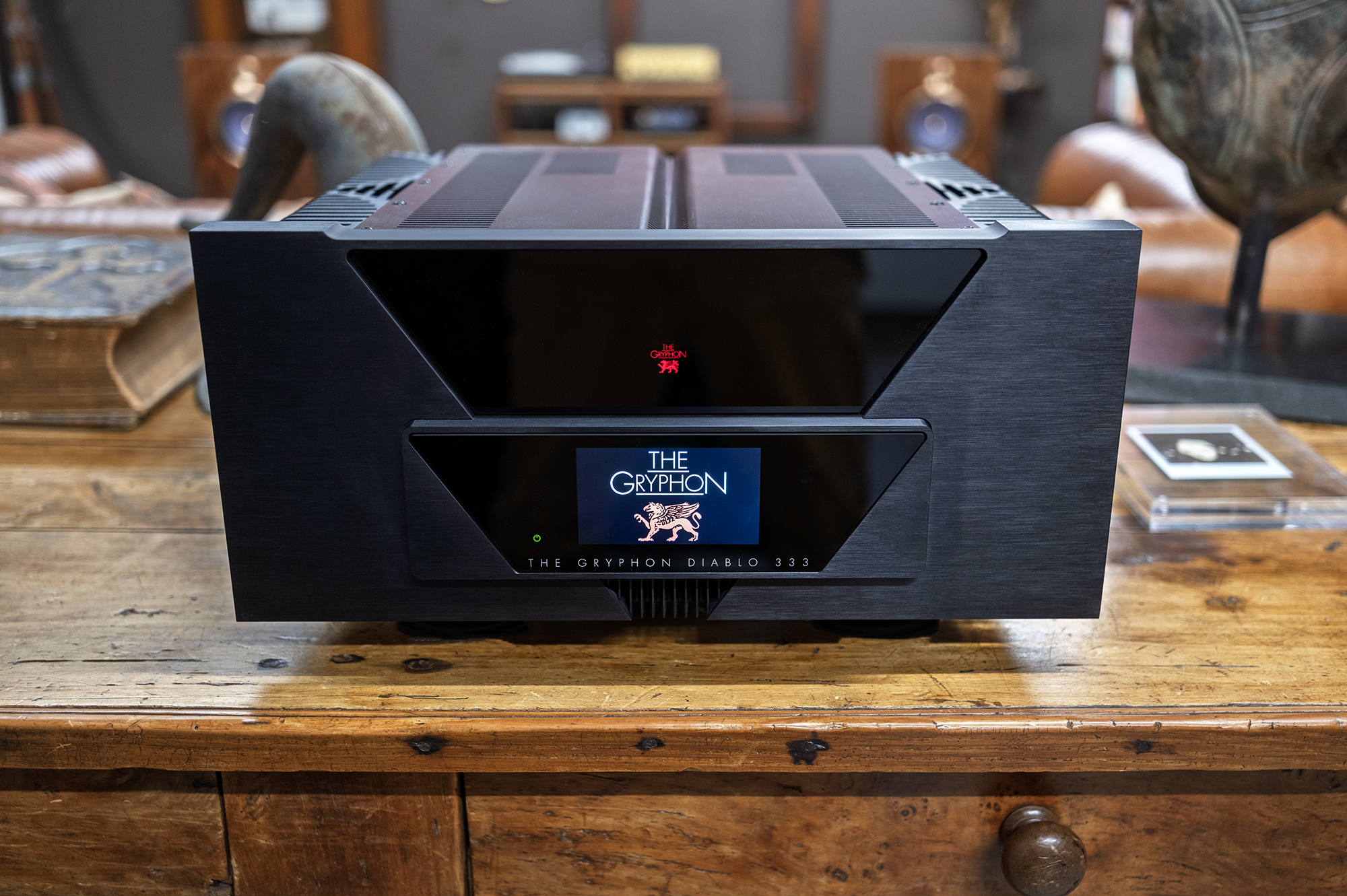
The Gryphon Diablo 333 does not employ global negative feedback, as in zero, and puts out 333 Watts of Class A/B power into 8 Ohms, doubles that into 4 (a perfect number for All Hallows Eve), and a whopping 1100 Watts into 2 Ohms according to the company. It’s worth noting that the output stage runs in high-bias Class A/B with the first 10 or so Watts biased to run in Pure Class A. The 333’s stablemates in Gryphon’s power amplifier lineup including the Essence Monoblocks, Antileon Revelation, and flagship Apex all run in Pure Class A.
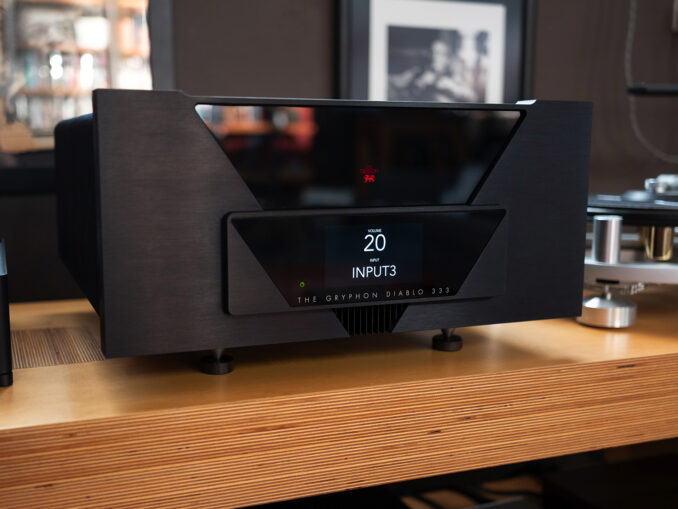
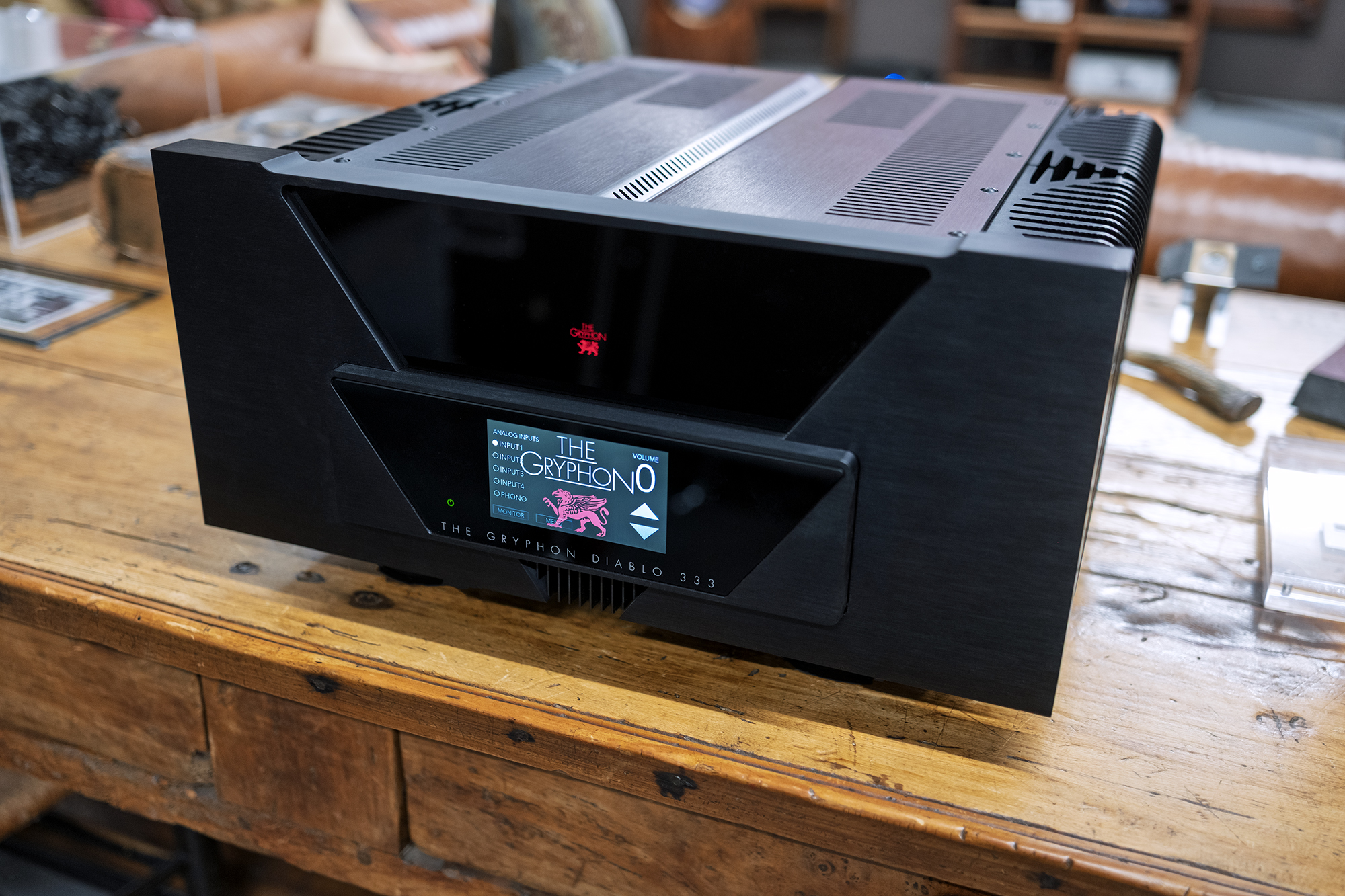
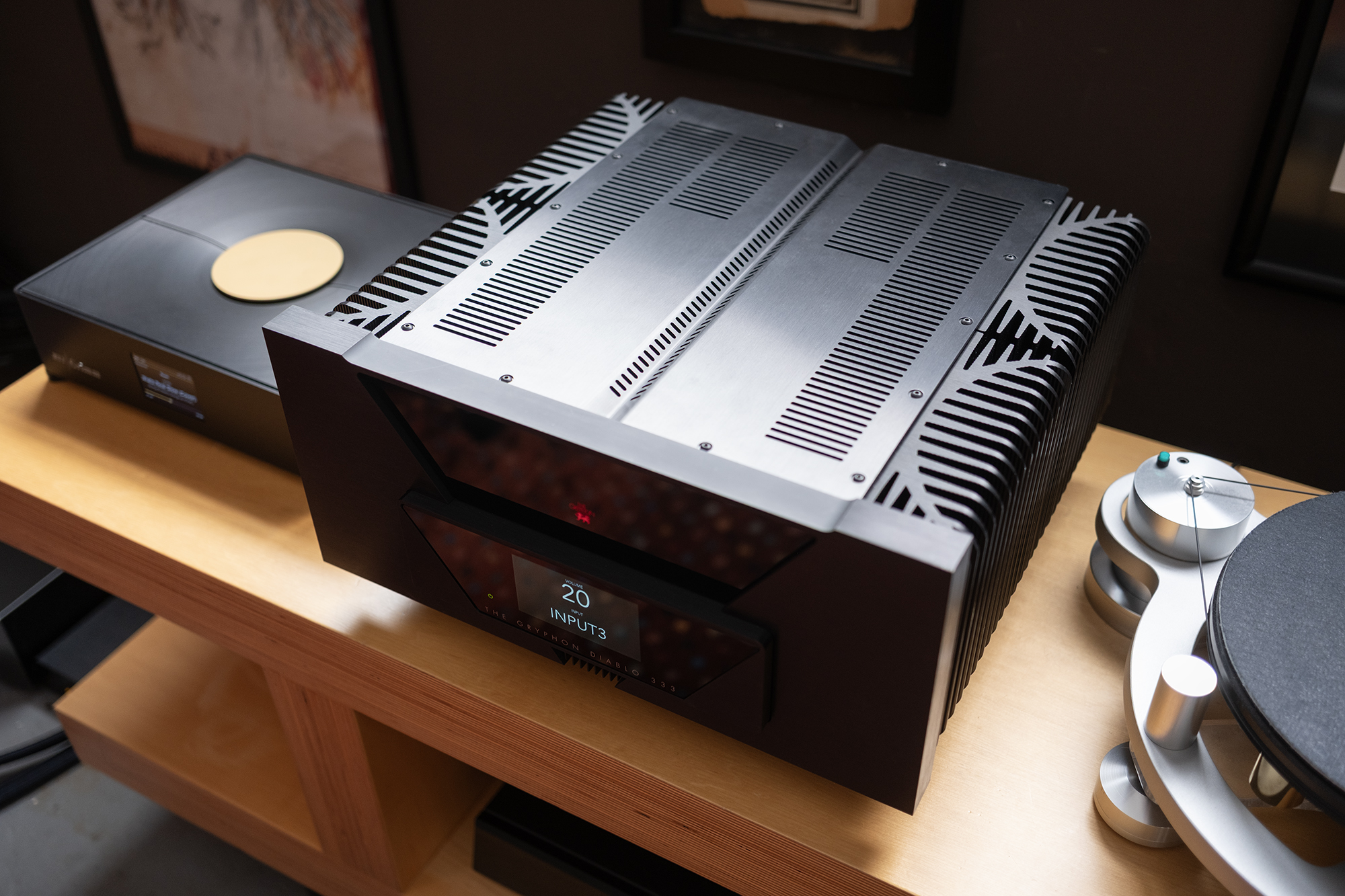
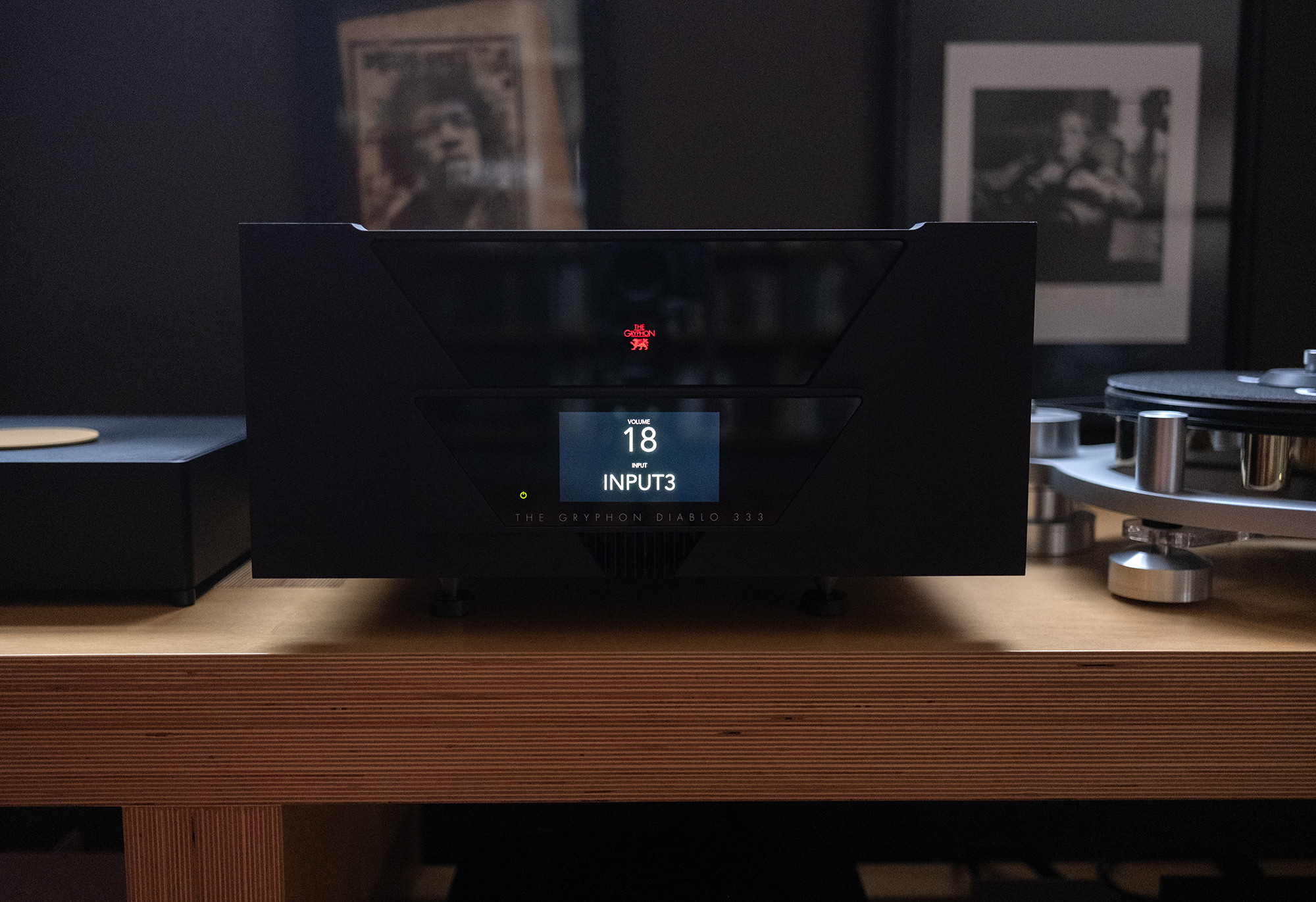
The Gryphon Diablo 333 is the successor of the Gryphon Diablo 300, an integrated amplifier in production since 2015 and regular readers know I appreciate a design that stands the test of time. The true dual mono Diablo 333 was designed by Gryphon’s Chief Designer Tom Møller while the industrial design comes from the mind of company founder Flemming Rasmussen. Setting the 333 up on the Barn’s old farm table for the photo shoot told me a few things—most of the unit’s substantial 126 lbs. are up front so we know where the “…massively augmented power supply distinguished by an oversized Holmgren Dual-Mono Transformer and 68,000uF per channel filter capacitance” reside, the 333’s build quality is battle ready, and its nearly square in two dimensions (18.4″ x 18.6″ x 9.66″) form factor lend it a very nice chunky stance. Think solid. And heavy.
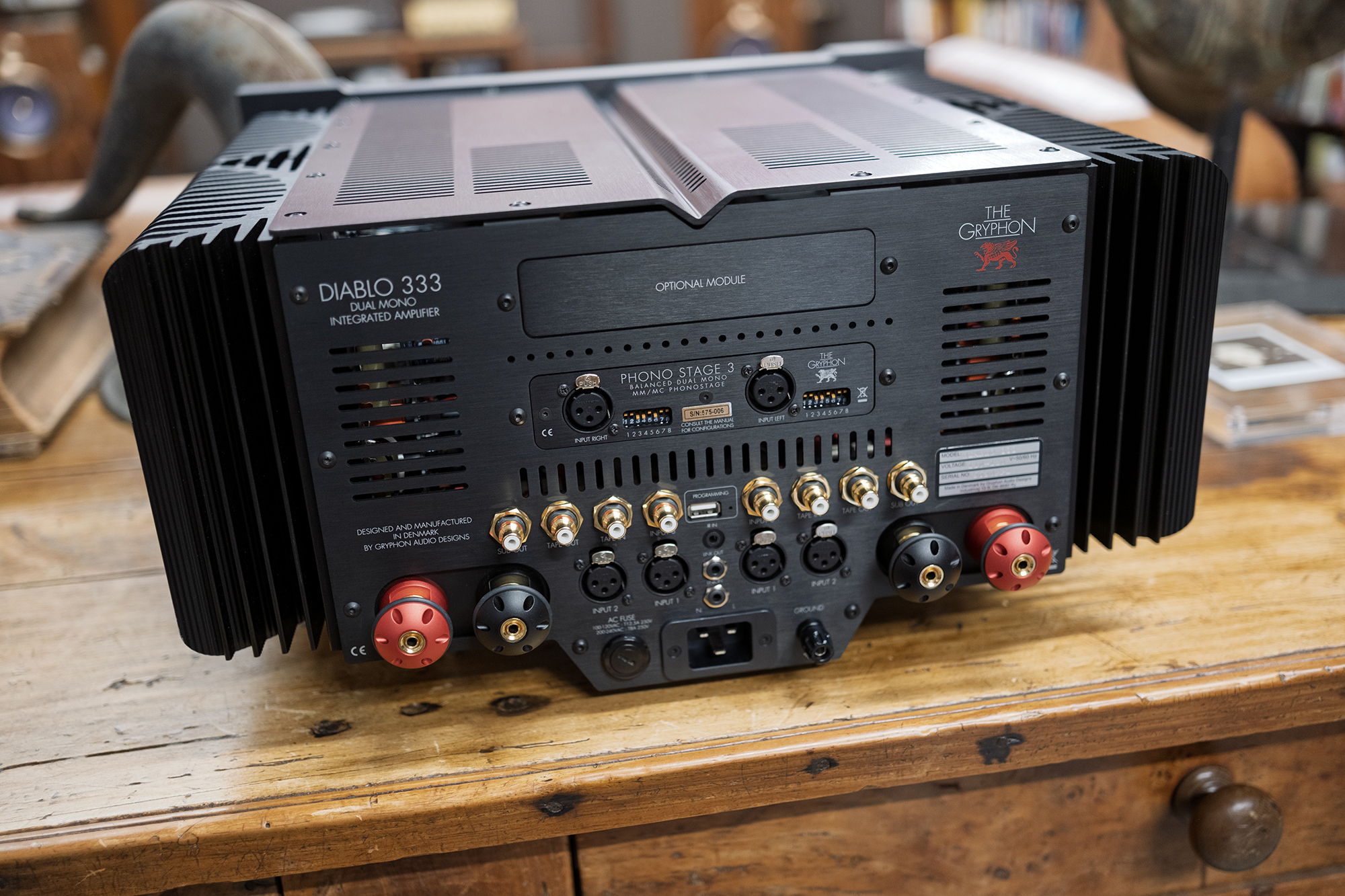
The review unit includes the optional True Dual Mono Class A-coupled PS-3 MM/MC Phono Module which sits directly below another slot for the optional DAC module. Those massive gold-plated binding posts are Gryphon’s own design and they are joined by single-ended RCA and balanced XLR inputs and a 20 Amp IEC connector.
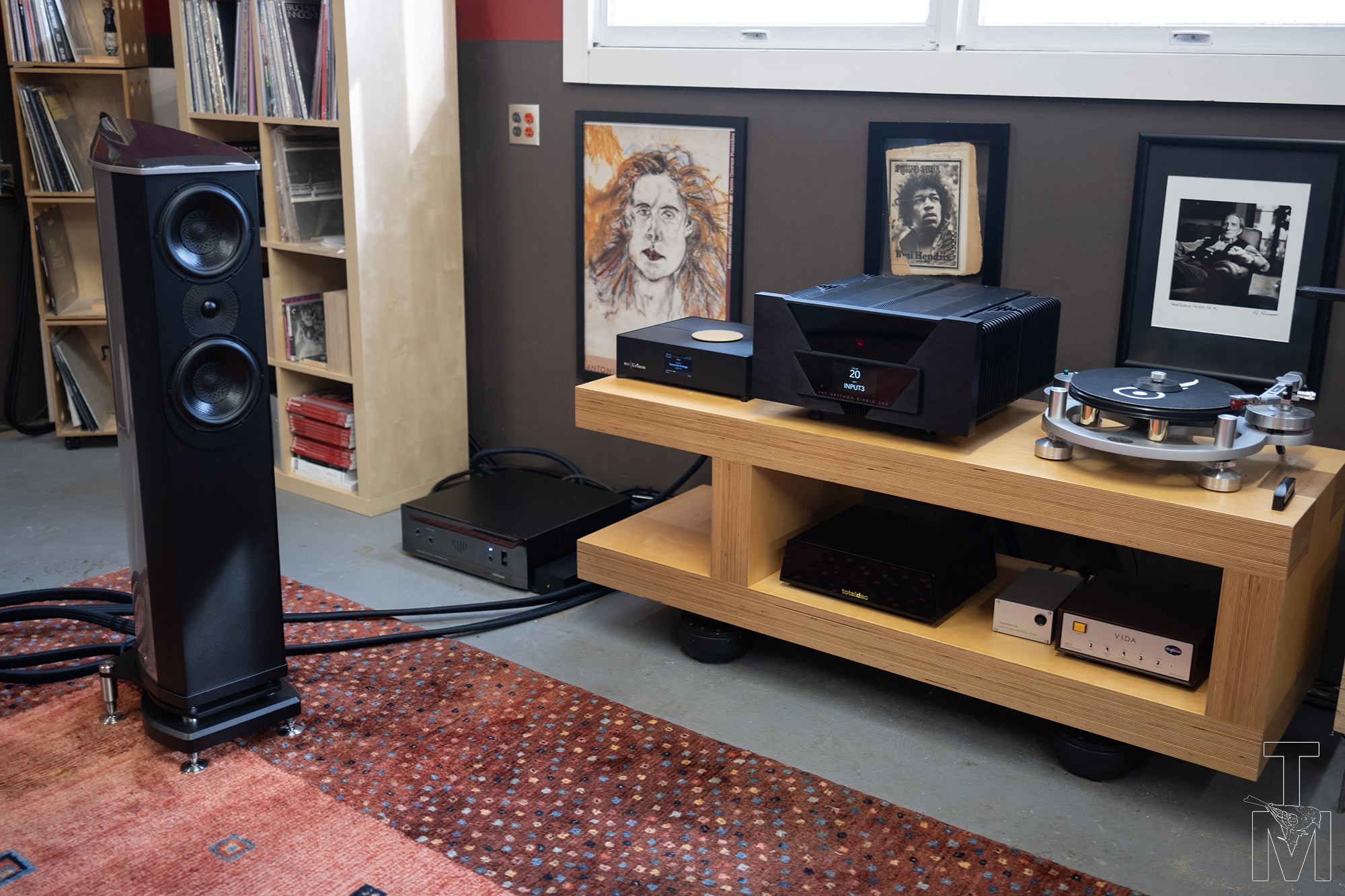
Here’s what I said about the Diablo 333 in my review of the Wilson Benesch speakers:
“…the Gryphon Diablo 333 offered great grip from bottom to top and a weightiness that benefited music played at lower volumes, something I tend to do often.”
Weightiness is another standout quality of the Gryphon and this is another of its qualities that remained regardless of the speaker. By weightiness I’m talking about making reproduced music sound solid, dimensional, and capable of real physicality in room as if the Diablo 333 was somehow summoning into physical form the people and things responsible for the music making in Barn to a greater degree than many other fine amplifiers I’ve had the pleasure to spend time with. One recent example being the Orpheus Lab Absolute integrated (review), another amplifier I more than enjoyed that seemed to emphasize grace and delicacy over weightiness, qualities that made the Orpheus better suited for the DeVore O/96, while the Gryphon made the Wilson Benesch and extra especially the Gauder Akustik transform from very good sounding to lots of cursing out loud along the lines of “Holy *”, “Damn!” and various and sundry other Jersey-specific cursing out loud level of performance. Literally.
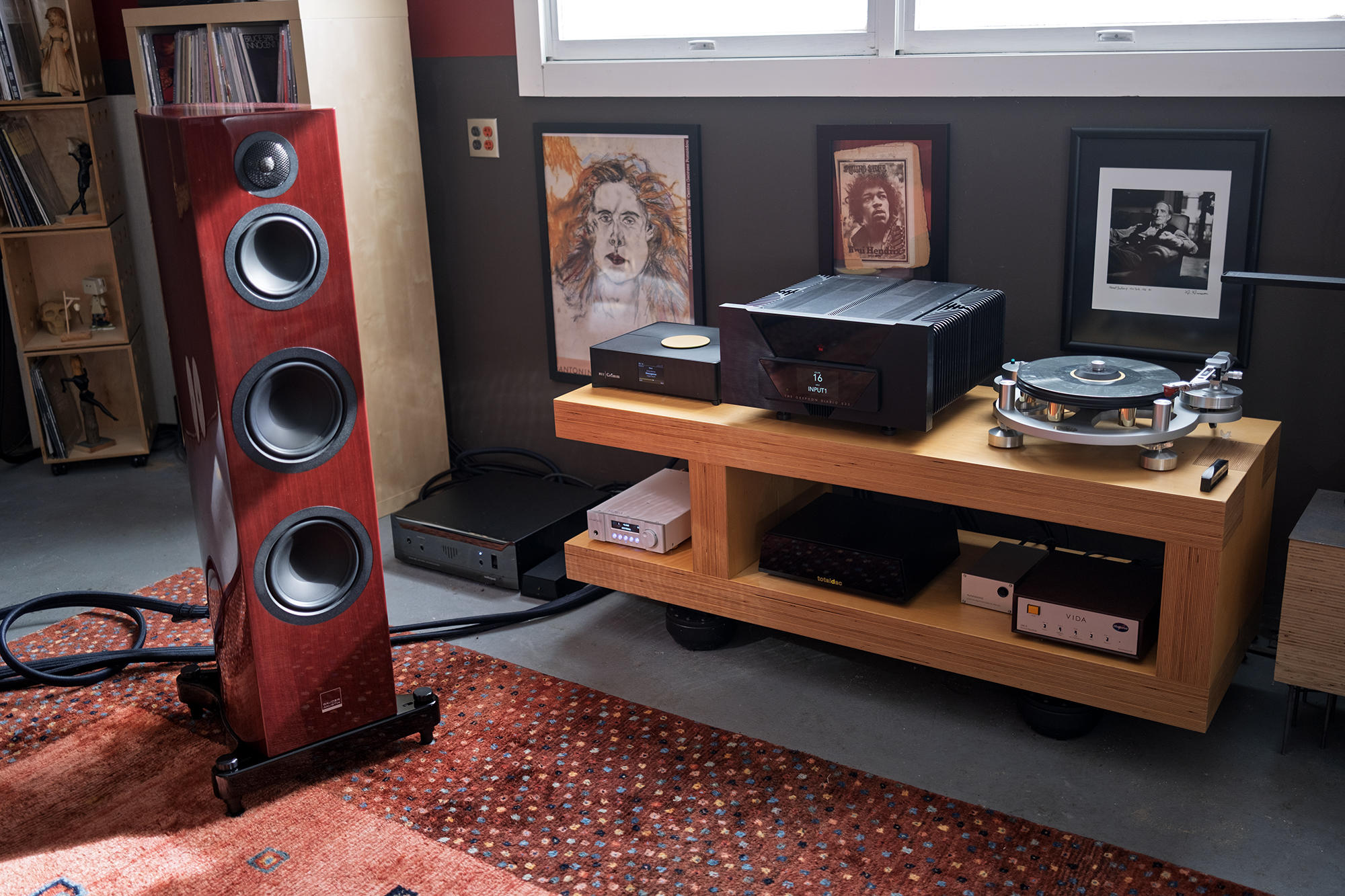
I also need to talk about this system as a system—the Barn resident Grimm MU1 (review), Imersiv D-1 DAC that’s in for review (more info), Diablo 333, Gauder Elargo 200 tied together with AudioQuest ThunderBird cable (see full Barn and system details). The reason being, this system brought some of the most exciting, dramatic, and impactful sound I’ve experienced to the Barn. Even after days and weeks of listening, there were moments in nearly every song played where I would be taken aback by the sheer quality of reproduction, a slap in the face obvious fact that music felt as if it had become materialized to such an extent I was left just shaking my head that had a great big smile slapped across its face. It’s times like this, special and kinda rare, where sound quality steps up and out with real swagger in the service of making reproduced music feel essential. Like sunshine.
Among the most shocking albums I got to smile through with the Diablo 333 providing the power/magic was Carrier’s 2025 release Rhythm Immortal whose sounds filled the Barn with orbs of energy so completely removed from the speakers the effect was like some sort of astral projection. Or so I imagine. And it’s no doubt Brussels-based producer Guy Brewer delights in creating a vast, cavernous space as stage for his dramas to unfold within. With the Gauder Elargo 200 pumping this music out and into the Barn, dynamics were as startling as standing near a car that unexpectedly backfires, with a very similar sense of shock followed by moments of suspense–Do I need to brace for that happening again?.
Tiny insect like sounds, big booming drums reverberating into dark corners well past the Barn’s front wall, showers of static falling from the sky where the effect brought to mind some people’s ability to look at code yet see the results as a GUI (I worked with people who did just that) as sounds transformed into emotions and reactions within me. The sheer physicality, musicality, and seemingly infinite degree of scale and refinement shifted my experience well beyond sound quality into an altered state of complete music-centric focus. Stunning. You can think of this music as being abstract, in the way Mark Rothko’s paintings are abstract, and with the Gryphon providing the drive Rhythm Immortal felt as real as looking at Rothko’s divine hovering light hanging on a wall a few feet away as it slowly envelopes everything.
Tender Prey from 1988 is among Nick Cave & the Bad Seeds most biblically infused albums complete with xylophone demons dancing on roofs.
“Who’s that dancing on the jailhouse roof
Stamping on the ramping with a cloven hoof”
Tender Prey is also a messy record, nearly sloppy compared to Cave’s & Co.’s typically more surgical precision. Nonetheless it contains many a Cave standard including opener “Mercy Seat” which I’ve heard every time I’ve seen Nick Cave & the Bad Seeds perform over the years. The Bad Seeds carny Halloween house of horrors are splashed all over Tender Prey and the Wilson Benesch with their full range control and remarkably fine-grained precision had all the hoots and howls flying around the barn like ghosts projected from a magic lantern with Cave’s vocals sounding spittingly present. And when things get denser and deeper on “Mercy” the Gryphon’s weighty yet spritely snap helped bring real drama and visceral impact to Cave’s pleadings and visions, a veritable modern day Saint Anthony (I hope you appreciate the restraint it took to not make any devil references or heaven forbid, jokes during the writing of this review).
Geese’s 2025 album Getting Killed seems to get better every time I listen to it and hearing it through the Gryphon/Gauder system made it even better still. Every element, slinky bass, manic drums, scorching overdriven guitar, and lead singer Cameron Winter’s spoken sung screamed vocals were all perfectly laid out in space with each element having the weight, snap, and voice very much like the real thing made materially present. When reproduction gets this convincing as a presentation of real things, time and the distractions of the day are completely swept away leaving only me and the music to play.
Music is, at least for me and few million others (at least), an emotional and intellectual pursuit, a perfect mind/body kinda deal where we can lose ourselves in sounds, words, meanings and movements that in the best case lead us well away from ourselves ideally leaving us in a better place once the music’s over. And for those of us who like to listen, just listen, for extended periods of time over the course of our lives, the quality of the experience takes on real significance. I’m sure you know what I’m talking about so when I get to experience reproduced music at the level offered by the Gryphon Diablo 333, I get a wee bit excited.
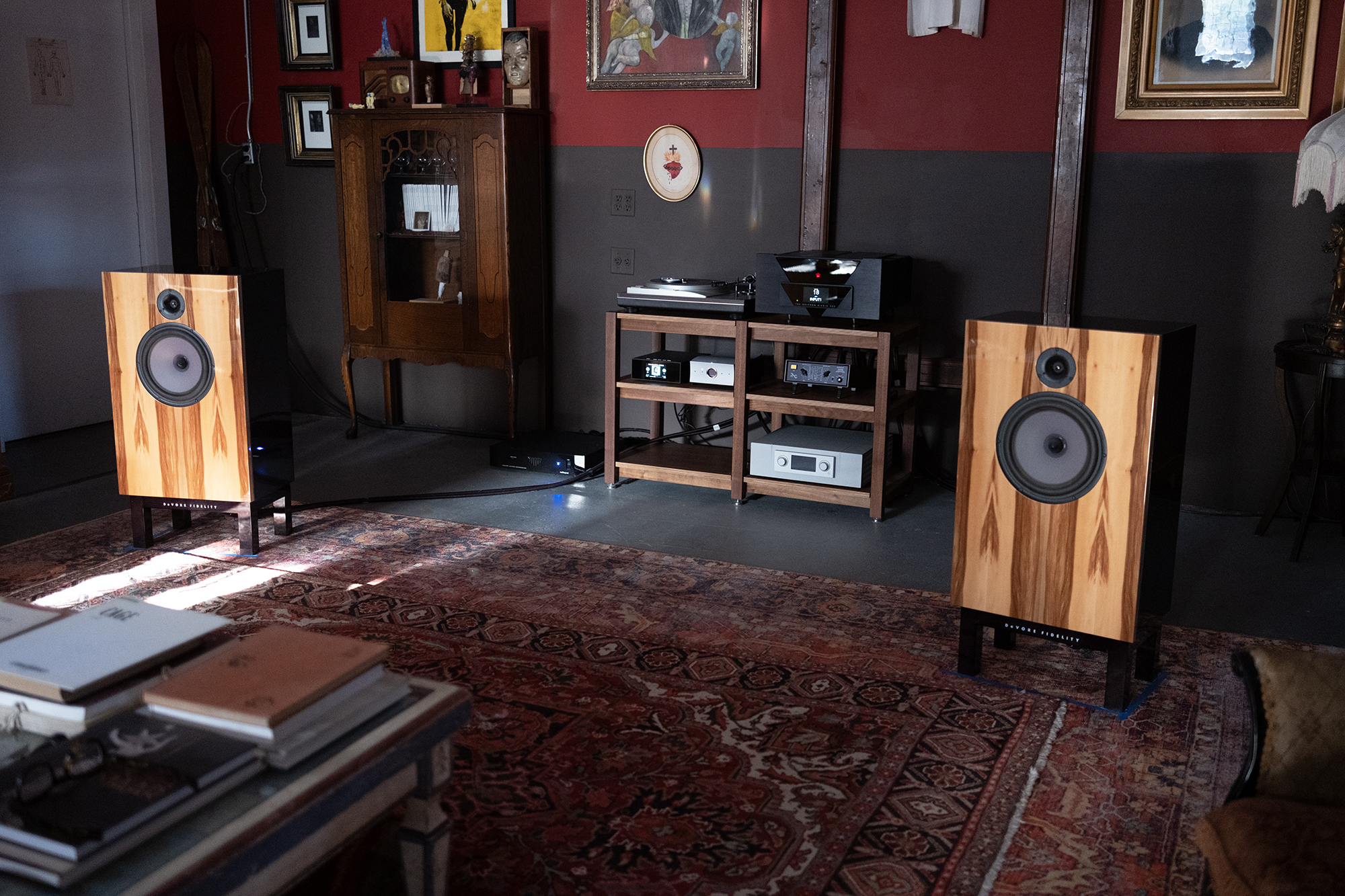
Getting back to my list of Favorite Amplifiers, there are a number in and around the Diablo 333’s price including the aforementioned Orpheus Lab, Soulution 331 (review), Viva Solista (review), and Bel Canto Black ACI 600 (review). If you know anything about these amplifiers, you know they don’t sound the same nor do they have the same specs which makes picking a winner beside any real point. With that said, if someone was building a system starting with a pair of speakers that appreciate real power—and I recommend starting with speakers when building a system–and asked me for one recommended integrated amplifier, I’d pick the Gryphon for all its strengths that don’t seem the least bit challenged or changed by the attached speaker. And those strengths include playing back any music about as startlingly real as I’ve experienced. Oh, one more thing—if you have a pair of Gauder Akustik Elargo 200s and are on the lookout for an amp, try a Diablo 333 and you can thank me later.
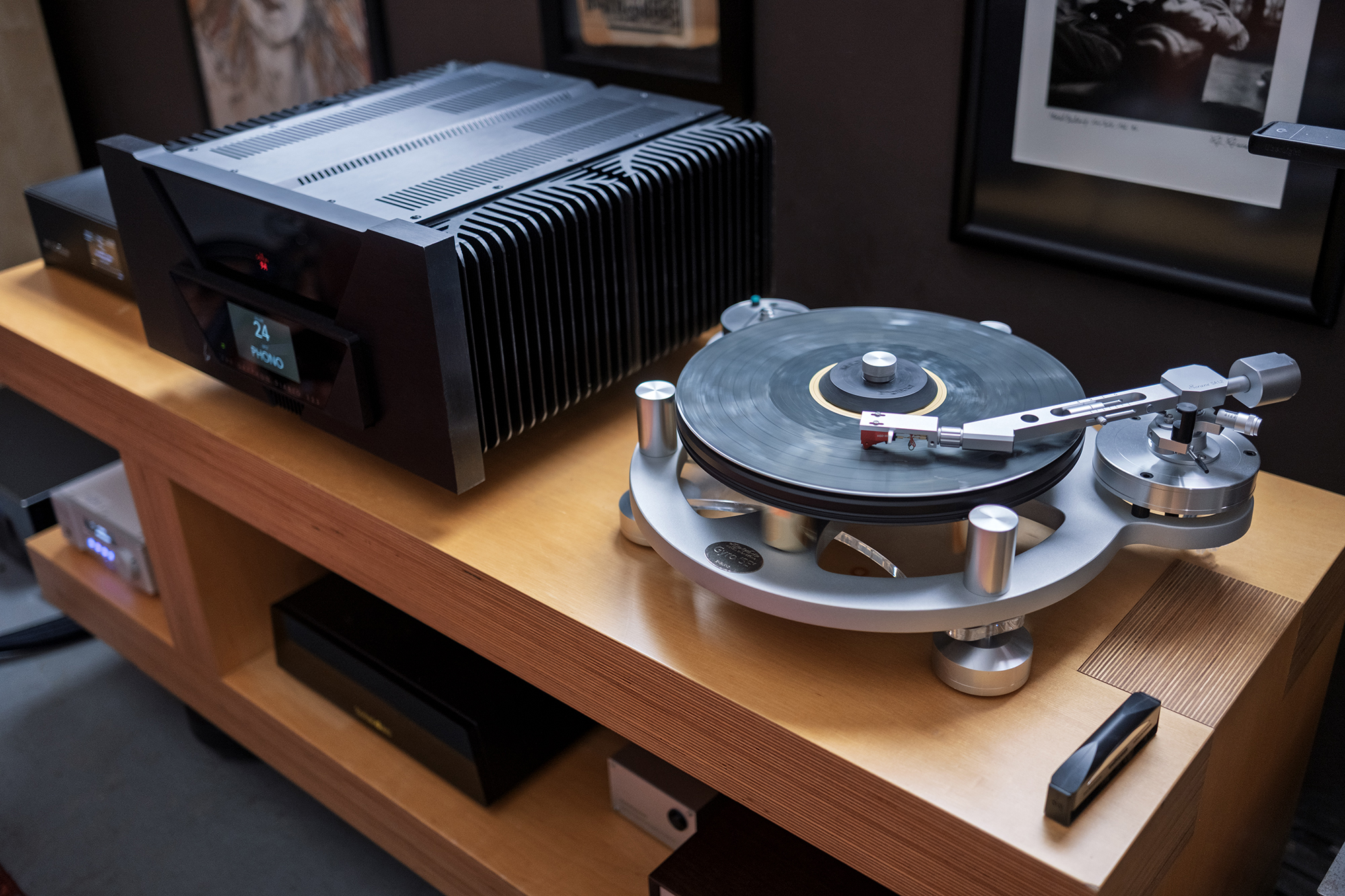
Seeing as the review Diablo 333 included the optional PS-3 MC/MM Phono Module (+$6800), I also listened to records during the 333’s 3-month Barn stay. My main analog setup consists of the Michell Gyro SE Turntable/Sorane SA1.2 Tonearm combo with my preferred cartridge, the EMT HSD-006. I set the Diablo’s rear panel DIP switches to match the EMT’s load requirements and was off to the vinyl races in no time.
Let’s talk about Japanese Breakfast’s latest, For Melancholy Brunettes (& Sad Women) their fourth studio album and first to be recorded in a proper studio with Blake Mills helping out with production, which is but of one the records I spun. An aside—at the last Capital Audiofest someone I know asked me if I’d like to hear anything specific while I was in their room. “Do you like Japanese Breakfast?” I asked. He just looked at me and slowly tilted his head as a sly devilish smile started twisting one side of his mouth up. No other words were spoken but I got his joke.
I love this record for its sweet adventurous pop that brings in gamelan, mandolin, viola, sax, Wurlitzer, and more adding to the more familiar sonic flavors provided by piano, synths, bass, guitar, drums, and vocals. From the very first notes of opener “Here Is Someone” plucked from a mandolin by lead singer/songwriter Michelle Zauner, I knew the Gryphon phono stage was to my liking as the sounds and delights of For Melancholy Brunettes (& Sad Women) shared the kind of vital and lifelike qualities of the amp itself.
As regular readers know, I don’t really review analog gear with a few exceptions so I’m going to my make comments appropriately short and to the point which is to say for the asking price, the Gryphon phono module strikes me as a no brainer. I imagine you can find a standalone phono preamp for $6800 or so that you might like better, or one that offers more features and loading options so have at it. I think there are only 3,333 choices to explore. On the other hand if your phono stage feature needs are met by the Gryphon’s and you’d rather spend that time listening to records, you won’t be disappointed by sticking with this no-brainer option.
The Gryphon Diablo 333 strikes me as being the right tool for the job in a broader sense than many other fine integrated amplifiers I’ve reviewed because of its ability to drive the four speakers I paired it with in Barn with similar unshakable results, where specs met music-making prowess. And those results are among the most shockingly and swaggeringly adept at recreating the joys and heartbreaks of music in all their power and grace I’ve had the great pleasure of experiencing since I began writing about hifi over 20 years ago.

Gryphon Diablo 333 Integrated Amplifier
Price: $27,800, PS-3 Phono Module MM/MC Phono Module: +$6800, DAC Module: +$8400, with Phono and DAC Module: $43,000
Company Website: Gryphon Audio
Specifications
Output Power: 2x 333W@8Ω, 2x 666W@4Ω, 2x 1100W@2Ω
Output Impedance: 0,015Ω
Bandwidth (-3dB): 0,1Hz to 350 kHz
Power Supply Capacity: 2 x 68.000uF
Gain: +38dB
SUB output gain: +12dB
Input Impedance, balanced (20-20000Hz): 50KΩ
Input Impedance, single ended (20-20000Hz): 30KΩ
Power consumption: ≤ 0.5W (standby), approx. 180W (idle)
AC voltage range: 110-120V OR 220-240V – not changeable.
Operating ambient temperature range: 15 – 30°C / 59 – 86°F
Dimensions (W x D x H): 468mm x 472mm x 245mm | 18.4in x 18.6in x 9.66in
Net weight: 50,6kg – 112lb
Shipping weight: 67,0kg – 148lb
MENU-controlled functions:
Volume Max Level
Volume Start Level
Display Intensity: (100%-75%-50%-25%, Auto Dim and Auto OFF)
Infrared source (Front or Rear Panel)
Input Level Match
Input Naming
Dedicate Input 2 (XLR) or Input 3 (RCA) to Volume-Bypass AV-input
Restore Settings
Phono Stage MM/MC selection (optional)
DAC level and filter settings (optional)
Note: Specifications can be changed without notice.