

Settling down with an integrated amplifier over the course of nearly 3 months allows for a certain amount of ease. Relaxed listening, if you will, which is among my favorite kind.
And during my nearly 3 months of time spent listening to systems powered by the Orpheus Lab Absolute Integrated Amplifier A Four I200, from here on out the Absolute Integrated, I’ve come to understand that one of its standout qualities is elegance, a kind of gracefulness it imparted to every recording I asked it to amplify regardless of the speakers in play. To my way of listening this makes the Orpheus Lab Absolute a stand out integrated amplifier in a very crowded field. And I mean—a very crowded field with nearly endless choices in and around its asking price of $23,700.

I’ve had the great pleasure of reviewing a number of competitors in that field including the Riviera Labs Levante ($23,995), the Bel Canto Black ACI 600 ($29,999), Pathos InPol Heritage MKII Integrated Amplifier ($18,995), BorderPatrol S20EXD Parallel Single-Ended Amplifier ($22,500), and whole lot more if we loosen the min / max price deviation. I also happen to have the Gryphon Diablo 333 Integrated amp in Barn for review (more info) which I used in direct comparisons with the Absolute Integrated. All to say that when I speak of standout qualities, I’m speaking from direct and relatively broad experience in terms of the field of play.
From “Well Did You Evah?” by Cole Porter:
What a swell party
A swell party
A swellegant, elegant party this is
Listening for hours on end day after day to the Orpheus Lab Absolute Integrated brought this song to mind for its playful yet poignant play on words and I refer to it here because another word I’d use to describe this lovely integrated amp is swellegant, in all its deeper and lighter meanings and connotations. After all, listening to music is a kind of party and I find so much of the handwringing and whining over how to best do it a bit much. Very much like arguing over and feeling the need to create a list of rules and regulations when it comes to picking the flavor of ice cream you want to eat. “You like pistachio better than butterscotch?! Was that a direct A/B? If not, how do you really know you prefer pistachio. What was its temperature when served? Did you use a plastic or wooden spoon? Did you rinse with water in between? What kind of water?”

When we sit down to listen to music, and the sitting down is essential when listening is our only focus, I know what I like when it comes to the sound of a hifi. I don’t have doubts based on past experiences or future expectations. But that’s just me. And each time I sat down in front of a system with the Orpheus Lab Absolute Integrated, whether driving the Barn resident DeVore O/96 (review), the recently reviewed Wilson Benesch A.C.T. 3Zero (review), the in for review Thrax LYRA SE Loudspeakers with the HADES Passive Subs (more info), or the Gauder Akustik Elargo 200 (more info) I knew I was in for a certain kind of treat that was long on smooth, richly hued control, and that easy elegance that made music feel luxurious. Special in its sounds and ability to move moods.
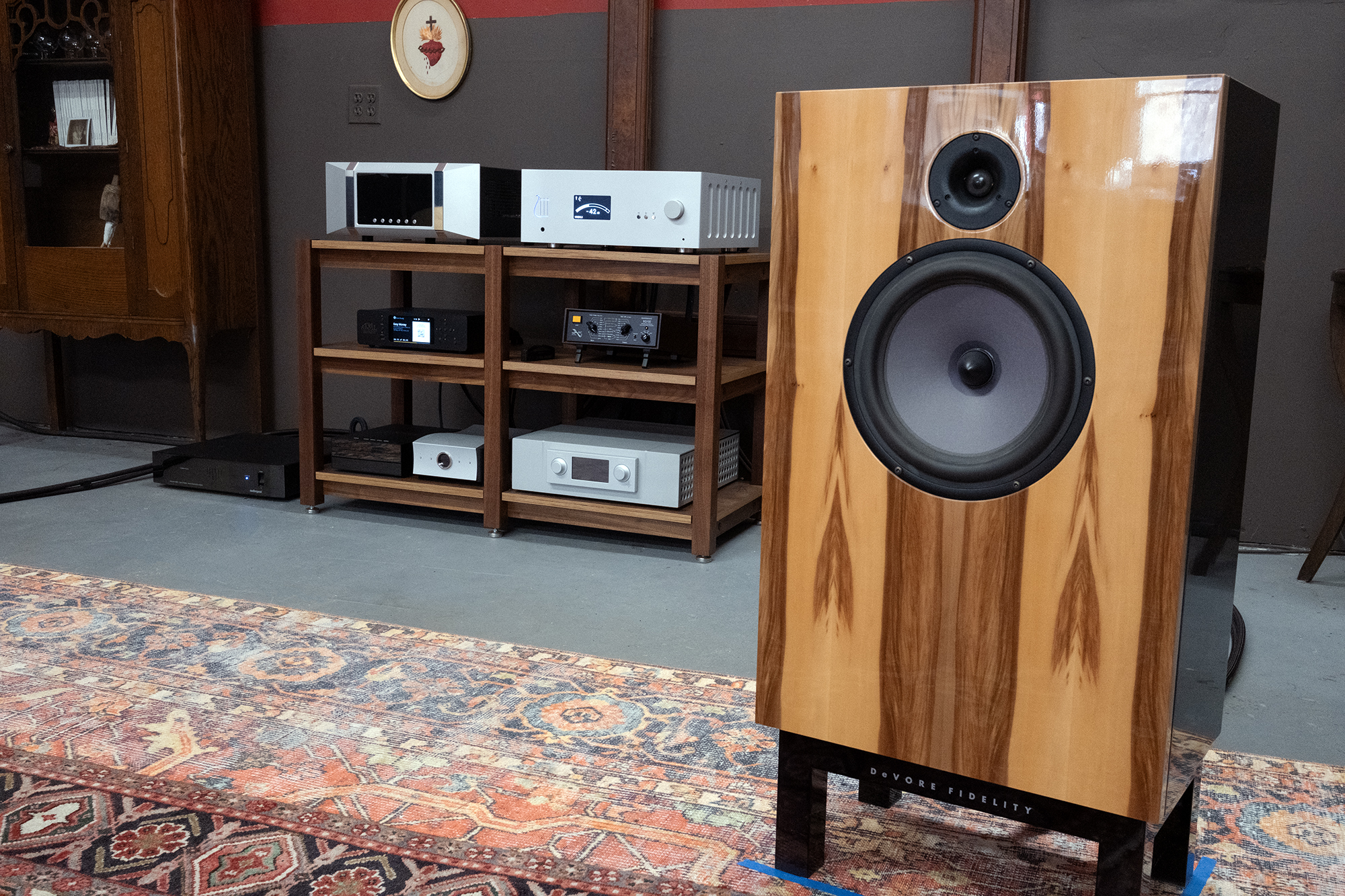
The Absolute Integrated got live on both sides of the Barn with digital front end duties shared between the Barn resident Grimm MU1 (review)/totaldac D1-unity (review) on the A-Side and the Auralic ARIES S1 (review)/Mola Mola Tambaqui (review) on the B-Side (see complete Barn and system details).

From Orpheus Lab:
The A Four I200 stereo amplifier from the Absolute line inherits the technology developed by Orpheus Lab for the Opus II of the prestigious Heritage line.
It features a current amplification stage driven by six high-power MOSFETs, meticulously hand-matched for each channel, capable of reaching instantaneous current peaks of up to fifteen amperes. To ensure optimal control throughout the amplification chain, each MOSFET is governed by a bipolar technology control stage. This approach, combined with a multi-point feedback topology, allows for the precise application of feedback, achieving a perfect balance between musicality and technical performance. As a result, the A Four I200 adapts seamlessly to any type of loudspeaker.

As you can see, each channel of dual mono amplification has its own dedicated oversized toroidal transformer “with a capacity of 880 VA” and Orpheus Lab rates the Absolute Integrated’s Class A/B power output at 200 Watts into 8 Ohms, with a peak power rating of 800 Watts! The whole package weighs a reassuring 79 lbs. including the gently curved sandblasted aluminum chassis.

A total of six inputs (3x RCA 3x XLR) each offer an input level setting (High, Med, or Low) to better match the incoming signal.
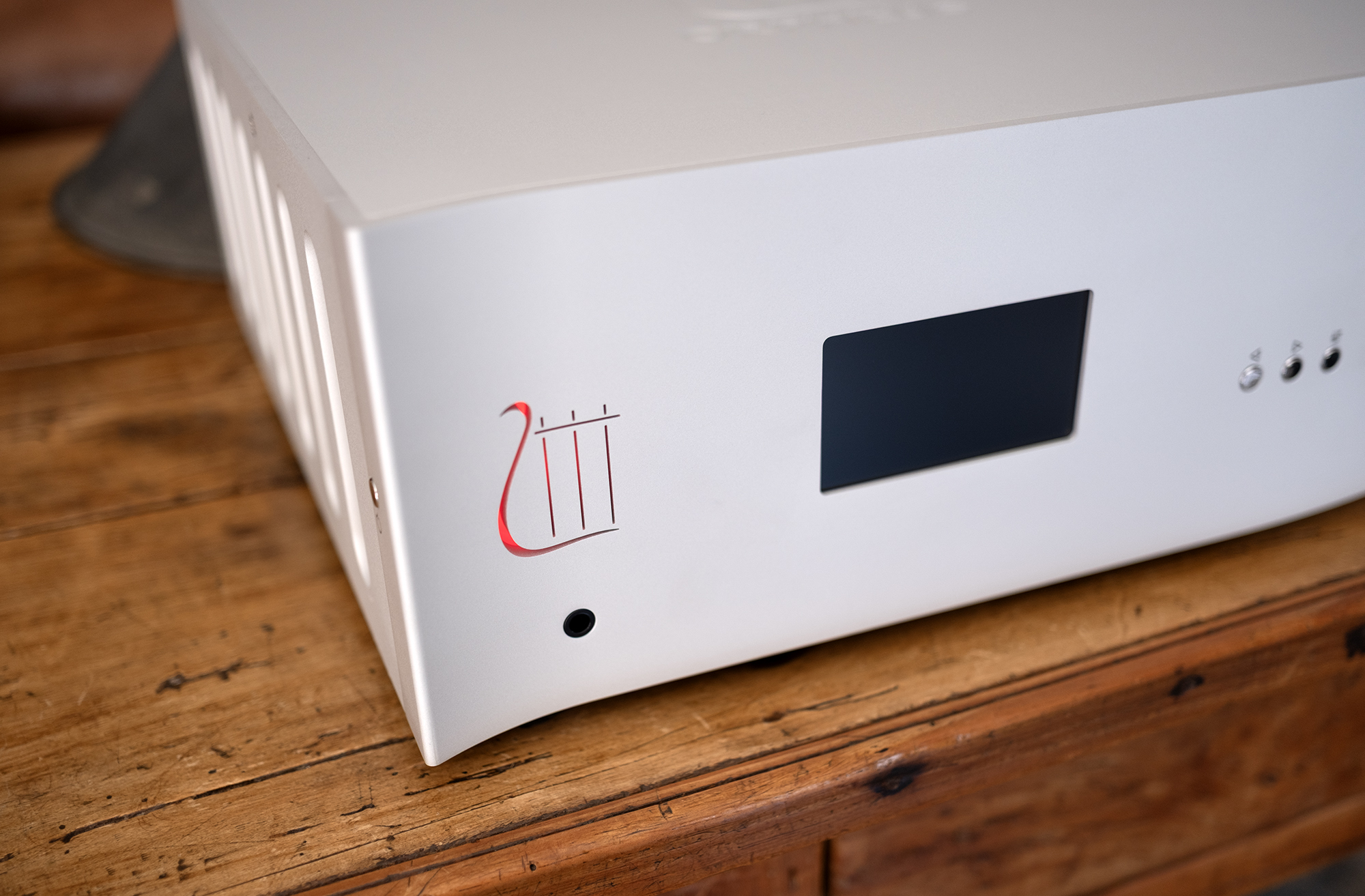
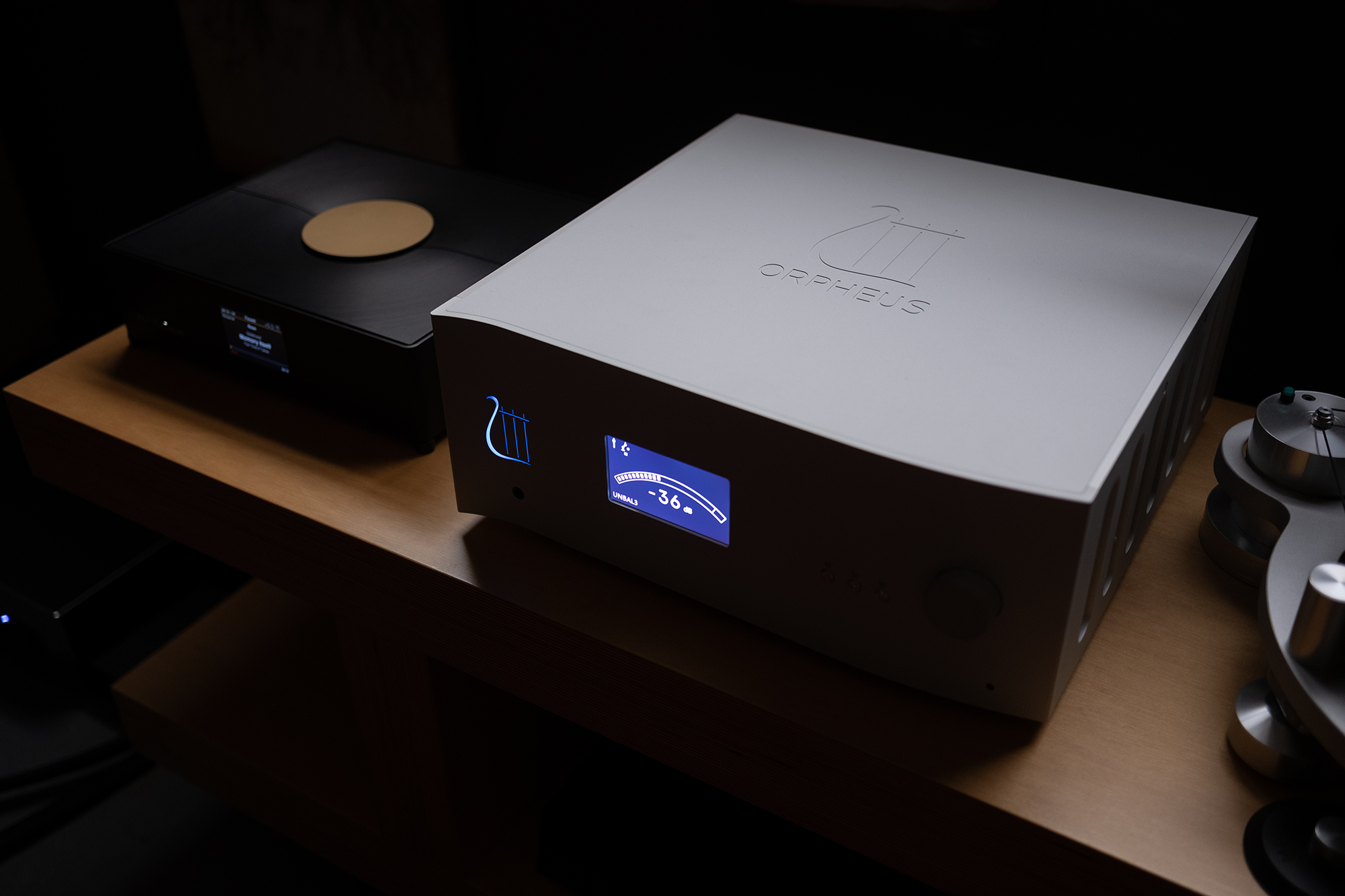
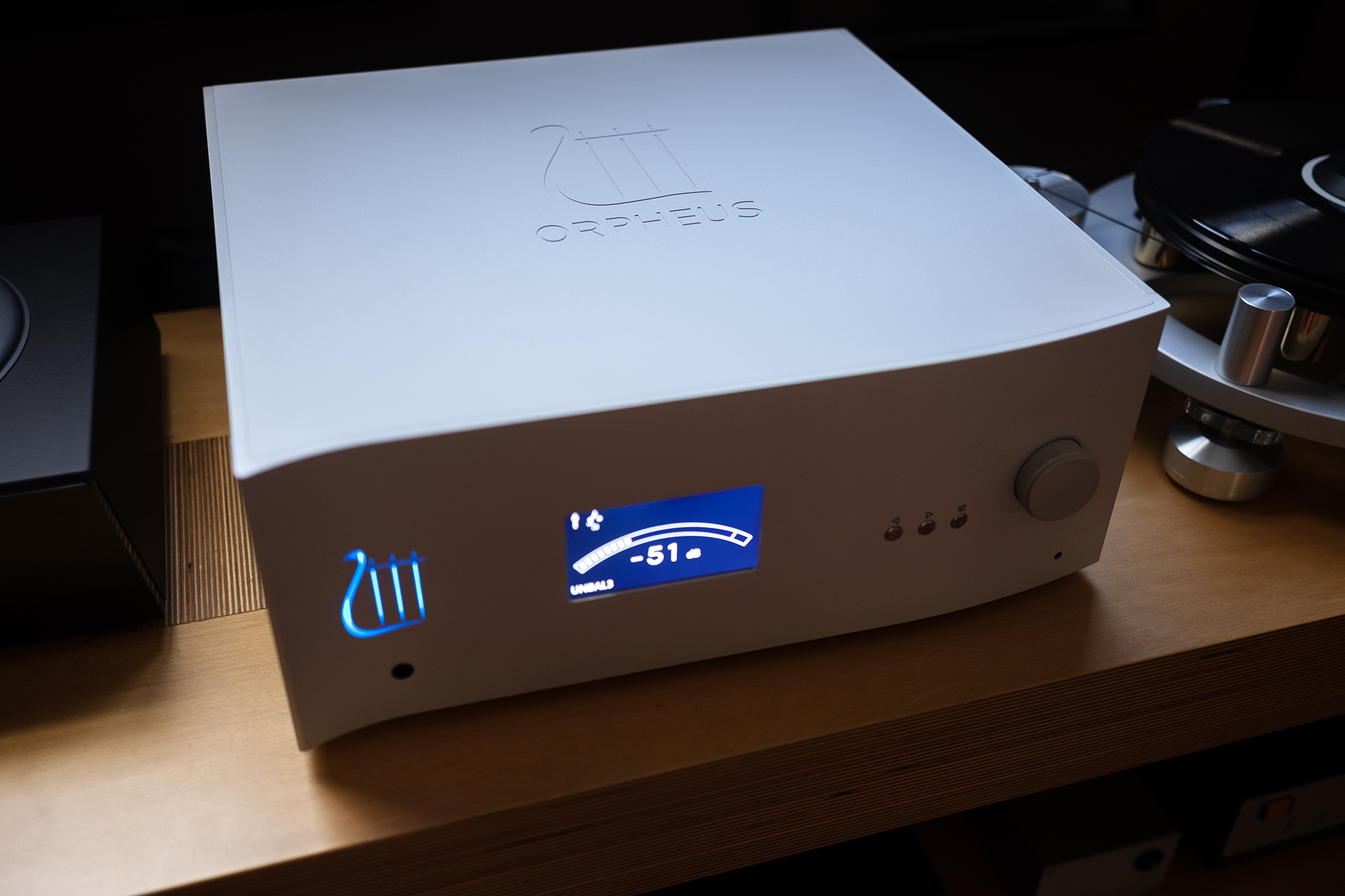
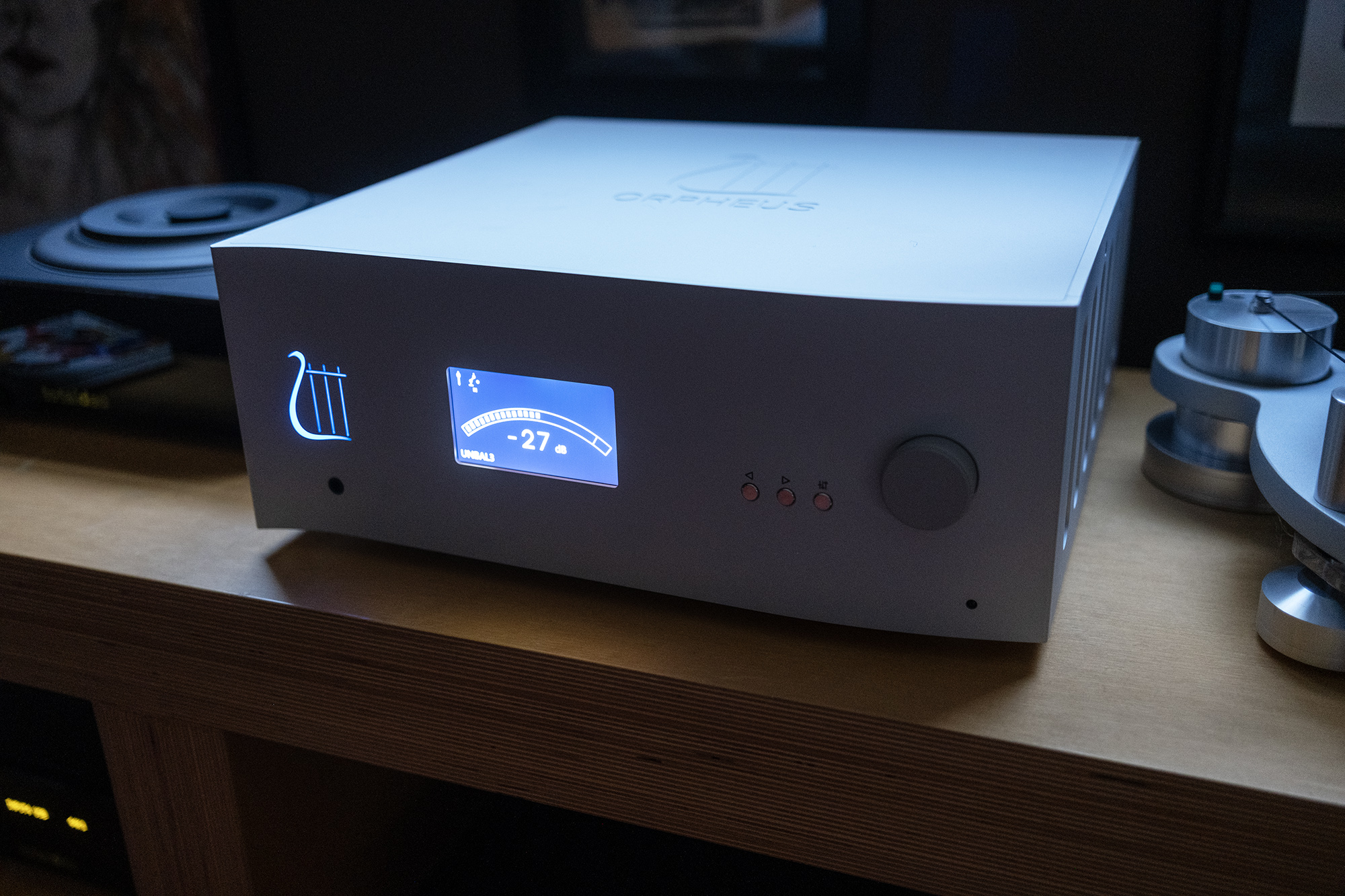
The curved front panel houses a nicely sized monochrome display, three control buttons for input selection and to access and step through the menu system that offers a number of options including display brightness and input level, and a silky smooth and appropriately-sized, imo, volume control knob that’s a pleasure to use. The backlit Lyre of Orpheus glows red in standby mode and blue when in use. A headphone jack sits directly underneath.

I find the entire Absolute Integrated package including the matching remote exudes a quiet elegance. I am a big fan of a sandblasted aluminum finish which captures light and turns it into a soft glow without showing a trace of every finger it has come in contact with. The soft blue backlit lyre logo is also a nice touch to my eyes. As you probably know Orpheus, according to Greek mythology, played a mean lyre capable of seducing people, animals, and stones (I did not make up that last one). There is also something quietly seductive about the Absolute Integrated’s appearance. To put it another way, it looks the part of a fine machine meant to make music.
Orpheus Lab was founded in Switzerland in 2001 where all of their products are designed, assembled, and tuned in-house. The company currently offers two lines—the Absolute and the flagship Heritage line—with products ranging from CD and SACD players to preamplifiers, stereo and mono amplifiers, and the Absolute Integrated.
It’s nearly unimaginable to me that Nick Cave & the Bad Seeds double album Abattoir Blues / The Lyre of Orpheus has been around for 21 years making it older than some people who drive. And yea, I went there with the Orpheus reference to reinforce my love of this record and to highlight the fact that the Orpheus’ influence, Pindar called him “the father of songs,” remains relevant to this day even for Nick Cave.
This is a dual personality double album with Abattoir Blues rougher rockier sound giving way to the more gentle breezes blowing through The Lyre of Orpheus. I’ll zoom in on “Breathless” from the latter with its faun-like fife/flute courtesy of Warren Ellis, Nick Cave’s new foil filling in after Blixa Bargeld’s departure. Here on “Breathless” the Orhpeus Lab integrated got to strut its more delicate stuff, its very light step that easily kept pace with the mostly acoustic comings and goings while exhibiting a very sense of timbral richness without being in the least bit over- or under-blown. Jim Sclavunos’ swirling brush work and the general jaunty vibe felt unforced and very nicely focused, Cave’s distinct spoken/sung vocals exhibited just the right amount of tactile presence as he continued with the sometimes awkward lyrics found on “Babe, You Turn Me On” (“Like a light bulb, babe”).
As I listened through these moods as albums, the Orpheus Lab Absolute Integrated’s gentle flow and liquid-like grace encouraged staying put for the duration in the capable hands of Nick Cave & the Bad Seeds.
Devonté Hynes is Blood Orange and Essex Honey is his new and adventurous album, co-released back in August by Domino and RCA, featuring a who’s who of guest artists including Caroline Polachek, Mabe Fratti, Lorde, The Durutti Column (!), Tirzah and more. If you enjoy the eclectic and unexpected Essex Honey will scratch those itches with some tracks, like opener “Look At You,” doing a musical about face mid track. There’s also a lovely mix of electric and acoustic elements with saxophone, cello, synthesizers, electric piano, and layers of vocals working together to create a rich and complex sound environment.
Basically a lot of music stops and starts to sort out and the Absolute Integrated seemed designed for the challenge. Dynamics are always on pace no matter the level or speed of the jolt, individual voices ring out with their natural voice, and the sound image is as vast as the recording permits with each element, no matter the size or level, perfectly defined within it. All of these sonic strengths suggest very low levels of self noise, so low they’re nonexistent for all intents and purposes, and plenty of fast, clean, clear power in reserve to maintain that lovely sense of ease even throughout the densest bits. Very nice.
I’ll close out these listing notes with a moody blue and beautiful album from Icelandic multi-instrumentalist and producer Ólafur Arnalds with pianist Alice Sara Ott and their 2015 album The Chopin Project released on Deutsche Grammophon.
From the liner notes:
The Chopin Project brings together award-winning young Icelandic pop/classical musician Ólafur Arnalds and the acclaimed German-Japanese pianist Alice Sara Ott for an exciting new take on Chopin’s music. Arnalds chose a programme of Chopin works to create an emotional arc through the disc, and then composed linking sections for string quintet, piano and synthesizer based on the atmosphere and motifs of those pieces.
Piano will tell you many important things about your hifi and Alice Sara Ott playing hers here told me that the Absolute Integrated offers a crystal clear, refined, and wonderfully nuanced naturally voiced reproduction that rang out in Barn breaking down the emotional barriers between live and recording. It’s as if I could have reached out and inside to pluck a string. The sound image when string quartet and synthesizer join in was nicely dimensional but that standout silken quality made this music sound all the sweeter. This is the kind of reproduction that focuses one’s attention on the musicians not the hifi which is its ultimate goal to my mind.
The most relevant comparison, due to price and overlap, is with the equally impressive Gryphon Diablo 333, which in its integrated amp-only version comes in at $27,800, $4100 more than the Absolute Integrated. The Diablo 333 offers more output power, 333 Watts into 8 Ohms compared to the Absolute Integrated’s 200 Watts (also into 8 Ohms) but from a bird’s eye view they are both powerful and very capable integrated amplifiers. Where they diverge when it comes to the sound they impart on music in the same system settings—both integrated amps spent time with the DeVore O/96, Wilson Benesch A.C.T. 3Zero, and albeit briefly with the Gauder Elargo 200—is the Orpheus Lab proved to be more nimble and delicate with a silky character to music all qualities that made each of these fine speakers sound warm and inviting. The Gryphon amp offers a comparatively more physical presentation with real grip and growl throughout the frequency range while still sounding wonderfully nuanced and rich if a bit less warm, a bit less gracefully seductive.
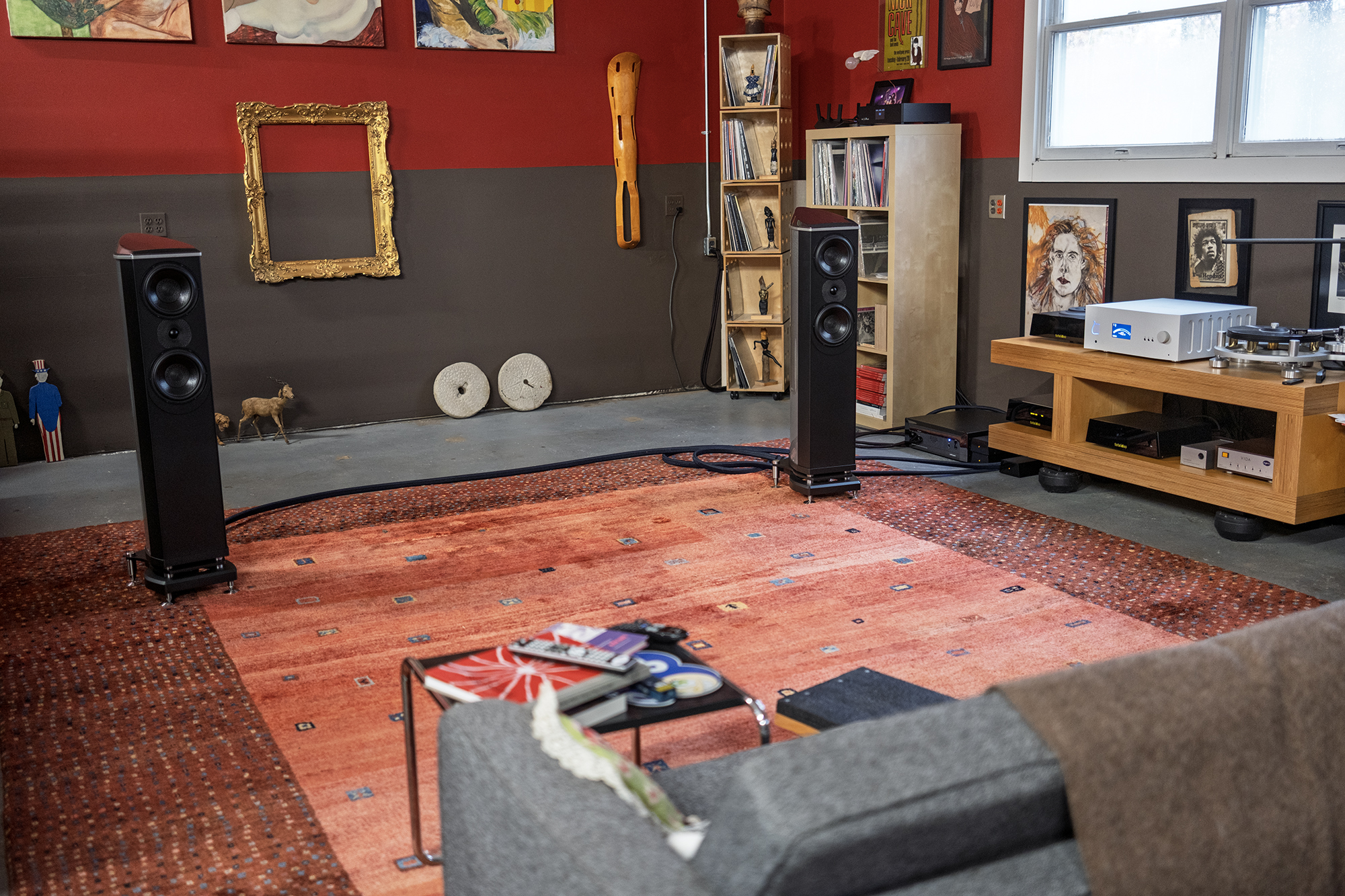
According to my preferences this made the Orpheus Lab integrated a more appealing partner for the DeVores while the Gryphon brought out a more balanced sound from the Wilson Benesch speakers even at lower volumes which is important to me. The Gauder and Thrax speakers arrived later in this review cycle so I don’t have much to add to these findings as they remain consistent from the perspective of each amp’s qualities which came through on the overall sound.
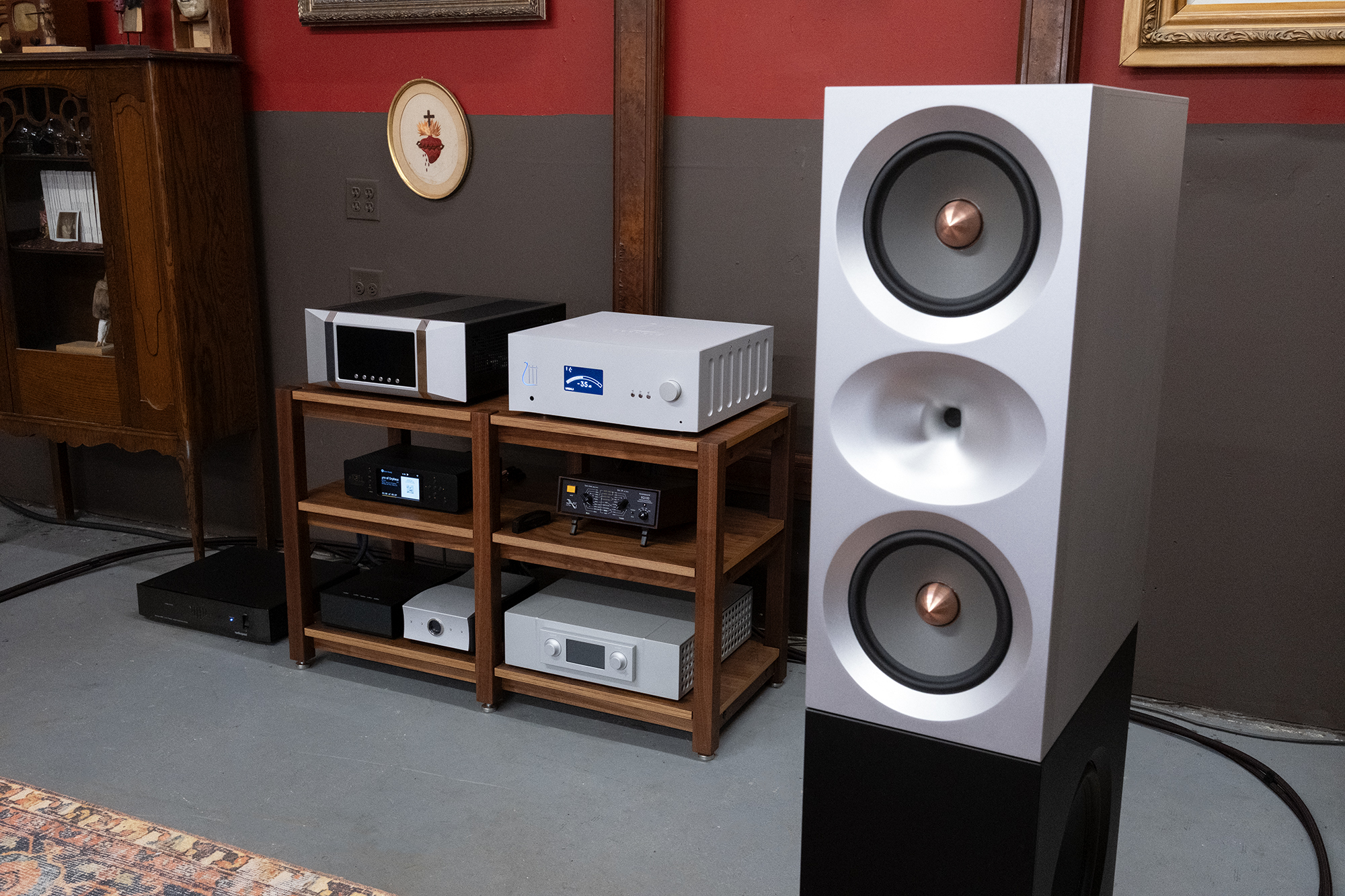
I will share that the Gauders sound—very much like their smaller siblings the Capello 100 I reviewed back in January (review)—big, bold, and punchy as all get-out and the Diablo 333 brought out these qualities to a greater degree than the Absolute Integrated. On the other hand, the Thrax LYRA SE w/HADES subs offer a thrilling level of resolution and immediacy and the Orpheus Lab’s sweeter and silkier character made them the more engaging match. Horses for courses (and speaker).
In any event, I feel confident, barring speakers with unusually difficult loads dipping into the 2 Ohm and below levels, you can feel free to transfer the qualities I’m ascribing to each amplifier more broadly.
The sound of the Orpheus Lab Absolute Integrated Amplifier A Four I200 was entrancing and addicting no matter the speaker or music in play. Its standout qualities, the aspect of its performance I found the most appealing and unusual, was an almost liquid silken smoothness and ease that drew me into whatever music I was in the mood to enjoy and ingest. It has the power to drive any sensibly designed speaker and its build quality and appearance are first rate adding to the sheer pleasure of living with the Absolute Integrated these past few months. What a swellegant, elegant party it was.

Orpheus Lab Absolute Integrated Amplifier A Four I200
Price: $23,700
Company Website: Orpheus Lab
North American Distributor: Bluebird Music
Specifications
Input
Connections: XLR or RCA
Balanced input Impedance: 94 kΩ
Unbalanced input Impedance: 94 kΩ
Maximum Input Level (input Bal) 4.8 Vrms
Maximum Input Level (input Unbal): 2.4 Vrms
Grounding option (unbalanced only): Grounded : Signal ground connected to earth | Lifted : Separated ground and earth signal
Output
Nominal audio power (AB class): 200 W @ 8 Ohm
Instantaneous power peak (<200 ms): 850 W (max 56.7 Vpic, 15 Apic)
Bias current: 125 mA
Thermal Idle power: 15 WPC
Frequency range (-3 dB): 0.7 Hz to 85 kHz
Frequency range (+0 dB, -0.1 dB): 5 Hz to 24 kHz
THD+N @ 200 W per channel into 8 Ohm: 0.004 % (-88 dB) @ 1 kHz, analysis range 20 Hz to 22 kHz
THD+N unloaded 0.001 % (-100 dB): @ 1 kHz, analysis range 20 Hz to 22 kHz
Clip to Noise Ratio (input Bal): -114 dB
Clip to Noise Ratio (input Unbal): -113 dB
Gain unbalanced: 18.5 dB
Gain Balanced: 24.5 dB
Output impedance: 0.0 Ohm
Damping Factor: > 3000
Headphone
Headphone impedance range: 32 Ω to 600 Ω
Noise Level: -96.2 dBu (12 uVrms)
THD+N @ 32 Ω: < 0.0009 % (-101 dB) @ 1 kHz
THD+N @ 600 Ω: < 0.0009 % (-101 dB) @ 1 kHz
Technology Used
Unique bias circuit guarantees a constant high bias current in all situations
Real dual mono topology with 6 High resolution MOSFET per channel
Each audio channel is powered by its own 880 VA toroidal transformer and 48 mF of dedicated capacitance, ensuring exceptional
Power
Nominal line voltage: 115 Vac or 230 Vac
Input voltage range: -15%, +10 %
Maximum power consumption: 950 W
Size & Weight
Height: 179 mm x Depth 420 mm x Width 440 mm
Weight: 36 kg