
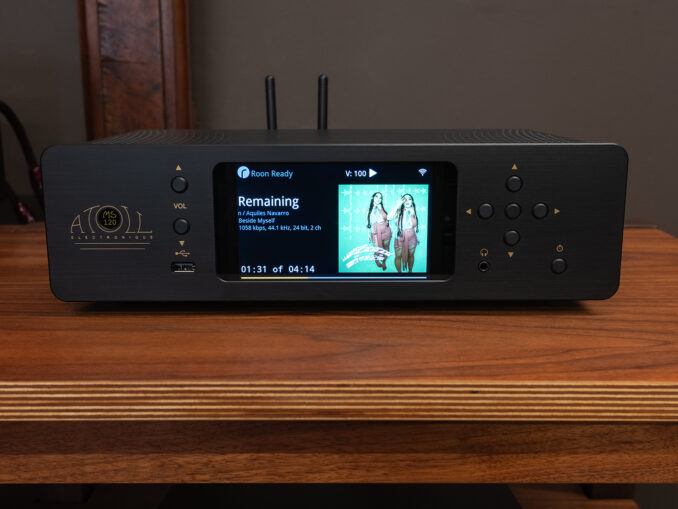
Color me impressed. Again.
Here’s what I concluded about the Atoll SDA300 streaming integrated amp when I reviewed it back in December 2024:
Rich, refined, and deeply rewarding. And smooth. And by rich, I’m talking about the winning combination of tone, texture, and heft that imbues reproduced music with earthy appeal. Weighty in the deepest sense of the word when talking about the enjoyment of music.
I could easily, very easily, say these very same things about the MS120 Streaming DAC.

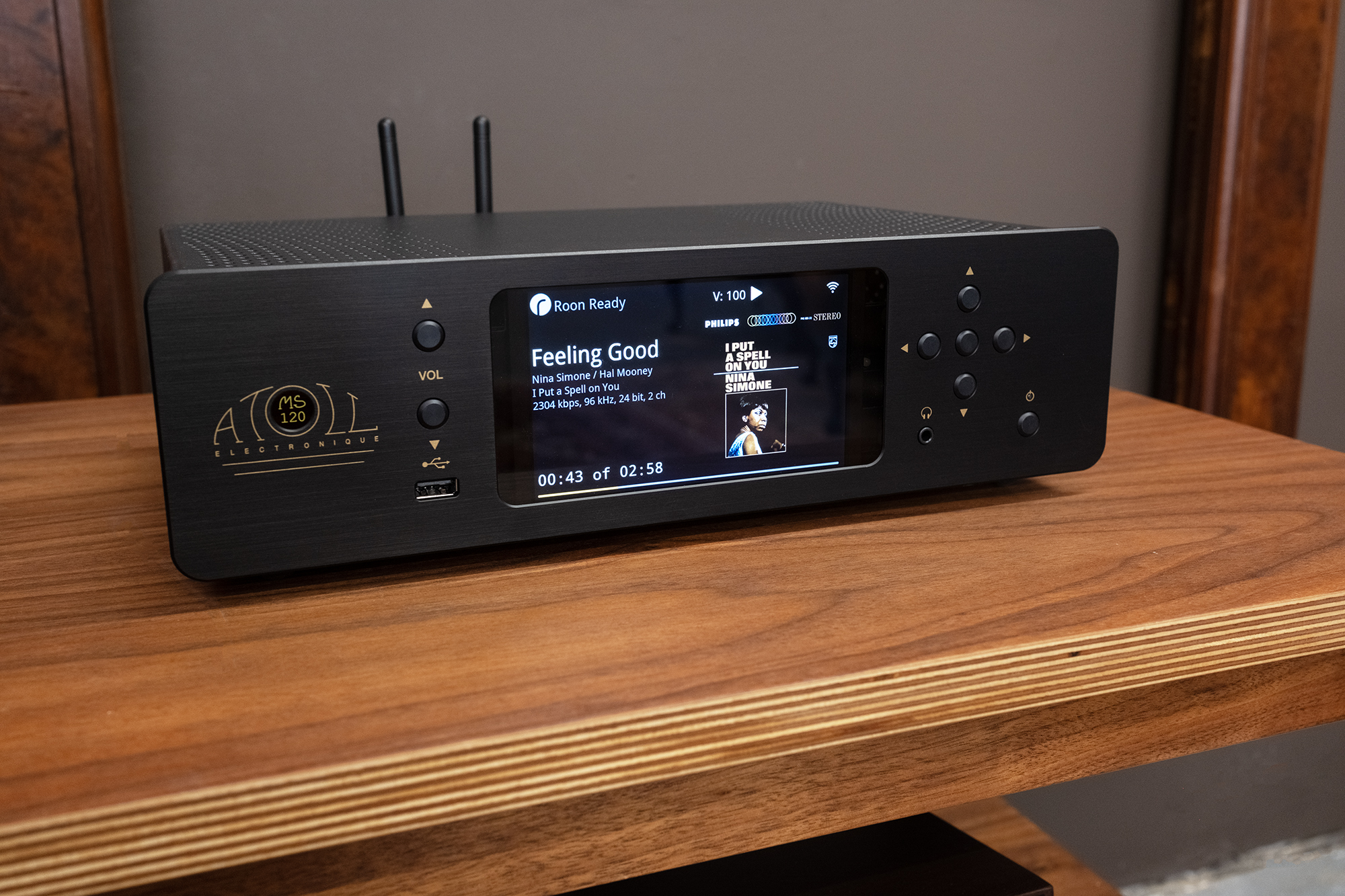
The Atoll MS120 Streaming DAC is Roon Ready, offers the triple crown of Connect apps (Tidal Connect, Qobuz Connect, and Spotify Connect), DLNA/UPnP support, Plāys with Audirvāna, Internet Radio, and more via the free ATOLL Signature 2 app for Android and iOS.

Dual antennae bring in WiFi and Bluetooth (4.2) (I always go with wired Ethernet) but the back panel surprise includes not one but two line level RCA inputs which makes the MS120’s analogue volume control make even more sense as you can run your turntable, for example, through it when paired with a power amp. You’ll also find 2x Optical and 2x Coax inputs (there is no USB DAC input), a pair of RCA outputs, on/off switch, IEC inlet, and a USB Type-A for connecting USB storage.
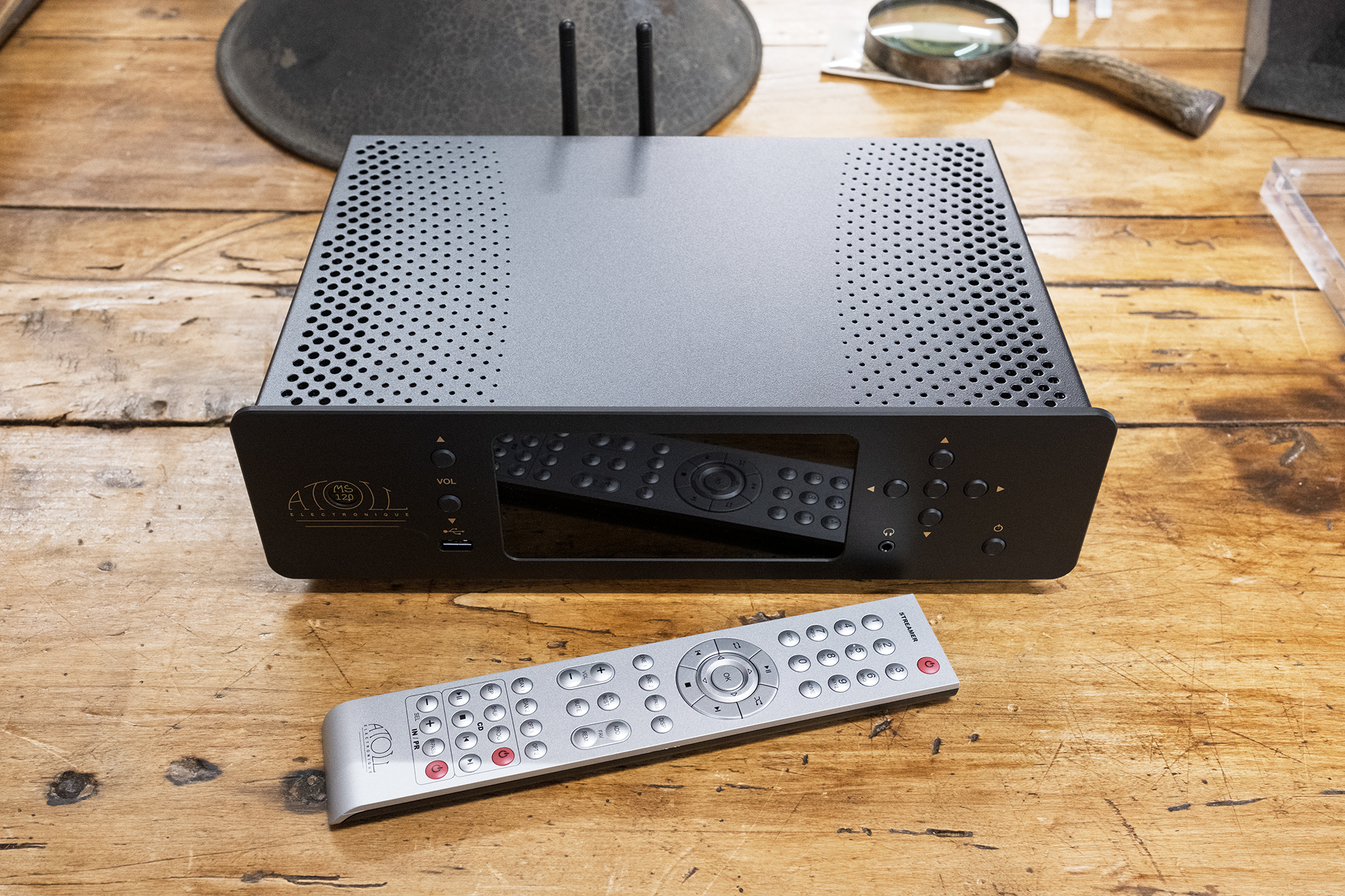
The included remote provides functions that mimic the front panel buttons and more including putting an analog input in By-Pass mode for use in a home theater while it the remote can control other Atoll products as well. I will also note that the analog volume control can be bypassed for those who prefer to do that elsewhere, which is exactly how I used the MS120 for the duration of this review.
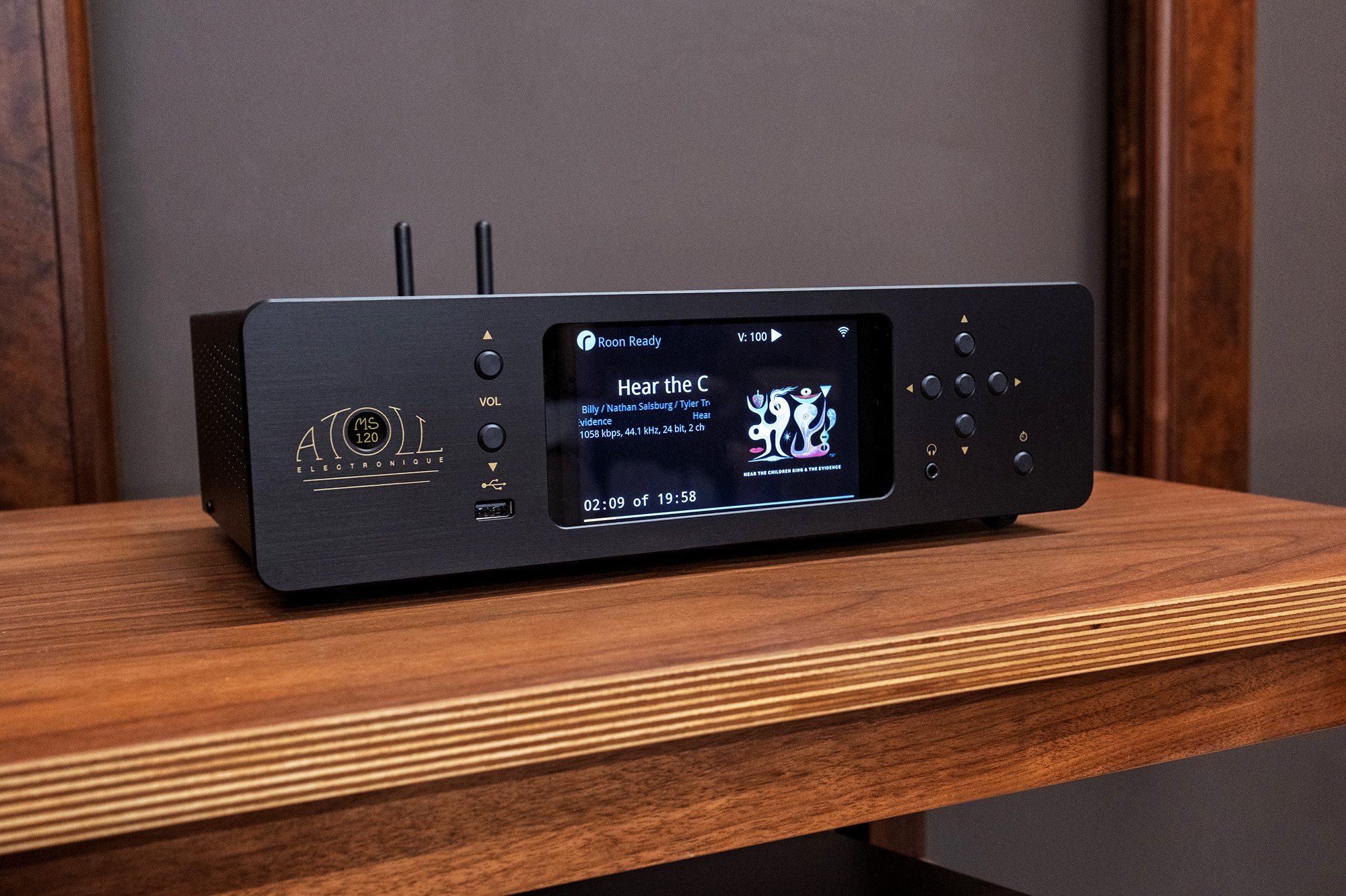
I enjoy the MS120’s squat appearance, it measures about 12.5″ across, 8″ deep, and 3.5″ high, as well as it’s nice build quality and design flourishes including the hole pattern up top and that funky fantastical Art Deco inspired font for the company logo and model name.
Atoll Electronique was founded in 1997 by Stephane and Emmanuel Dubreuil and their lineup currently consists of about 40 products which are all hand made in the company’s Normandy, France facility while many of the parts that go into and around Atoll gear are sourced within France.
From the company website:
Our production is completely carried out on-site. We also subcontract specific parts in France, which account for almost 80% of the product’s value. The chassis is manufactured in Bretagne, the aluminium front facades are in Lorraine, the printed circuits are in Pays Basque, the transformers are in the Rhône region, and the packaging is in Normandy. This approach provides reliable and consistent quality, quick response times, and excellent flexibility in meeting demand.
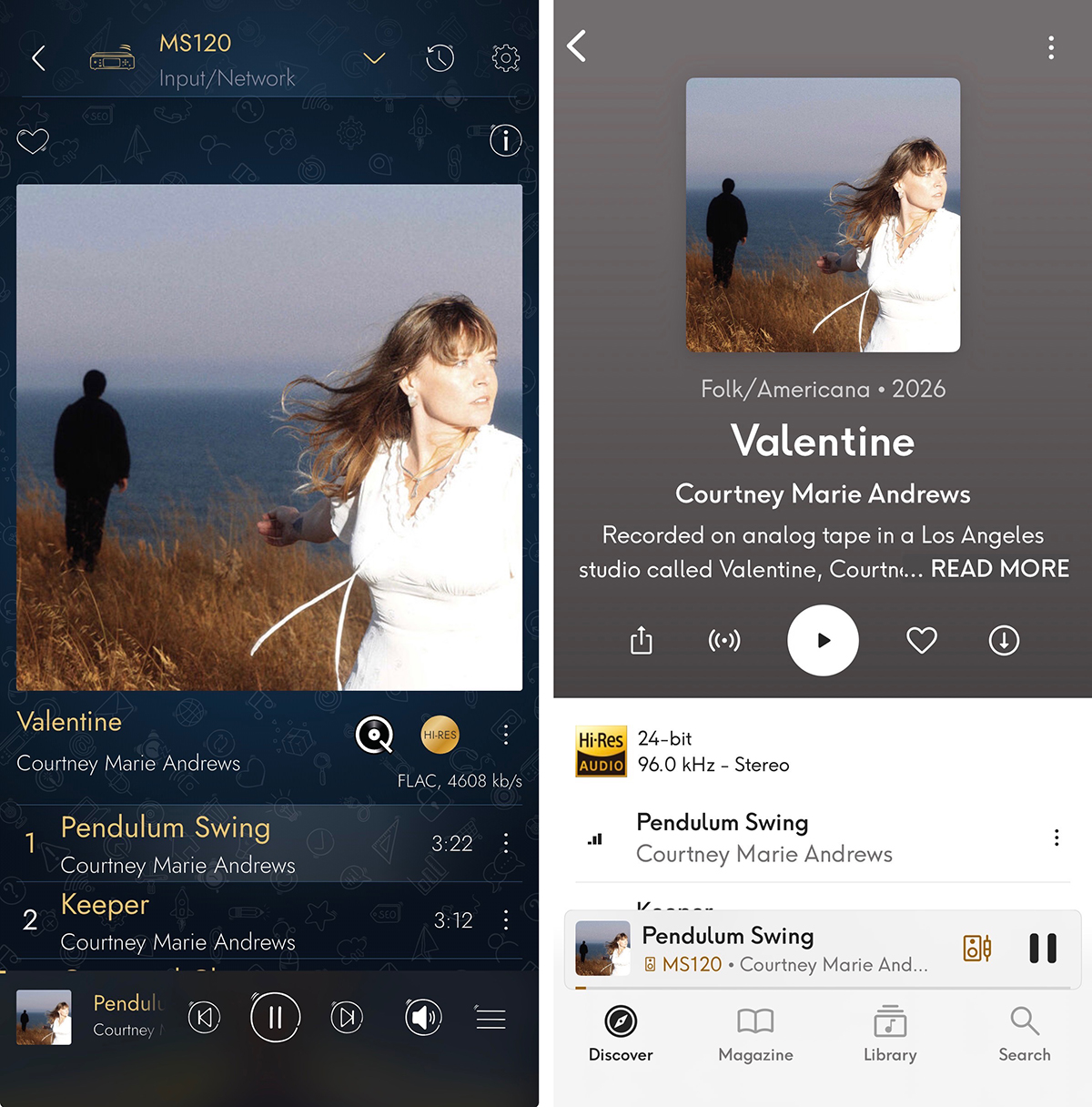
For the record and sake of completeness, I did take the Atoll app (left) for a spin as well as Qobuz Connect (right) and found both to be a pleasure to use. Just not as pleasurable as Roon and the only catch is Roon is far from free.

In addition to that nice 5″ TFT LED color display (800*480), there’s another USB Type-A input up front also for attaching USB storage, a headphone jack, and a number of function buttons for volume control, input selection, on/sleep (for off use the rear panel power switch), and menu navigation. The menu provides access to a number of features including selecting and setup for wired or wifi connectivity, network info, a choice of languages, rename analog inputs, firmware updates, balance control, digital output volume (variable or fixed), and power management. All of these functions are also available through the free Atoll Signature app.
Since I always run with a wired connection and Roon in control, set up for the MS120 was plug and play. I will share that even though I spent the better part of 18 years working in IT and more than 6 years focused on digital audio as the Editor of AudioStream, I smile every time I plug in a Roon Ready device and hit play a minute or so later.
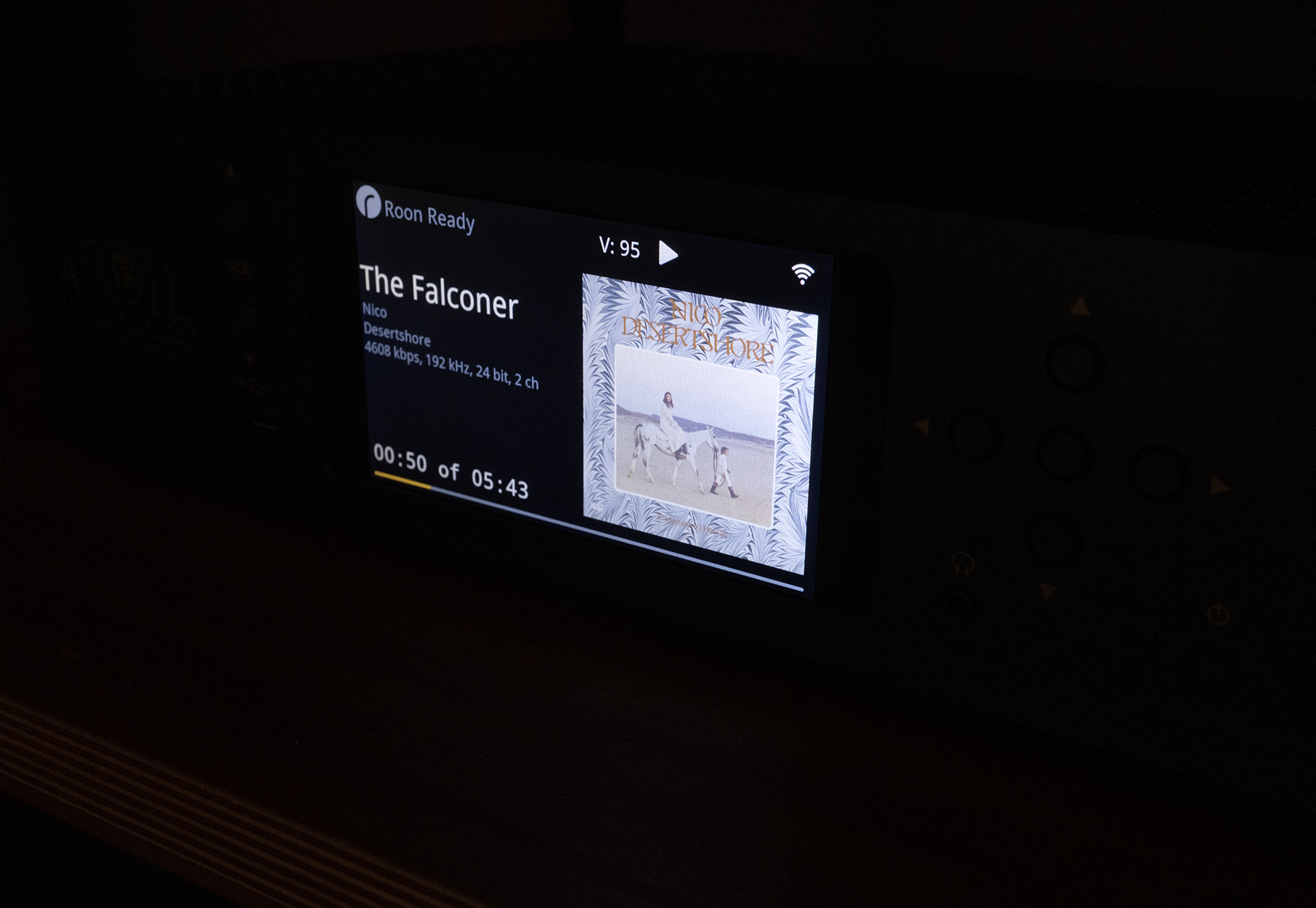
It has been my experience that some digital products make music sound very nearly hyper-real, more human than human. When this is the case, I tend to shy away from listening over long periods of time because all that extra detail and finely etched resolution just gets tiring. It wears, it grates. What’s more, this kind of presentation makes me cautious when using the volume control in anything but a measured and hyper-careful manner for fear of ear bleed. OK, that is a slight exaggeration, at least the blood bit, but I bet most of you know exactly what I’m talking about, especially those of you who also enjoy listening to records.
Thankfully the Atoll MS120 offers the opposite of that caricature as its sound is rich, refined, and deeply rewarding. And smooth. And by rich, I’m talking about the winning combination of tone, texture, and heft that imbues reproduced music with earthy appeal. Weighty in the deepest sense of the word when talking about the enjoyment of music. Where have I heard that before?
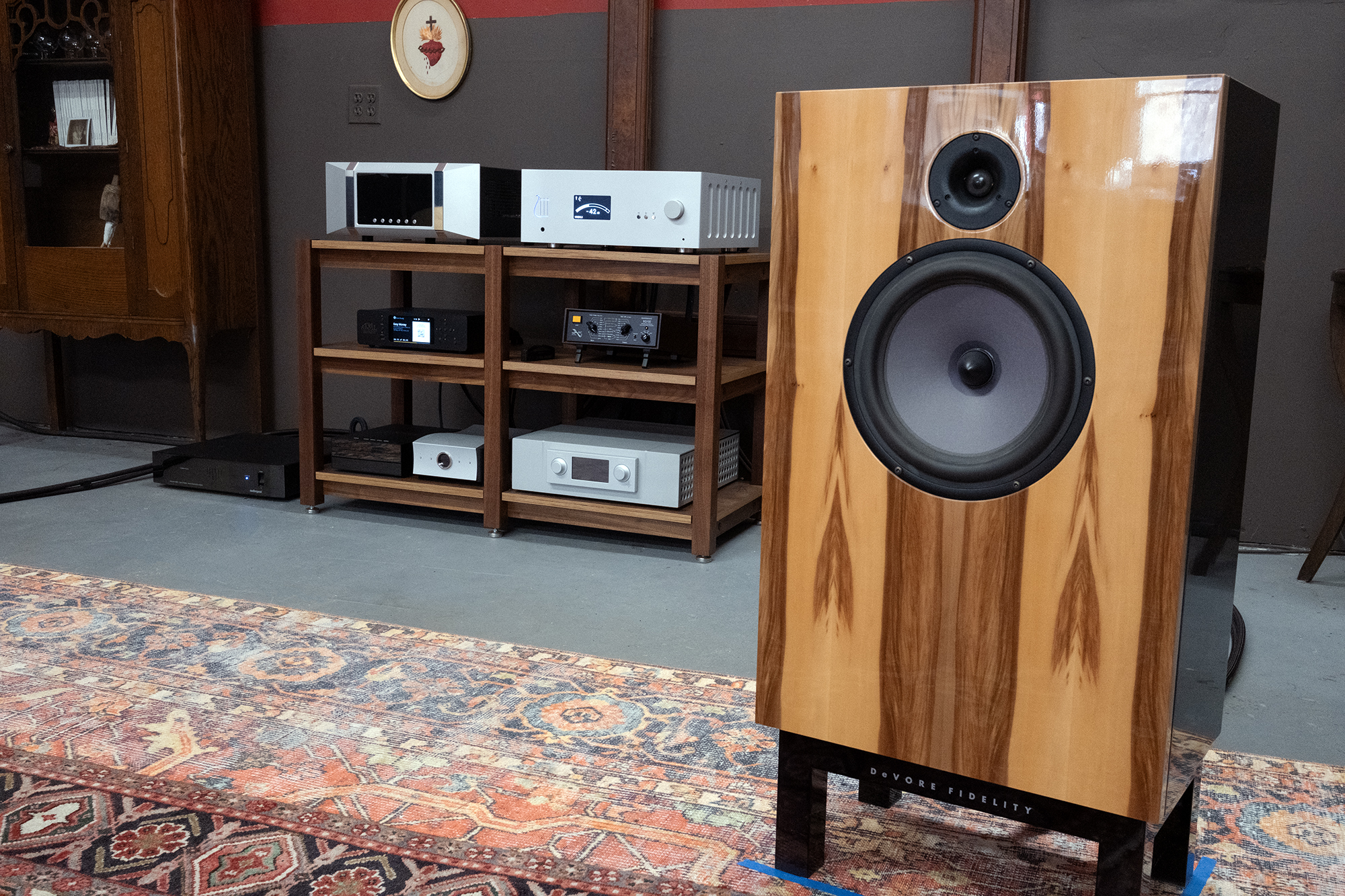
The Atoll MS120, which spent quality time in a few system settings on the Barn’s B-Side which included, but were not limited to, the Barn resident DeVore O/96 (review) powered by the recently reviewed and lovely sounding Orpheus Lab Absolute Integrated (review) as well as the Thrax Enyo Integrated (more info)/Thrax LYRA SE Loudspeakers & HADES Passive Subwoofers (more info) combo with all cabling from AudioQuest including their new and pretty spectacular Brave Heart speaker cables (see full Barn and system details).
I will note that I gave the Atoll’s volume control a spin by maxing out the Enyo’s volume and loe and behold I preferred the Thrax by a country mile which comes as no surprise as I’ve yet to meet a DAC with a volume control that I prefer over a preamp or the integrated amp’s own.
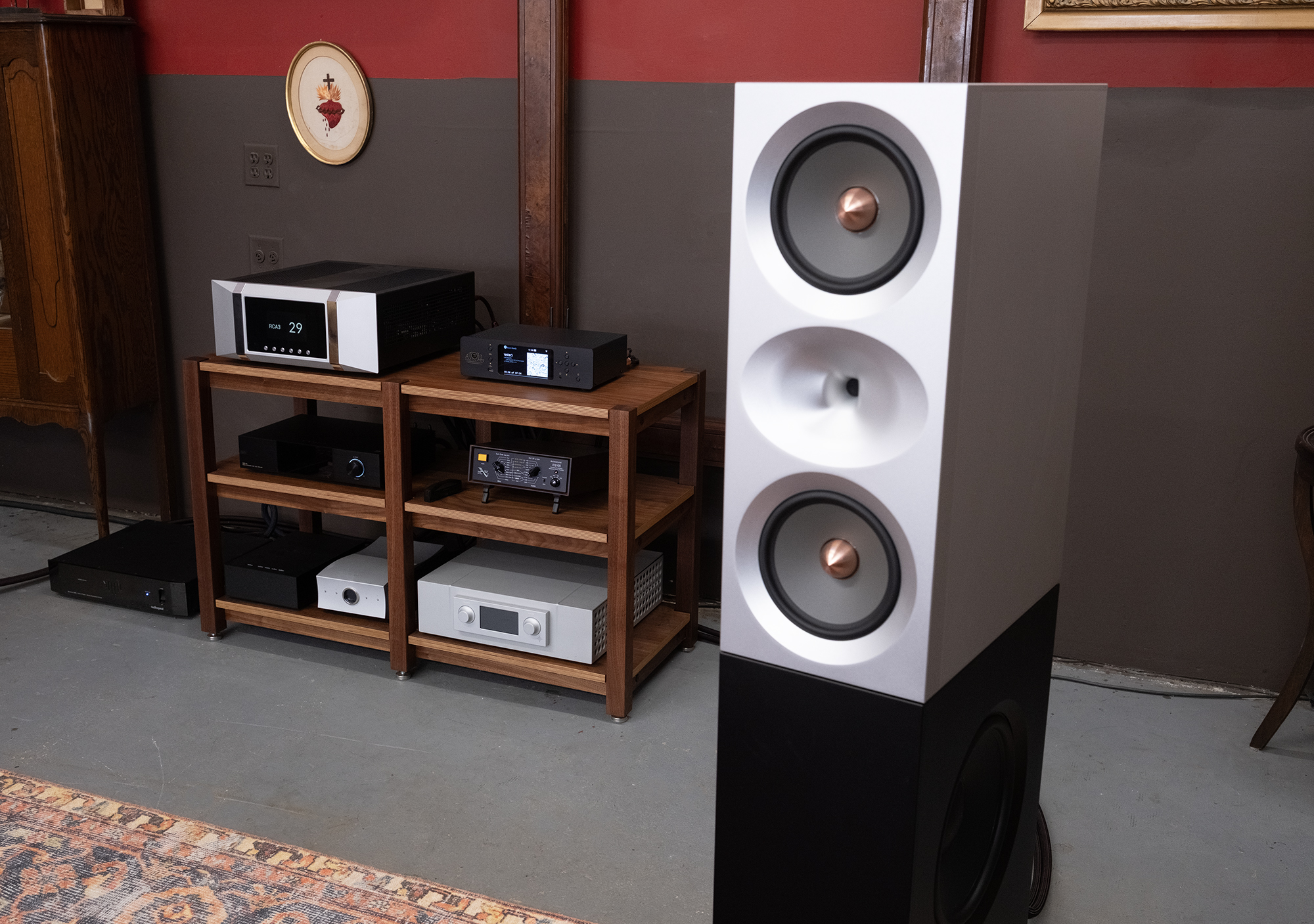
One thing I want to say about these two systems is they offered very nice, and kinda perfect, system settings for me to zero in on the qualities of the Atoll MS120 because I am a) intimately familiar with the DeVore O/96 having lived with them for years and b) the Thrax system is very transparent and revealing in the best possible ways. These systems are also much more costly as compared to the Atoll’s $1599 asking price but it nonetheless did not sound out of place. Granted, more costly DACs like the Barn resident totaldac d1-unity (review) and the shockingly good (so far) Imersiv D-1 (more info), both coming in around the $12k mark, offer more of everything when it comes to the sounds that make up music but that’s to be expected by all but the most fervent conspiracy theorists and bits ‘r bits extremists. Harumph!
I’ve been obsessed of late with two two-song releases—one titled Hear The Children Sing The Evidence by Bonnie “Prince” Billy, Nathan Salsburg and Tyler Trotter which I’ve written about before and the other, an EP, is from Marisa Anderson and Tara Jane O’Neil named after the Cole Porter tune “You’d Be So Nice to Come Home To”. Marisa Anderson is a classically trained musician who nonetheless plays in the style of ‘American primitive guitar’, think John Fahey, while Tara Jane O’Neil is a multi-instrumentalist, composer, audio engineer and visual artist here lending her voice and guitar to these simple proceedings. This record is also very well recorded with Anderson’s intro on “You’d Be So Nice…” practically leaping out from the speakers into the room, or Barn, and the Atoll DAC didn’t leave me wanting. As a matter of fact, I was moved from the get-go all the way through “You’d Be So Nice to Come Home To” and its pure sweet sentiment.
I’m sure I’ve mentioned this before but I love a good cover (or interpretation), whether staying true to the original, see Chet Baker and Elvis Costello’s You Don’t Know What Love Is, or one that strays as far from the original as is musically possible. Here, Anderson toys with the melody of “You’d Be So Nice…” in her intro, skirting around it like a cat with a ball of yarn so when she finally settles into accompaniment mode, settling into that well known melody, it feels like a prize, a reward and hommage to Porter’s lyricism. Nice. And all of this drama, anticipation, and reward come through the Atoll MS120 with real emotive appeal and I attribute this response to its timbral rightness and brightness that makes strings glint with a natural light.
Guatemalan cellist and vocalist Mabe Fratti remains a favorite and here we’re going back to 2021’s Será Que Ahora Podremos Entendernos, a record I find simply stunning for its overactive imagination and searing, searching beauty. Grounded by Fratti’s cello, the album feels like a sonic odyssey as rich with color and life as a rain forest.
From the liner notes:
Using voice, cello, synthesizers and field recordings, her newest record which translates in English to ‘Will we be able to understand each other now?” is an exploration of communication, not only with others but also ourselves.
If you enjoy the music of Lucrecia Dalt and/or Juana Molina you’re going to fit right into Será Que Ahora’s many voices that the MS120 seemed to capture in all of their delicacy and detail with a rich warm touch that wouldn’t dent a butterfly wing. As I said, other DACs that cost more than the Atoll can bring out even more—more distinction between these many and varied voices, a greater sense of separation between them in space, and most importantly an even more visceral response—but I have to run up my list of Favorite Digital Gear all the way to the Aurender A1000 at $3850 (review) to find a meaningful improvement.

I enlisted the help of the Eversolo DMP-A8 Streaming DAC/Preamp ($1980 more info) for the purposes of a sound comparison to the Atoll. And I mean that literally as my focus here is on the sound quality of these two fine streaming DACs as opposed to a deep dive into the Eversolo’s deep feature set that includes DSP-based EQ and room correction, a very nice 6” LCD touch screen, optional internal SSD storage, HDMi eARC in and I2S out, and both single-ended RCA and balanced XLR inputs and outputs. To name but a few.
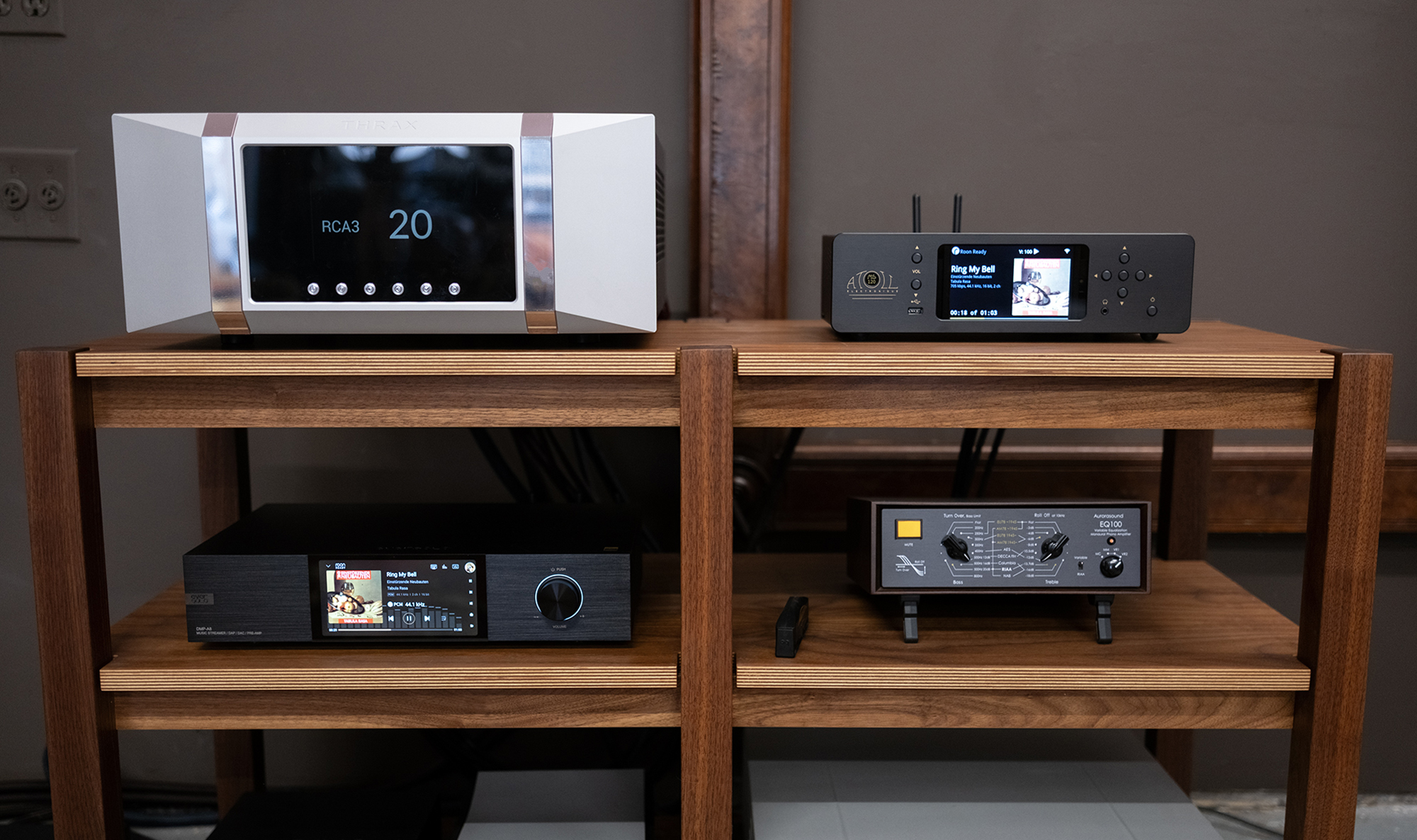
My initial impressions of the DMP-A8 remained unchanged over the course of the week or so I spent listening through it in the all Thrax system. The A/B’ing was easy peasy as I had the Eversolo and Atoll connected to my network and to the Thrax Enyo so I could go from A to B in a matter of seconds—change device in Roon, change input on the Thrax. Level matched, of course, unless I got excited and wanted louder or less excited and wanted softer.
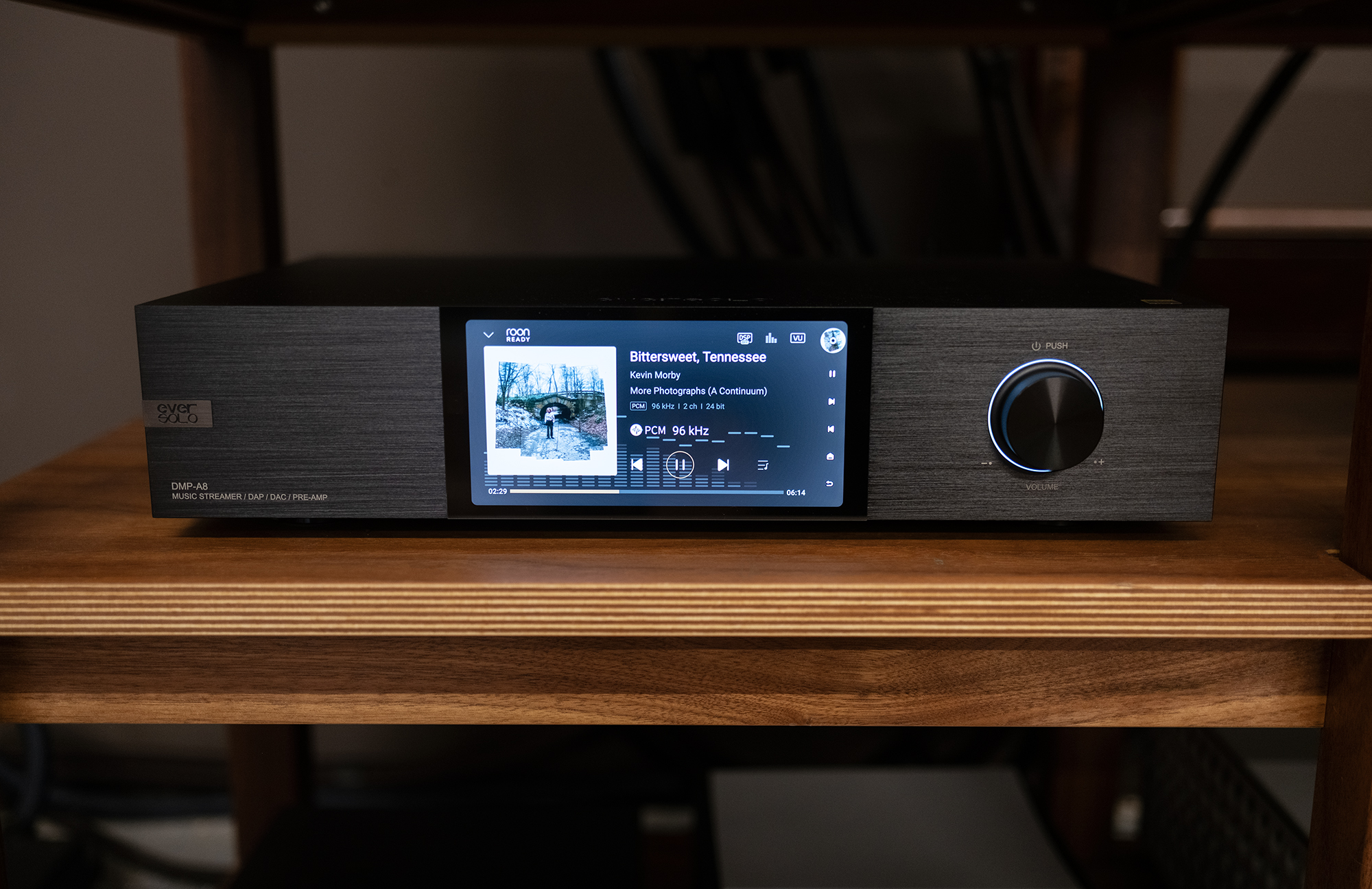
And my impression of the Eversolo placed it more toward the high resolution camp of digital products with very fine grained detail, super clean separation, and what I heard as a hint of hardness and a less weighty, less rich sound as compared to the Atoll. In terms of overall character, the Eversolo reminded me of the DACs from LAiV, I reviewed their Harmony (review) and µDAC (review), where the Atoll brought to mind the sound of the Wattson streaming DACs, I reviewed their Emerson Analog (review) and Madison LE (review).

And I bet you can guess where my tastes lean which is toward the Atoll and Wattson’s denser weightier richness. If you’re looking for a streaming DAC and don’t care about features like EQ or a display, take a hard look at the Wattson Emerson Analog. I’m sure others will prefer the Eversolo, especially considering its richer feature set, or the LAiV DACs for their sense of greater resolution and I suppose you could also get into system sound where the character of a DAC can be used to better accentuate, or tilt, the sound of a system one way or another like flavoring a bouillabaisse. But I’m not going down that road because I prefer to build a system with components and speakers that each exhibit the kind of reproduction I like.
These qualities exhibited by the Atoll of a richer, weightier sound which is also less hyper-real as compared to the Eversolo, brought out a more visceral response where instruments, voices, and other sounds simply felt more moving and present in a physical way where the Eversolo seemed to appeal more to a heady, intellectualized take. I also ended up turning up the volume on the Atoll without restraint and turning down the volume on the Eversolo when things got too aggressive. To put it in visual terms, picture a live performance in a comfortable intimate setting versus an operating room.
Let’s close out with something on the wilder side, DJ Haram’s debut Beside Myself from last year. This is big, bouncy music with deep bass and the Atoll ate it all up and I’ll add one more note on the Eversolo comparison—the Atoll does bass bigger and better. While I’ve heard a larger and more well defined sound image from this record through those more expensive DACs mentioned above, the MS120 doesn’t miss a beat, pounding pulse, or lightning fast attack. Dynamics are dead on even with this relentless music and there’s no sense of strain or excessive etch or thinness that can infest digital gear around this price even with the wild and worldly bombast on display throughout Beside Myself.
To my way of hearing, the Atoll’s big selling point is one of balance where its accumulated strengths outweigh any concern over what it’s not doing unless we bring in some much more expensive competition. All of this praise heaped on a streaming DAC that can also act as a preamp and headphone amp that costs a dollar shy of $1600 adds up to a true hifi bargain in my book.
Simply stated, Atoll has done it again with the MS120 Streaming DAC, a product I recommend without reservation for anyone shopping in this ballpark or the greater surrounding area. Well done!

Atoll MS120 Streaming DAC
Price: $1599
Company Website: Atoll Electronique
US Distributor Website: Audio Excellent
Connectivity
Audio Inputs
2 Stereo line inputs
4 Digital inputs: 2 Coaxial, 2 Optical
1 Bluetooth® 4,2 input
2 USB-A inputs (1 front, 1 rear)
Audio Outputs
1 Stereo line output
2 Digital outputs: 1 Coaxial, 1 Optical Toslink
Various
1 RJ45 input (network)
1 Trigger output (12V)
1 WIFI antenna (802.11b/g/n)
1 Bluetooth® antenna
Technical Data
Power supply: 9 VA + 7,8 VA (audio)
Total of capacitors: 5 435 µF
Output stages: 2 discrete component stages, biased in class A with no feedback
Dynamic: 123 dB
Output impedance: 22 Ω
Maximum input level: 3,5 Vrms
Output level: 2,8 Vrms
Signal/Noise ratio: 123 dB
Distortion at 1 kHz: 0,0005%
Bandwidth: 5 Hz – 20 kHz
Rising time: 1,7 µs
Digital/analogue converter: BURR-BROWN PCM1796 24 bits/192 kHz – DSD128
Dimensions: 320×210×94 mm
Weight: 3 Kg