
If you read damn near any article about the state of hifi affairs you will most certainly be led to believe it is, at best, on life support.
A dying hobby, passing away with all the old audiophiles typically portrayed as socially inept basement dwellers with soiled pants.
I offer Exhibit A from “Lucky Alan,” a short story by Jonathan Lethem that appeared in The New Yorker, March 19, 2007:
“Blondy watched this proud, drum-tight personality fidget past him on the street and began projecting; he couldn’t help it: an unfinished degree in journalism, concerned married sisters in New Jersey or Connecticut (but probably New Jersey), weights but no cardio, aggrieved blind dates, Cigar Aficionado and Stereophile, takeout menus, acres of porn.”
Let’s face it—we’re an easy mark for people who have no interest in hifi.
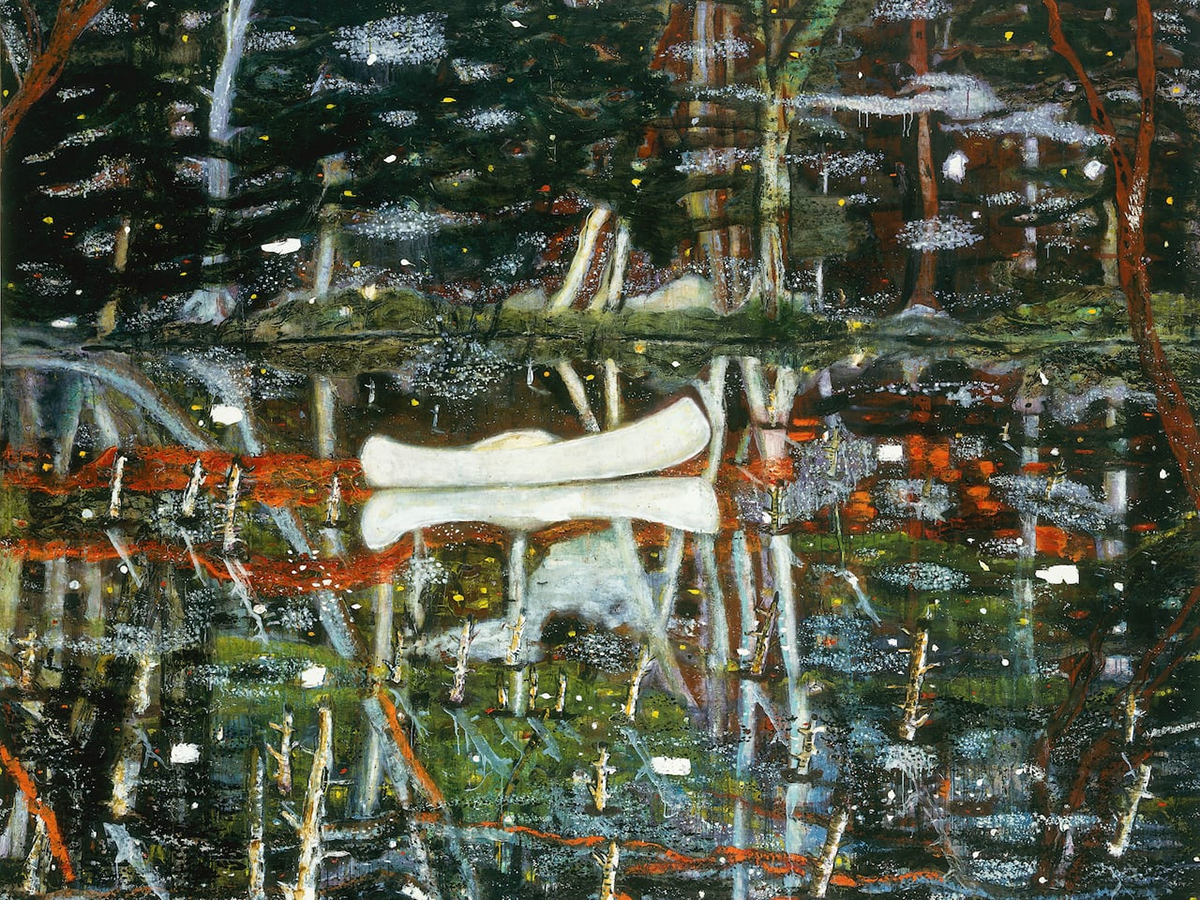
Do you know the artist Peter Doig? Doig first made news back in 2007 when his painting “White Canoe “ sold at Sotheby’s for $11.3 million, an auction record at that time for a living European artist (his painting “Swamped” sold for $39 million at Christie’s in 2021). I find Doig’s paintings fascinating—uncannily familiar yet unique as if he’s describing the world in a foreign language that I somehow understand.
Back in the late 2000s I was hanging out at NYC dealer In Living Stereo talking to owner Steve Mishoe when a very polite guy came in asking about getting his vintage EMT cartridge retipped. After he left, Steve said, “Do you know who that was?”
“No.”
“That’s Peter Doig. The painter. One of his paintings sold for something like 11 million at auction.”
Steve also studied art.
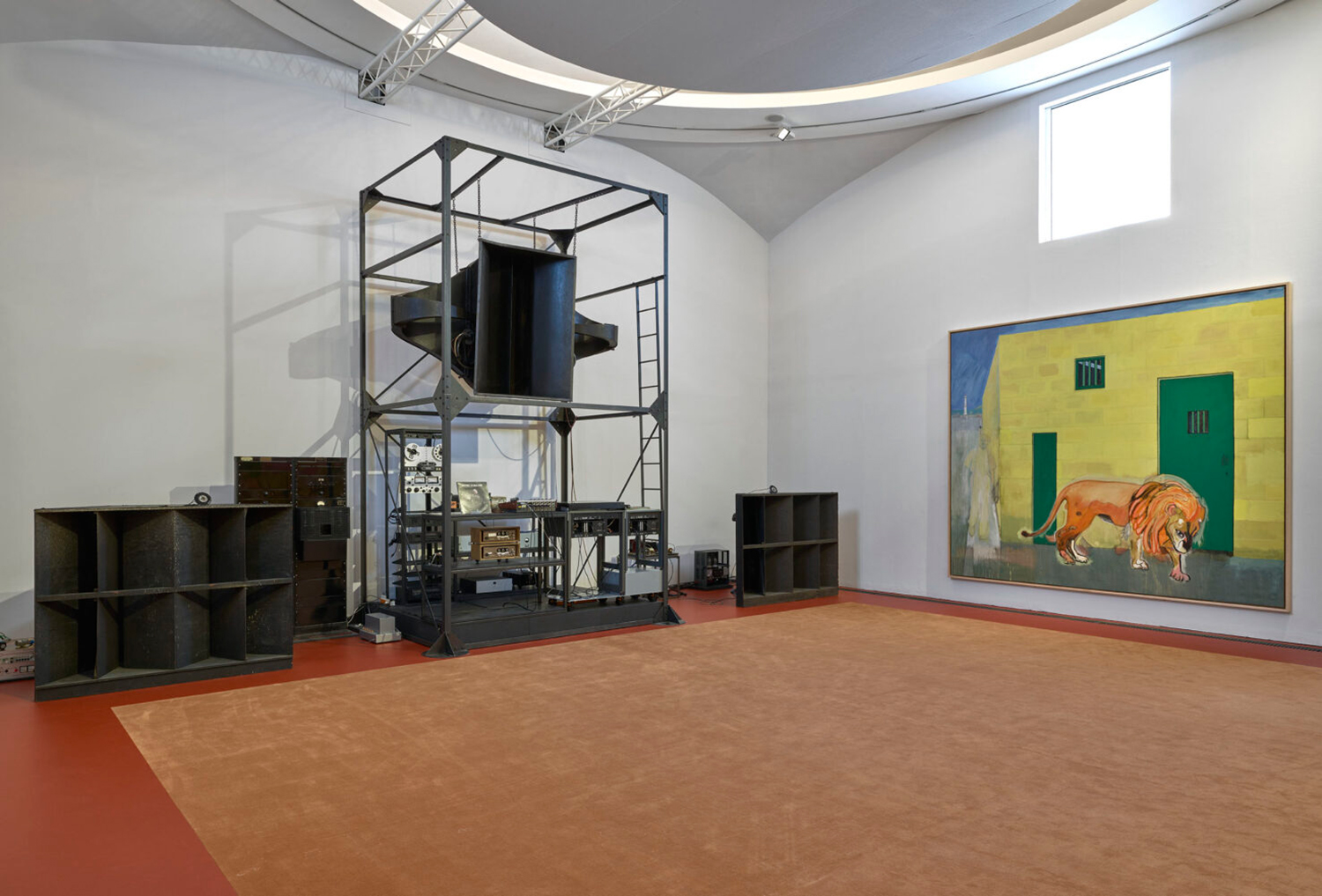
Which brings us to the Serpentine South Gallery in London and their exhibit Peter Doig: House of Music which runs from 10 October 2025 – 8 February 2026.
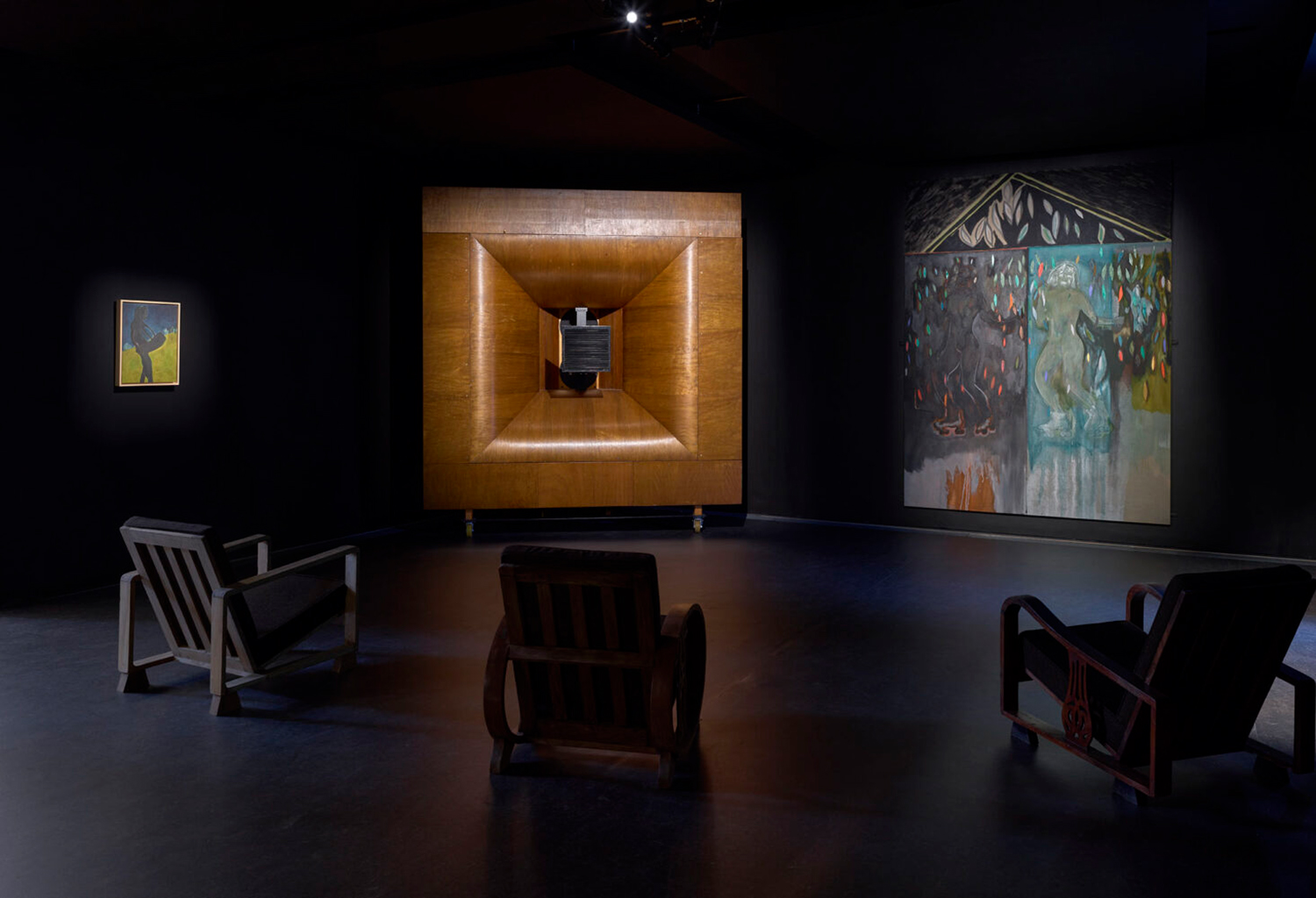
From the gallery:
Serpentine presents a new project by Peter Doig that explores the role of music, film, and sites of communal gathering, listening and creative exchange within his practice.
At the centre of the exhibition is an original Western Electric / Bell Labs sound system, produced in the late 1920s and early 1930s. Developed to respond to the demands of modern movie sound, this extremely rare ‘loud speaking telephone’ consists of valve amplifiers and mains-energised field-coil loudspeakers, which were designed specifically to herald in the new era of ‘talking movies’. These speakers were salvaged from derelict cinemas across the UK by Laurence Passera, with whom Doig has collaborated closely on this project. Laurence Passera is a London-based expert and devoted enthusiast of cinematic sound systems. The speakers offer a unique listening experience due to the technical mastery achieved in their construction that places them as the great grandfathers of modern ‘hi-end’ audio.

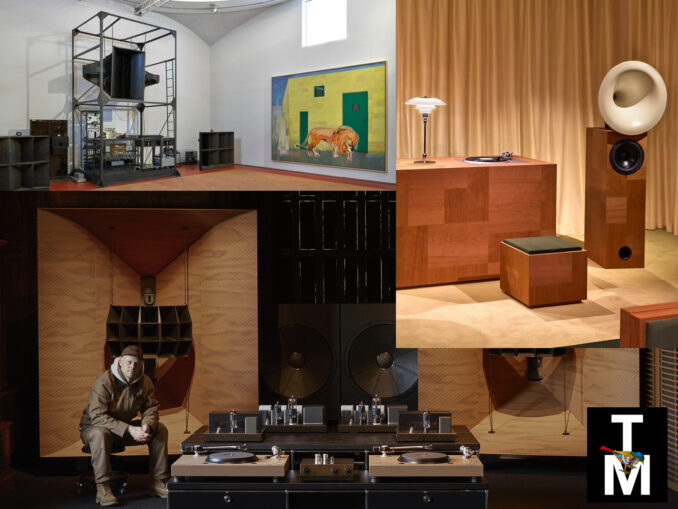
Of course two related hifi things come to mind—the Silbatone room at High End Munich (pictured from my show coverage) which remain among my favorites and the work and exhibitions of Devon Turnbull’s OJAS which have appeared in art galleries and museums the world over.

As I type, Devon Turnbull: HiFi Pursuit Listening Room Dream No. 3 is on exhibit at the Cooper Hewitt in NYC running through July 19, 2026. As you can see, Devon’s work also pays tribute to vintage hifi while treating the listening experience as something special, something that deserves time, attention, reflection, and thoughtfulness presented for an audience much larger than one.
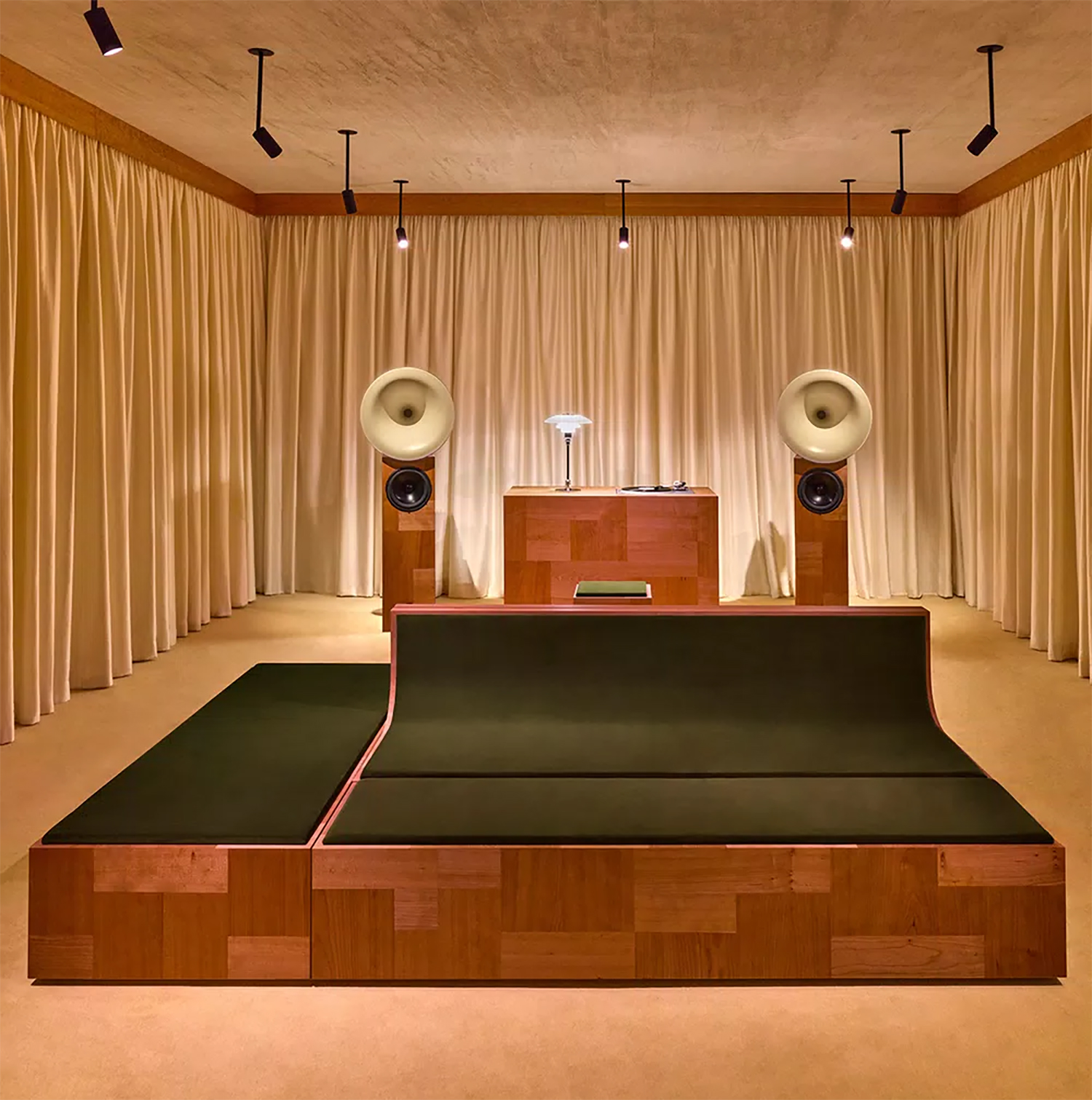
My pal Stephen Mejias sent me a link L’Atelier Sonore at the Valentino store on Madison Avenue in NYC:
Step into a sensory journey with L’Atelier Sonore, an immersive listening room open daily through August at Valentino Madison Avenue. Curated in collaboration with the Italian cultural collective Terraforma, the space offers a serene listening experience shaped by a bespoke playlist and custom-designed acoustics. Within a calming space, vinyl tracks create the ideal grounds for deep listening and quiet contemplation.
Launched with a live 10-hour program on May 15 featuring international artists including Laraaji, Lea Bertucci, Laurel Halo, Lizzi Bougatsos, Chuquimamani-Condori, Kevin Beasley, Veronica Vasicka, Physical Therapy, the installation now invites visitors into the store’s mezzanine floor for a continuously evolving audial landscape. Immerse yourself in a new dimension of listening, where silence, resonance, and presence converge.
I see all three exhibits as very positive hifi news but as sure as the sun will not shine, some audiophiles will be critical of these events. I’ve certainly heard my fair share of negative comments about Devon’s work from people who just don’t get it. And what they just don’t get is–context.

Context creates meaning, as French writer Jean Genet playfully pointed out, so if you look at any of these exhibits the same way you look at a system in a hotel room at a hifi show you are missing this important element of context. Imagine taking your favorite amplifier and putting it on the floor of a gas station restroom and asking people unfamiliar with hifi what they thought about it on their way out.
To my mind, by placing carefully curated systems in art galleries and museums as a communal event, the conversation about hifi changes for those who attend, especially for people who are unfamiliar with the audiophile bent. And this conversation revolves around the appreciation of art in the form of listening to music, something now experienced in the same context as painting, sculpture, and in the case of L’Atelier Sonore, fashion—with hifi being an essential ingredient in this experience (that’s the cool part).
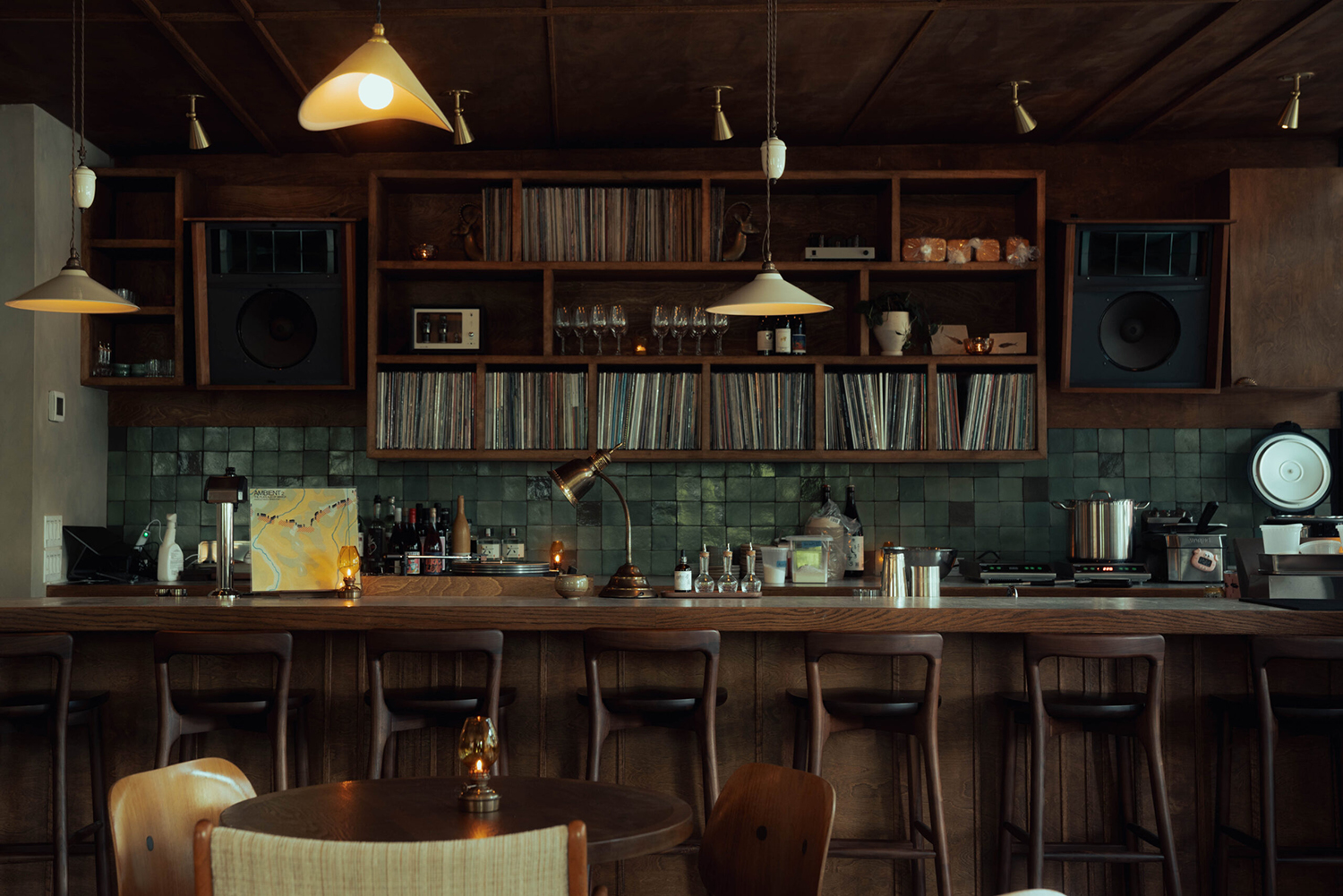
We can also add the proliferation of “listening bars” popping up across the US, our version of the classic Japanese “Jazz kissa”, as further examples of listening to music on the hifi as a communal activity reaching well beyond sound quality concerns and a solitary sweet spot. And in each of these cases—listening bars, art galleries, museums—this is happening well outside the established ‘hifi industry’.
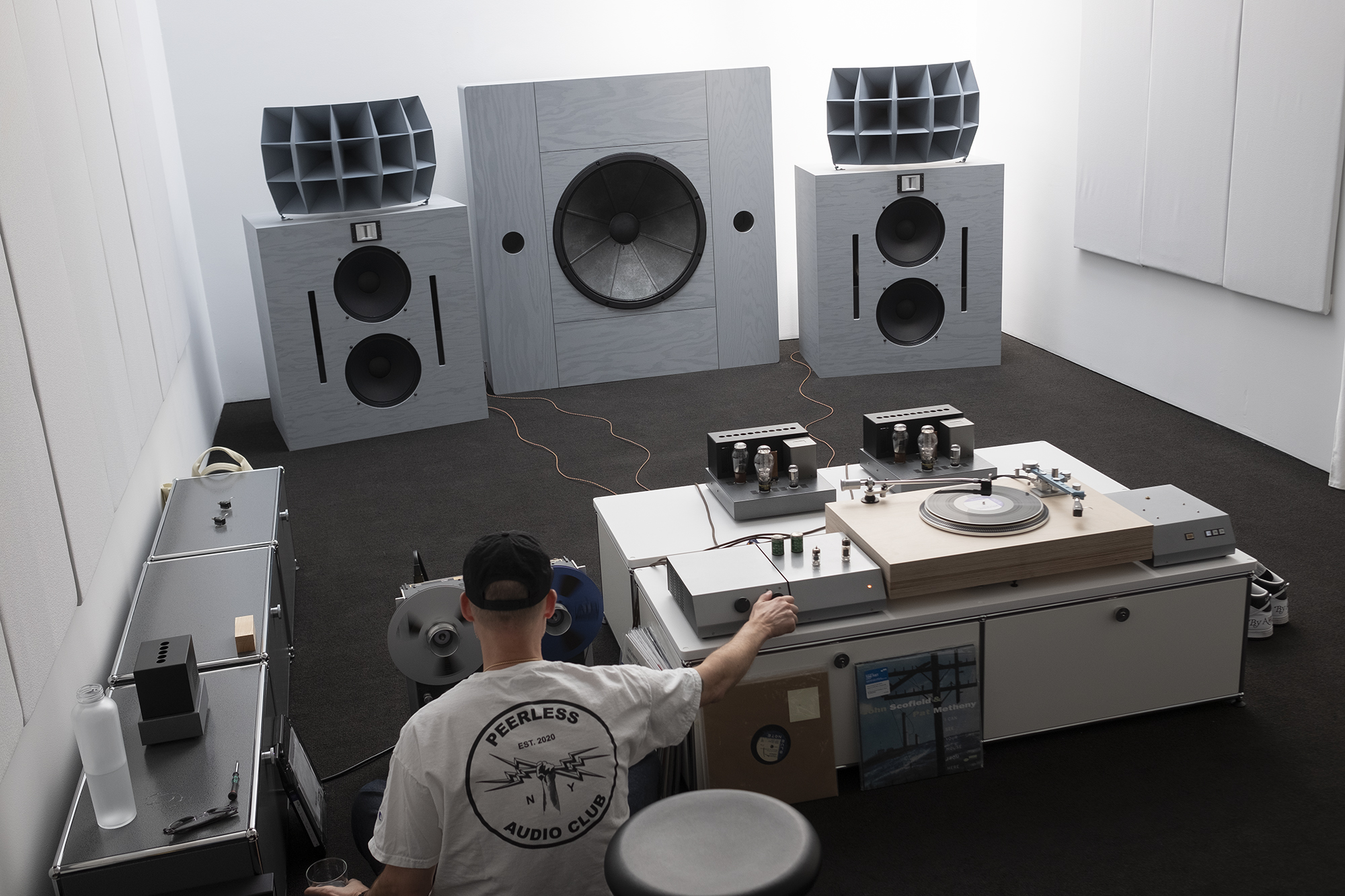
Regardless of sound quality-centric opinions, hifi and the listening experience in these exhibits have become part of a broader culture and conversation where aesthetics, history, and music come together as a way to enrich our lives. A way to slow things down and focus on the moment with more senses and sensations taking part.
“Every human being is an artist, a freedom being, called to participate in transforming and reshaping the conditions, thinking and structures that shape and inform our lives.” Joseph Beuys
Does this make hifi cool again? I think that’s the wrong question. This context and conversation helps us focus on listening to music as a shared experience that’s well worth our time and complete attention with the added elements of history, design, aesthetics and presentation also playing an important role adding up to a richer and more meaningful experience.
And the best part is we can each apply this approach to our own lives by simply taking care of and giving thought to the context we create for our listening.