

Or, how to make a good DAC even better.
I reviewed the original Wattson Madison Streaming DAC back in August of 2024 and had this to say:
I love a good streaming DAC and the Wattson Madison is better than good. Its combined strengths of musically illuminating clarity and refinement invited me into whatever worlds the music presented.
About a year later, in July of 2025, I spent time with the upgraded Wattson Madison LE (review) as part of a Wattson stack which also included the Madison Amp and remained very impressed with the pair as I was with the smaller and less expensive Wattson Emerson Analog (review). Winners all around.
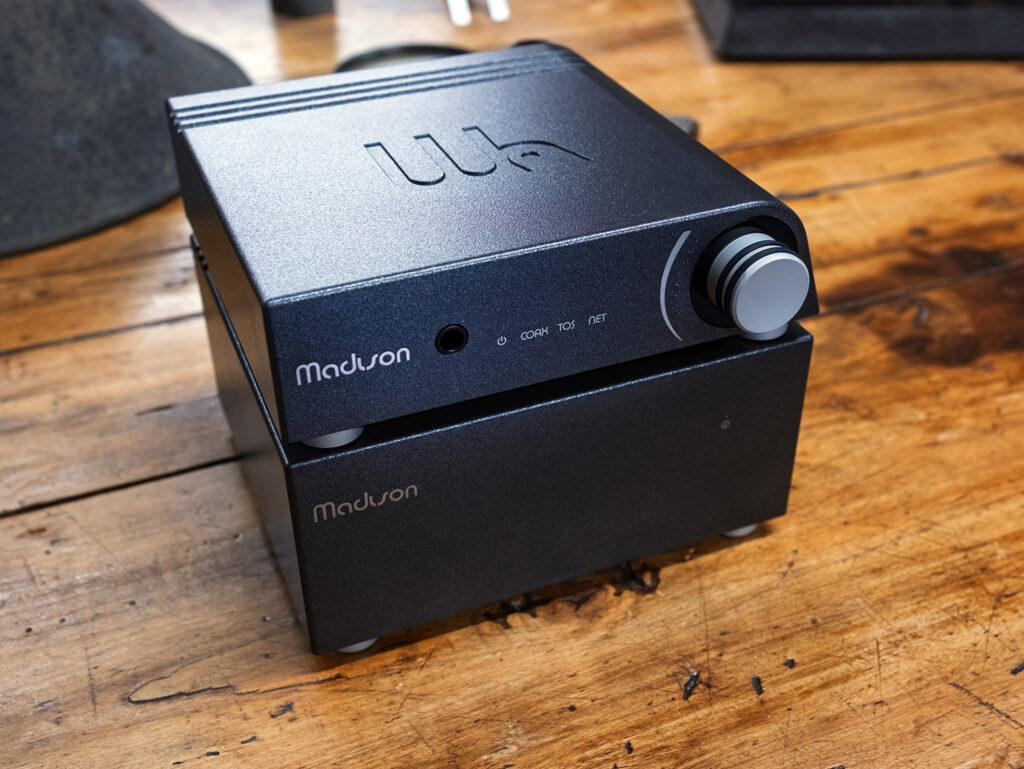
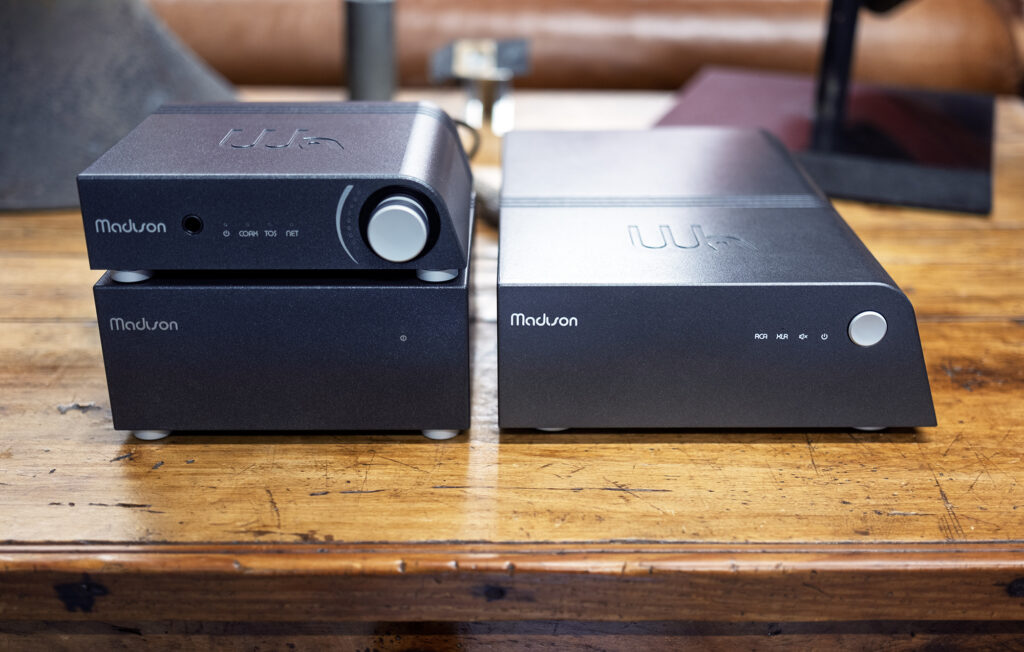
Wattson has since simplified their product line by offering just one version of the Madison which is essentially the LE without the “LE” so we have the Madison Streaming DAC and I’m going to direct to my review of Madison LE for the complete story on the Madison Streaming DAC. More to today’s point, they’ve added the Madison Power S to the lineup which was designed as an upgrade path for Madison Streaming DAC owners.
Would I like to review the Madison Power S along with the new Madison Streaming DAC?
Yes.
Wattson also sent along the Madison Amp so I could spend time with the latest and greatest stack but my focus here will be very narrow and answer the question—is the Wattson Power S worth buying? A seemingly simple question which I’ll answer right now in the affirmative—the Wattson Power S is worth it. For some speed reading skimmers, that may be all the information needed but for those of you who want to to know why I think that’s the case, read on.
As you probably know, Switzerland’s CH Precision acquired Wattson Audio in 2024 and as the Wattson website explains, the Power S includes some CH DNA:
Power lies at the foundation of musical performance. In Préverenges, Switzerland—where CH Precision and Wattson Audio share their headquarters, production, and engineering workshops—the same team of engineers and craftsmen pursue a single vision: a common language of precision and the belief that true musical expression begins with flawless power delivery.
At CH Precision, power supply design has been elevated to an art form—redefining how scale, speed, and silence can coexist within a digital source. The Madison Power S embodies this same philosophy, distilling that expertise into a compact, purpose-built supply for the Madison Streamers.
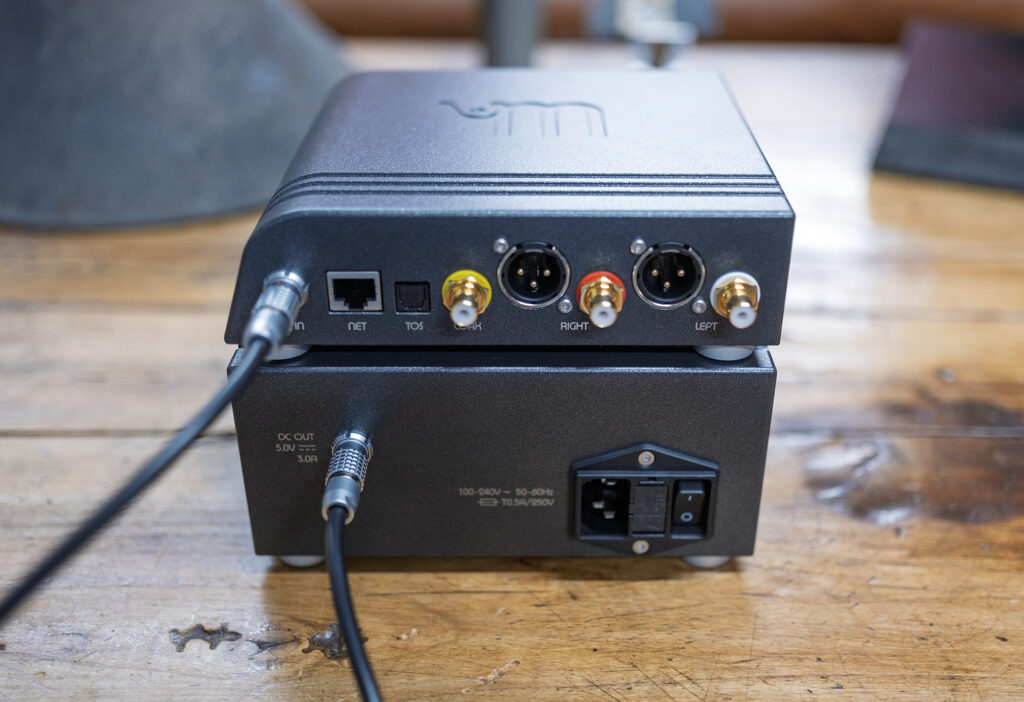
Moving the power supply outside and away from a DAC is a fairly common practice these days especially as we move up in price. The totaldacs, which I owned for about 11 years, take this approach as do many others and the main reason for this decision relates to noise and ultimately sound quality.
I’ll let Wattson explain:
At the input stage, a precision power line filter suppresses unwanted noise and high-frequency interference before it reaches the switched-mode section. The converted DC is then refined through a combination of passive and active filters, supported by substantial energy storage to maintain voltage stability under dynamic load conditions. The result is a foundation of exceptional purity and responsiveness—allowing the Madison Streamers to perform at their full musical potential.
The Power S’s output stage is governed by a discrete bipolar transistor regulator, delivering ultra-low noise and precisely controlled voltage. By avoiding the low-frequency hum inherent to conventional transformers, it ensures a cleaner, faster, and more immediate current response.
And here’s the claimed result, again from Wattson:
By lowering the noise floor and increasing dynamic headroom, the Power S reveals new layers of musical information. Dynamic contrasts become sharper, spatial cues more vivid, and low-level detail emerges from a quieter, blacker background. The result is greater dimensionality, a more stable soundstage, and a sense of effortless realism that deepens the emotional connection to the music.
Now I know some people have a difficult time wrapping their head around the notion of noise being an issue in a digital device—“it’s just 1s and 0s and my printer works fine without fancy cables or power supplies” goes the thinking—because they seem to forget about the “A” in a Digital to Analog Converter. I learned long ago, the hard way, that trying to reason with the 1s and 0s crowd is a waste of everyone’s time in the same way trying to reason with someone who believes climate change is a hoax because it still gets cold outside. So I don’t.
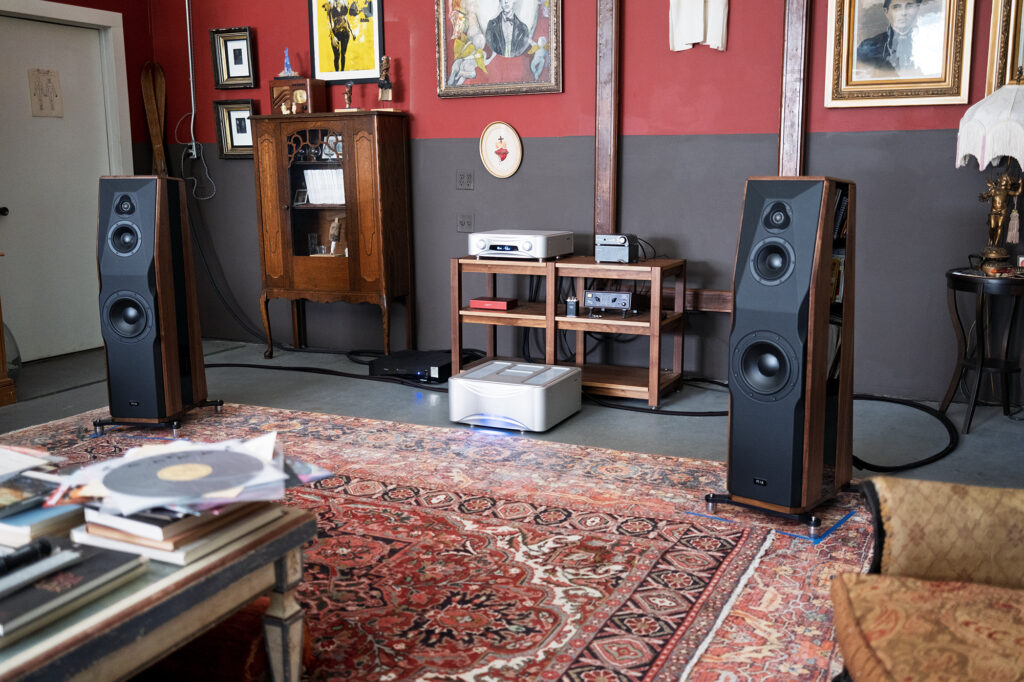
My approach to this review was in then out and repeat as needed and I didn’t need many repeats to hear the improvements that came with the Madison Power S in a few different system settings. These included using the Madison Streaming DAC and Power S as part of a system that included the Esoteric Grandioso stack (more info) driving the Peak Consult Sinfonia speakers (more info) and using the Madison DAC and Power S with the Aestheix Calypso Eclipse Tube Linestage and Atlas Eclipse Power Amplifier (more info) driving the Barn resident DeVore O/96 (review). I also added the Madison Amp to that mix.
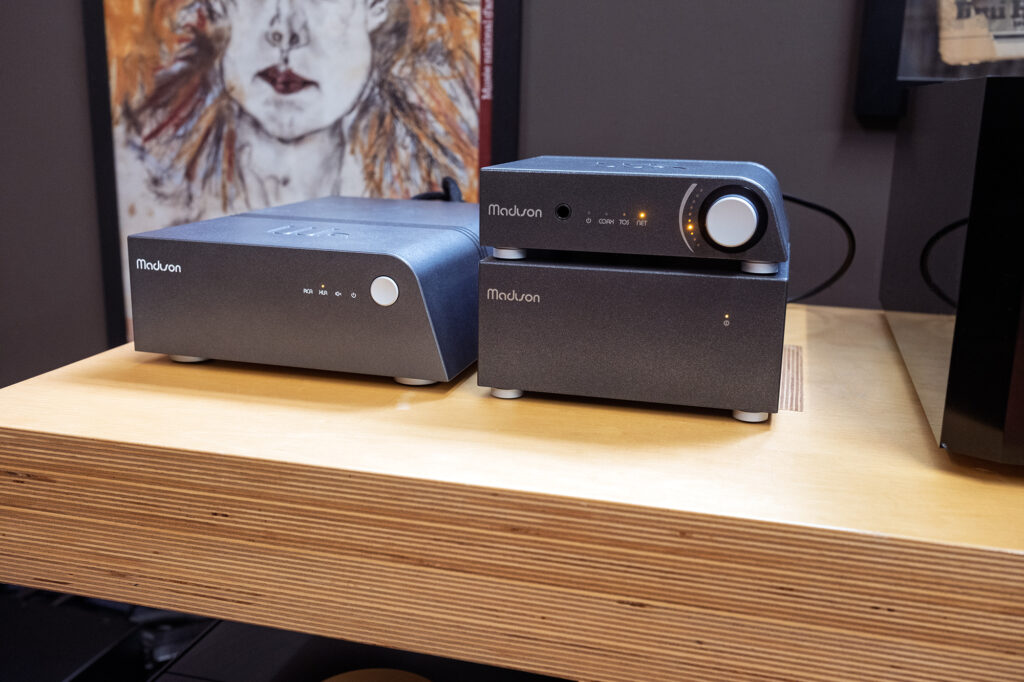
The Madison gear arrived here back in June and it spent its 2 months + of time mostly on the B-Side with the Esoteric/Peak Consult system but the improvements brought by the addition of the Power S were consistent no matter the system setting and I’m going to use just a few musical examples to explain these improvements.
I’ve been a Josephine Foster fan for many years, soon after being introduced to her lovely kinda quirky folk/roots music by my good friend Stephen who you know from his #NewMusicFriday column. Adormidera is her latest album, released on Seattle’s Eiderdown Records back in May.
From the liner notes:
As homage to her longtime collaborator, Josephine invited Spanish composer Víctor Herrero to curate a selection of his own songs for her voice. Herrero’s classical guitar accompanies Josephine’s gossamer singing, in compositions that reanimate the lineage of Amancio Prada and Victor Jara.
What we have here is Foster singing Herrero’s songs with his Spanish guitar as sole accompaniment. Simple oh-so-lovely music that allows you to zoom in on the subtle stuff, the quieter things that occur which makes this music so damn engaging, things that the Madison Power S revealed to an obvious and more moving degree. This change brought with it a greater sense of intimacy as I was hearing deeper into the music down to the sublist inflections of Foster’s voice and Herrero’s masterful touch.
To complete the Power S improvement story with this music as well as the months-worth of others, I was hearing greater resolution, sharper contrasts, crisper attacks from Herrero’s guitar, longer decays, and a richer sense of timbre. Many of these sonic things are things that the DeVore O/96 do exceedingly well and I consider them to be among the best communicators of music’s emotional impact which largely lie in details many a speaker man-handle into obscurity.
I pay close attention to Kevin Richard Martin in each one of his musical guises as well as his Instagram account where he shares lots of great music on a near daily basis. Here as The Bug along with Berlin-based producer and performer Dis Fig (aka Felicia Chen) we have the Ladybug 1 EP, the first in Martin’s Ladybug single series released on his own PRESSURE label. If you’re familiar with the music from The Bug you know you can expect bass, deep Earth (or Barn) rattling bass and this EP is no exception along with seriously tasty electronics and vocals from “Vanishing” offered up in five flavors.
The liner notes make reference to a favorite and difficult film to watch, Wim Wenders’ Paris, Texas:
Unexpectedly, the EP conjures the widescreen expansiveness of the devastated Harry Dean Stanton wandering the sun-baked desert of Paris, Texas. But instead of Ry Cooder’s Paris, Texas score and its Blind Lemon Jefferson blues inflections, it’s the super-heavyweight beat, bass and ambient drone of The Bug’s desolation dub that soundtracks Dis Fig’s tale of post-break-up trauma.
Ladybug 1 sounds even better than that reads and one thing I can tell you about the Peak Sinfonia is they know how to go low and you can add better bass definition and weight to the Power S’ growing list of pluses. This music also creates a vast sound image in every dimension and the Power S offered up a more spacious and more clearly defined sense of it with sounds and bass heavy throbs trailing off into deep space seemingly endlessly.
I have to believe that the accumulation of improved musical goodness offered by the addition of the Madison Power S is at least in part due to the reduction of noise because all of these aural queues that become clearer with it in the picture otherwise get diminished and/or buried in the mix without it. To say this another way, I agree with the claims Wattson makes about the Power S based on experience(d) listening.
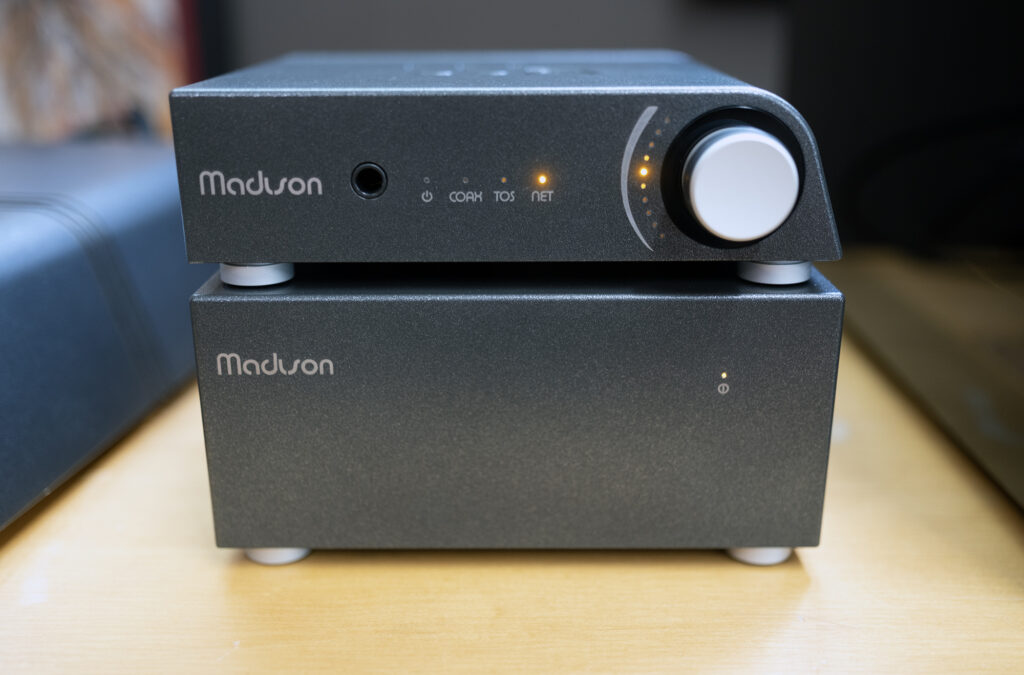
The Wattson digital duo comes in at $8250 for the Madison Streaming DAC + Power S and a quick look at my Favorite Digital gear and current prices finds no close neighbors. At $5500, the Madison Streaming DAC remains a Favorite and the Power S makes the pair an even easier recommendation and an even more compelling Favorite and I appreciate a clear and easy upgrade path that doesn’t involve starting from scratch. Just add S. Nice.
The pair got to play in some fancy company where it fared very well, so well that my sense is the Madison dynamic duo may be all the digital one needs to live happily ever after unless you have more to spend for something like the Holo Red (review) paired with Imersiv D-1 DAC (review) or better yet the Grimm MU1 (review)/Imersiv combo which is how I roll in the Barn but we’re looking at an extra $18k or so.
Of course the degree to which the Madison Power S’ improvements strike the listener is dependent on a few things namely system context and how closely the listener listens but this is the case for all of hifi, more or less.
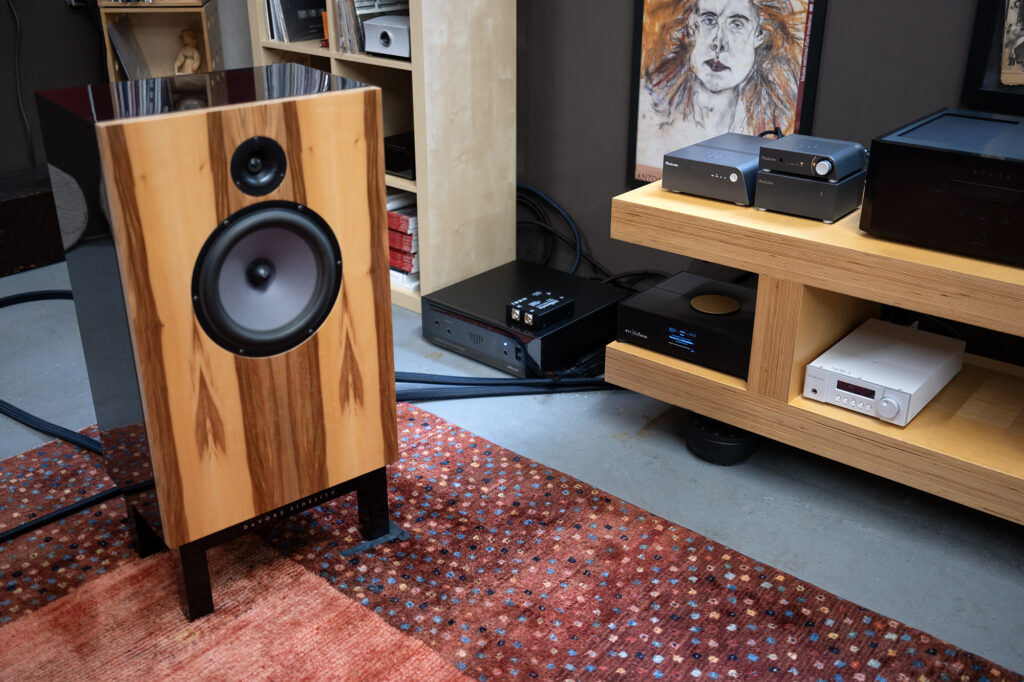
As I mentioned, the Madison Amp ($7000) also came along for the ride and the entire Wattson stack as a system makes a very compelling case as such—small, very well made and very well engineered if you care about such things. I’m a fan of the one-stop shop when the whole is competitive with parts that cost much more. All to say if you’re looking for a simple digital-centric system and can live off the Madison Amp’s 50 Watts (into 8 Ohms, 75W into 4, 100W into 2) or if you can swing a pair to work as mono blocks for double the power (into 8 Ohms), double the fun, I recommend lending the Wattson Madison stack both ears and a good long listen.
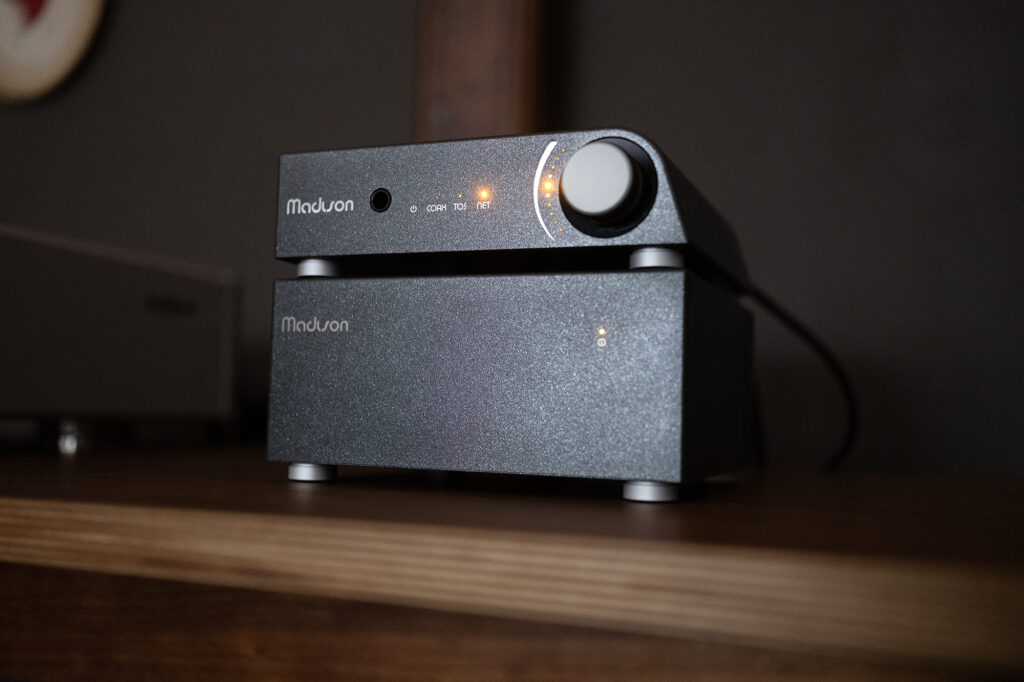
When listening for difference, when comparing this without that, it can be the case that a sense of loss is more telling than a sense of gain which was the case when taking the Wattson Madison Power S out of the system equation. In nearly no time flat, listening without the Power S reminded me in very clear terms what I was missing from the music in play, important things that all added up to a more convincing and more compelling presentation. All things that drew me deeper into the music and further from the gear which is the only direction to travel as far as I’m concerned.
Of course everything comes with a price but if the Wattson Madison Power S fits within your budget and you already own and love the Madison Streaming DAC you will love it and your music even more with the S in the mix. Recommended without reservation.

Wattson Audio Madison Power S: $2750
Wattson Audio Madison Streamer: $5500
Company Website: Wattson Audio
Specifications
General
Type: Power Supply
Color Options: Light gray or dark grey
Dimensions (W x D x H): 175 x 155 x 87 mm
Weight: 2.3 kg
Power Supply: Universal AC input: 100 – 240V AC 50/60Hz
Power Consumption: No load, or Madison Streamer in standby: < 5W:
Maximum Power Consumption – 30W
Primary Fuse: 5mm x 20mm, slow blow, T500mA 250VAC
Monitoring and electronic protection: Over-voltages, over-current, short-circuit, high temperature
Output
Output voltage: 30 V DC
Maximum output current: 3.0 A