
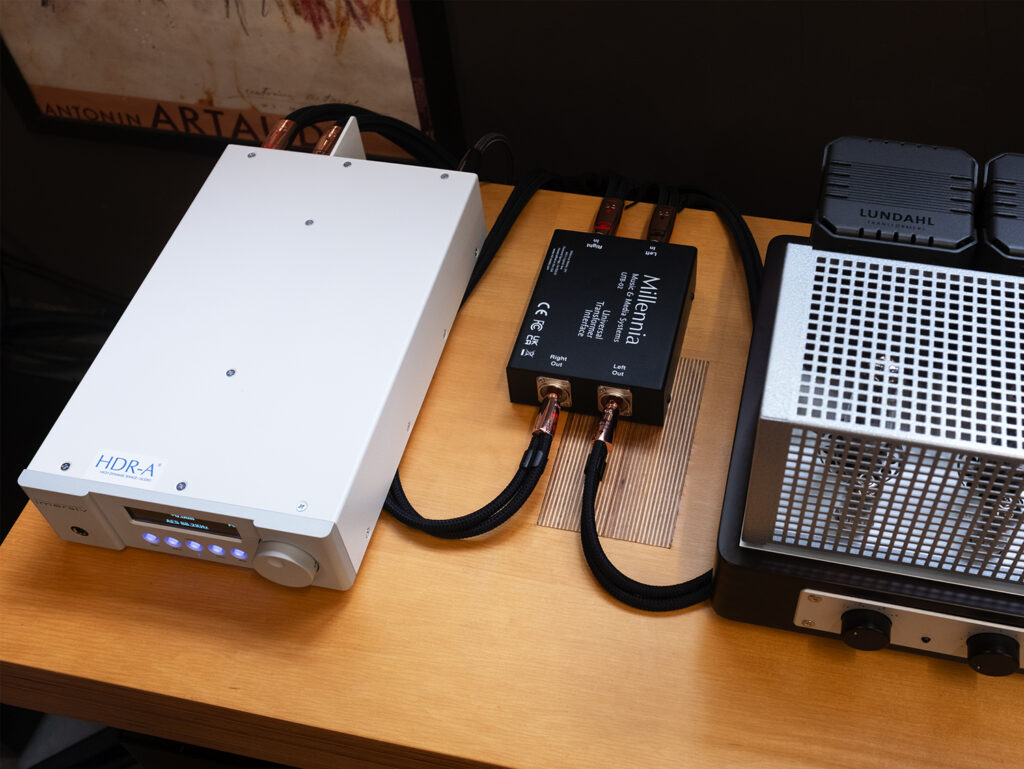
The Imersiv UTB Universal Transformer Interface is an add-on device meant to accompany the company’s wonderful D-1 DAC for people who want to connect it to their hifi via unbalanced RCA interconnects. People like me.
In terms of what the Imersiv UTB does and why it may be needed, I’m going to send you the FAQ page on the Imersiv website for more details but in essence the Imersiv D-1 DAC has both RCA and XLR outputs but only the balanced / XLR outputs are “performance rated.” This performance is best summed up by the D-1’s stated dynamic range of 168dB hand-in-hand with THD+N at 20kHz (80kHz BW) rated at 0.0005% at +22dBu.
From the Imersiv website:
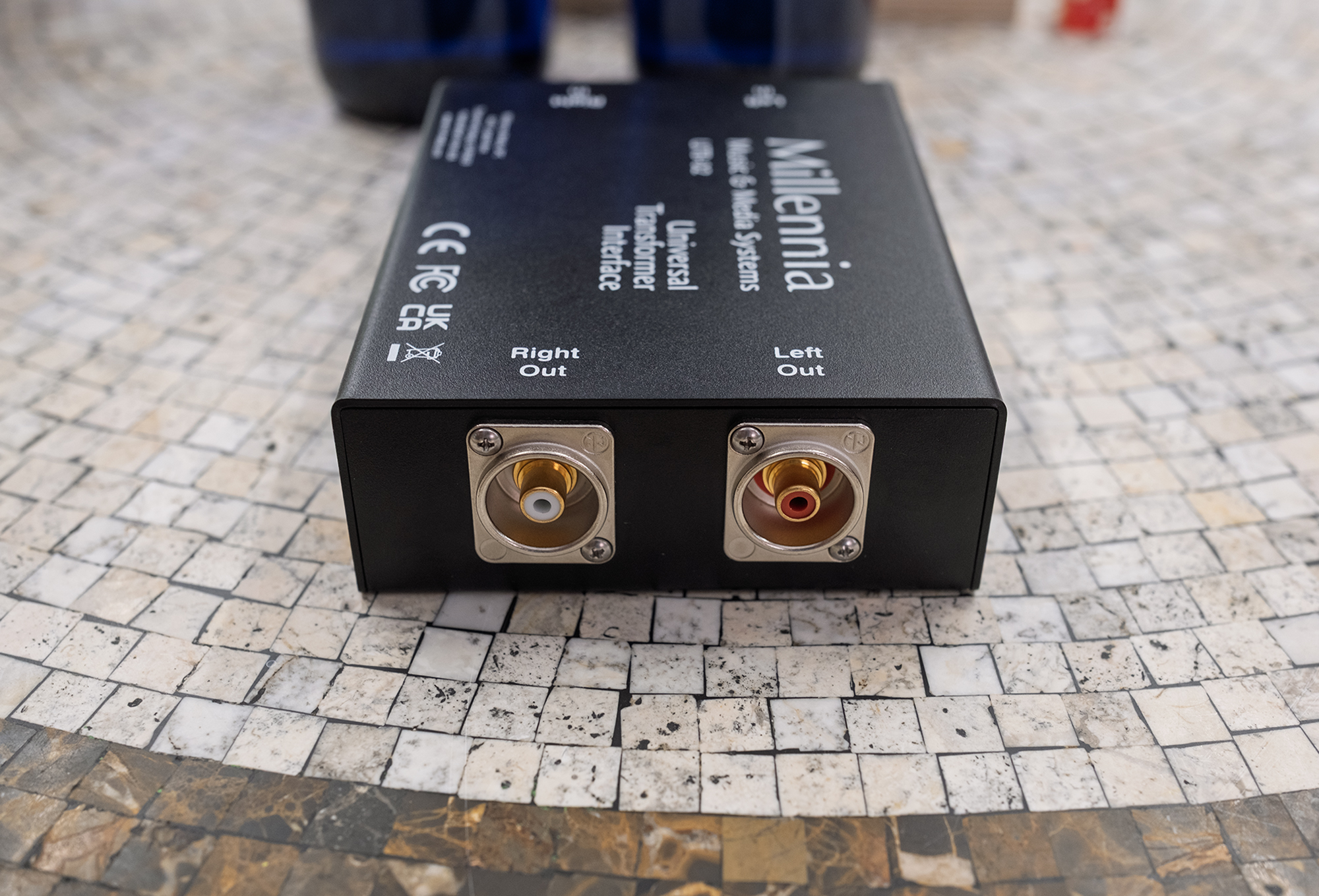
To achieve HDR-A 168dB performance, the differential-balanced XLR outputs must be used. If the audio device downstream of the D-1 DAC has only RCA (unbalanced) inputs, the UTB Universal Transformer box will properly convert the D-1’s differential-balanced XLR signals to an unbalanced RCA format while preserving full HDR-A dynamic range performance. The employs Lundahl transformers, Neutrik RCA connectors, and Mogami OFC internal wiring.
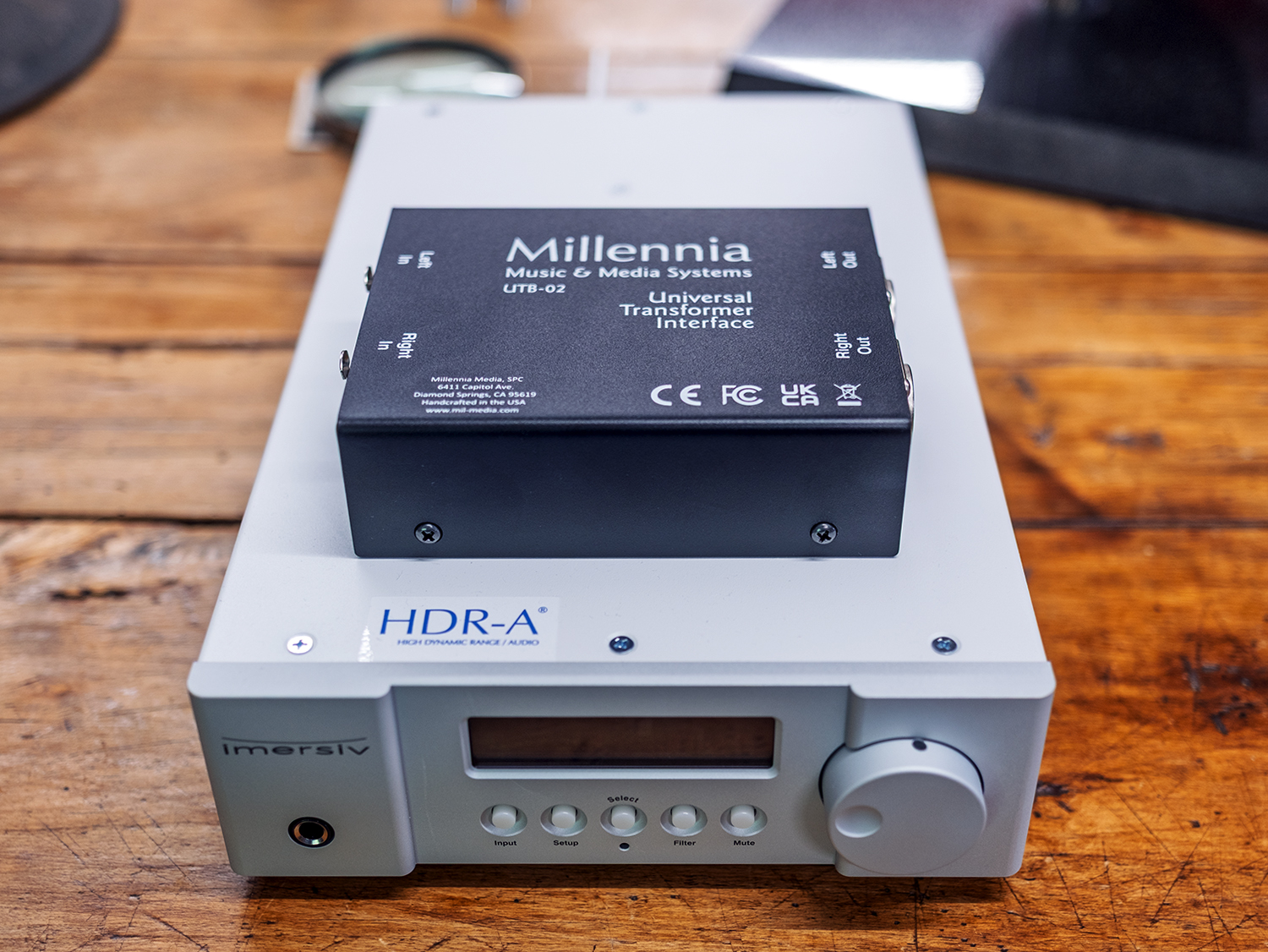
You can read about the D-1 DAC in my review where I talk about how it made music sound in a few different systems as well as some background on the company and some general information on their HDR-A technology which I’m not going to cover again here.
From my D-1 review:
Regardless of the system setting, the d-1 DAC’s stand out qualities stood out. Chief among these qualities are an unshakable sense of completely unobstructed transparency, endless resolution, unrestrained dynamics, and a completely natural voice.
In that review I found that the D-1 worked just fine with the RCA inputs on the Enleum AMP-54R (review) and the Barn resident Leben CS600x. Compared to the long term Barn resident totaldac d1-unity (review), the Imersiv DAC offered “improved transparency, dynamics, and overall excitement.”
But the question that came to mind during that review was—will the Imersiv UTB Universal Transformer Interface make music sound even better?
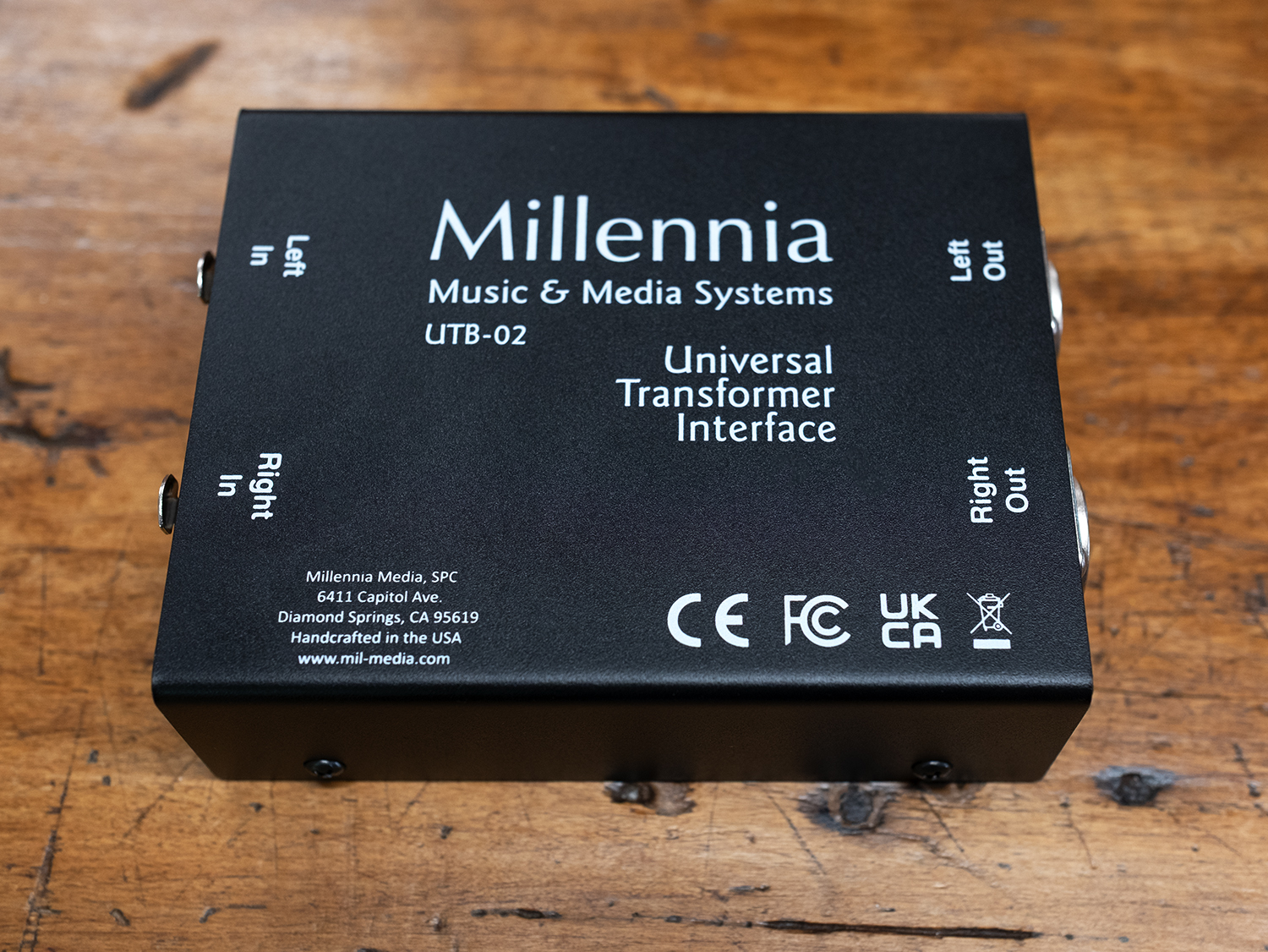
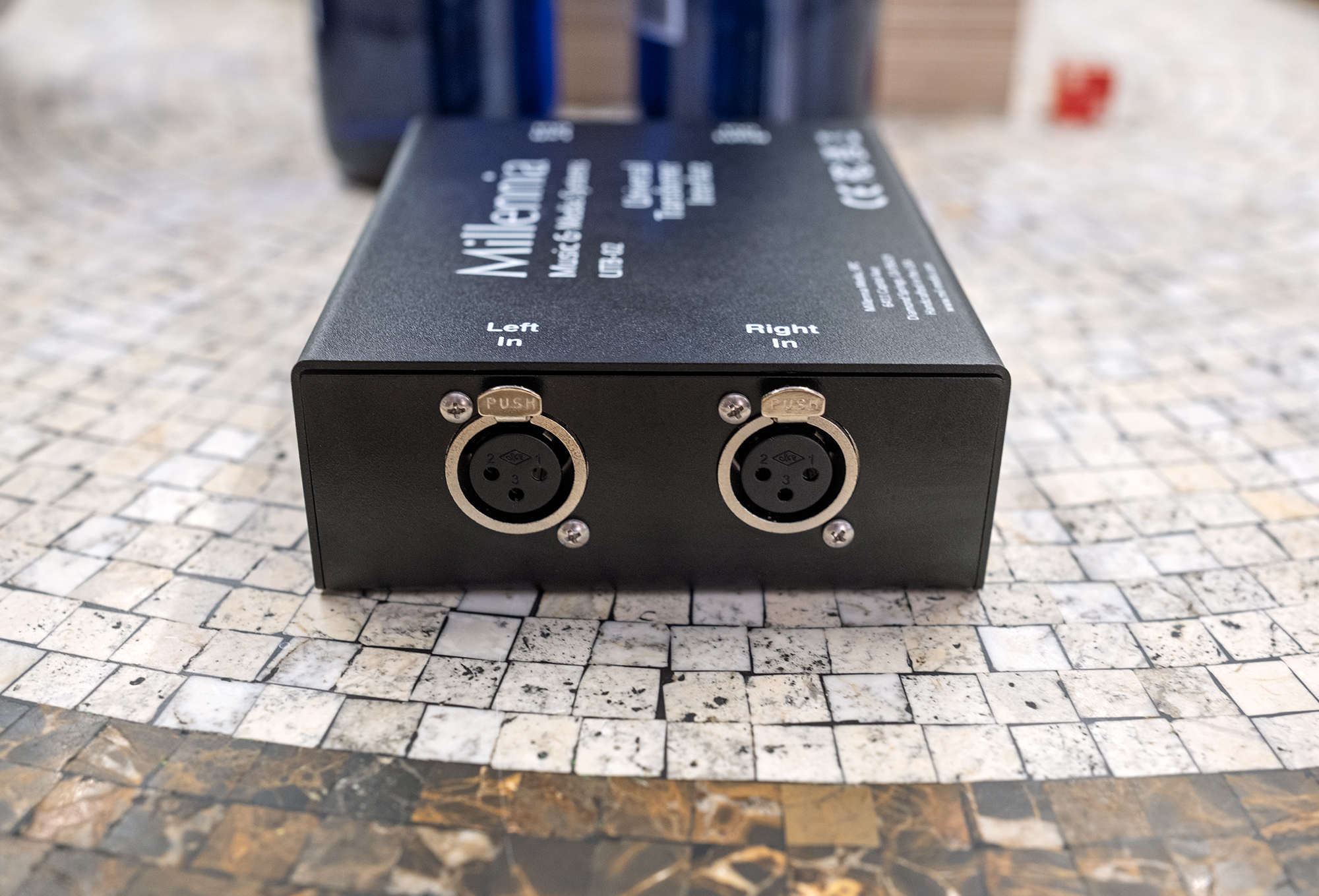
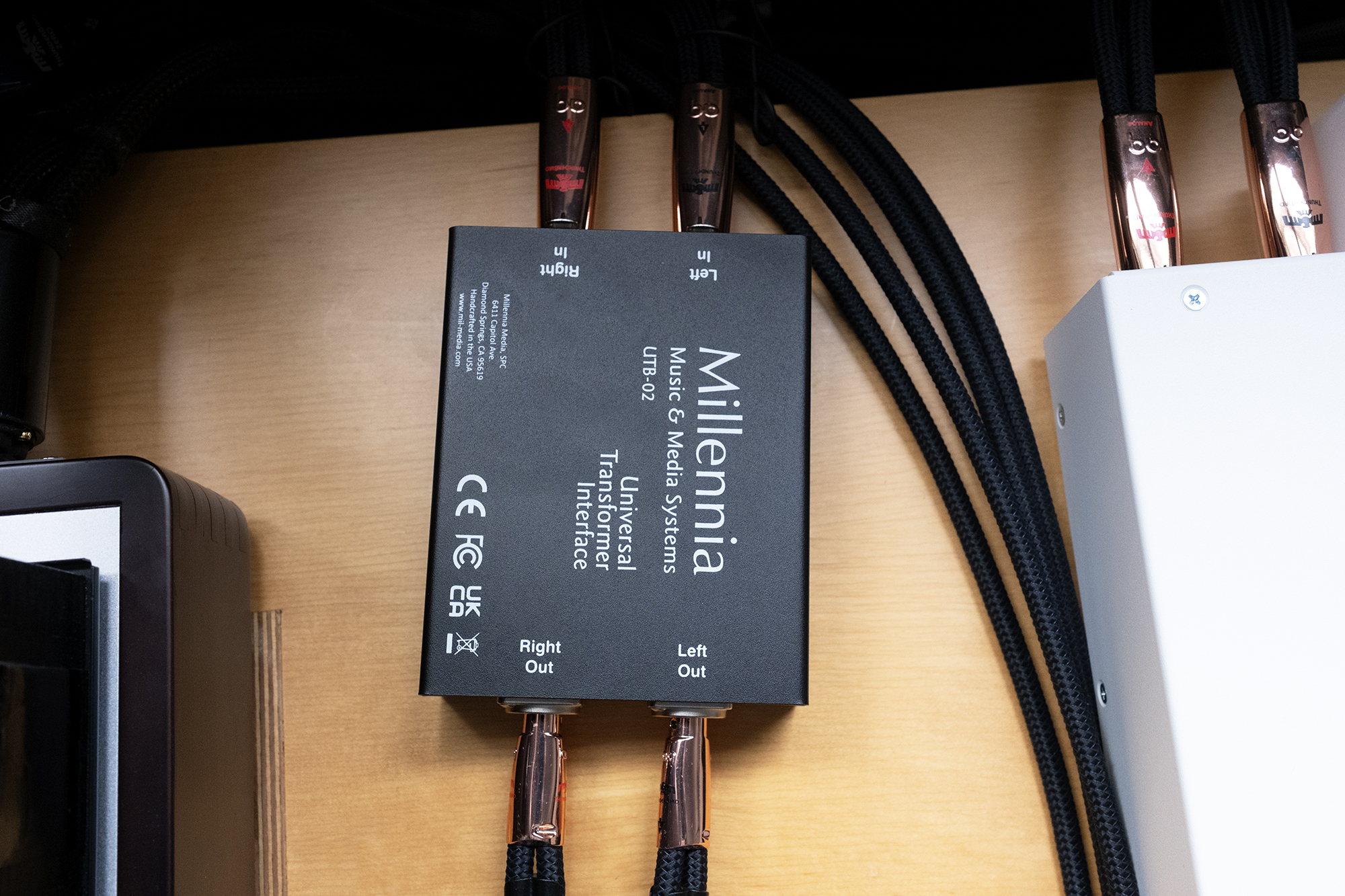
The UTB is a simple passive device with XLR inputs on one side and RCA out on the other. In between is where you’ll find, among other things, those Lundahl transformers (search results return a price of around $90/each for the LL1585). The UTB case is sturdy and heavy for its size and built to last with those high quality Neutrik connectors ready for business. I used pairs of AudioQuest ThunderBird XLR and RCA cables to connect the D-1 DAC/UTB to the Leben CS600x as well as the recently reviewed Aurorasound HFSA-02 Integrated Tube Amplifier (review) and spent nearly 3 weeks listening—admittedly not as much time as I spend when reviewing sources, amplifiers, and speakers.
Why the foreshortened listening time? When it comes to ancillary equipment like the Imersiv UTB there are two questions to answer—does it change the sound and if so are those changes an improvement. Easy peasy especially so as the UTB is purpose-designed to work with the D-1 DAC so A/B comparisons with other DACs and other like-devices is not really a thing. Plug, play, and listen being the order of the day and weeks.
To cut to the chase my answer is a resounding yes—the Imersiv UTB made music sound better when used with the Leben and Aurorasound integrated amplifiers driving the Barn resident DeVore Fidelity O/96. It helps that I’ve been living with this system, Leben/DeVore, for many years so I know it better than well and I’ve had the great pleasure of living with the Imersiv D-1 DAC for about 6 months in part because there was delay in getting the UTB in Barn. Woe is me. All to say the system context for my UTB findings are as familiar as my trusty well worn Thorogood moc toe boots.
I will note that the UTB and its effect on overall performance will be dependent upon the accompanying amplifier and system. The following listening notes and the related impact of the UTB versus going RCA-direct out of the Imersiv D-1 DAC were consistent with the two integrated amps used for this review.
By better I’m referring to how, with the UTB in the system, musical things improved including clarity, focus, resolution, and bass response and these improvements were easy to hear and even easier to enjoy. To highlight these changes lets talk about the delicate wonders found on a pair of singles from Emily Sprague, “Sing To” and “Double Moon,” from her forthcoming album Cyano due out in October on RVNG Intl. Regular readers and music lovers know Emily Sprague as part of Florist and you can consider me a fan of both the band and her solo outings.
The first change/improvement with the UTB in the picture hit as soon as the first few notes from “Sing To” were released into the Barn with greater clarity from attack to decay or perhaps better stated as simply sounding more natural and complete as compared to going RCA-direct from the D-1 DAC into the Aurorasound. As this track develops and then on into “Double Moon” it becomes even clearer that the UTB also improved overall clarity and focus as if music was set free from system noise, noise that tends to mask finer details. This focusing in on music’s finer points makes listening that much more involving as the experience feels less like a compromised copy and more like the real thing. They are here or you are there whichever way you care to look at it.
For a more complete sonic scene with deep base and gobs of space I ran with Carrier’s Rhythm Immortal from 2025 which made the UTB effect that much more pronounced. The drum thwacks on “Outer Shell” resounded into a much more dimensional space as compared to RCA-direct making this menacing music sound even more foreboding. While I agree with Sun Ra that space is the place, vast sonic soundscapes can feel dangerous and with the UTB’s ability to help reproduce a better defined vast expanse made this music downright scary.
Getting back to that sense of a lower noise floor, music emerged from a deeper silence with more pronounced dynamic impact and here on Rhythm Immortal deep bass was more defined and whole all adding up to a more impactful experience.
Settling into some loveliness with Irreparable Parables released back in March on Clay Pipe Music by Scottish multi-instrumentalist and composer Andrew Wasylyk allowed me to zoom in on the sounds of brass and woodwind, a six-piece string section, guitar, bass, drums, vibraphone, Mellotron, Fender Rhodes, tape loops, synthesisers and percussion with vocals from six singers including Stuart Murdoch from Belle and Sebastian, Gruff Rhys of Super Furry Animals, Saya Ueno from Japan’s Tenniscoats, and Peter Brewis from Field Music.
This is gentle yet stirring music and as is the case with all music, the sounds of things help paint the complete picture intellectually and emotionally and the addition of the UTB brought this music to more vivid life. Once again the silence between notes felt deeper making the sounds that emerged from it that much more alive and compelling with piano ringing out more true, brass had more bite, and the setting of these songs, more like vignettes, were drawn with a finer brush as compared to RCA direct.
All of these improvements were as clear as a bell yet I wouldn’t call them dramatic, not nearly as dramatic as listening to music through your phone’s speakers then sitting in front of a room-filling hifi. If we want to get just plain silly about it, it’s easy to say things like all DACs sound the same which can be the case if we’re not really listening and differences between amps are not all that important when using rapid A/B’ing to remove music’s emotional impact from the equation (but why?). What’s more, we can argue endlessly about Imersiv’s claims related to the performance of their HDR-A technology without ever listening.
I prefer to listen to music over time and in this regard the UTB proved to be a welcome addition to the D-1 DAC’s RCA output as I worked my way through favorite albums new and old alike. And to remind you of my impressions of the D-1 DAC, here are some more words from my review:
Every time I sat to listen over the course of two months the D-1 DAC’s level of sheer magic was addicting for its ability to reproduce music with a level of clarity and transparency I’ve not heard done better with the vibrant beating heart of the musical matter on full display.
To answer our most important question about the Imersiv UTB Universal Transformer Interface, it did indeed make the D-1 DAC’s RCA output sound better, better in musically significant ways that drew me deeper into the listening experience by making music feel that much more natural, alive, and engaging.
Imersiv UTB – Universal Transformer Interface
Price: $500
Company Website: Imersiv