
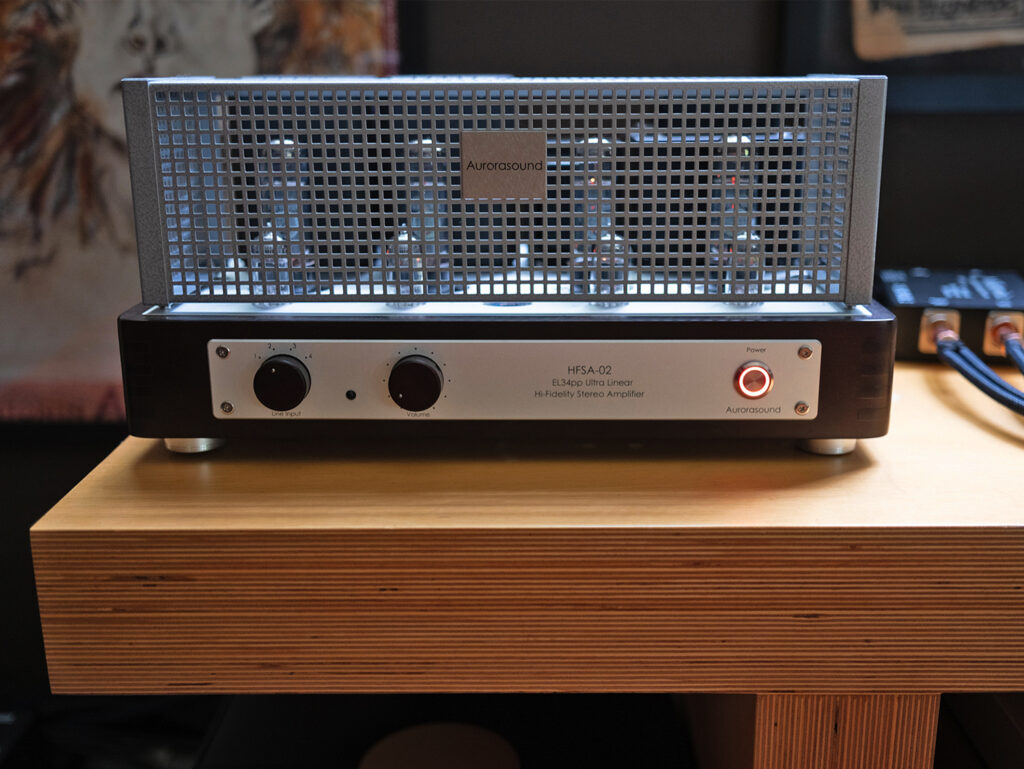
These days I get most excited about exceptional performance which is exactly what I heard when I sat down and listened to the Aurorasound HFSA-02.
The HFSA-02 had me on the edge of my seat for the weeks turned into months during its Barn stay and listening sessions went on well into the evening because I just couldn’t get enough music as it was portrayed by the Aurorasound integrated driving the DeVore O/96, speakers I know better than well.
And that’s the thing about declaring exceptional performance—you need a baseline and the more experience with similar gear the better. After all, saying a savory soufflé was exceptional when you’ve only tried two holds less weight than the soufflé aficionado who’s been savoring them for decades. Savvy?

Exceptional performance is necessarily rare by definition but also in practice as my list of the gear I find to be exceptional, as represented by my Short Lists, are short. What’s rarer still is to find a company that makes a number of exceptionally good products with some costing under a grand. I’m talking about Japan’s Aurorasound as I own their AFE-12 MC Step Up Transformer (review), VIDA MK.II Phono Stage, and the EQ-100 Variable Equalization Monaural Phono Amplifier and I’ve reviewed their HFSA-01 Vacuum Tube Integrated Amplifier (review) and VIDA Prima Phono Stage (review) with glowing results.
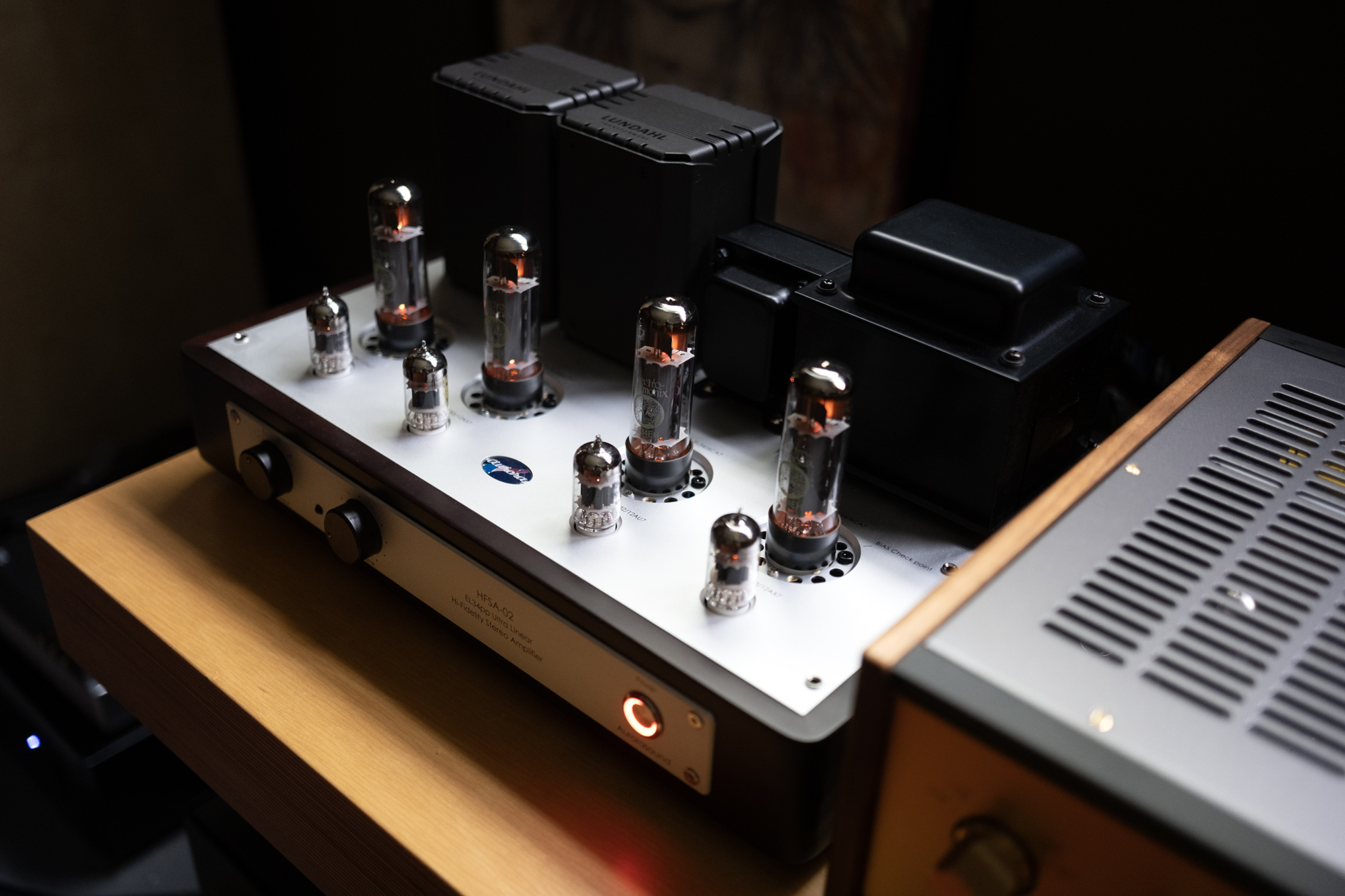
To say I haunt the Aurorasound and US Importer highend-electronics websites looking for new gear is a bit of an exaggeration, a tiny bit, so when I saw the announcement for the then forthcoming HFSA-02 Integrated Tube Amplifier back in November of last year, I sent off a review request in milliseconds. And here we are.
Both websites and the related product descriptions of Aurorasound gear are rather low key when it comes to marketing speak. Here’s an example of the most extreme language from the HFSA-02 page:
Carefully designed and hand-crafted, this amplifier not only meets the demands of the modern digital high-resolution era but also provides ample functionality and performance for analog playback. Built to last, it is a tube amplifier that will remain unchanged for decades to come.
Seeing as I’ve been the very happy owner of the Leben CS600 in its original form as well as the current CS600x version I value things that are meant to last—the Leben has been in production for 21 years mostly unchanged. On a similar note, my DeVore O/96 have been in production since 2011. Or to put it another way, I’m not a big fan of the MK2 that arrives hot on the heels of and replaces the MK1. I bought my first Leben CS600 back in 2018, I owned their CS300 before that, so I’ve got some years of experience living with and listening through Lebens.
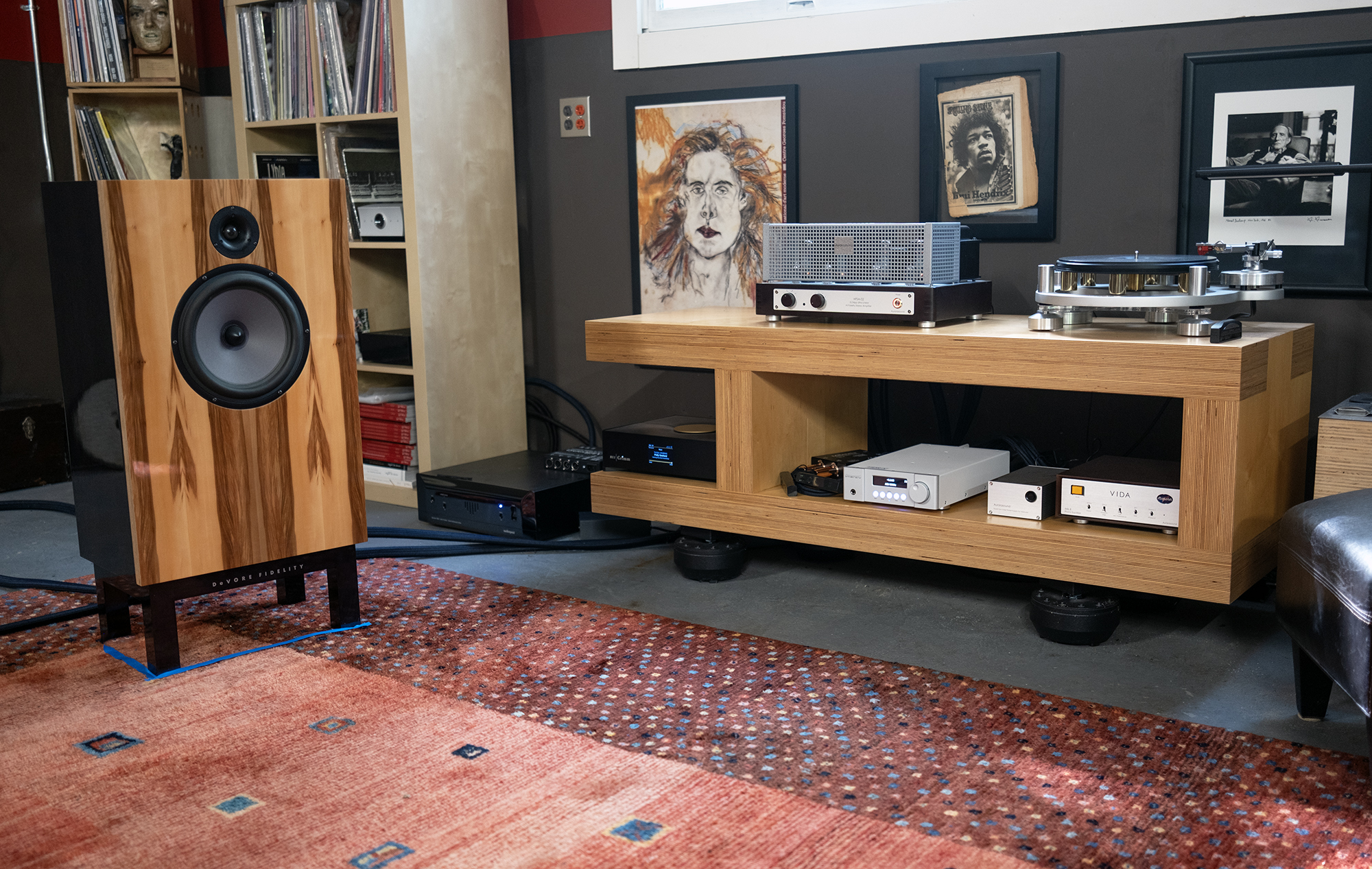
But my experience with different amplifiers on the O/96 includes dozens in all shapes, sizes, and prices. Basically every amplifier that comes through the Barn gets to spend time driving the O/96 as they are my reference and have been for 5 years (I own ‘em). All to say my frame of reference for exceptional amplifier performance is relatively wide and deep and I’m here to tell you in no uncertain terms that the Aurorasound HFSA-02 ranks among my favorites of favorites, price be damned.
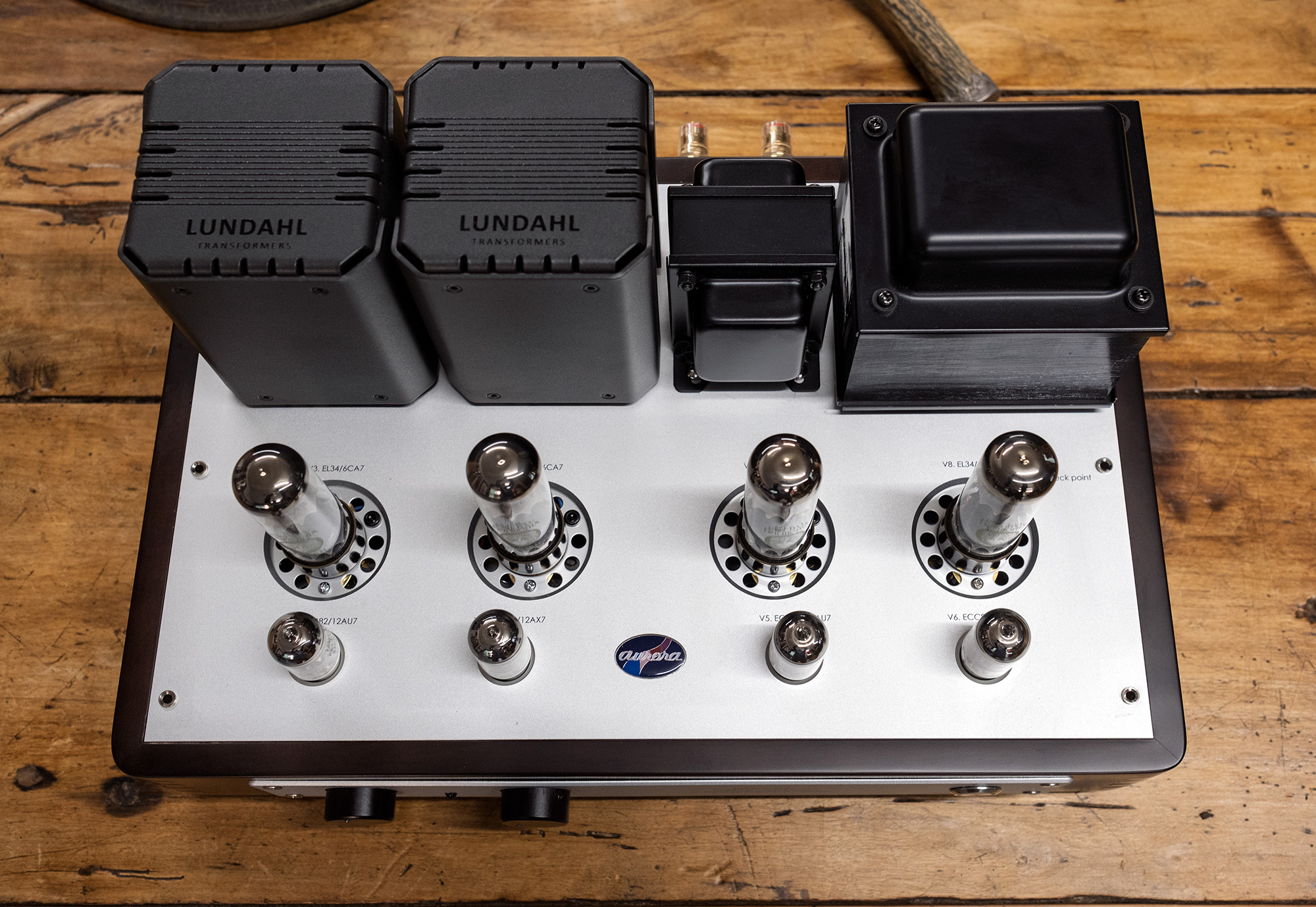
The Aurorasound HFSA-02 Integrated Tube Amplifier relies on a quad of self-biasing EL34s run in push pull operation for 31 Watts (into 8 Ohms) of power. If that part sounds familiar, the Barn resident Leben CS600x is also EL34-based. The HFSA-02 also houses pairs of ECC83s and ECC82s in the input stage while rectification comes courtesy of a ROHM silicon carbide diode. All tubes are new stock from Electro-Harmonix.
The chassis is made from a 22mm thick solid maple wood frame with a 4mm thick aluminum top plate. As you can see, the output transformers come courtesy of Lundahl while the power and choke transformers are custom made in Japan for Aurorasound. Inside are some quality parts including resistors from Vishay, PRP, and Japanese TAKUMAN; the film capacitors are WIMA (Germany), and the electrolytic capacitors are TDK-EPCOS.
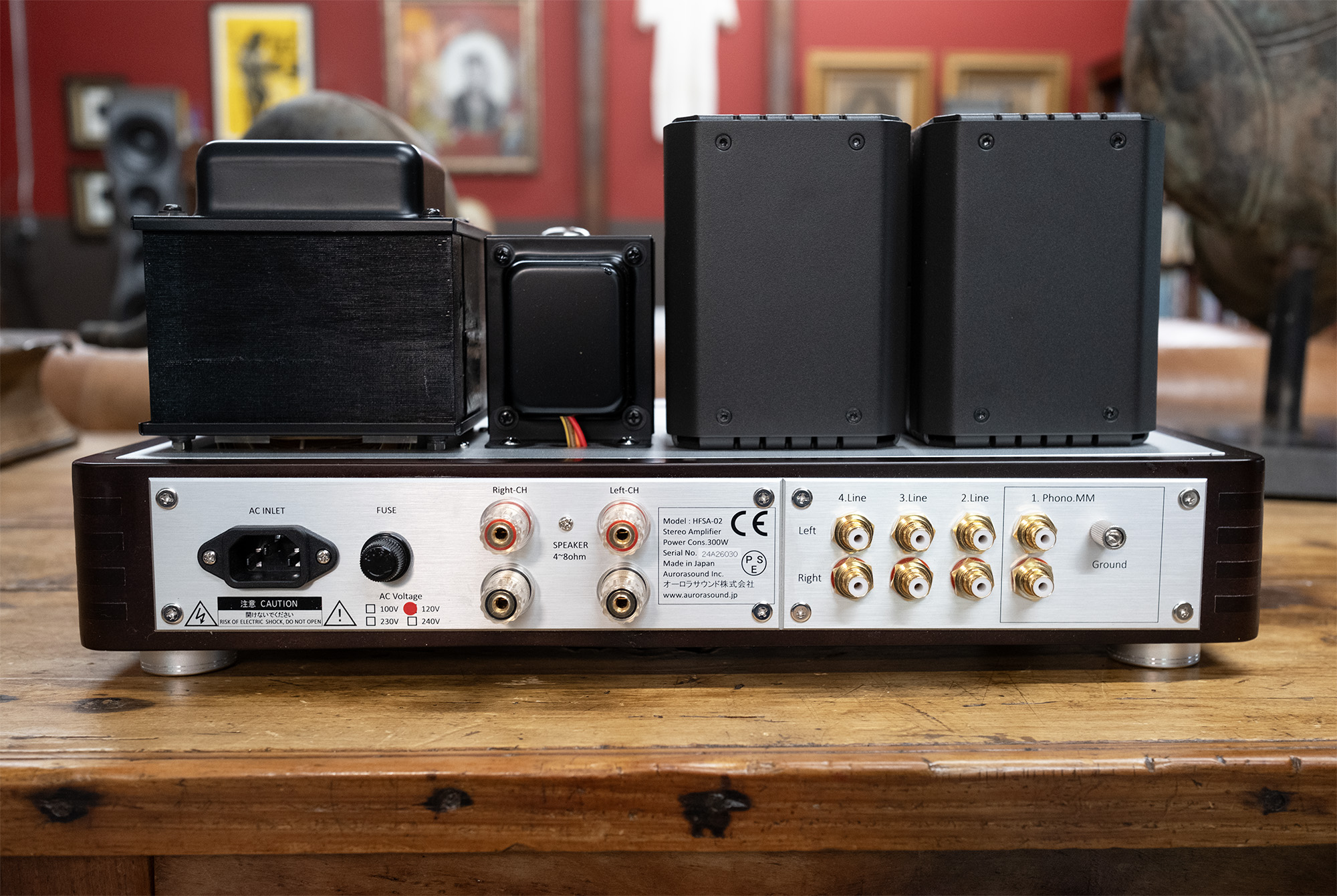
I opted for the HFSA-02’s Option 1 which adds a MM phono stage in addition to three single-ended RCA inputs. The standard version offers four RCA inputs while Option 2 adds one XLR pair to the three RCA inputs. A single pair of binding posts take the signal out to your speakers.
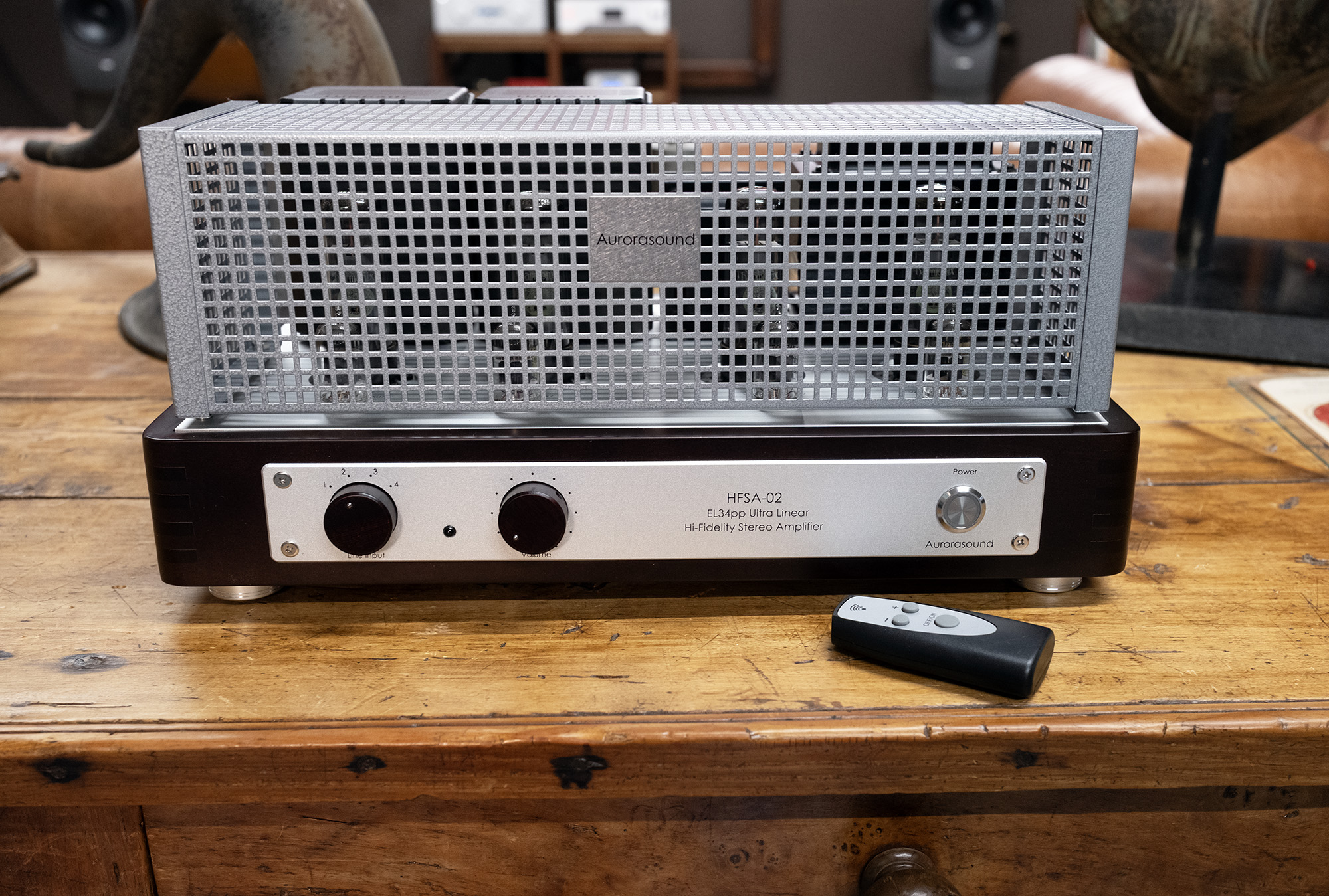
An admission—I don’t know why I thought I could easily live without a remote volume control but the simple little one that comes with the HFSA-02 is a joy to use and sure makes listening more pleasant when it comes to the minor level adjustments made on a regular basis to compensate for track-to-track level variation, especially when I let Roon Radio take over music selection.
My initial thought was to leave the included tube cage in the box but when a few friends came over to hang out and listen to music, one of them asked to see it and I immediately changed my mind—to my eyes the tube cage adds another welcome visual element and you can never really have too much hammertone, imo.

Overall the HFSA-02 is, like every other product I’ve reviewed and own from Aurorasound, very well made and the level of fit ’n finish is smile inducing. If you’re wondering how the HFSA-02 differs from the HFSA-01 I recommend reading that review but one difference is the HFSA-01 marries a solid state preamp with an EL84-based output stage for 14 wpc into 8 Ohms and now costs $4290 which includes a MM phono stage, headphone amp, and EQ curves for playing pre-RIAA records. Even with the price increase since my review I consider the HFSA-01 to be a genuine HiFi Bargain.
What makes the Aurorasound HFSA-02 Integrated Tube Amplifier so special? So exceptional? As is the case with every Aurorasound product I’ve spent time with, the HFSA-02 combines a stunning level of clarity with a refined, wonderfully textured and harmonically rich voice, a rare combination of strengths no matter the price. In my experience these qualities typically are the result of, among other things, very low self noise also evidenced by the fact that the HFSA-02 ran dead quiet. Soon after it was playing music in Barn, my posture changed as I sat up straighter and leaned in to better focus on what I was hearing—pure sweet music with that spark of life feel that makes listening seem vital. And this sense of being taken over and energized by the sound of music wasn’t a fleeting feeling as it persists to this very day as I type these words.
When reproduction reaches this level of pure engagement time fades and the music completely takes over one’s attention with a level of excitement that makes every new album played feel like the best gift ever. The more time I spent listening through the HFSA-02, the more confounding my level of enjoyment became because this level of reproduction rarely comes in an integrated amplifier that costs less than $10k. While I’m not saying that $10,000 is cheap or inexpensive (it’s not), what I am saying is in my experience this level of reproduction typically costs a lot more.
Emily Sprague as Florist makes lovely intimate music and 2025’s Jellywish is no exception. Led by Sprague’s dusty vocals and fingerpicked guitar, this record draws our attention to the smaller things, things that are easy to miss if we’re not paying attention and this is one of the HFSA-02’s standout qualities—there’s a level of purity and clarity that digs as deep into the recording as I’ve heard and as I said this is balanced by an entirely natural voice that’s as rich and right as the music demands.
Plucks off strings very nearly elicit visual stimuli in space, synesthesia-like, because they’re perfectly bright, crisp, and clear and as fast as the real thing. Whatever spatial information exists in the recording is spread out with superb separation and delineation dissolving the barrier between reproduction and pure experience, obviously also thanks to the source which for most of this review was the Grimm MU1 (review)/Imersiv D-1 DAC (review) combo and of course the DeVore O/96 (review, see full system and Barn details). Breathtaking was a word that kept coming to mind during the review period which described whatever music was playing and the way it was being made whole in Barn.
Tara Clerkin Trio’s latest Somewhere Good continues the band’s unique sound, a heady mix of genres that offers a surprise around every hook. Synths, guitar, piano, bass, harmonium, clarinet, drums, samples, and vocals coalesce into dreamy jazz tinged hyper trip-pop with folk roots twisted by contemporary classical concerns. And the Trio are in no hurry, letting music unfold along with the harmonium’s breath while a walking bass line walks us into a more upbeat mood on “Ups & Downs” like walking in Spring rain with magnolia blossoms blowing by.
The Aurorasound amp digs into this music and keeps expert pace with the subtle shifting time signatures and brushes on cymbals shimmering with that bell bronze glow and double bass sounding fit, full, and perfectly formed. The combination of clarity, tone, and perfect timing no matter what was responsible for making the sounds of this wonderfully weird music come alive in Barn consistently made listening exciting and entirely engaging. What more can you ask for?
Let’s go back to 2022 and the Tricky-produced self titled Lonely Guest, a favorite record that remains high on my frequently played list. Each track has a featured vocalist ranging from Tricky regular Marta to Idles’ singer Joe Talbot, Oh Land, Lee “Scratch” Perry and more all mixed up into Tricky’s dense layered and infectious sound world. This record highlights another of the HFSA-02’s standout qualities—deep bass. In a general way, reproducing deep bass can be equated with gobs of power powering gobs of big drivers, the more of each the better. And while I won’t argue that point, my preferences prefer all things being equal when it comes to reproducing music, even music with deep bass and the 31-Watt Aurorasound powering the 96 dB/W/M DeVores made all the bass I need with great grip, shape, tone, and force.
Of greater importance is the entire picture and here on Lonely Guest this system highlighted all of the varied voices in play as well as I’ve heard and to a nearly shocking degree all things considered. Every sound rang out true from attack to decay, emanating from and dissolving into pure silence.
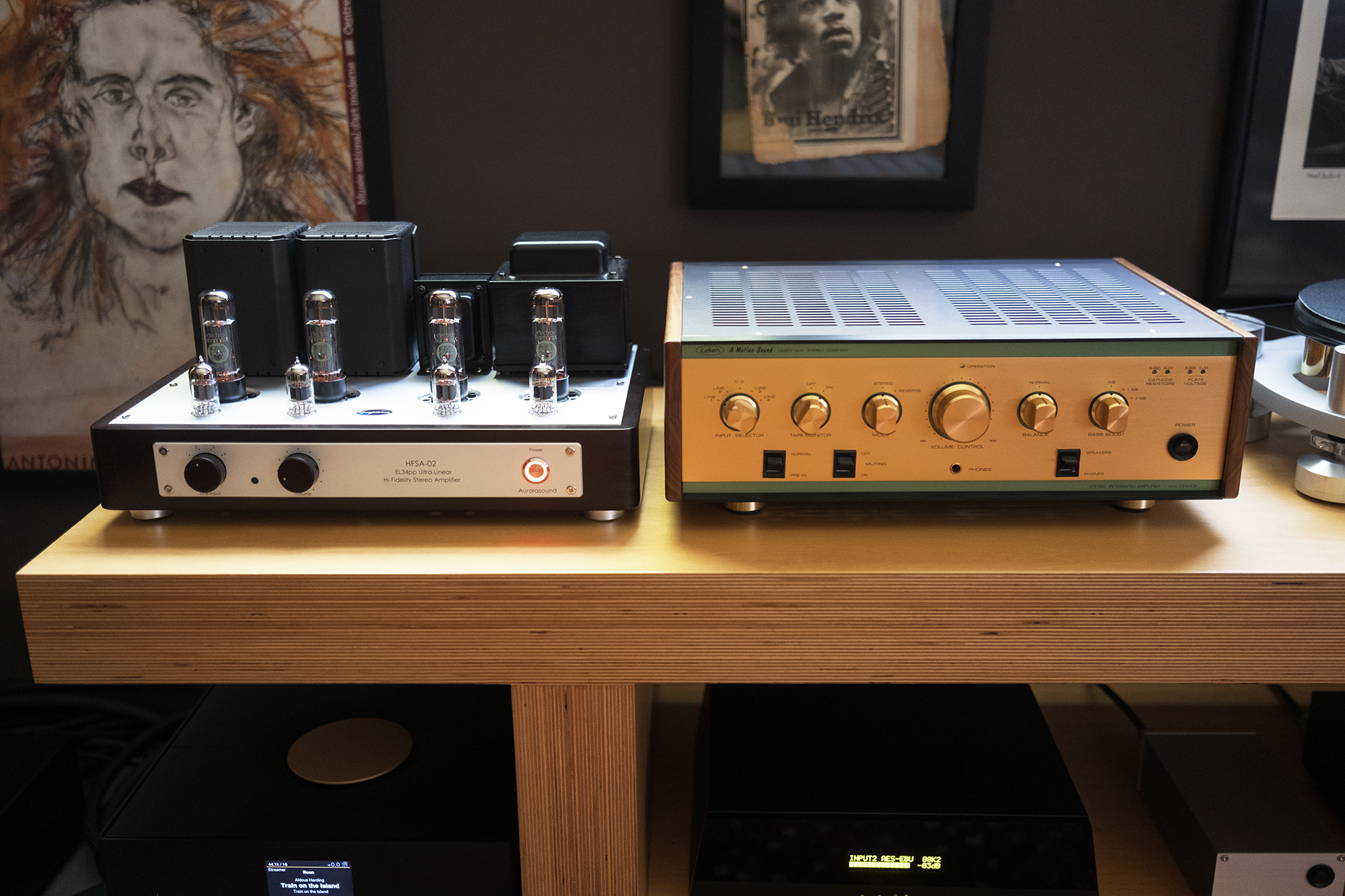
The obvious comparison, and the only one I’ll offer, is to the Leben CS600x which costs nearly the same as the HFSA-02 at $9995 and I’m not going to spend a lot of time here. The Aurorasound amp offers greater clarity, more resolution, a more nuanced and textured voice with greater control way down low. The Aurorasound also explodes the sound image to greater dimensions with more air and space in and around the notes while everything feels more distinct and focused in an obvious way. And there’s that remote which the Aurorasound has and the Leben hasn’t.
That said, differences and their degree do not reside in the world of objective measure they reside within the listener—intellectually and emotionally (we are talking about listening to music after all). This point is obvious and I’ll refer to reality as proof—someone cooking dinner with unfamiliar music playing in the background will not react to differences in presentation to the same degree as someone doing nothing but listening to familiar music. Obvious, right? That’s an extreme example but I often wonder how engaged people are with music when they claim that subtle differences aren’t important. That whole diminishing returns thing that says to me the person staking that claim needs to pay better attention and/or spend more time listening.
There’s also the question of preference and I can see how some listeners might lean towards the Leben’s comparatively warmer fatter sound which is kinda remarkable seeing as I would not describe the CS600x as being overly warm and fat sounding but in this context that’s how things played out. There’s also the all-important question of system context which may sway some the Leben’s way especially if you have speakers that tend to bite more than sing.

As I mentioned, I opted for the included MM phono stage and regular readers may have seen my recent post about the Aurorasound AFE-12 MC Step Up Transformer where I mention, among other things, that I bought one. As I explained I prefer my MC cartridges—the Zu Audio Zu/DL-103 Mk.II and the EMT HSD-006—so a step up will come in handy when I review integrated amps with an MM-only phono input like the HFSA-02. This MM phono stage option adds $400 to the HFSA-02’s RCA-only version and I’ll say that is a deal very well worth making if you own or plan to own records and a record player. The AFE-12 Step up comes in at $799 so for $1120 you can have a MM/MC set up and this is what I used to inspire the following listing notes.
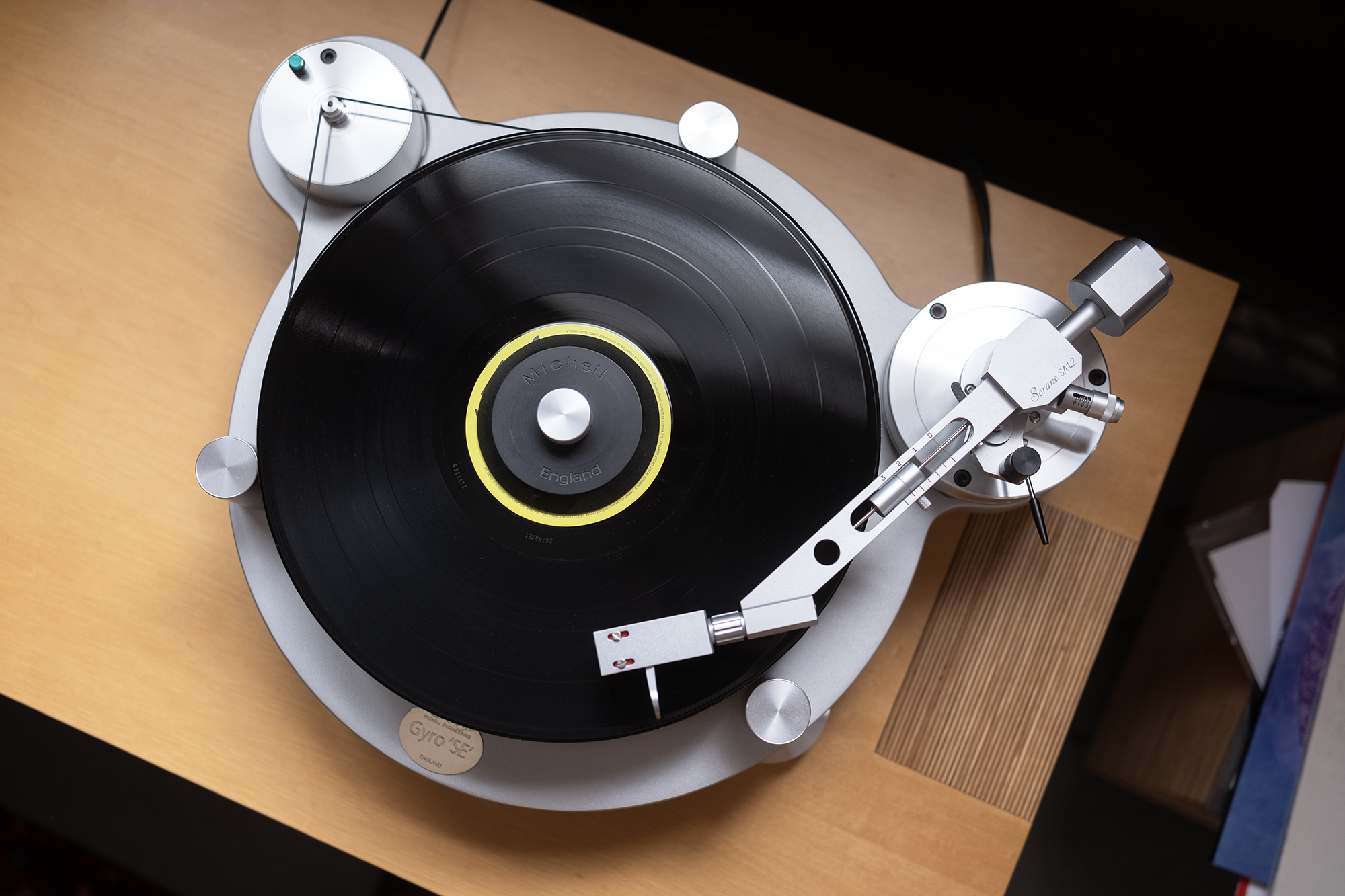
I’ll also keep these brief as the HFSA-02’s MM phono input fed from the AFE-12 MC Step Up offered a similar level of exceptional sound. The front end here was the Barn resident Michell Gyro SE/Sorane SA1.2 with the EMT riding the grooves and I could very easily live happily ever after with this entire setup, from cartridge to amp to speakers. There was just so much texture, clarity, and analog goodness on display playing records through the Aurorasound that listening to records mimicked digital replay in the sense that more was not only called for but often led to extended listening sessions. And to be clear—this wasn’t about “I wonder what ___ will sound like on this system”, the desire to listen more was about “I love this record! And that one! Which reminds of this other one!” And so on. Music is the gift that keeps on giving while hifi ideally acts as runway.
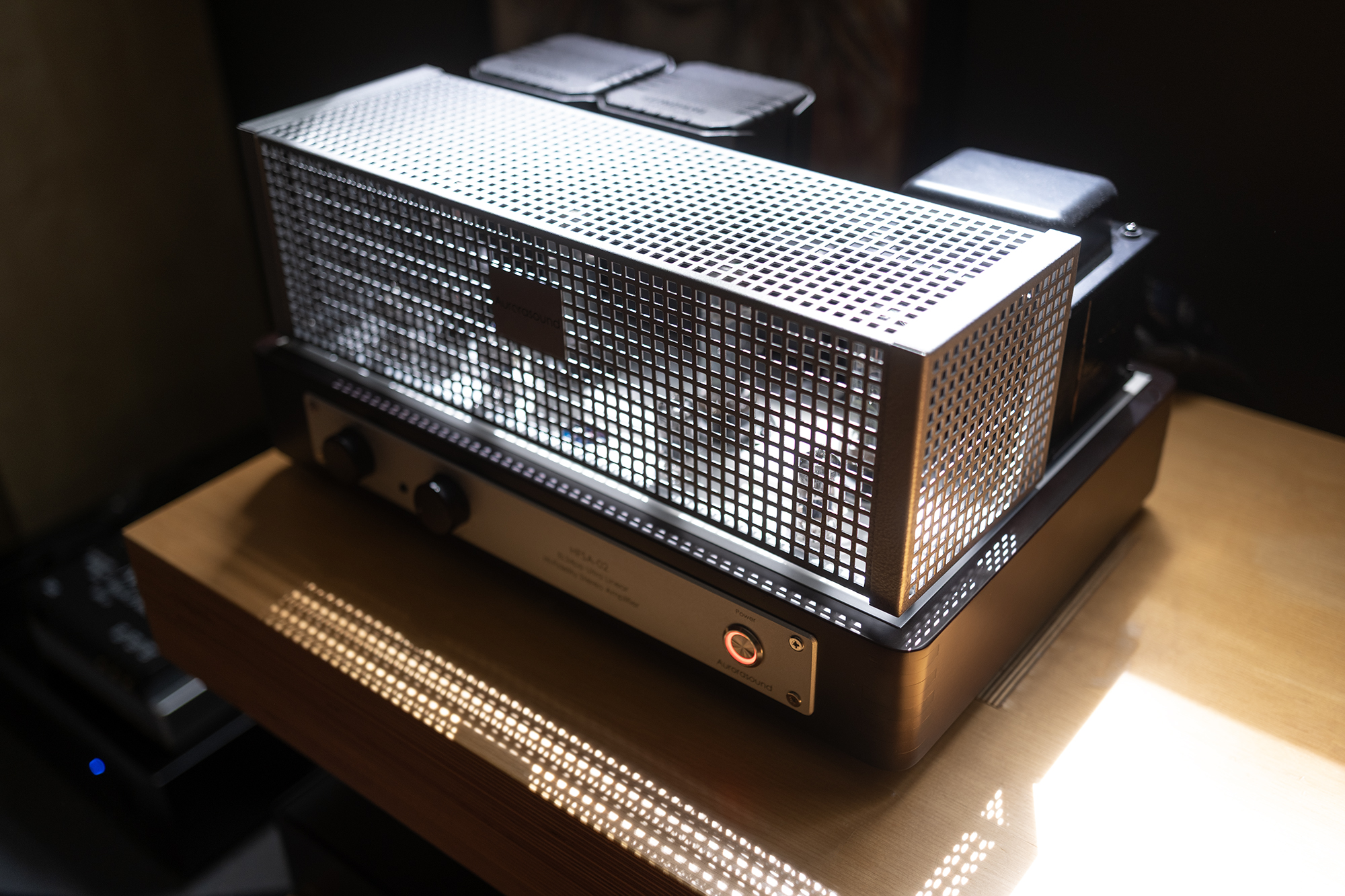
The sum of the parts. That’s what makes the Aurorasound HFSA-02 so exceptional. It’s not just EL34s, specific transformers, or resistors. It’s everything, every choice that went into the entire design and for me that extends to the Aurorasound’s fit ’n finish which also elicited a smile. The only caveat is its 31 Watts of output power which means choosing the right speaker partner. Thankfully there are a lot of choices out there with one outstanding example being the DeVore O/96.
The Aurorasound HFSA-02 is simply an exceptional integrated amplifier in every regard making it easy to recommend for anyone who listens to music with intent, fascination, and pleasure.

Aurorasound HFSA-02 Integrated Tube Amplifier
Price: $9990 | $10,390 w/MM Phono
Company Website: Aurorasound
US Distributor Website: highend-electronics
Specifications
Input: RCA LINE x4
Option 1: Phono (MM) x1, RCA line x3
Option 2: XLR line (balanced) x1, RCA line x3
Volume control: remote control
Gain / Input sensitivity: 31dB / 440mV
Input impedance: 25kΩ
Output: 31W +31W @8ohm
Frequency Response: 10Hz–30kHz, -3dB
THD+N: 0.1% 1kHz
SNR: 98dB, A-weighted
AC power voltage: Europe/Asia model 240V/230V, USA 120V
Power consumption: 200W
Dimensions (W x D x H): 440 x 290 x 228mm without knobs/terminals
Weight: 20kg