
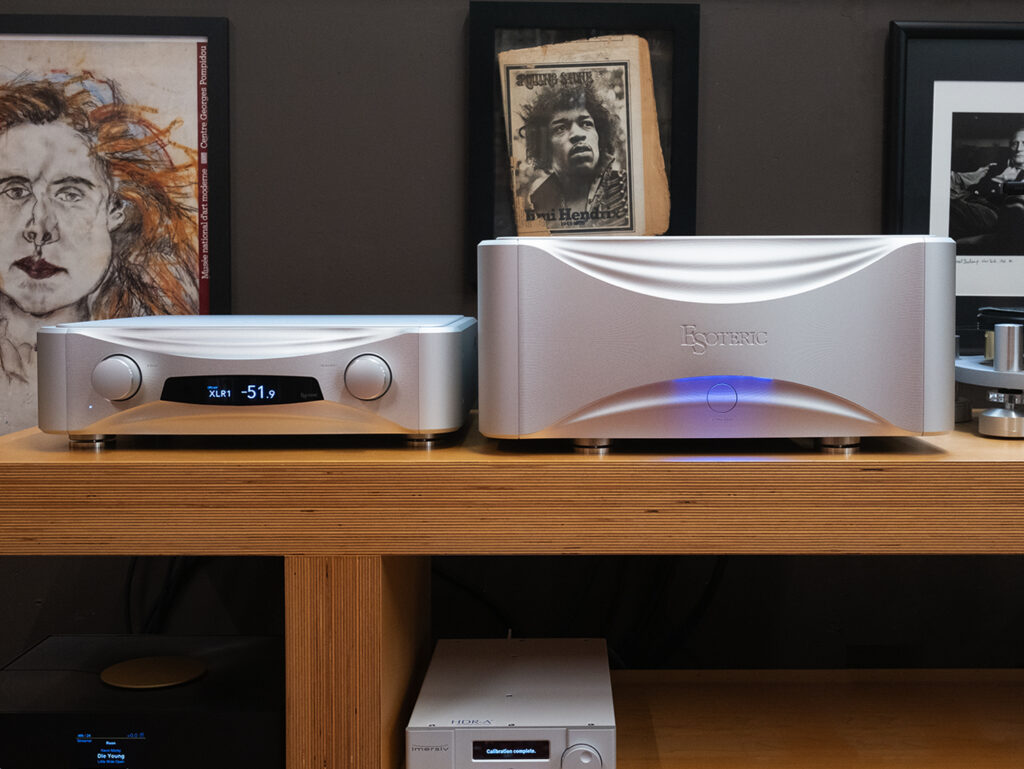
I hope they sound as good as they look.
Any number of elements go into forming the basis of our response to hifi—who made it, where it was made, how its made, how it looks, how it feels, how it sounds…
When gear comes from a company whose history dates back to 1953 founded as the Tokyo Television Acoustic Company on August 26th, 1953 by brothers Katsuma and Tomoma Tani which became TEAC in 1964 then giving birth to Esoteric in 1987 in Tokyo, Japan you know we’re dealing with some deep hifi history. Nearly 75 year’s worth and one look at the Esoteric Grandioso stack tells us that aesthetic appeal is an important priority while a good long listen goes a long way in explaining how all of these things come together in the service of music and its enjoyment.
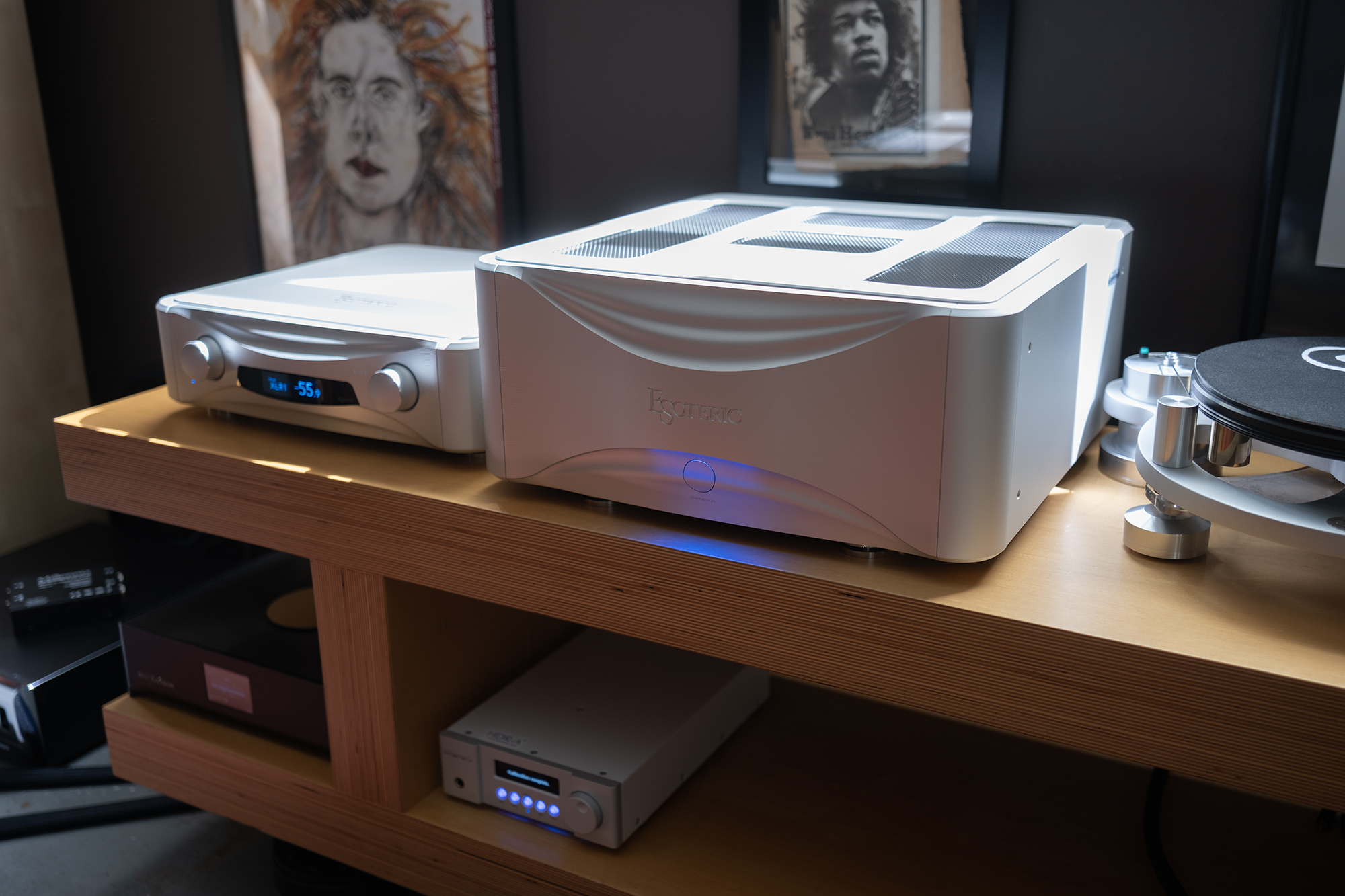
Once we get past the Grandioso’s elegant sculpted casework that makes metal look like draped silk, on second thought I never got past that lovely look even after living with the Esoteric stack for 2 months, another important element is how the C1X solo Preamplifier & S1X Power Amplifier are made. On the inside.
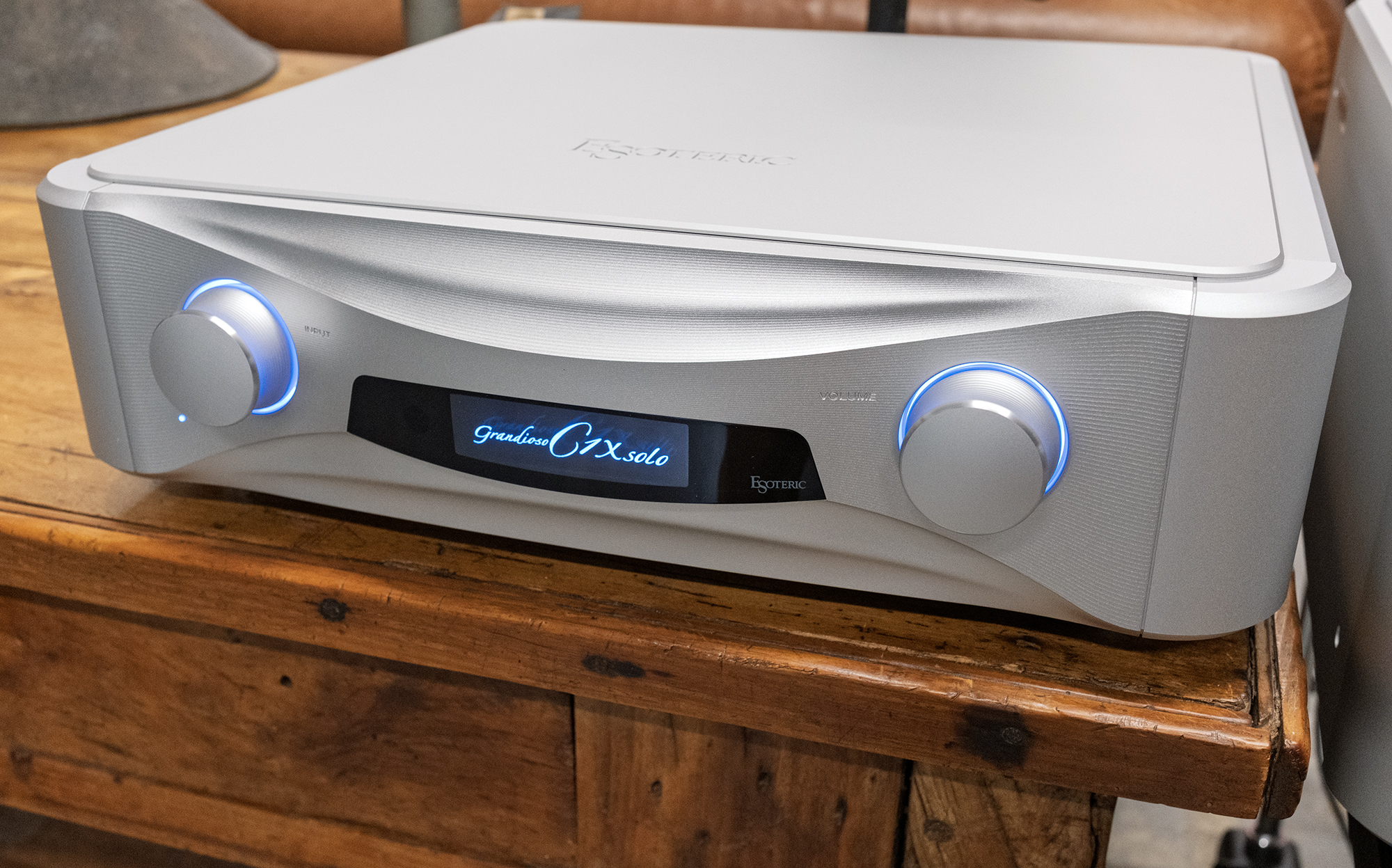
The Grandioso C1X is the flagship line stage preamplifier in Esoteric’s lineup and it comes in two versions—the C1X solo that’s 1/2 the subject of this review and the C1X which adds a matching external power supply.
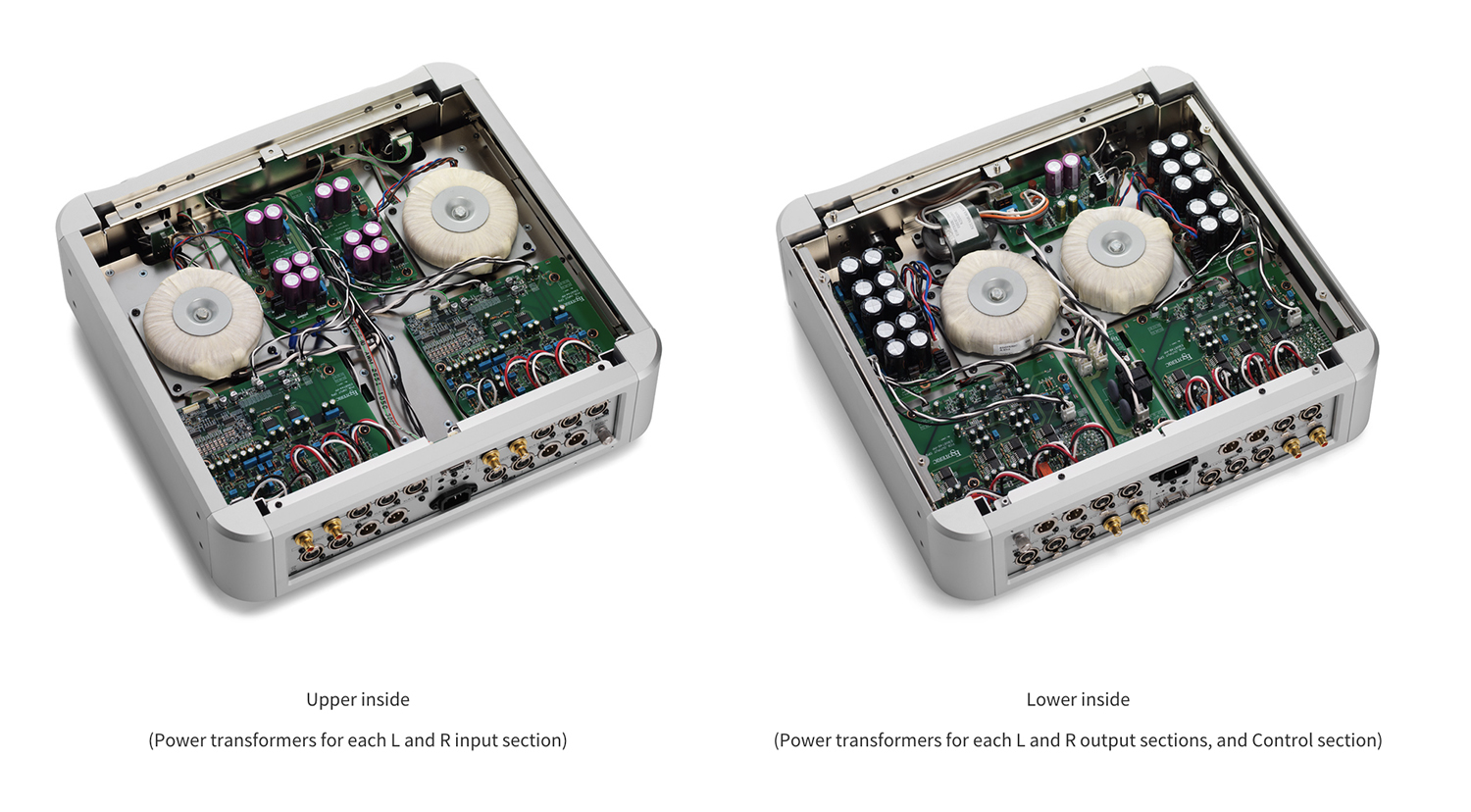
Here are a few Key Features of the C1X solo as highlighted by the company:
- Full dual monoblock configuration in a one-piece chassis
- Dual-balanced configuration with 4 circuits per channel for thorough low noise
- “Ultra-Fidelity Attenuator System” with 1,120 steps @ 0.1dB intervals
- Discrete amplifier module “IDM-01”
- 3 inputs and 2 outputs of ES-Link Analog, a unique and proprietary current transmission system
- 2,000V/µs slew rate current transmission enhanced output buffer circuit
- Esoteric-HCLD (High Current Line Driver)
- 2 XLR outputs and 2 ES-Link Analog outputs for a multi-power amplifier system
- 5 transformers: 4 large toroidal transformers for audio system and 1 R-core transformer for control system
- Input switching circuit with FET elements ensure great sound and long life
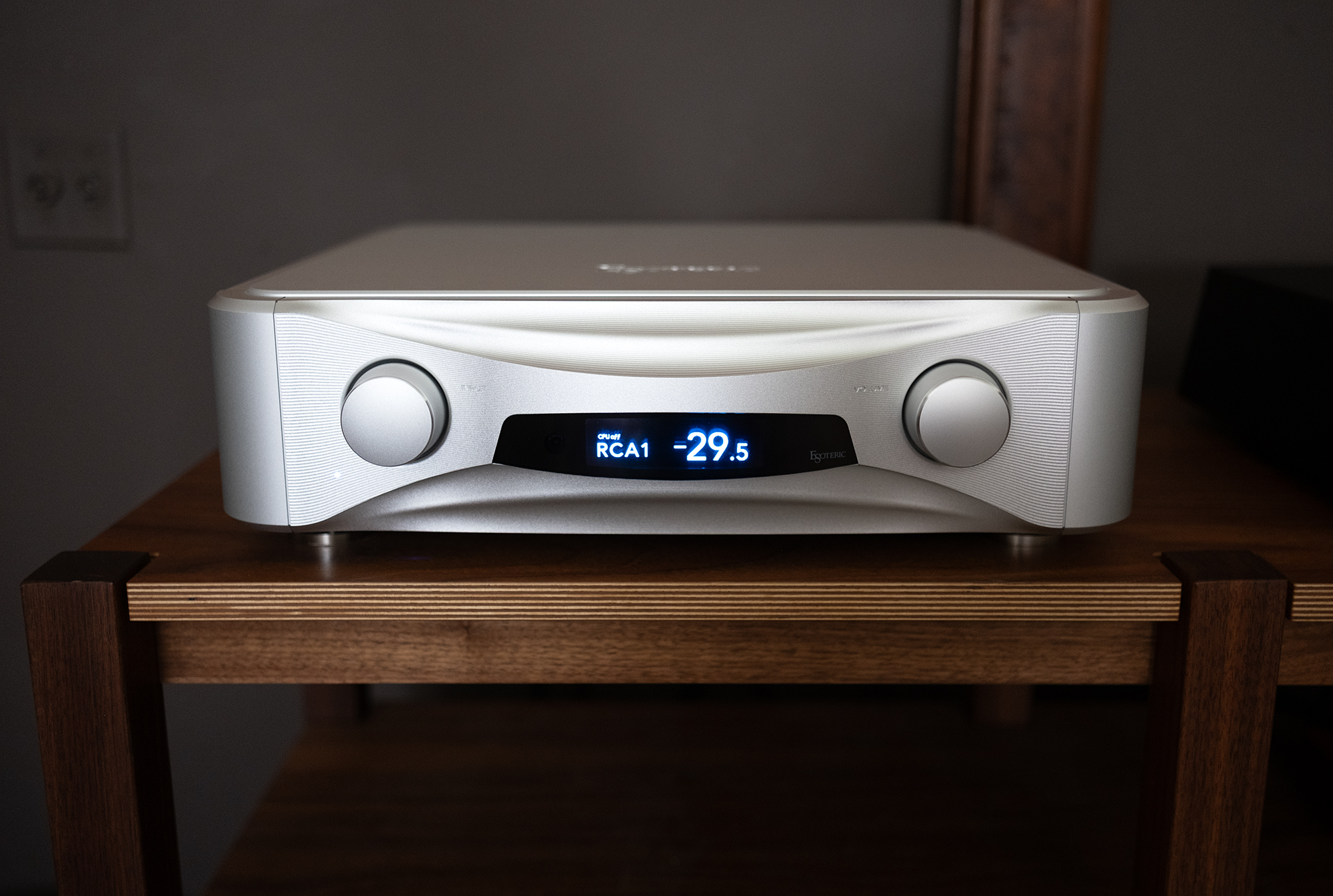
The carved and curved front panel offers two large knobs for Input selection and power/standby when pressed (left) and volume (right) while the centered display shows the current input source (you can customize the names), volume level, and various setting options which are accessed through the included remote. These options include Balance, Output level, Input source name, and Volume level which are explained in detail along with other options in the C1X manual.
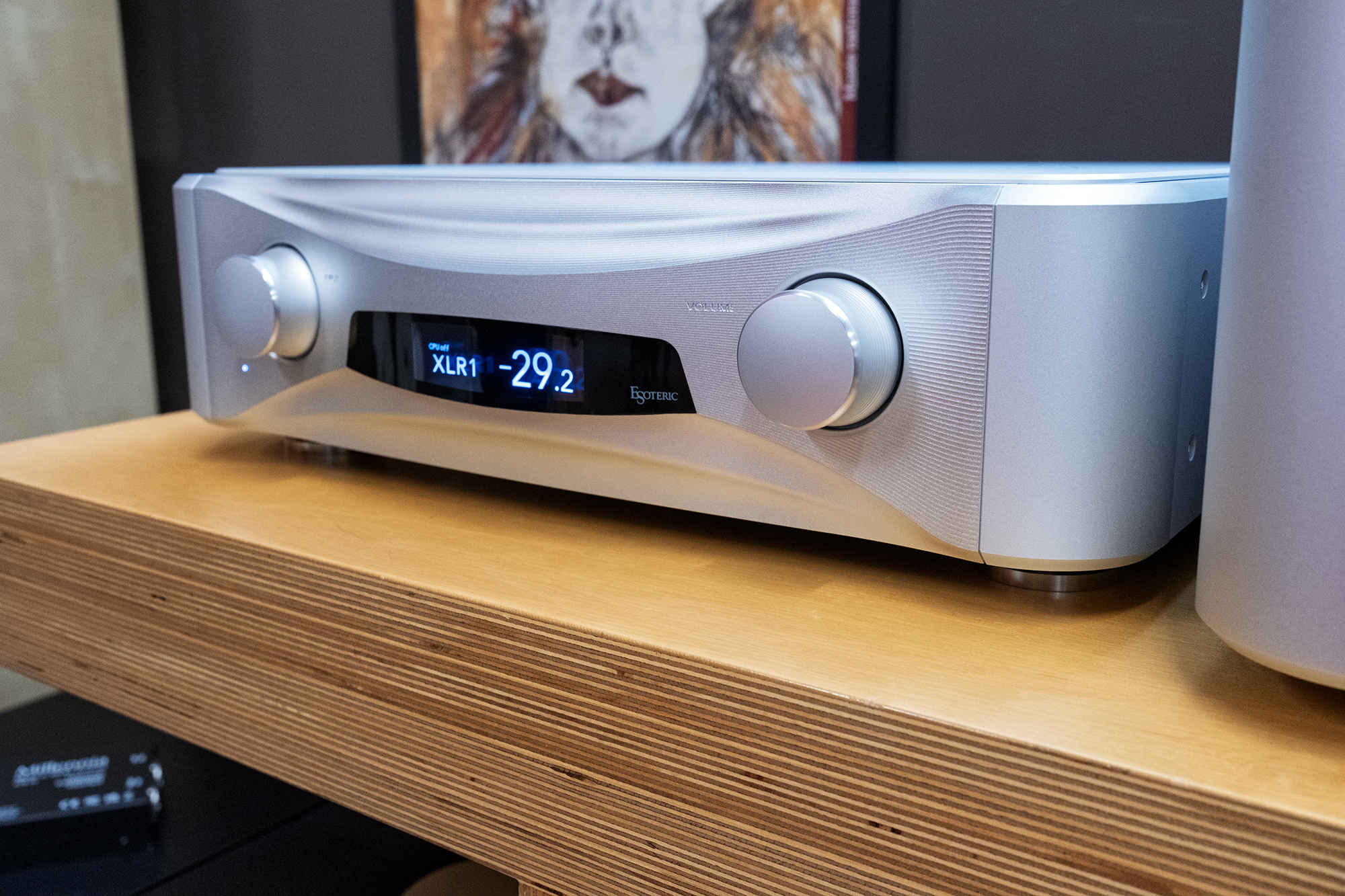
The volume control in the Grandioso C1X is a bit different from your basic stepped attenuator.
From Esoteric:
The core of the Ultra Fidelity Attenuator System is the UFA-1792, our proprietary module that integrates a stepped resistor attenuator into an integrated circuit. The internal resistors can be switched in 0.1dB/1,120 steps, which means that the volume can be adjusted in astonishingly fine, nearly infinite steps, compared to a typical attenuator module which offers about 0.5dB/100 steps.
What’s more, the volume knob offers the perfect balance of silky smoothness and resistance making it a pleasure to spin.
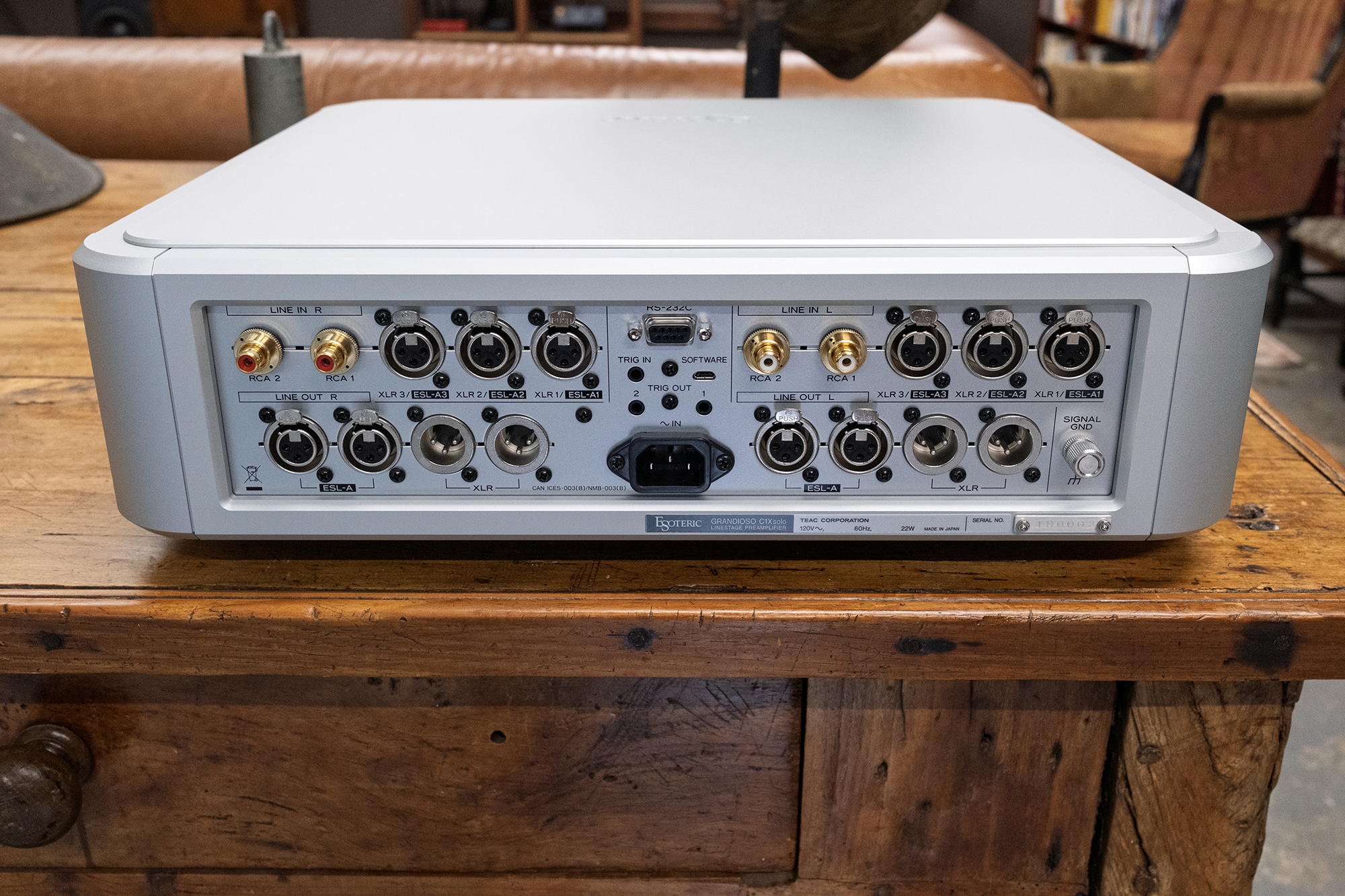
In addition to the usual RCA and XLR inputs and XLR outputs, the C1X solo also includes Esoteric’s proprietary ES-LINK Analog (ESL-A) which uses standard XLR terminated cables to carry input to output between Esoteric components.
From the company:
The “ES-LINK Analog” transmission method, developed by Esoteric, is a current transmission method utilizes the high performance of the HCLD buffer circuit and its enhanced ability to supply power at high-speed to transmit a pure and strong signal with minimal interference from the impedance of the signal route.
I will say up front that comparing the C1X’s regular XLR and ESL-A outputs into the Grandioso S1X amplifier proved that the latter is better if you view aspects of reproduction including better bass control, greater dynamics, and improved resolution as good things. I do.
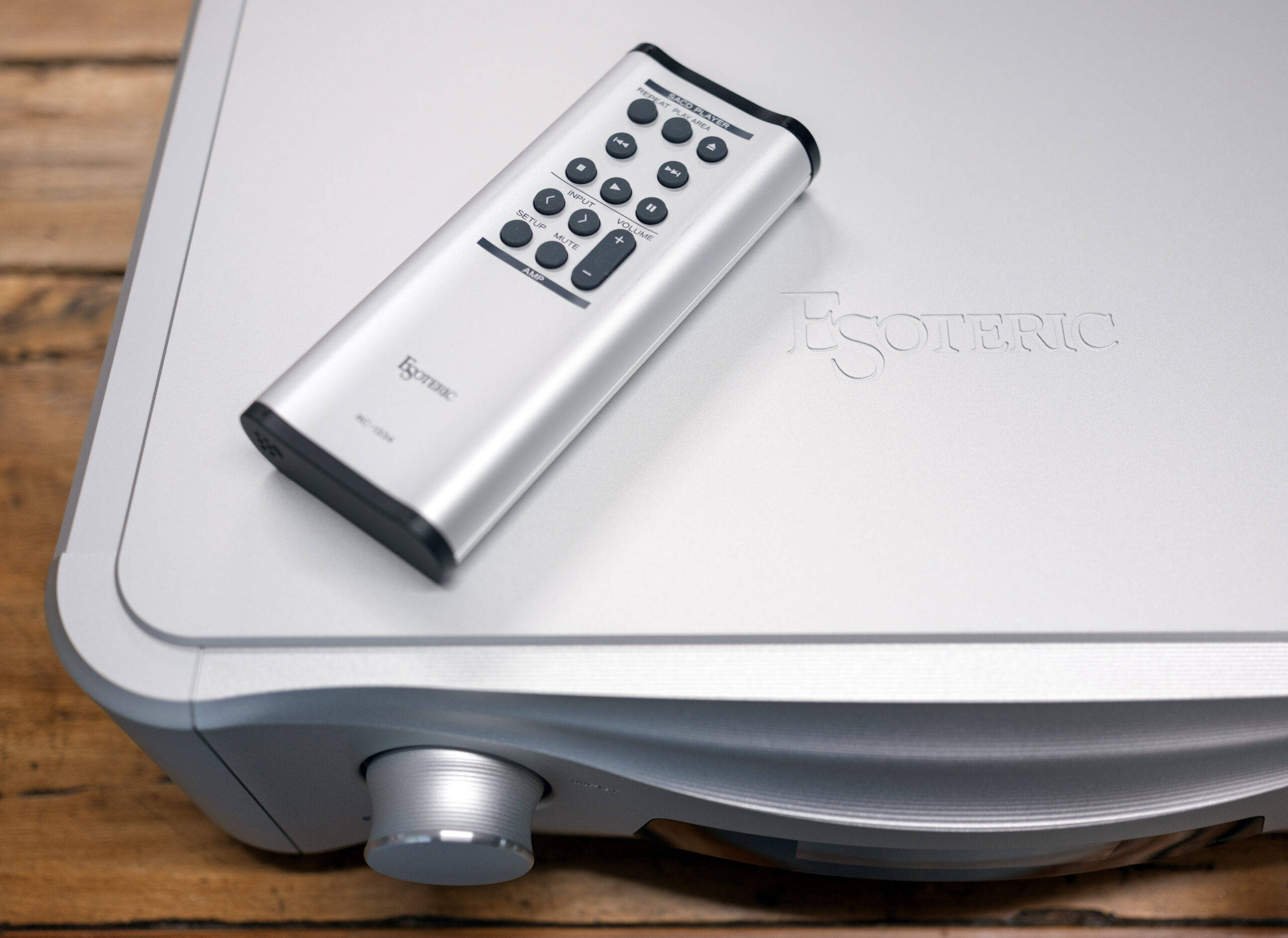
The remote is dual sided with function buttons for the preamp on one side and buttons for controlling an Esoteric Network/DAC on the other. Seeing as I didn’t have a Network/DAC on hand for this review I cannot speak to the effectiveness of this design other than to note that I’m sure I accidentally hit some buttons on the Network/DAC side when controlling the preamp which I imagine would be annoying if those accidents affected music playback.
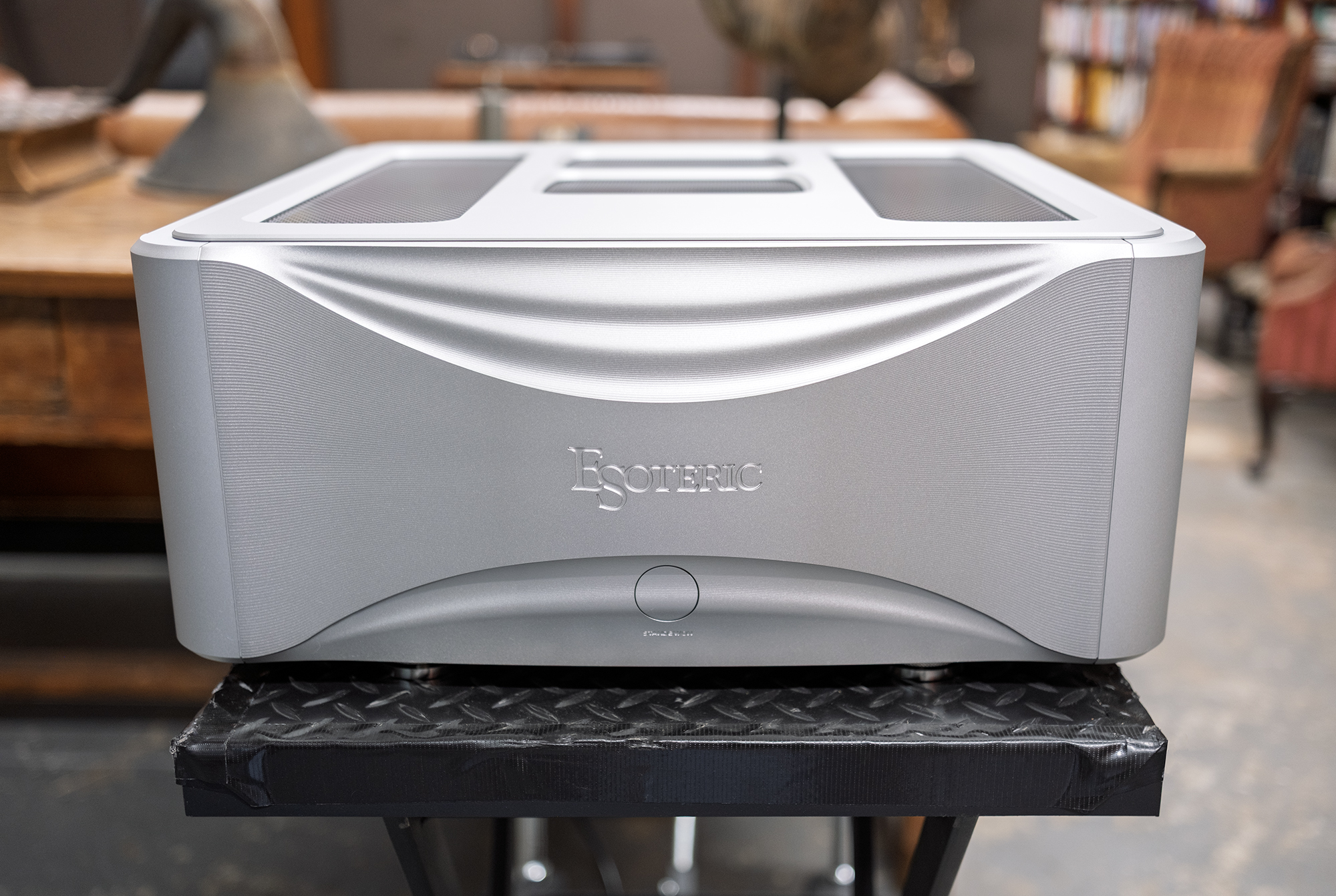
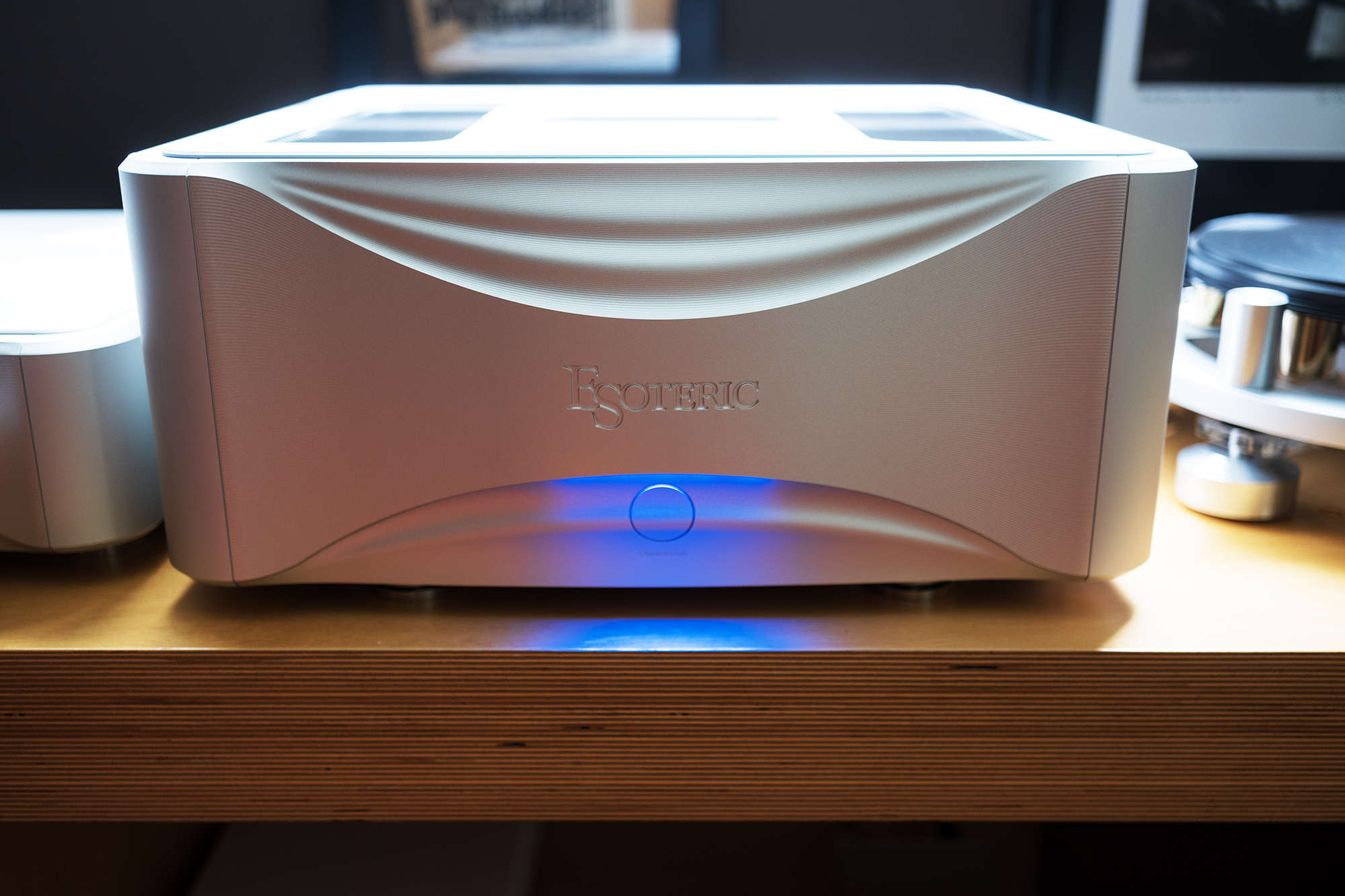
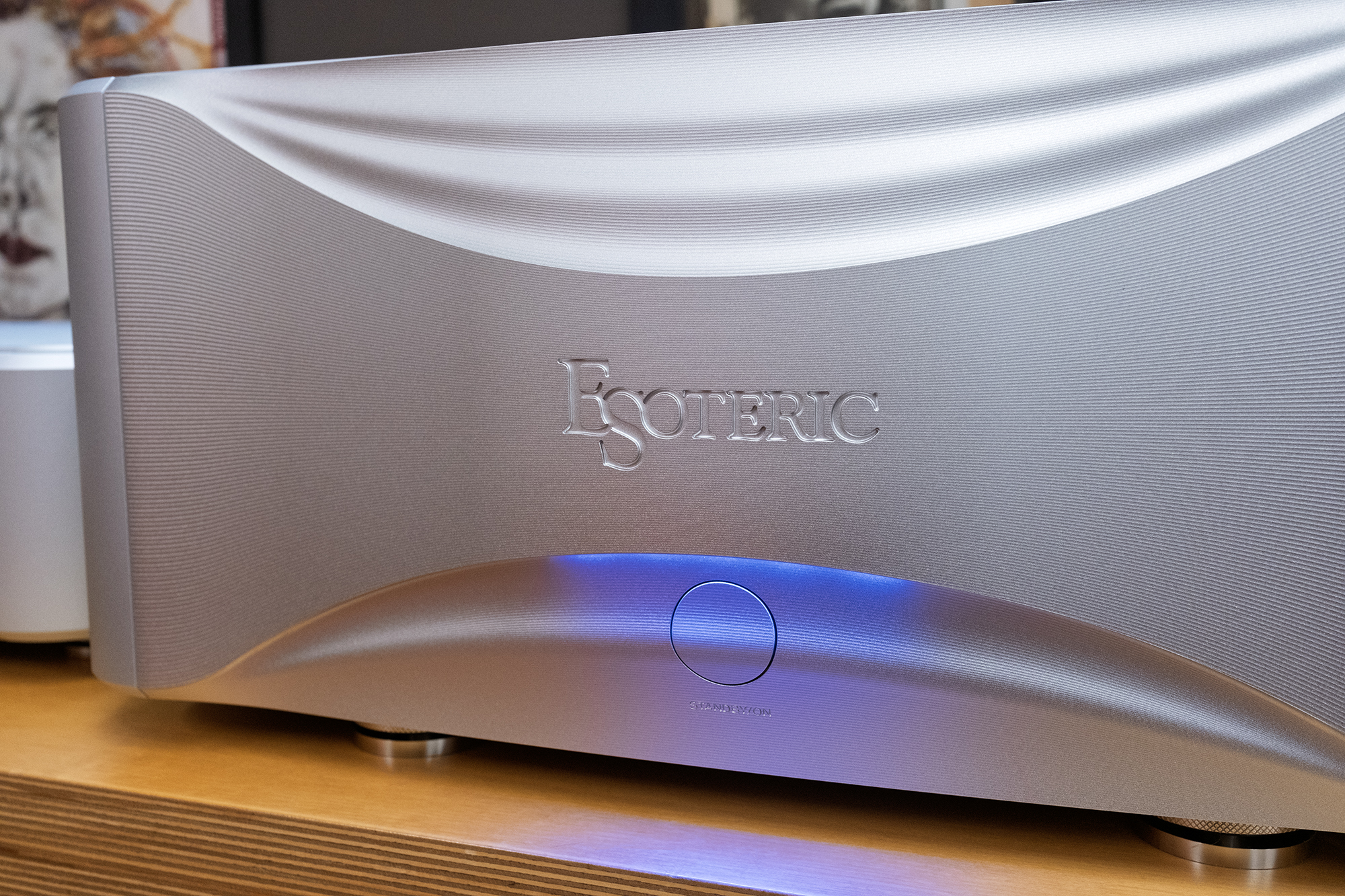
The S1X Stereo Power Amplifier runs in pure Class-A offering 50 WPC into 8 Ohms and double that into 4. It’s carved front panel houses an inset power/standby button and blue power indicator light that’s lit when the unit is on while the top plate offers ventilation for that Class-A heat.
I’m going to pause for a moment to touch on Class-A amplification as it brings some expectations along with it, whether solid state or vacuum tube. Chief among the sonic traits typically associated with Class-A designs is a rich full-bodied sweetness, the aural equivalent of raw honey as opposed to Class A/B’s cane sugar and Class-D’s Splenda. OK these are kinda gross and exaggerated generalizations but I know I can put together one of each kind of amplifier and they’ll sound very much like that analogy. On the down side, some Class-A amplifiers don’t have the current to control a speaker’s bass response, a problem that gets worse the lower the speaker’s efficiency and the greater its impedance swings.
The good news, the great news in my book, is the Grandioso C1X/S1X embodies those positive Class-A traits while offering superb bass control and I say this based on pairing the Grandioso stack with the recently reviewed Peak Consult Sinfonia (review) and the Barn resident DeVore Fidelity O/96 (review). That said, I initially found the Grandioso gear kinda weak in the bass department and a bit flat up top for a while, a good long while and it was only after about 6 weeks of playtime that the amp opened up to reveal its true self. In other words, the Grandioso stack took a while to break in and if I’d written this review after a month or so, it would have been a very different review as the differences in performance pre- and post- break-in were obvious and important. I know some people don’t believe in break-in which is fine by me seeing as I don’t believe in people who don’t believe in break-in.
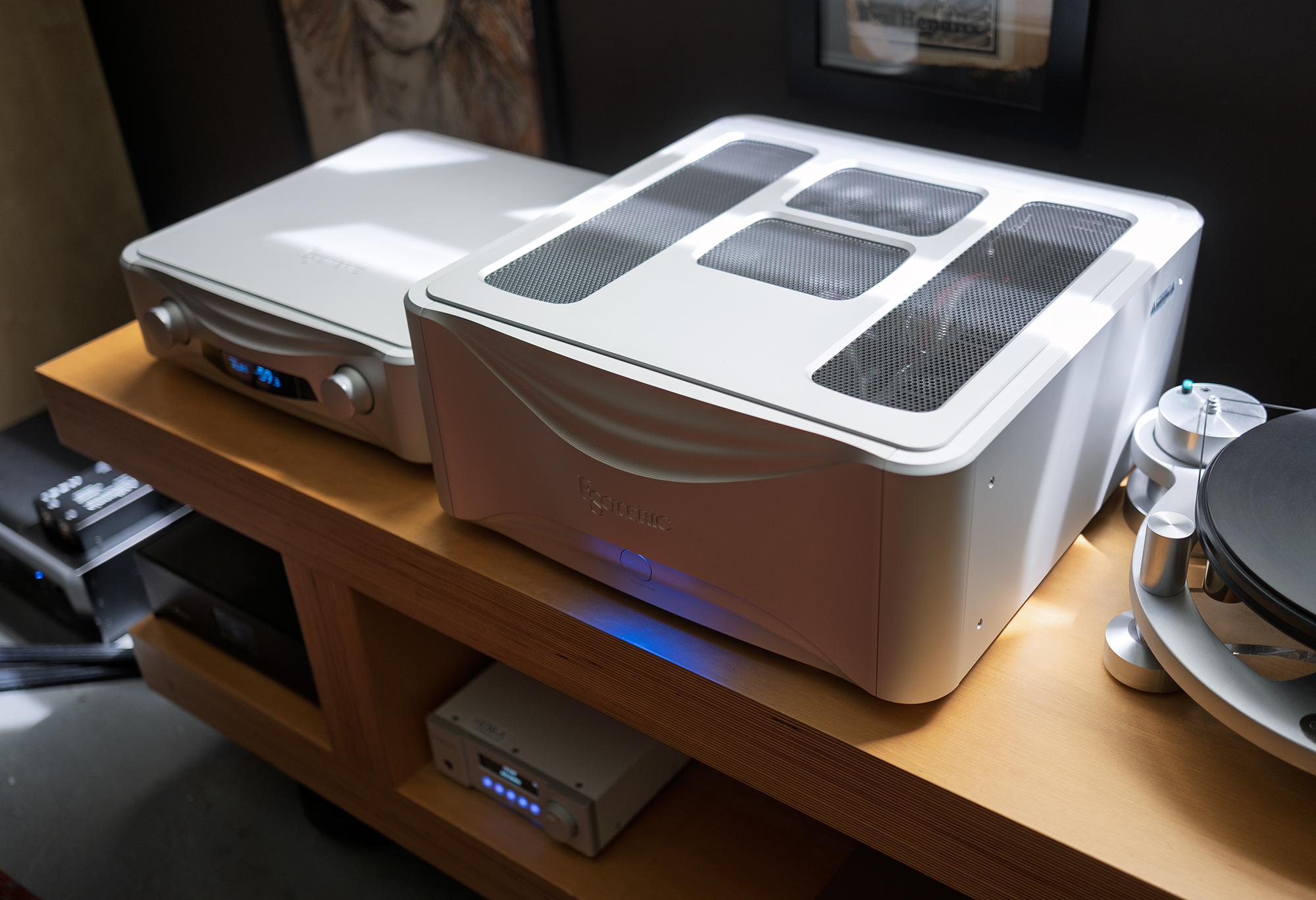
I will also note that both units have a ‘floating’ top panel and “high-precision metal pinpoint feet” with optional felt pads to protect your rack.
Here are a few Key Features of the S1X as highlighted by the company:
- Newly designed drive stage with 5-parallel push-pull drive by large bipolar transistors
- Pure Class-A operating range of 50W/8ohm provides a full musical expression that combines precision and dynamism
- “ES-Link Analog” transmission pushes the limits of fidelity between preamp and amplifier
- Superior power linearity for unparalleled dynamics (50W/8Ω to 100W/4Ω)
- Large toroidal-core power transformer that is extremely responsive to dynamic current supply changes
- 3-transformer configuration with independent power transformers for the pre-drive stage, main drive stage, and control system
- Channel independent high-capacitance Grandioso custom capacitors (10,000μF × 6/ch)
- Pure copper busbars, ultra-thick wiring, and shortest pattern connections significantly reduce internal impedance
- Balanced audio connections in each circuit block to ensure low noise
- High quality parts such as FET switch for input switching, discrete amplifier module IDM-01, etc.
If you’d like dig into more technical details, I recommend visiting the S1X’s Featues page on the Esoteric website.
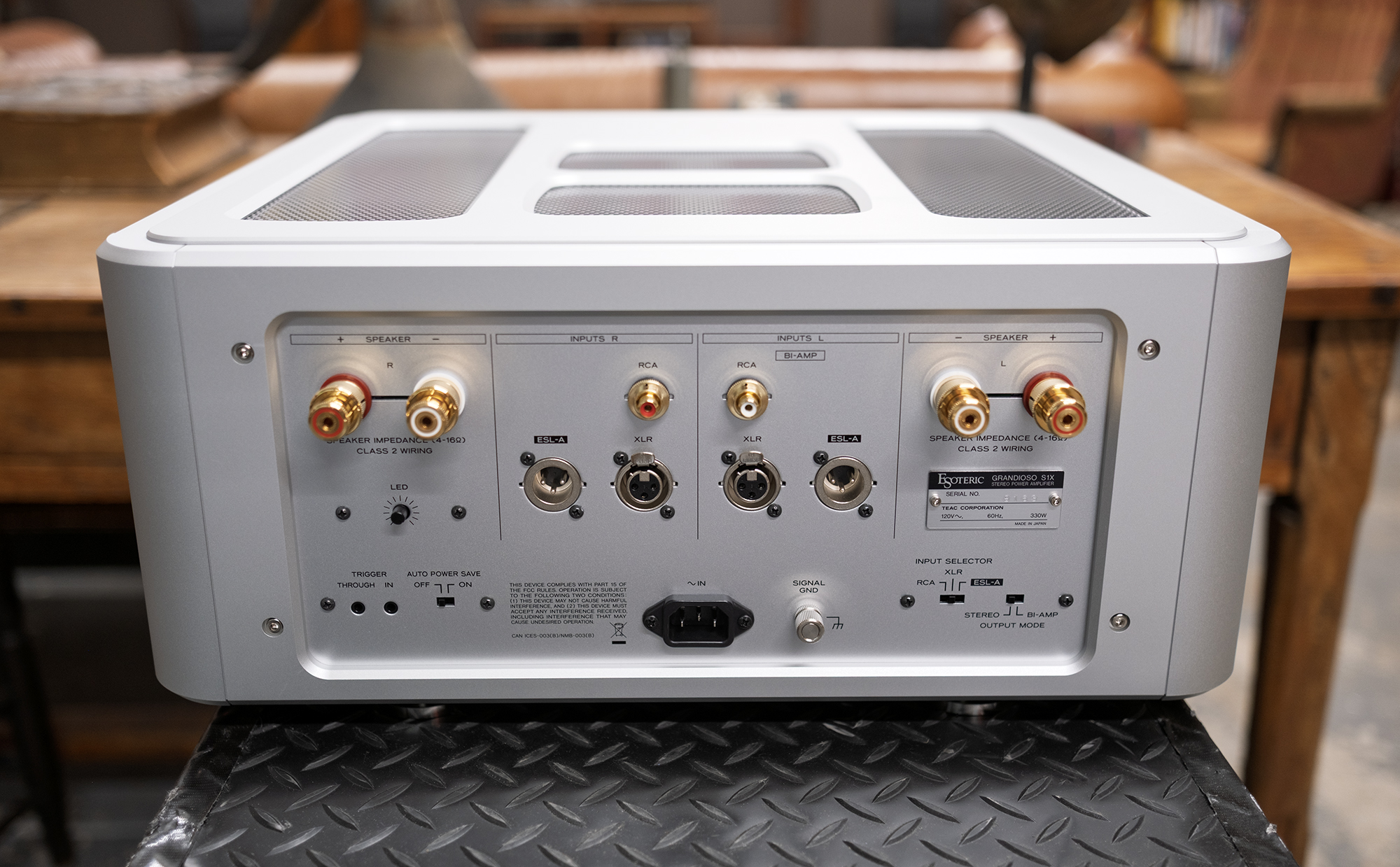
RCA, XLR, and the aforementioned ESL-A inputs are joined by a single set of speaker binding posts, LED brightness adjustment knob, Trigger inputs, Auto Power Save Mode switch (on/off), AC power inlet, Signal Ground terminal, Input Selector switch, and an Output Mode switch (Stereo/Bi-Amp).
The Grandioso S1X power amp weighs in at about 105 lbs which is now at the limit of movability for me working solo (with help from a hydraulic lift cart).
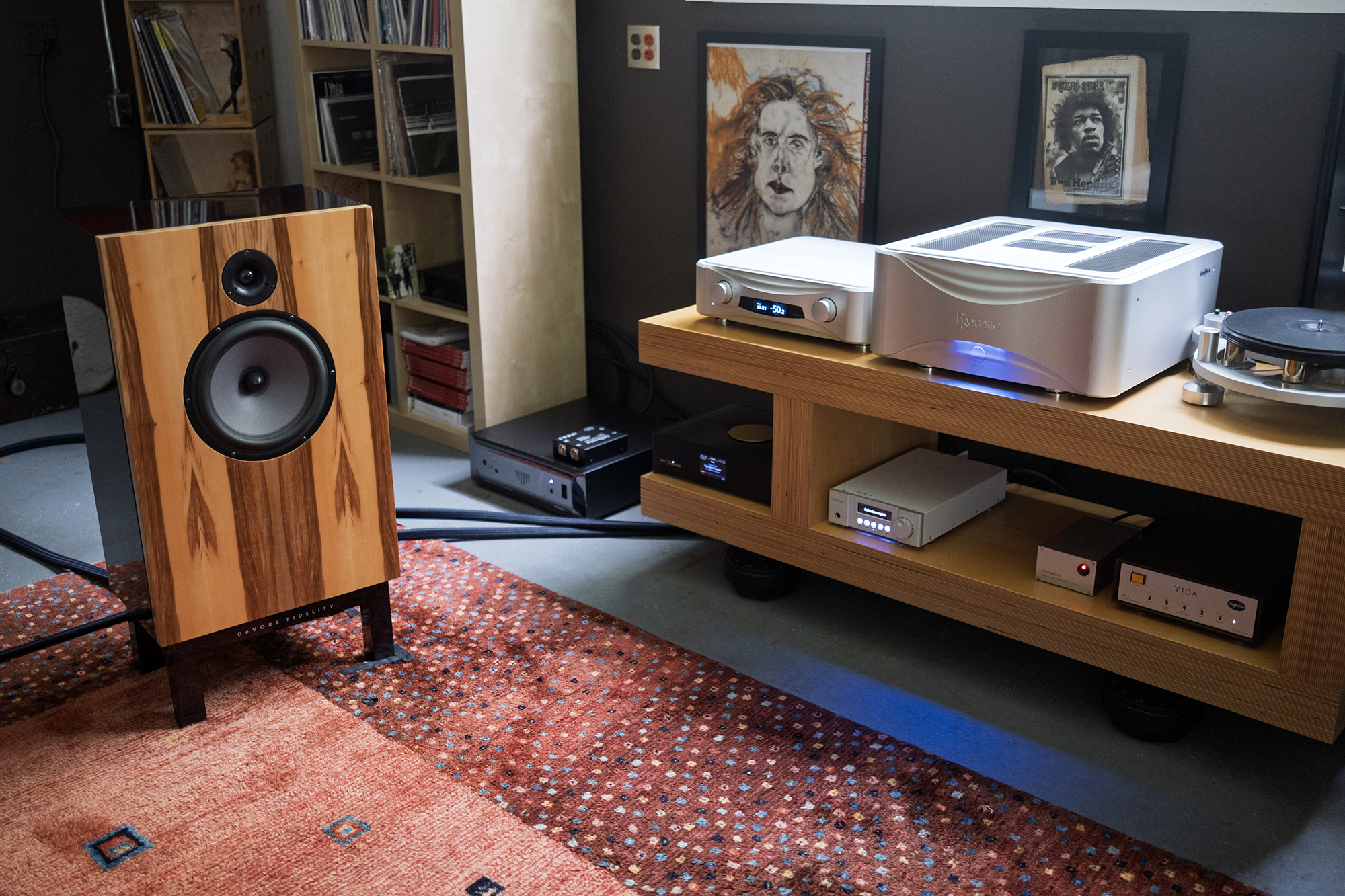
To my way of seeing, the Esoteric Grandioso stack’s appearance matches its name—grand—with more than a hint of refined elegance which is more than evident to anyone who has seen ‘em in person which I tried to capture with my camera but it’s obviously not the same. I think Gertrude Stein wrote, Photo is a photo is not an amplifier. My only quibble when it comes to the Grandioso stack’s looks is I wish the blue on the preamp’s display matched the blue light on the power amp (or visa versa).
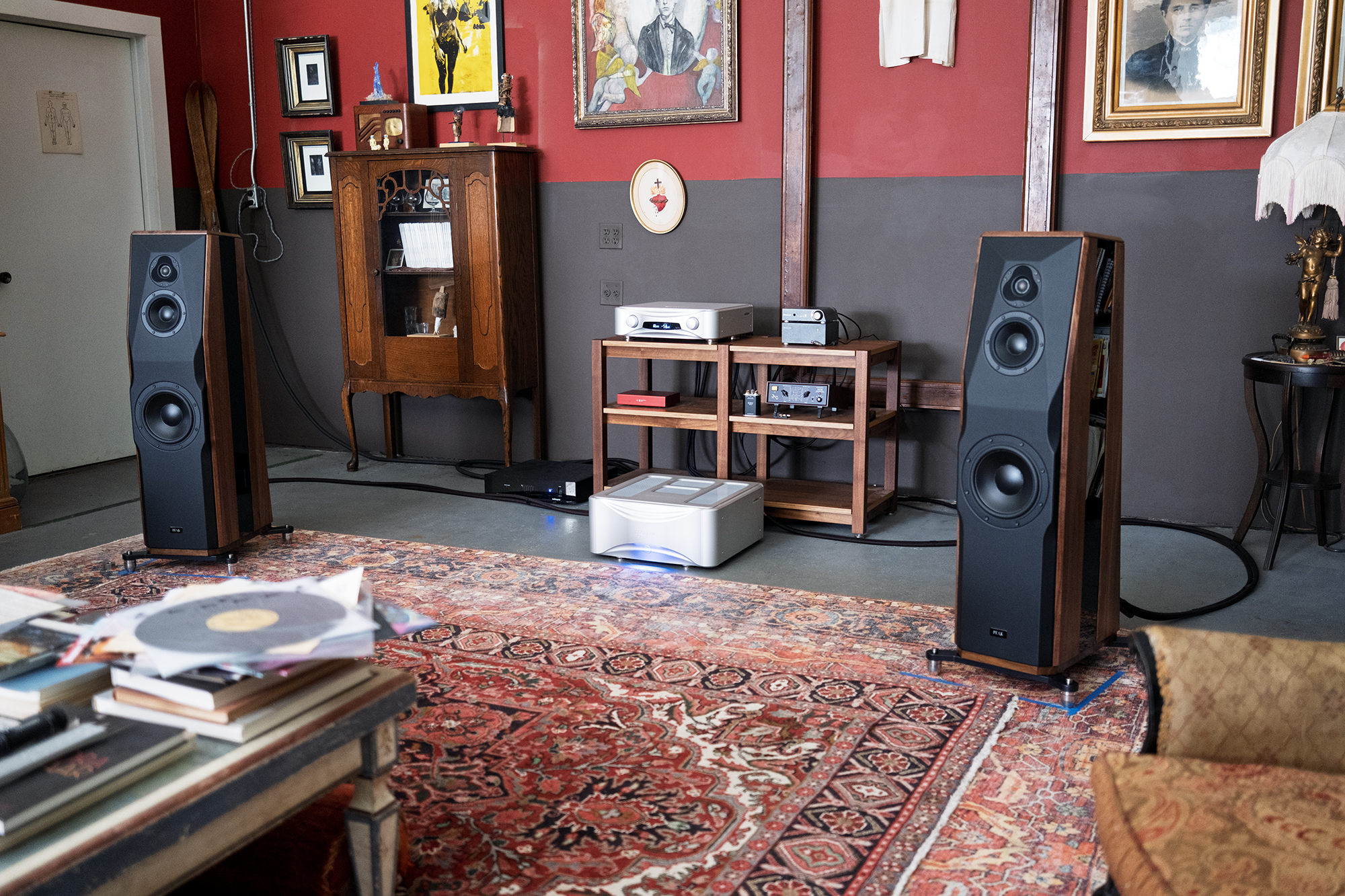
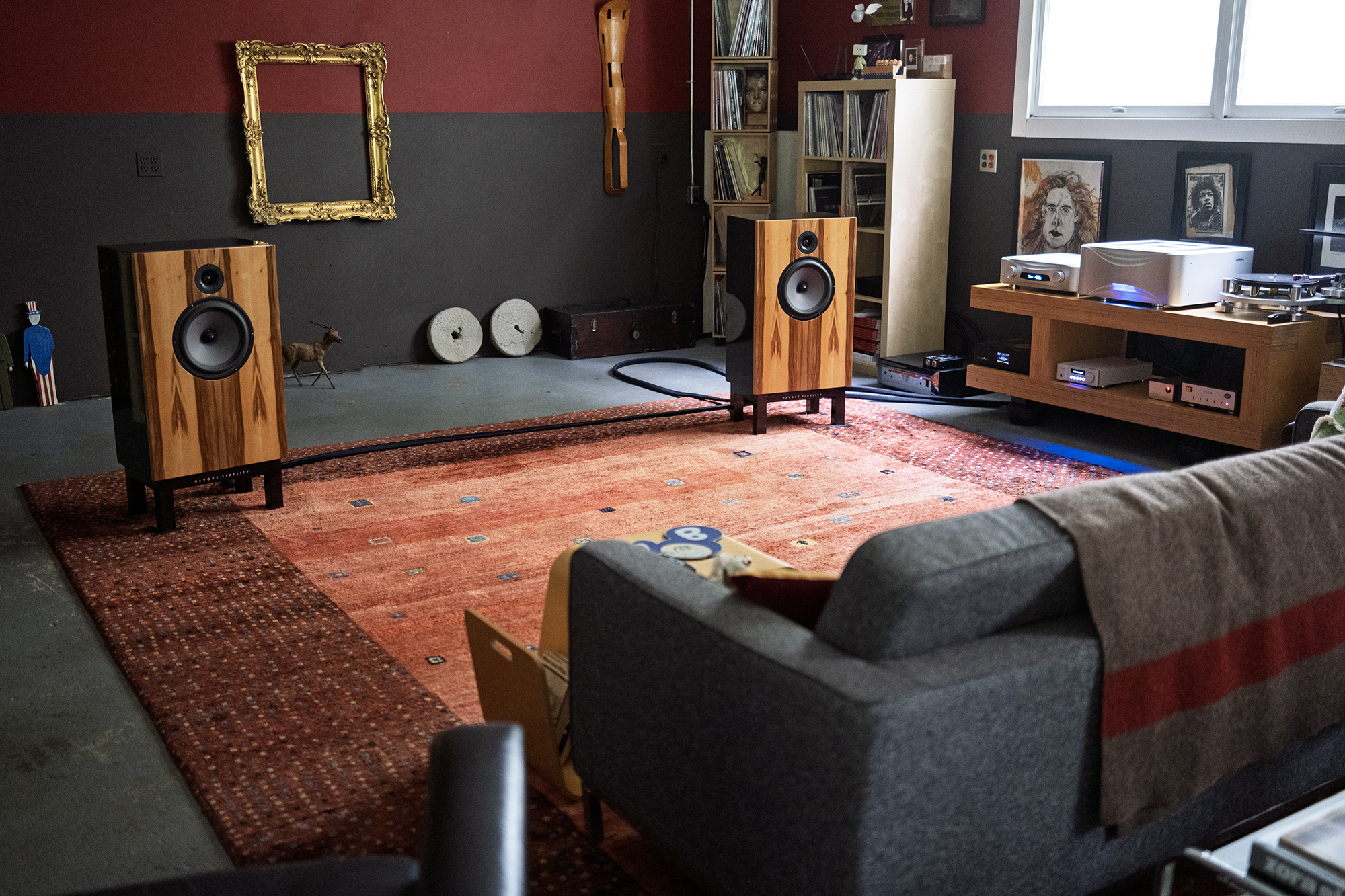
In addition to the Peak Sinfonia and DeVore O/96, the Esoteric gear got to play with the Barn resident Grimm MU1 (review)/Imersiv D-1 DAC (review) combo on the Barn’s A-Side and the Barn resident Holo Audio Red DDC & Network Streamer (review)/totaldac D-1 unity (review), Mola Mola Tambaqui (review), and the recently reviewed Wattson Madison Streamer/Power S combo (review) on the B-Side with all cabling and power conditioning from AudioQuest and racks from Brooklyn’s Box furniture (see full Barn and system details).
The following listening notes were written post-break-in.
It was late, later than I usually stay in the Barn and after a long day of crating up two pair of big speakers for return when I sat down to relax and listen. A friend was over who helped with the heavy lifting and we were taking turns picking songs and telling stories when I decided to play “Wee Rosebud” from Clarissa Connelly’s 2024 album World of Work. Yes, I was shooting for a stunner and this track delivers the real deal musically and sonically with Connelly’s vocals soaring into outer space, a vast place with no discernible barriers to speak of when played through a good hifi.
We were sitting on the A-Side listening through the DeVores and at the 0:20 mark when Connelly comes in and hits her first pure high note sounding nearly horn-like both our heads started that slow nod up and down in the affirmative, the affirmation of being in the presence of simply stunning sound. As this track builds and grows adding more layers of voices followed by acoustic guitars, bells, a Korg M1, and piano things get positively heavenly in a medieval manner and all of this sonic goodness felt real, rich, and oh-so-right through the Grandioso stack powering the O/96. The pluck of guitar strings had realistic and snappy attack and the vocals spread out in space with bells ringing off in the distance converting the Barn into some kind of grand open-air cathedral, a magical moment that faded into silence. Stunning.
I went back to this album a few times during the Esoteric Grandioso stack’s stay for all its weird wonder and superb sound that this system so expertly reproduced, turning time into breath and beauty.
It’s been six years since Phoebe Bridgers last solo album, a long time in album years, nearly forever in these times of non-stop inaction taking place online flooding our attention with an endless stream of mostly useless twaddle. Or so it seems to me. So its been about six years since I professed my admiration for the music of Bridgers but her latest, Lost Weekend released back in August on Dead Oceans, has refreshed and strengthened my feelings for it and her. One of the things I enjoy about Bridgers music is its sense of transcendence no matter how dark the story she’s telling.
Just after high school I worked as a landscaper for a few seasons and two guys on our crew, Jocko and Jiggers (I did not make up those nicknames), would occasionally show up Monday morning wearing the same work clothes they left in on Saturday, looking well worse for the wear. “Another lost weekend” is about all they’d say to explain their sorry state so this album title reaches back into personal territory touching on the Billy Wilder movie The Lost Weekend starring Ray Milland as an alcoholic writer as well as Jocko and Jiggers.
The album credits for Lost Weekend lists some 39 musicians that includes sweeping strings, horns, all manner of guitars (acoustic, electric, 12-string, pedal steel, bass, baritone), mandolin, pump organ, piano, synths, drums, and plenty of guest vocalists all adding up to a rich and varied feast for the ears (and emotions). I ran this record through both sides of the Barn with the Grandioso stack powering the O/96 and Peak Sinfonia and some common traits included exceptional dynamics, great bass grip especially so through the bass heavier Sinfonia, fine-grained resolution that displayed even the most heavily produced parts with clean clear clarity, and an overall sense of hearing the full scope of all these unique voices and sounds take up residence in a clearly defined space well free from the speakers in play. Rich and rewarding according to my reaction.
I have a soft spot for the sweet-toothed version of Webern’s complete music for string quartet as performed by the Quartetto Italiano recorded in 1970 and released on Phillips. The complete works span a wide range of styles over some 33 years. Of course music for string quartet narrows one’s focus sonically as compared to the previous albums mentioned here and this narrower focus on acoustic instruments really let the Esoteric Grandioso gear shine. The interplay of timing, tone, and texture is practically dizzying on “String Quartet” whose manuscript included a quote from German philosopher, Christian mystic, and Lutheran Protestant theologian Jakob Böhme which read in part, “The sense of triumph that prevailed within my spirit I cannot write nor tell; it can be compared with nothing but the birth of life in the midst of death—the resurrection of the dead.”
While our property borders on a cemetery, I did not sense any resurrections but the Grandioso stack certainly gave a full, rich, and compelling account of the Quartetto Italiano’s sweeping opulent portrayal. When paired with the DeVore O/96 the sound of this music was as rich as I’d want bringing to mind dark tones and hues of well worn wood aged to a rich amber that made me long for a snifter of some ancient spirits. I’m talking about complete immersion in the sounds, moods, and movements of Webern’s string quartets made possible by the Esoteric gear’s many riches in sound.
The recently reviewed Aesthetix Calypso Eclipse Tube Linestage and Atlas Eclipse Power Amplifier (review) overlapped with the Esoteric stack’s stay and they got to play through the same speakers using the same front ends and cables. The Aesthetix gear are hybrid designs and the combo comes in at $34k while the Esoteric combo is nearly double that at $63k so not a fair apples-to-apples comparison. Nonetheless, there are aspects of the Aesthetix gear’s performance that I preferred, namely its sense of greater speed and dynamic snap combined with a sweetness that belied its Class A/B origins and 200 Watts of power (into 8 Ohms). The Esoteric gear certainly had greater weight overall, a kind of saturation that made music feel more full-bodied and rich while offering fine-grained resolution and superb bass control.
In terms of other comparisons, my Favorite Amplifiers includes the Riviera Labs APL10 Preamplifier / AFM25 Monoblock combo (about $60k review) and the stunning but pricier JMF Audio PRS 1.5 Preamplifier / HQS 6002 Amplifier ($84k review) and I’m going to send you to those reviews for the full story on each stack’s sound. The important thing to note is how each of these exceptional pre/power combinations are exceptional in their own way in terms of where they’re made, how they’re made, how they look, feel, and sound. When we reach this level of performance, amplifier Class falls by the wayside as does measured performance which necessarily give way to personal preference and system building.
There are very few amplifiers I’d recommend hands down and due to the Esoteric’s 50 Watts of Class-A power, some consideration needs to be taken when picking the accompanying speakers. Then again I’d say this about 99% of the amplifiers I’ve reviewed.
Getting back to break-in, I was sitting on the A-Side’s couch one night and cued up “Vanishing (Vanished Dub)” from The Bug and Dis Fig’s EP Vanishing and remember cursing out loud when the deep bass hits soon after the track begins. “Damn!” This is subterranean music in more ways than one and I enjoy inhabiting these dank atmospheres grounded by nearly sub-sonic sounds. It was at that deep bass Barn-shaking moment I realized I hadn’t heard what the Esoteric Grandioso C1X/S1X combo could do up until that point and I spent the remaining weeks of review time playing all manner of music, reveling in reproduction that felt earthy and badass when called for.
I am as much a creature of the eyes as ears and the Esoteric Grandioso stack proved to be a delight for both. If you love the idea of living with beautifully made gear from a company with a long hifi history that makes music sound and feel rich, full, and alive the Grandioso C1X solo Preamplifier and Grandioso S1X Power Amplifier combo were made for you.

Esoteric Grandioso C1X solo Preamplifier: $26,000
Esoteric Grandioso S1X Stereo Power Amplifier: $37,000
Company Website: Esoteric
US Distributor Website: Playback Distribution
Esoteric Grandioso C1X solo Preamplifier Specifications
Analog Audio Inputs
XLR/ES-Link Analog × 3 pairs
Input Impedance 50kΩ
Input Sensitvity 500mV (at rated output)
Maximum Input Level 11.7V
RCA × 2 pairs
Input Impedance 500kΩ
Input Sensitvity 500mV (at rated output)
Analog Audio Outputs
XLR × 2 pairs
Output Inpedance: 30Ω
Rated Output: 2V
Maximum Output level: 17V (1kHz, 0.003%)
ES-Link Analog × 2 pairs
Output Impedance: 30Ω
External Control
RS-232C
Connector:S-sub 9pin × 1
Trigger Input
Connector: 3.5mm Monaural mini jack × 1
Input Level: 12V, 2mA
Trigger Output
Connector: 3.5mm Monaural mini jack × 2
Output Level: 12V, Total 100mA maximum
General
Power: AC 120V, 60Hz | AC 220-240V, 50Hz
Power Consumption: 22W
Standby Power:0.3W when RS-232C Remote control is disabled, 1.0W when enabled
Overall Dimensions (W×H×D):445 × 132 × 449mm (including protrusions)
Weight: 27.5kg
Included Accessories
Power cord × 1
Remote control (RC-1334) × 1
AA batteries × 2
Felt pads × 4
Owner’s manual × 1
Warranty card × 1
Audio Performance
Frequency Response: 1Hz to 150kHz (–3dB, XLR)
S/N Ratio: 120dB (2V input, IHF-A, XLR)
Total Harmonic Distortion: 0.00035%
Gain: +12dB
Grandioso S1X Stereo Power Amplifier Specifications
Output
Rated Output: 50W + 50W (8Ω Class-A)
100W + 100W: (4Ω)
Compatible Speaker Impedance: 4Ω to 16Ω
Analog Audio Inputs
ES-Link Analog × 1 pair
XLR × 1 pair
RCA × 1 pair
General
Power: AC 120V, 60Hz | AC 220-240V, 50Hz
Power Consumption: 310W (270W at no signal)
Overall Dimensions: (W×H×D) 491 × 221 × 536mm (including protrusion)
Weight: 48kg
Included Accessories: Power cord × 1
Delt pad × 4
Owner’s manual × 1
Audio Performance
Frequency Response: 5Hz to 100kHz (+0dB, –3dB, 8Ω)
S/N Ratio: 109dB (IHF-A, XLR)
Total Harmonic Distortion: 0.006% (1kHz, 8Ω, 50W)
Gain: 28.5dB (XLR) | 34.5dB (RCA)