
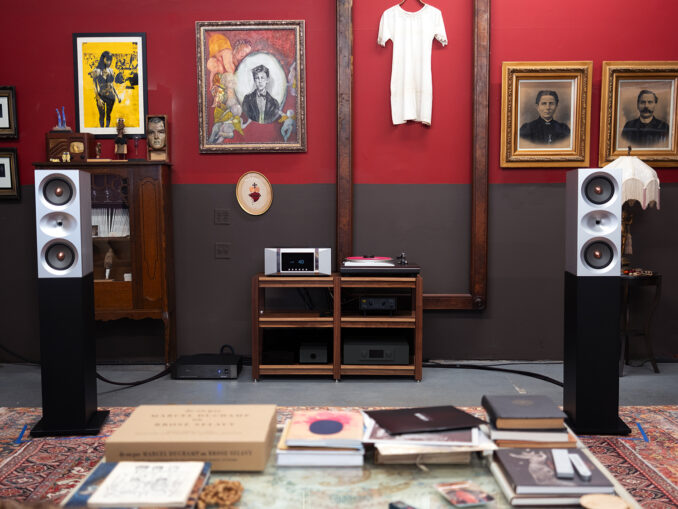
A complete Thrax system. Just add turntable.
As I sat in the throes of Rage Against the Machine’s “Bullet in the Head” during CAF 2025, my adrenaline flow and smile grew in equal proportion. The sound was big, even in this big mostly empty room, and lightning fast keeping pace with Tom Morello’s singular sounding guitar wizardry. As I said in my show coverage, “Where’s my lighter?” which was the first thought that ran through my head at the track’s end followed thereafter by—I’d like to review this.
“Hey Oz,” I said the Thrax Distributor Ozan Turan of High End by Oz, “I’d like to review this.”
“Which piece?”
“The whole thing.”
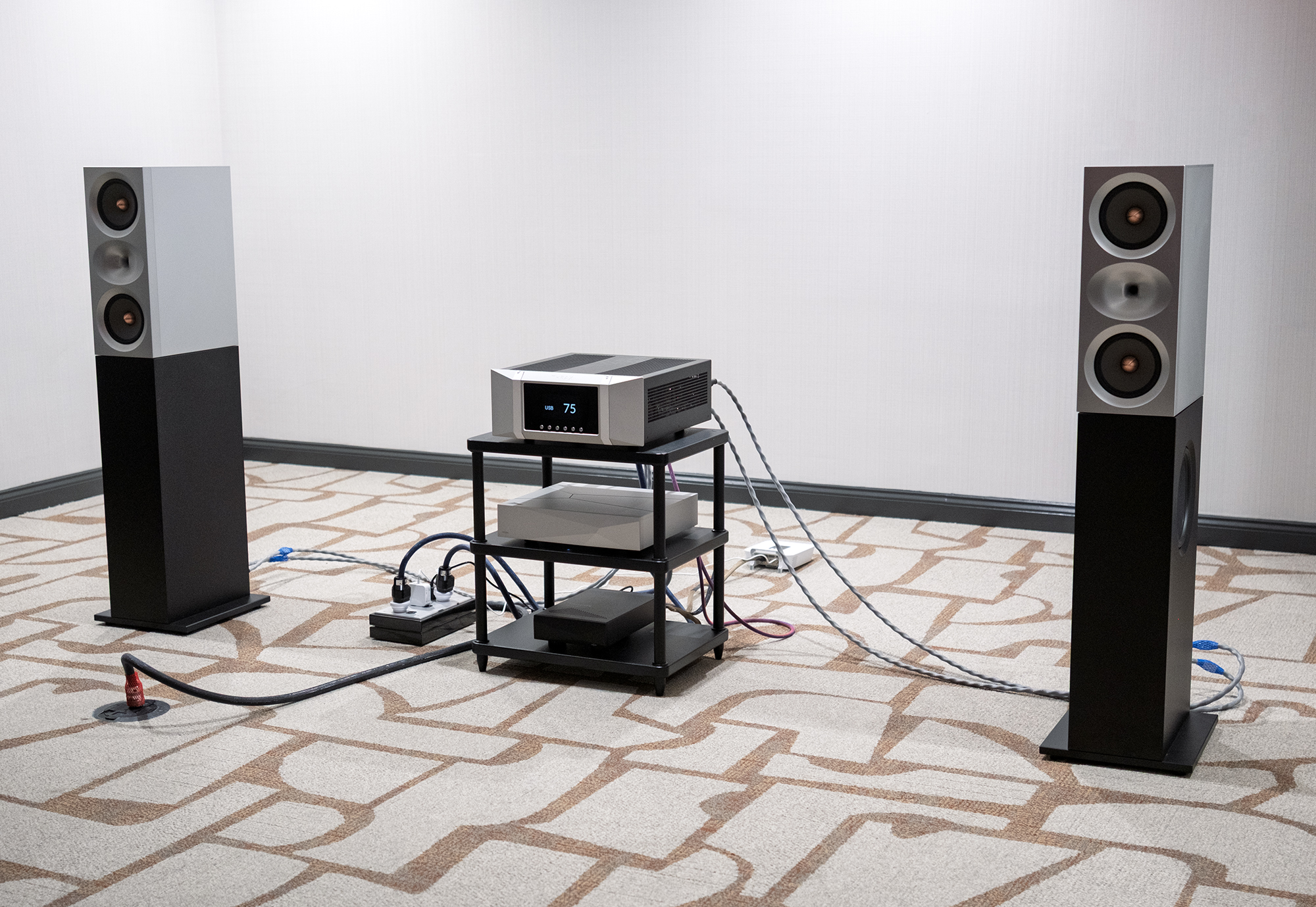
And I wanted the whole thing because I wanted to bring that high speed energy directly into the Barn. Post haste.
If you want to get a good sense of some of the things the Thrax system does really well, cue up Carrier’s 2025 album Rhythm Immortal, sit back, relax, and explore. Within minutes, if you hear what I heard, you’ll say, “I see!” And what you’ll hear is a system with the speed of a horn more than capable of describing the smallest of details within the largest sonic spaces with deep powerful bass and the overall coherence of a fine two-way with plenty of color and texture to really light things up. Add all of that up and we get music that sounds and feels as alive as a lightning strike lighting up a vast night sky. But I’m getting ahead of myself.
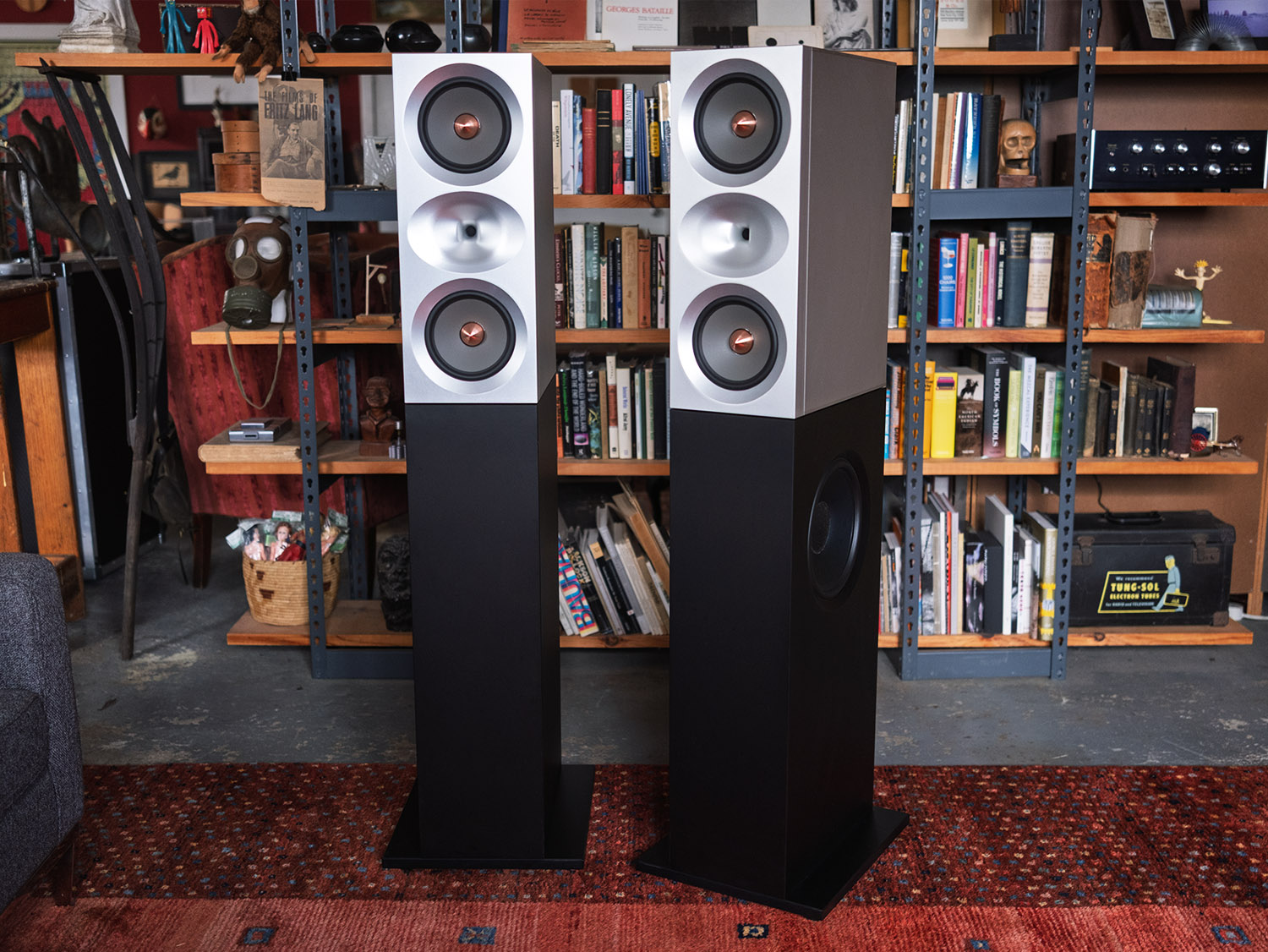
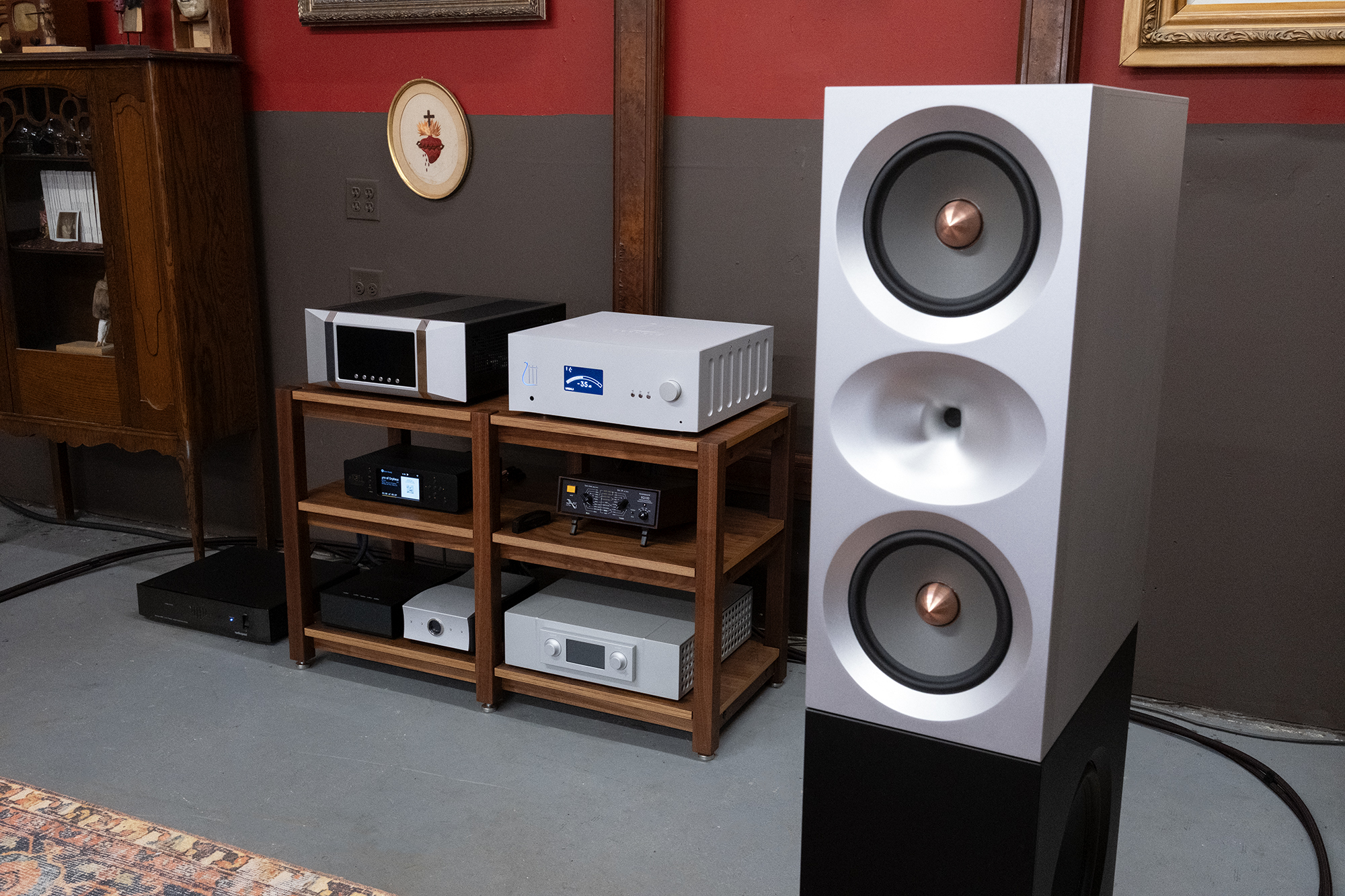
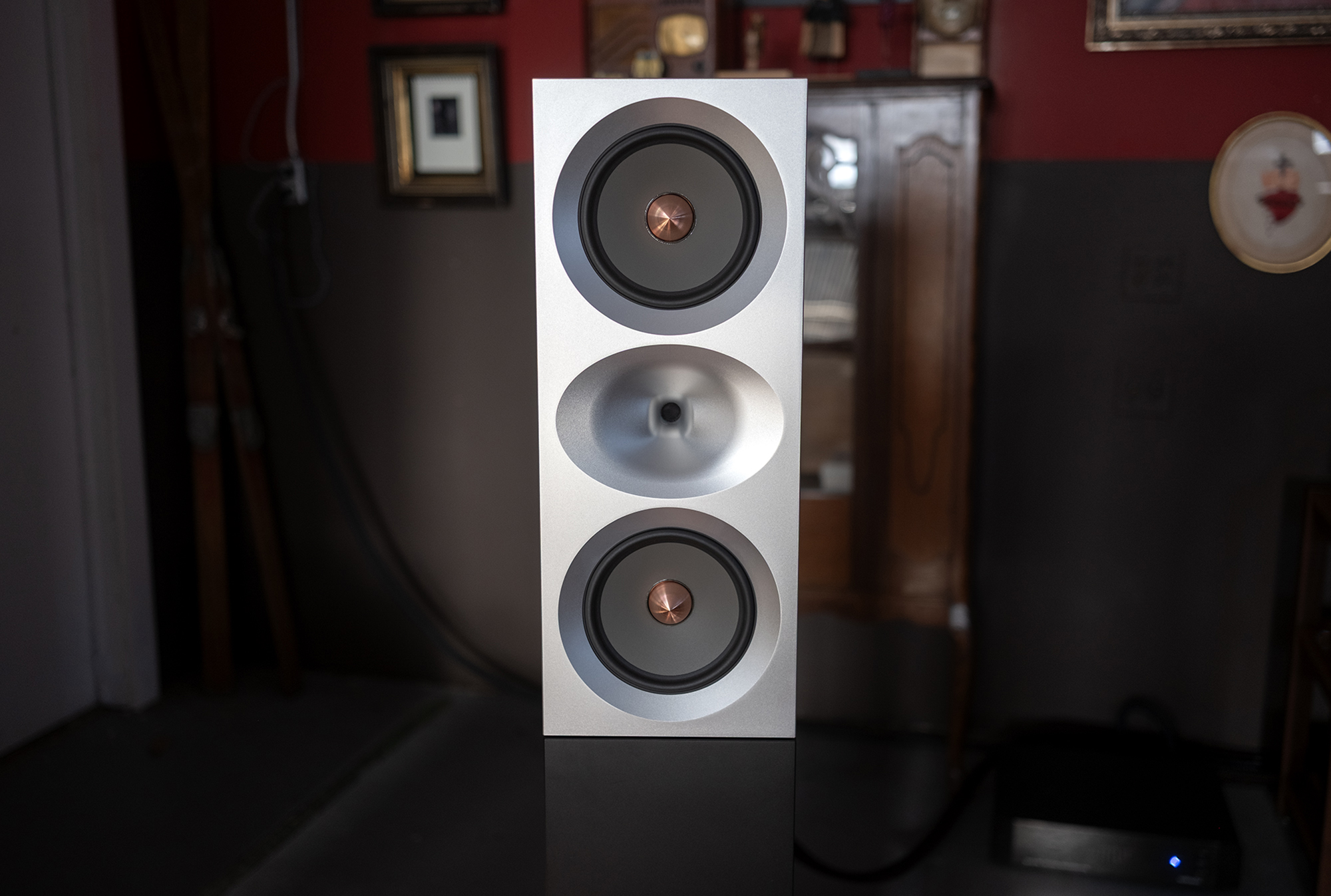
The all-aluminum body 2-way Thrax Lyra SE feature a 1″ horn loaded custom designed low-compression ring diaphragm tweeter that reaches down to 1600Hz mated to a pair of 5.5″magnesium diaphragm bass/midrange drivers, MTM style, with nice looking copper phase plugs. Frequency response for just the Lyra SE is rated at 34Hz – 20kHz with a claimed sensitivity of 90db/2.83V. The Hades subs are also wrapped in aluminum and house a single 10″ side-firing ScanSpeak driver per side. The Lyra SE are also available in black aluminum if you prefer a matchy-matchy look. Thanks in large part to their aluminum enclosures, the Lyra alone weigh in at over 75 lbs a piece. Think solid.
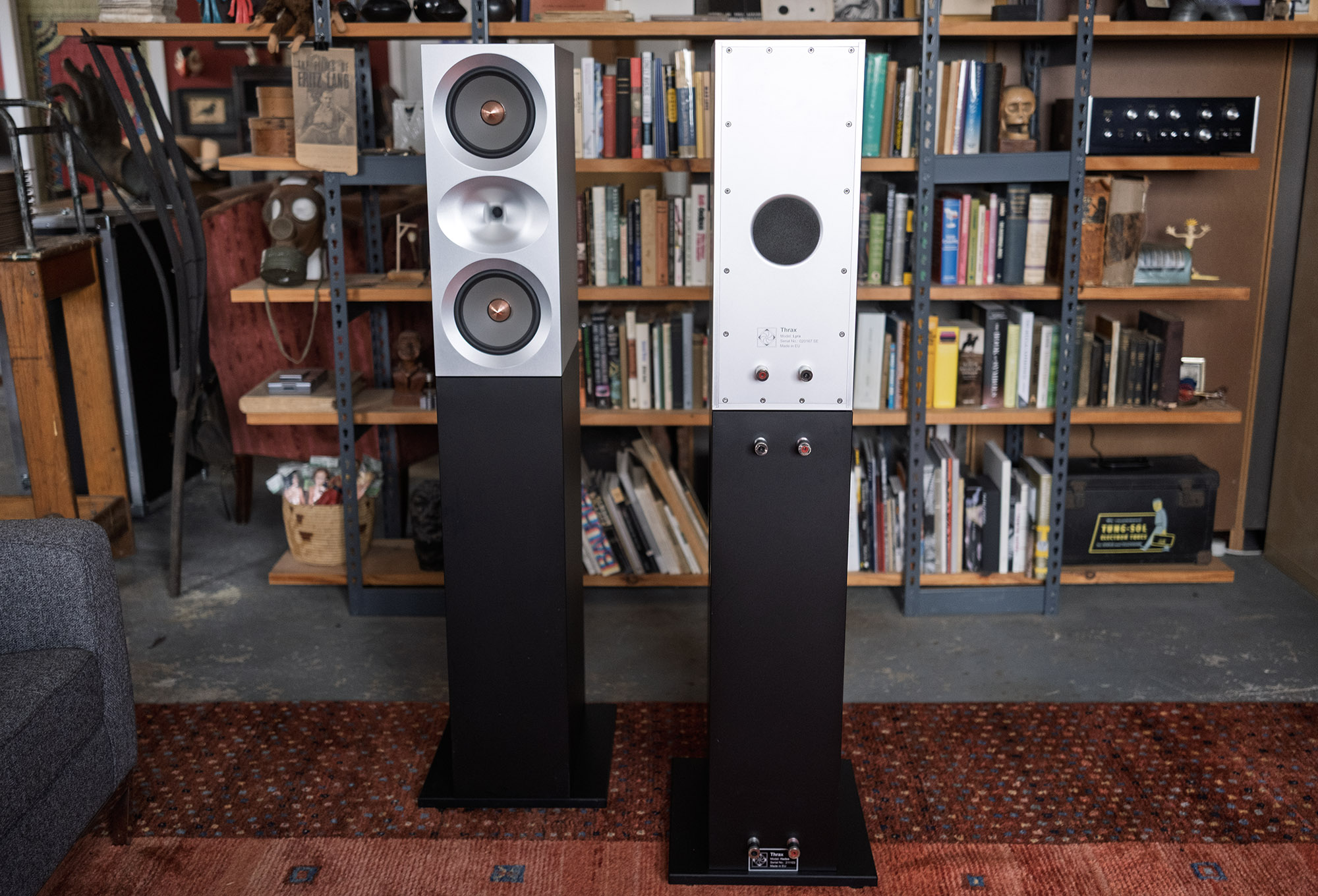
The Lyra SE’s bass reflex port gets plugged when using the Hades passive subwoofers that include two sets of binding posts, located top and bottom. This allows for two options—connect your amp to the bottom pair of posts on the Hades while the top set connect via jumpers to the Lyra or connect your amp to the Lyra’s posts and jumper down to the Hades.
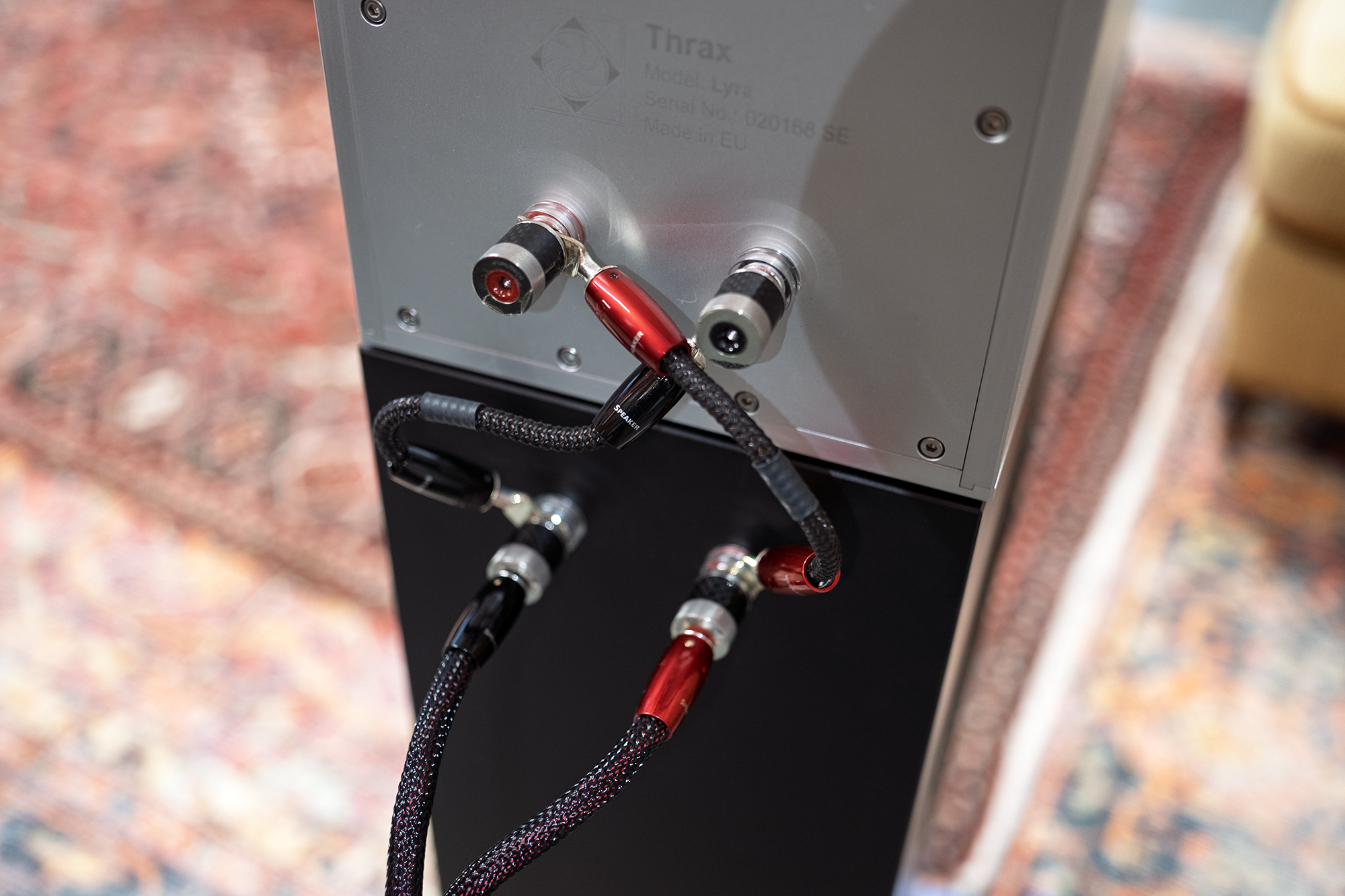
I tried both ways and found I preferred top down so to speak with the AudioQuest Braveheart speaker cables going to the Lyra’s bottom posts as opposed to connecting to the Hades own. While not a night and day kinda difference, I heard an improved sense of detail and separation going top down.
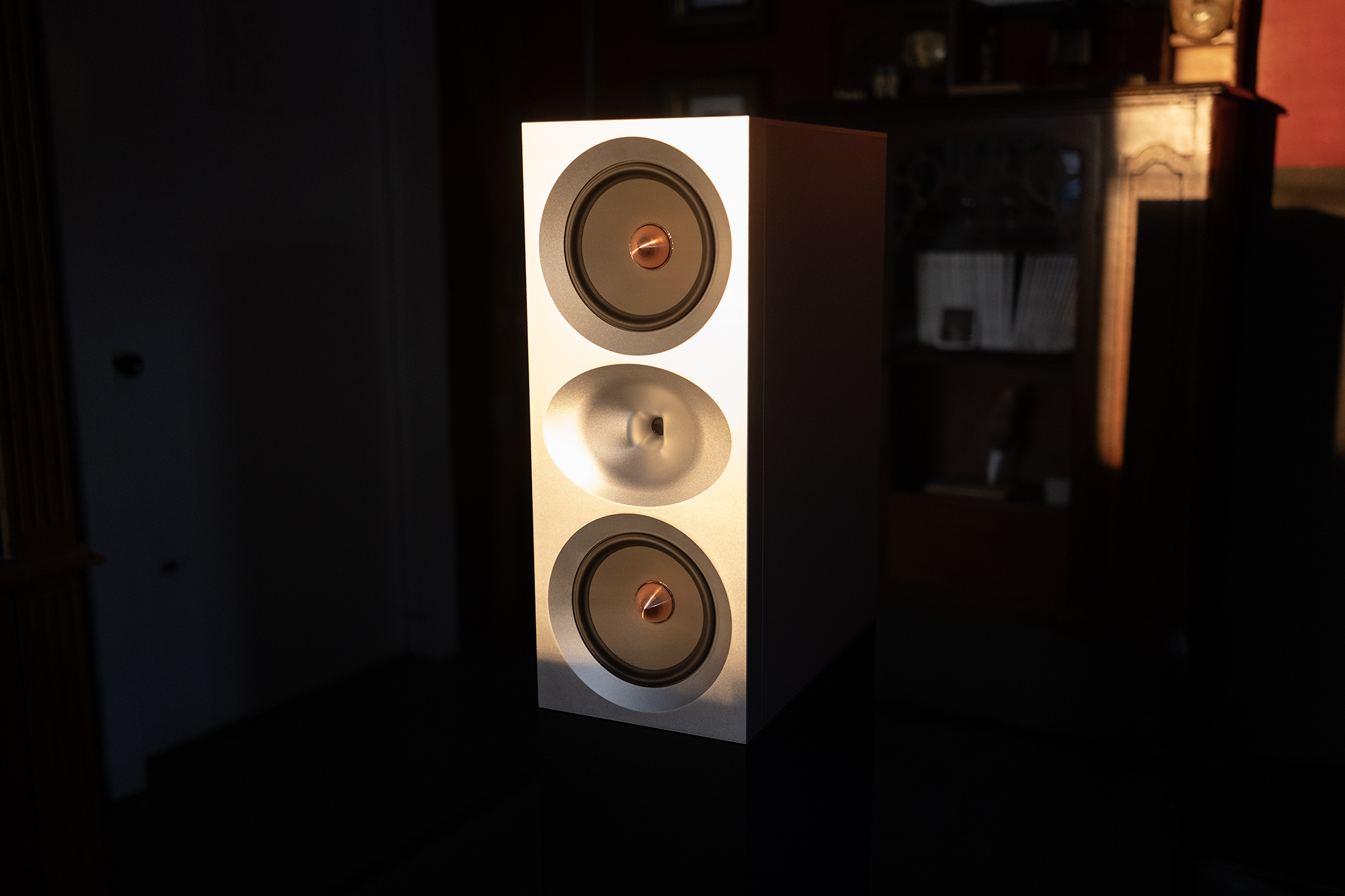
In terms of looks, fit ’n finish, the Lyra/Hades combo are kinda deceptively lovely largely due to their minimal design and lovely matte finish that captured the changing Barn light beautifully. With high gloss finishes, light bounces off the surface of the speaker which has its own appeal while reflecting back its surroundings. On the other hand the Thrax speakers seem to absorb light, turning it into a soft glow which I find more appealing from an aesthetic sense.
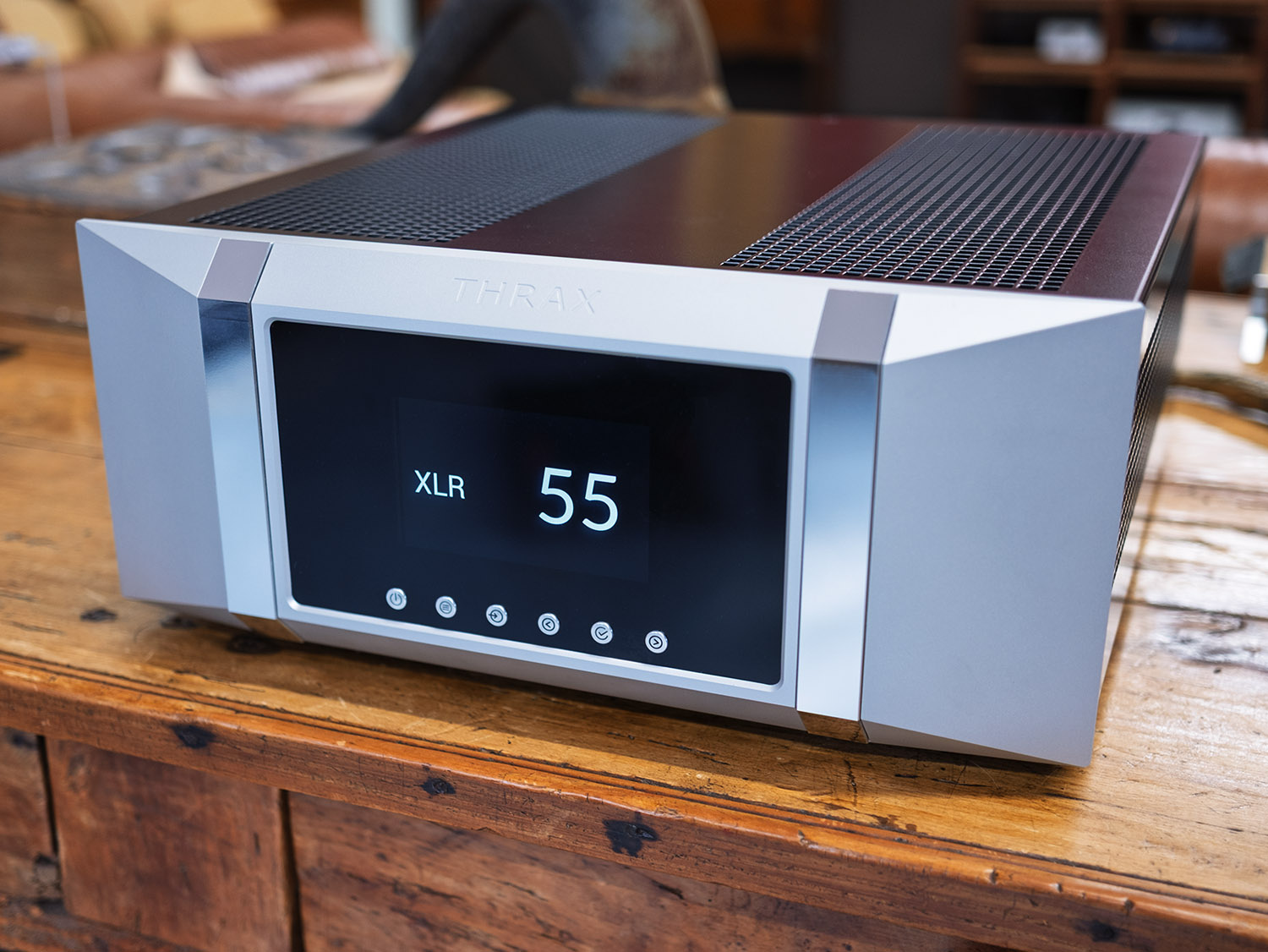
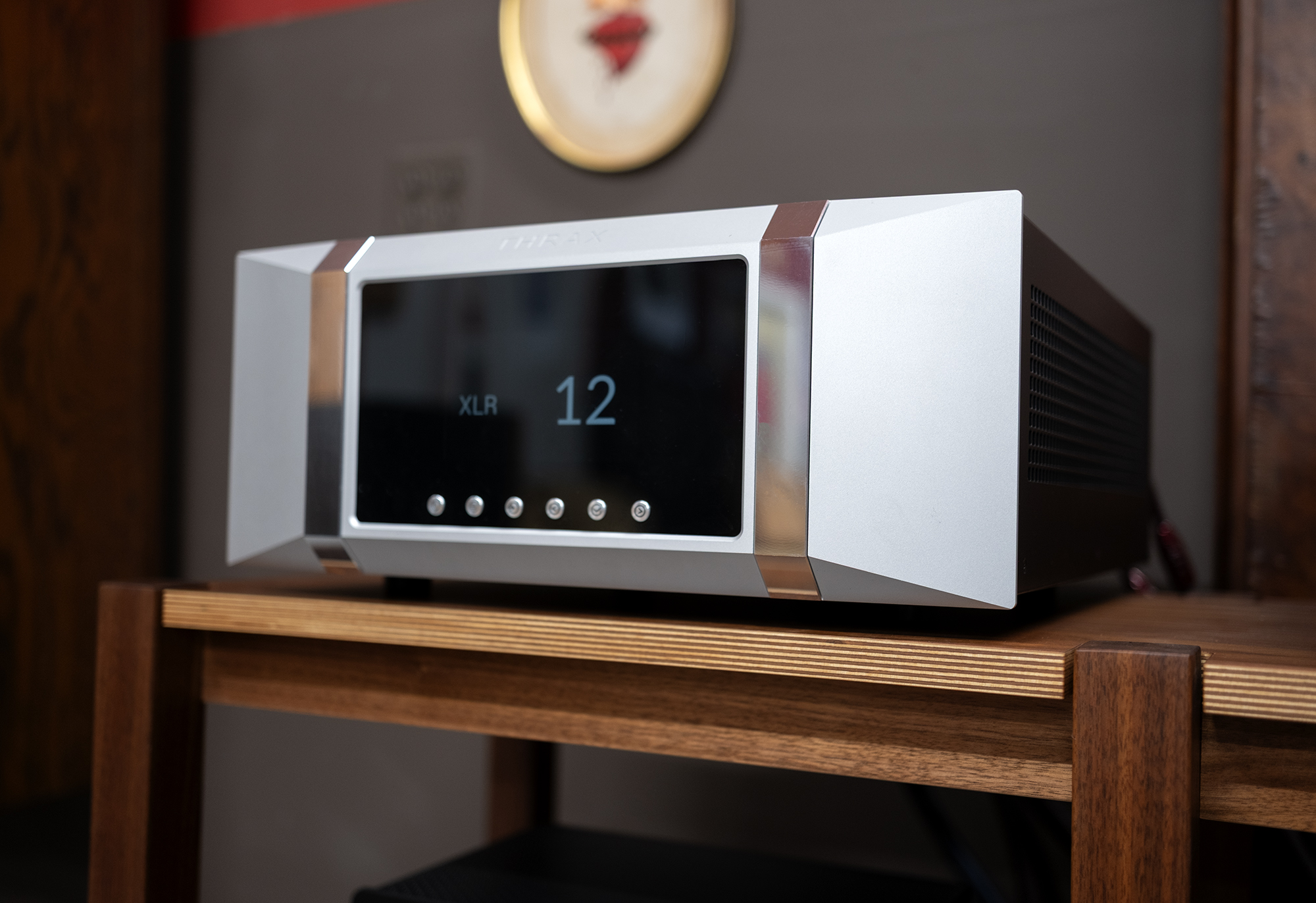
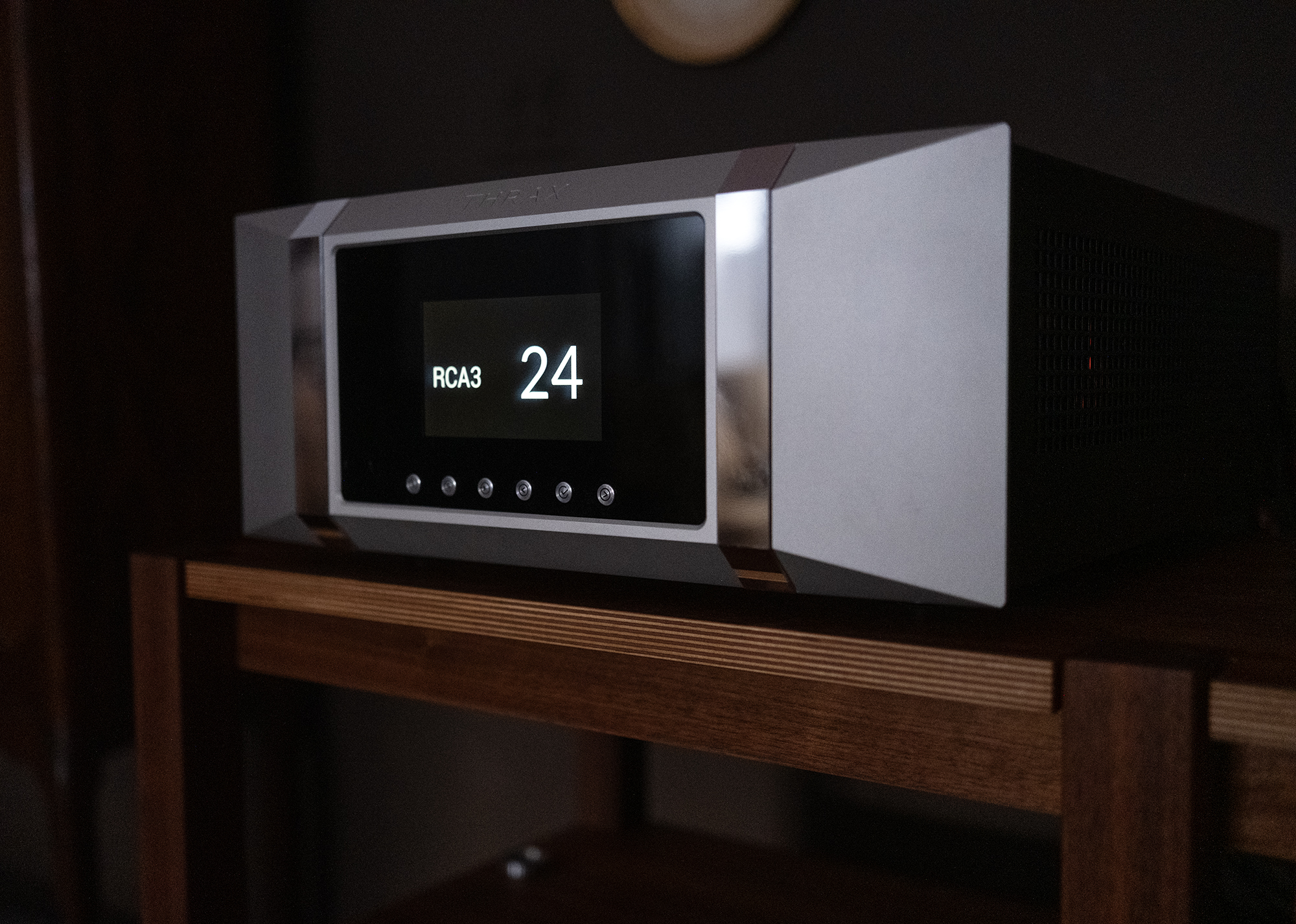
This matte versus gloss finish plays out on the matching Thrax Enyo MK2 Integrated Amplifier with its silver anodized aluminum finish sporting two stainless steel strips running down the front. I reviewed the Enjoy Signature back in August of 2023 (review) and I recommend reading that review if you want a more complete take on just the Enyo driving other speakers.
From Thrax:
The power amplifiers used in Enyo are a completely new design based on our research over the last 10 years, with a 3-stage fully differential architecture. The output stage uses the rare arrangement of cathode feedback while retaining the usual ultra-linear connection of the pentodes. This required the design of a special output transformer wound on double C-core GOSS. Driving this output stage called for the development of a special front end circuit accommodating positive grid swing. DC-coupled tubes are rare but Enyo uses only a single capacitor in the signal path.
The input and driver tubes used are our favourite 6n6p. While the output stage duty goes to the GU50. The Gu50 tube is based on Telefunken LS50 but made by the Soviets for the radio communication in the MIG planes. This is evident by looking at the socket locking the tube from falling out due to heavy vibration.
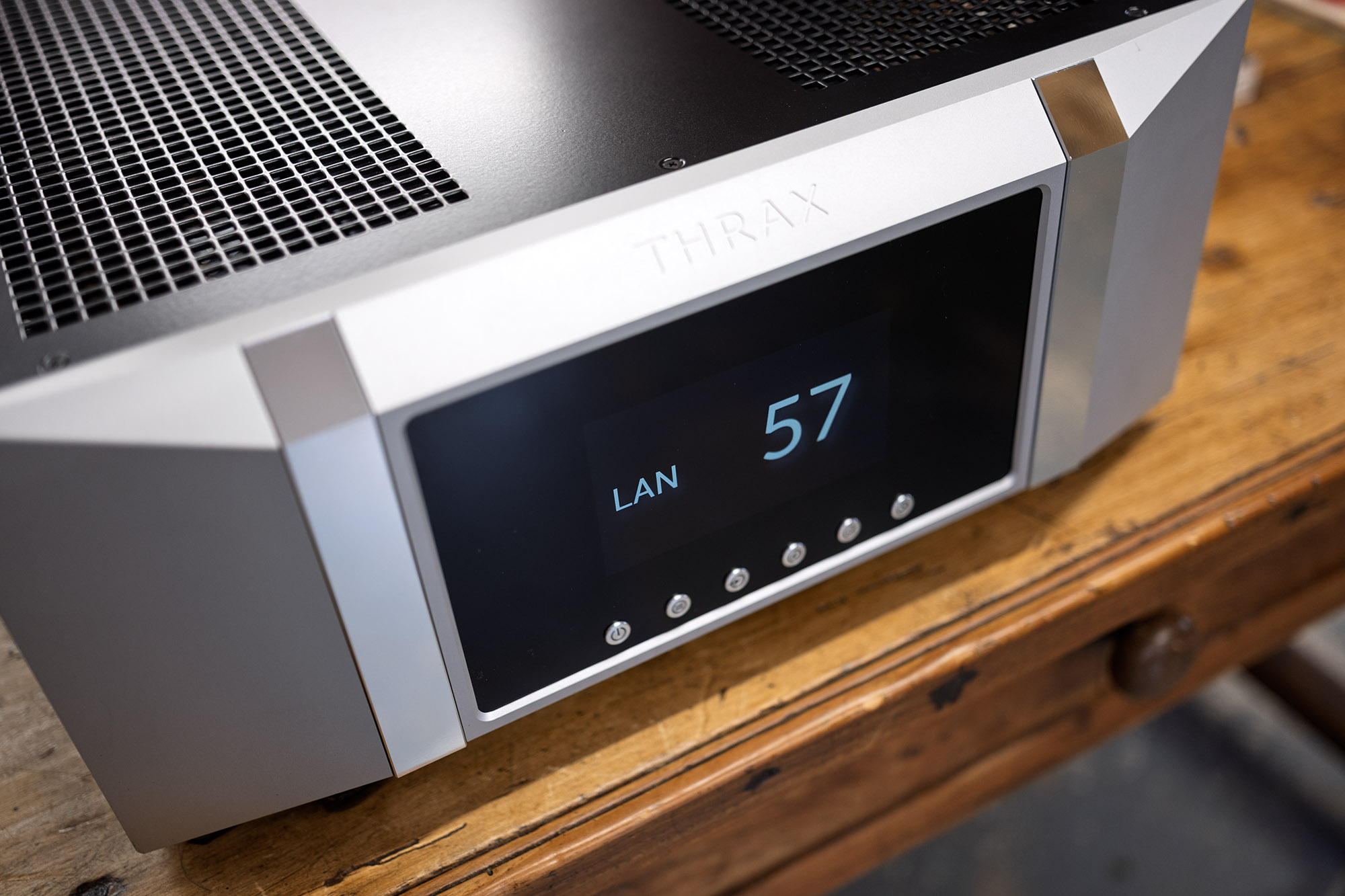
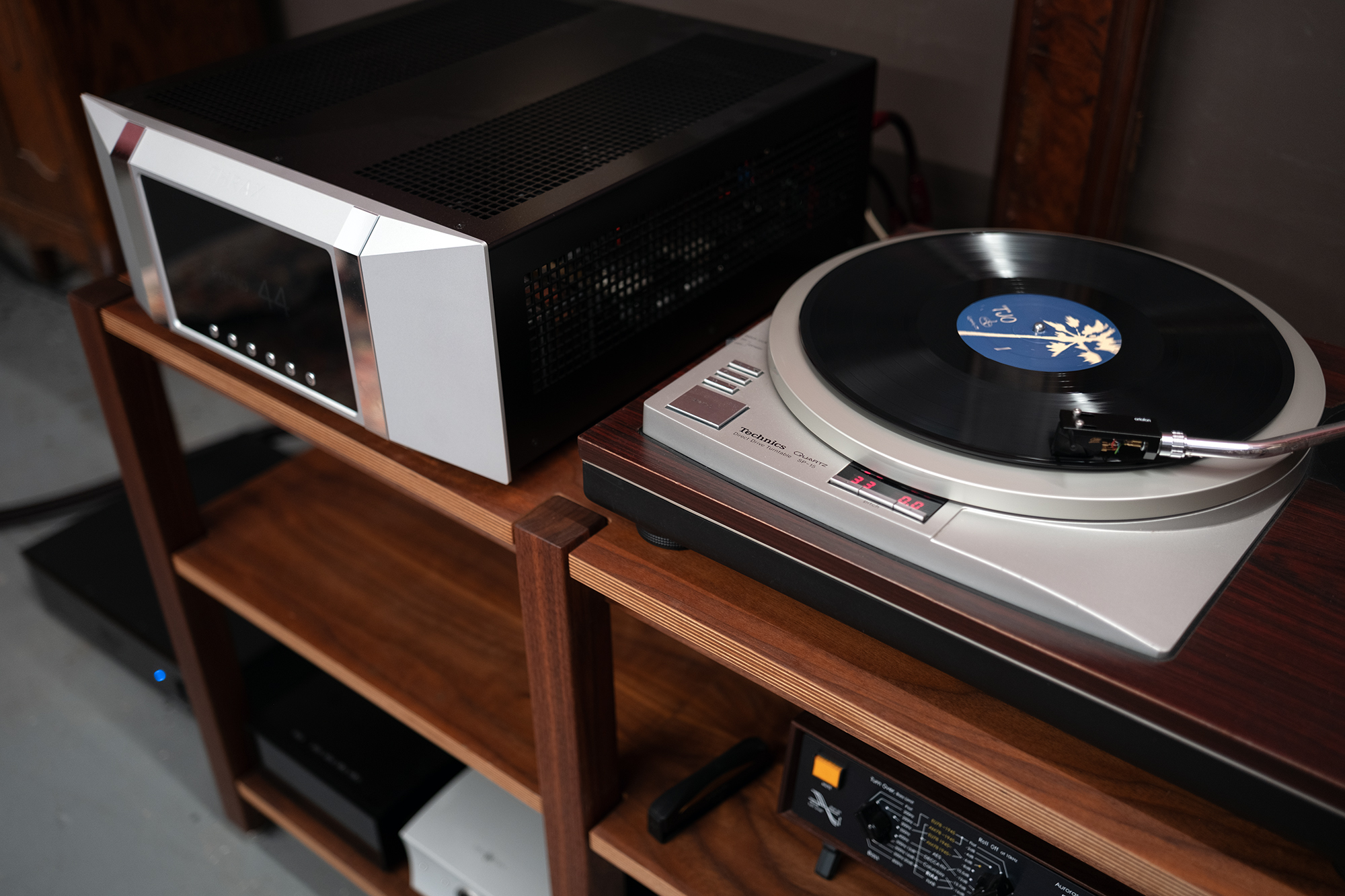
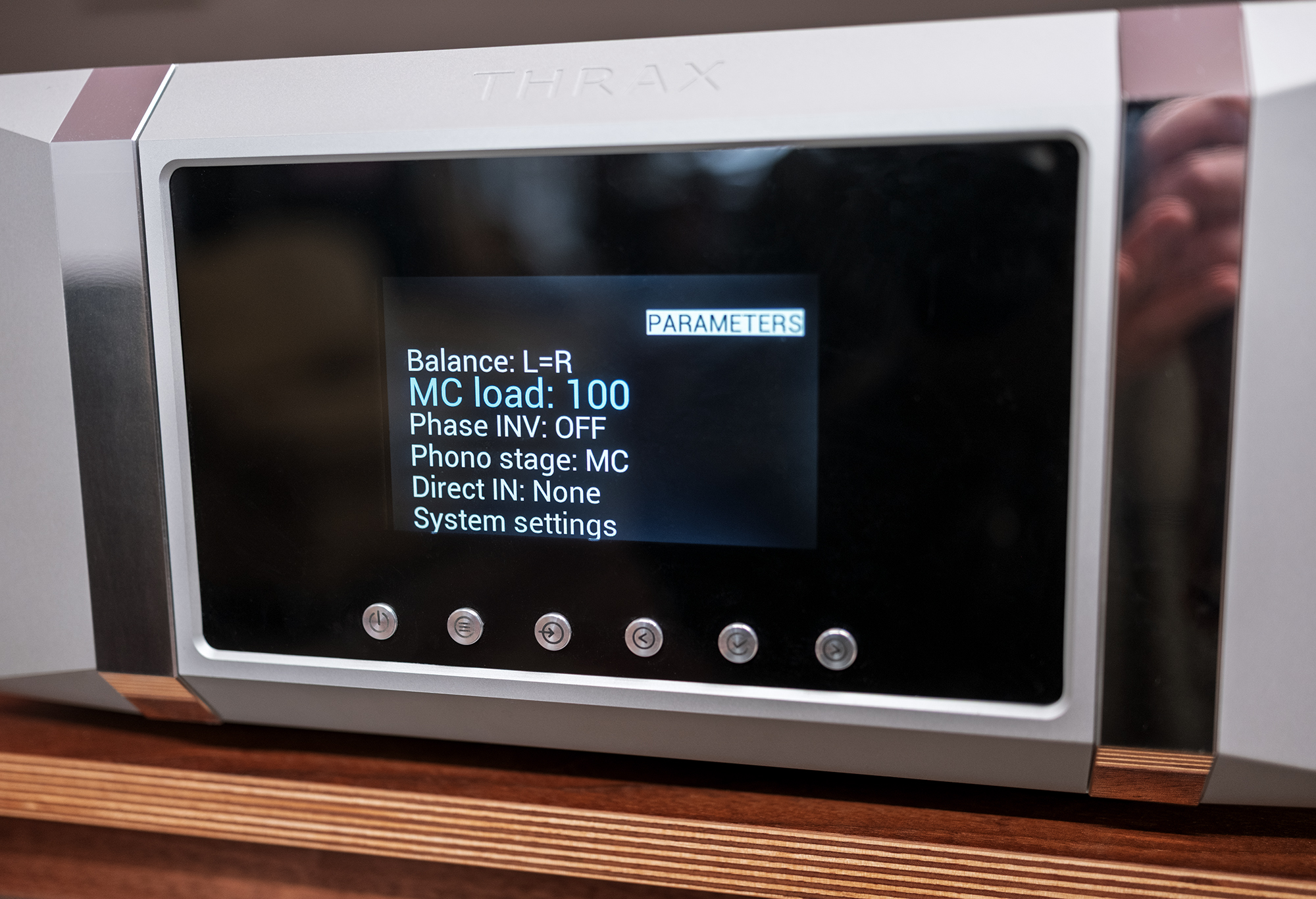
The fun all-in-oneness of the Enyo comes in with its Roon Ready streamer, a discrete DAC that supports up to 32-bit/768kHz PCM and DSD256, and a MM / MC phono stage. My listening focus in this review found most of my time using that inbuilt streamer/DAC and my trusty c1970s Technics SP-15 turntable. For fun, I ran with the Ortofon 2M Black MM cartridge as well as my Zu Audio Zu/DL-103 Mk.II MC cart (spoiler alert—I prefer the Zu/Denon if I had to choose just one).

The Enyo hosts 6x digital inputs, 1x MM/MC input, 2x single-ended and 1x balanced line level inputs as well as 4 and 8 Ohm speaker taps. I employed the 4 Ohm taps to mate to the Lyra’s 4 Ohm load.
I will note that I did try a few other amps with the Thrax speakers and found the recently reviewed Orpheus Lab Absolute Integrated (review) to be a fine mate as it offers a sweet silky smooth yet powerful sound that made the Lyra/Hades sing accordingly. That being said, seeing as the Thrax Enyo costs $800 more than the Orpheus Lab and includes a great sounding streaming DAC and MM/MC phono stage while sounding like it was made to be a perfect partner for the Thrax speakers, system building becomes an in-house, one-stop no brainer Thrax shop as far as I’m concerned.
Which gets us back to the reason I chose to go this all Thrax route—what better way to get to know a company’s house sound than by spending a few months with just their stuff?
Rumen Artarski is Thrax Audio’s chief designer and he founded the company in Sofia, Bulgaria in 2009 after spending a few decades in and around the business of hifi. That said, the company stresses the importance of a team comprised of “master craftsmen” and apprentices bringing the necessary balance of skills that go into every Thrax product.
From Thrax:
Our team has members with life long experience in the fields of electronics and acoustics but also being ardent audiophiles all the time. Their knowledge and experience extends to areas not covered in any current academic curriculum. The other part of the team are recently graduated young professionals driven by the passion for audio and educated to the latest trends and cutting edge technologies. The team has drive and creativity coming from young engineers with the error correction and wisdom of experience of the elders. A combination we see as unique in our field.
As a former business owner/employer, I appreciate the notion that experienced workers are a company’s “most valuable asset” and wish this sentiment—and reality—trickled its way into more companies instead of the greater and greater imbalance with fewer and fewer taking more and more approach that seems to be our new norm. Anywho….
The sound of this Thrax system was, in a word, compelling. Exciting on a daily basis for its combined skills that emphasized a fine-grained yet rich sound with a better than typical sense of presence, speed, and articulation. As a system, not a single thing about the Enyo or Lyra/Hades design ever spoke louder than the music rather the emphasis was always on everything that went into the music-making unfolding on the Barn’s B-Side. And this transformation from a collection of boxes and recordings into an ever-present experience that held my attention at the edge of the B-Side’s comfy couch made for pure enjoyment during the Thrax system’s 2-month+ stay.
It’s worth noting that the behind the scenes stuff that goes into a review, all of the cable swapping, gear swapping, A/B’ing, repeated tracks, cartridge swapping, and moving stuff around makes a focus on just the listening experience a tall task at times. Especially when a system—we always listen to systems not components–isn’t grabbing our attention due to its way with music. No matter the behind the scenes stuff I went through during the Thrax review period, I was always snapped right back into listening mode soon after I sat back down. This kind of experience goes a long way expressing the real value and appeal of hifi. At least according to me.
I’ve written about Guatemalan composer, cellist, and vocalist Mabe Fratti before but lately I’ve been enjoying her 2021 release Será Que Ahora Podremos Entendernos (“Will we be able to understand each other now?”) the mostest (this favorite album by an artist thing changes with time in my case). As is the case with all of Fratti’s work whether solo or as part of a group, this is adventurous music that delights in sounds and sonic spaces that combine to create a kind of alternate reality for our consciousness to spend time within. As such we want our hifi to make every sound, no matter how big or minuscule, to resound in space with a real-life feel and presence that’s as startling as the real thing and this is certainly one of the Thrax system’s strengths as Fratti’s cello with its many voices jumped out into the Barn with startling snap and body that seemed to reach inside, bone deep. Add in the other aural comings and goings on display from voice, synthesizers and field recordings and the Thrax system drew a vast world in sound that felt as finely detailed and fully formed in space as a projected dimensional image.
This system also runs dead silent so sounds emerge with great clarity and precision adding to the overall sense of real drama. Seeing as the Barn sits on 4+ acres of mostly wooded land down a private dirt road with a total of 3 other homes, 2 far out of sight, each sitting on larger parcels of property that sees a handful of cars come and go on any given day, I can hear silence.
Do you like beauty? More than a little bit of pure lovely? Mary Lattimore and Julianna Barwick offer up heaps of both on their recent album featuring heavenly harp and angelic vocals. If all that sounds over-the-top you haven’t listened to Tragic Magic.
Tragic Magic brings together Julianna Barwick and Mary Lattimore, two of contemporary ambient, experimental and electronic music’s most celebrated composers, for a unique collaboration at the Philharmonie de Paris, with extraordinary access to the Musée de la Musique’s instrument collection, in partnership with the French label InFiné. The album features seven immersive, evocative compositions guided by the human spirit – intimate, grounded in friendship, both earthly and cosmic – and part of a greater continuum, reflecting the solace and transformative power of artistry across generations.
Sitting on the B-Side’s comfy couch with this music washing over me and the ever-expanding collection of Barn things, it felt as if this Thrax system made this very music with all the delicacy, pluck, voice, and other sonic things resounding with life-like realism. While I typically avoid zooming in on a driver level, the horn-loaded tweeter in the Lyra deserves a shout out for its lack of shout and stunning articulation and sense of presence it endows to the music it’s responsible for making. Bravo!
URGH, Mandy, Indiana’s recently released Sacred Bones debut made the argument for the Thrax system’s ability to get down and dirty and menacing. This is fasten your seat belt music, noise-rock all twisted, gnarly, bold and relentless with hints of carnival creepiness the likes of which I haven’t heard since Nick Cave & the Bad Seeds early days with pounding percussion that turns things up to an even 13. Let me say this simply—the Thrax Enyo does not sound like a tube amp (many tube amps I’ve enjoyed also do not sound like tube amps), and by that I mean it sounds powerful, precise, and rich with more than enough umph to deliver every last ounce of URGH in all its manic glory. Color me impressed, again. This album really let the Thrax system flex its dynamic prowess and other finely tuned skills for an experience that nearly left me in a cold sweat. Badass.
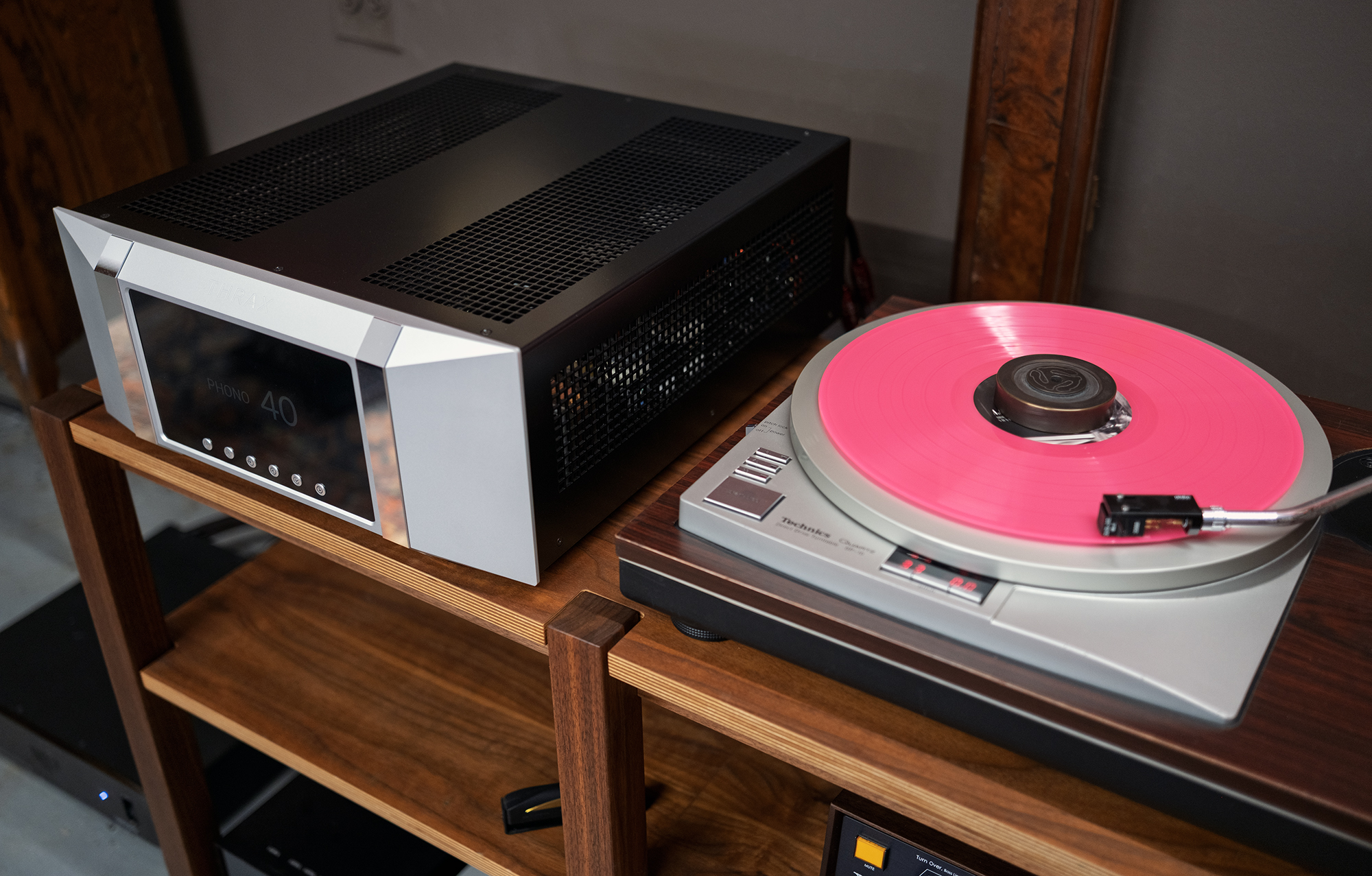
Seeing as I already spilled the beans about my preference for the Zu Denon DL-103, let’s talk about it riding the grooves of the A.A. Williams stunning solo album Songs From Isolation released back in 2021 on Bella Union. I only recently picked up this shocking pink vinyl version after realizing how often I listen to this collection of intimate covers that includes songs from Radiohead, Nick Cave, The Pixies, Gordon Lightfoot, and others. Very much like the amp itself, the Enyo’s phono stage is a dead silent runner and this album, somewhat surprisingly in its shocking pinkness, is also dead silent fresh out the shrink wrap and with the Zu DL-103 doing to delicate work, A.A. Williams’ powerfully emotive voice filled the Barn and me with warm wonder.
Piano rang out with the richness you’d expect from a nicely recorded record and the Thrax system’s ability to startle with lightning fast dynamic snap! added to the immediacy and moving interpretations of “Creep,” “Into My Arms,” and “Porcelina of the Vast Oceans”. To my way of hearing, the Thrax phono stage built into the Enyo does not require an outboard upgrade which is also the case with its digital side. This kind of quality in reproduction is the kind you settle down into for the long haul with the sound of music erasing even fleeting thoughts of upgrades.
With a system price of $70,500 there’s a world of alternatives out there. Countless really, especially for those audiophiles who like to mix and match down to the component level—a preamp from here, a power amp from there, this streamer with that DAC with that clock and so on. And on. If I pull out just the Lrya /Hades speakers at $46,000/pair, one easy at-hand comparison is the in Barn for review Gauder Akustik Elargo 200 (more info) at $49,975/pair that have been living on the Barn’s A-Side for nearly as long as the Thrax gear. Here, in a head-to-head, speaker-to-speaker match-up, my preference tilts heavily toward the Elargo 200 for their richer, weightier, and more top to bottom Barn-filling sound. When paired with the recently reviewed Gryphon Diablo 333 (review), Grimm MU1 (review)/Imersiv D-1 DAC (more info) combo offered some of the most compelling sound I’ve heard in Barn. Adding up that system list gets us up and over the $100k mark not counting cables.
Clearly, there’s more in play than the sound of a hifi when it comes to putting one together (I imagine some readers will have already made up their minds based purely on looks alone). I’ve not been shy about my love for integrated amplifiers and streaming DACs so we already know I lean toward the simpler rather than the more complex solution. For those buyers who care about sound quality and prefer to spend more time listening to music than evaluating gear, this very Thrax system presents a very strong case for one-stop shopping.
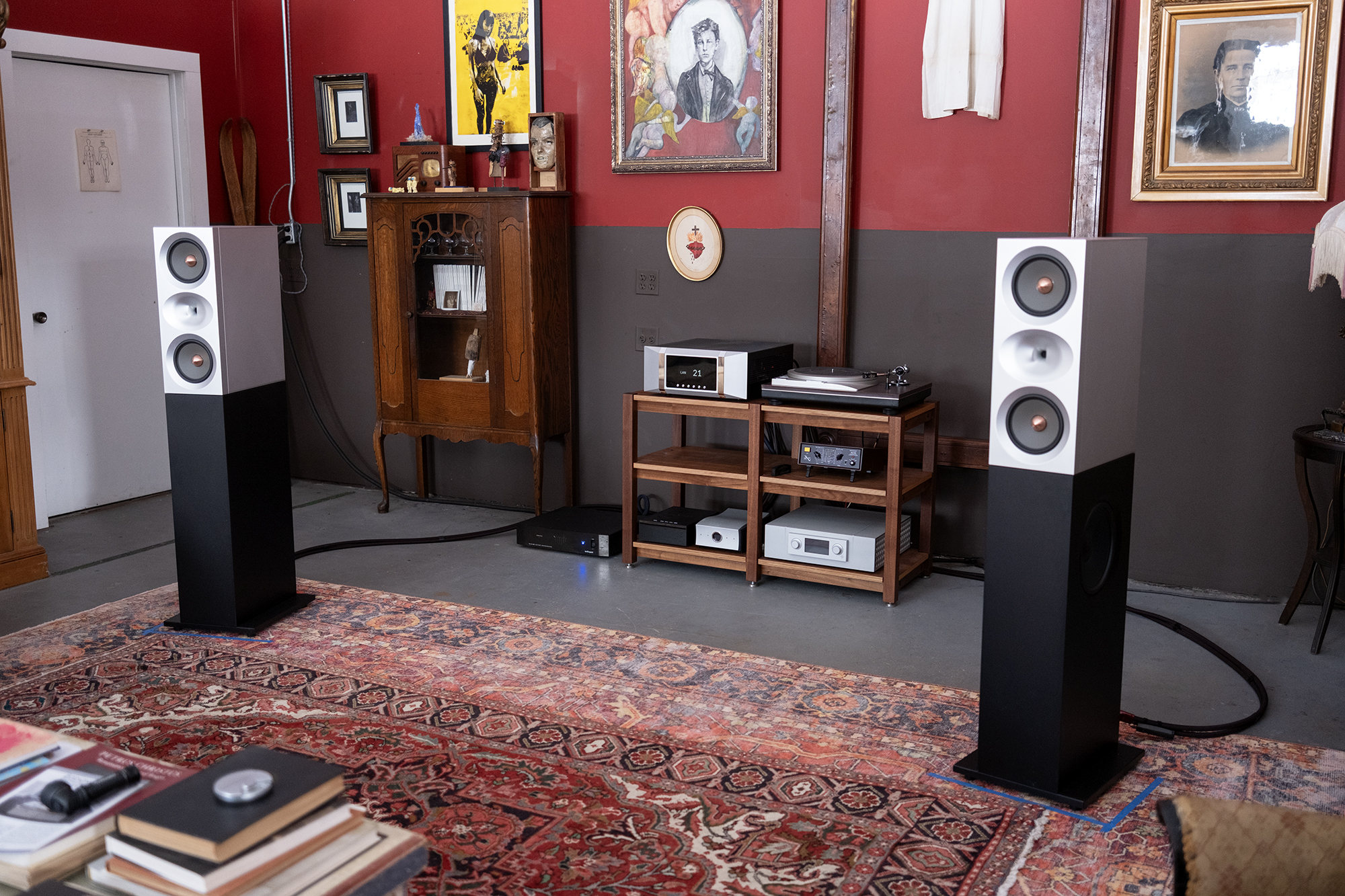
Three things—two speakers and one integrated amp that can handle all your digital and analog needs. That is the Thrax system’s proposition along with the knowledge that they also come from the same minds and hands, designed and built from the ground on up.
After spending a very pleasurable two months with the Thrax Enyo and Lyra/Hades, I can tell you that this system consistently moved music into the fore and me to the edge of my seat with a level of engagement and excitement that made a very convincing argument for this one-stop Thrax shop.
Thrax LYRA SE Loudspeakers w/HADES Passive Subwoofers
Price: $46,000/pair
Company Website: Thrax Audio
US Distributor Website: High End by OZ
Thrax LYRA SE Specifications
Weight: 35kg
Dimensions:210 x 520 x 385mm
Power Handling: 250W
Impedance: 4Ohm
Sensitivity: 90db/2.83V
Frequency response: 34-20,000Hz
Thrax Enyo MK2 Vacuum Tube Stereo Integrated Amplifier
Price: $24,500
Specifications
Weight: 29kg
Dimensions: 430 x 480 x 190 mm
Power: 300W max. 115/230V 50/60Hz
Min input level: 0.5V Rms
Output power: 50W
Gain: 32db
Input impedance: 40kOhm
Output impedance: 1 Ohm
Signal to Noise: 103db
Frequency response: 20-20,000Hz +/- 0.5db