
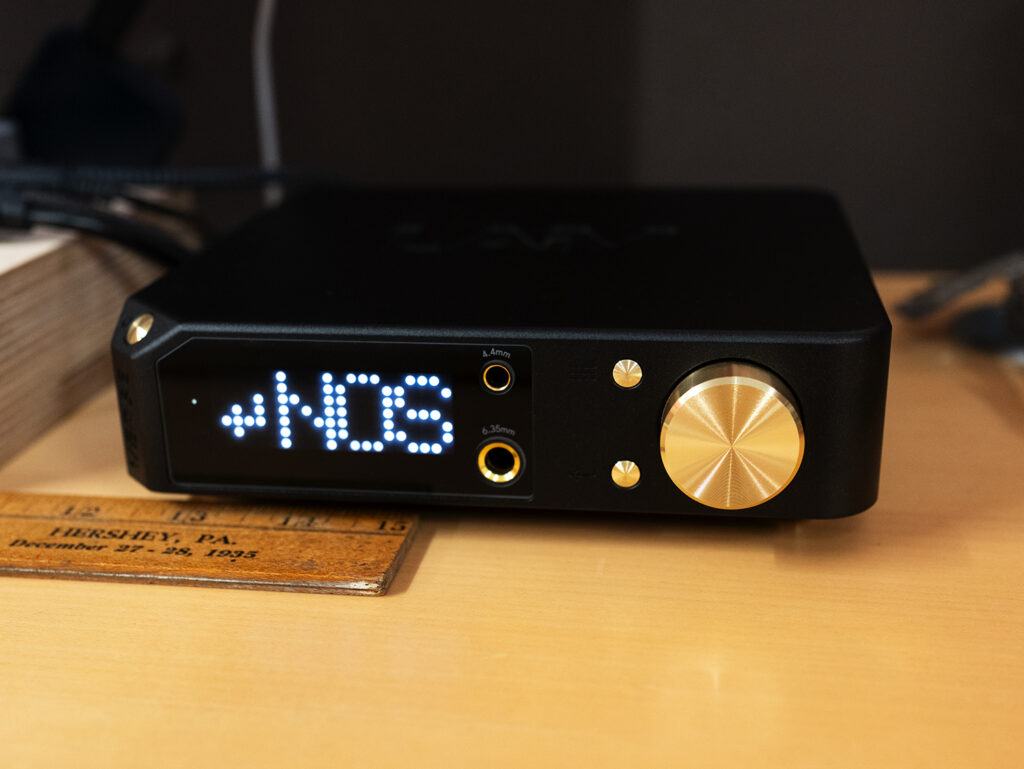
LAiV Audio is three for three when it comes to delivering affordable DACs that don’t sound cheap.
The Crescendo Verse is the latest and least expensive DAC from the Singapore-based company coming in at $849. I reviewed their two DACs next up the price ladder—the Harmony µDAC ($1049 review) and the Harmony DAC ($2849 review). It’s worth noting that LAiV is raising the prices of their Harmony line come June 1.
Here’s what I said about the Harmony µDAC:
We end how we began—the Harmony µDAC from LAiV Audio is a remarkable DAC when it comes to price, performance, and build quality. There was a gaping hole on my list of Favorite DACs in the $1000 neighborhood and the little µDAC fits perfectly with plenty of room to spare.
I picked that quote because I would say the same about the less expensive Crescendo Verse—it’s a lot of DAC goodness for the money. Remarkably so. If you’re looking for a sub-$1k DAC and one that can easily fit on a desktop or in a modest full fledged room-filling system, the Crescendo Verse is as good a bet as any.

The Crescendo relies on LAiV’s proprietary balanced discrete R-2R ladder DAC architecture for D to A conversion just like its stable mates in the Harmony line using individual resistors with a tolerance of 0.05% according to the company. But the Crescendo Verse can be more than a DAC as it also includes a discrete output buffered preamplifier and a discrete headphone stage with both single-ended and balanced output all packed into its small roughly 6.5” wide aluminum chassis that comes in black or silver with gold accents.

Continuing with the more than you’d expect from a <$1k DAC theme, the Crescendo Verse offers both single-ended and balanced output and four digital inputs including USB and I2S (with 8 modes to match the pinout of your connected streamer) that support PCM resolutions from 44.1kHz – 768kHz and DSD64 – DSD256. What’s more, the Crescendo Verse offers native DSD 1-bit processing as well as user-selectable upsampling and you can even add an external clock via I2S.
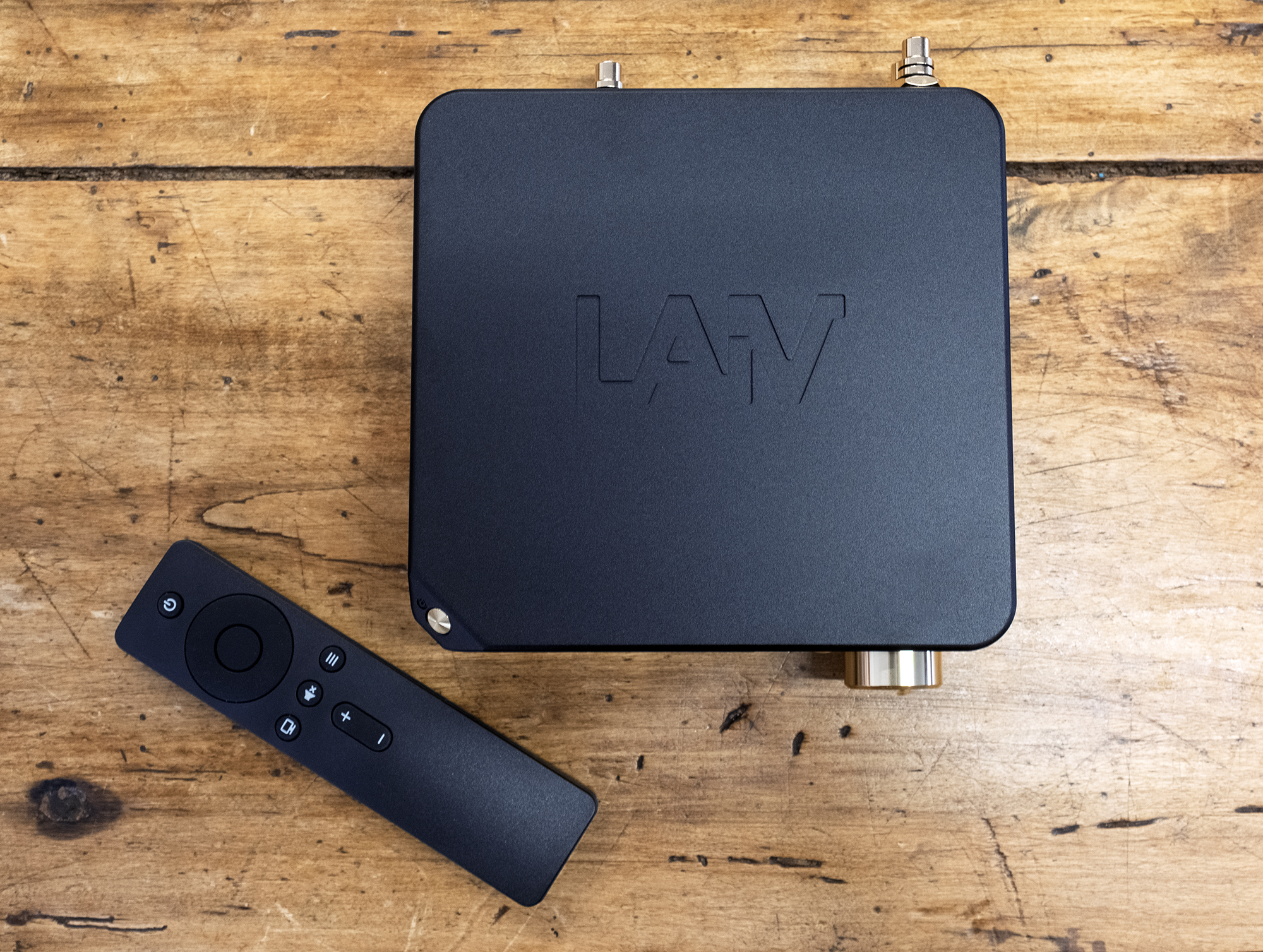
The included remote as well as the front panel buttons provide access to the Verse’s deep menu system that offers input selection, output settings to run in fixed or variable output mode as well as three gain settings and four volume protection limits, DSD (native/multibit), Non-oversampling (NOS) and Sampling Rate Conversion (SRC) with a total of nine SRC modes (5x PCM, 4x DSD when using Native mode) and two filter options (sharp/slow), Phase, Display settings, I2S modes and Clock (local/I2S), Power (auto/manual), Firmware, and Reset. Whew! Check out the Verse manual for the nitty gritty.
The little LAiV weighs a hair under 2 lbs and its looks, fit ’n finish give no indication of its price—it looks and feels like it costs more. I used the Crescendo Verse and its volume control on my desktop where it got its signal via a length of AudioQuest Carbon USB from my iMac for input while it fed the desktop resident ADAM A3X powered speakers via AQ XLRs. The little LAIV also got to play on the Barn’s A-Side paired with the resident Holo Audio Red (review) via I2S and an AQ Cinnamon HDMI cable with the LAiV sending its analog output via AQ RCAs to the review sample Aurorasound HFSA-02 Integrated Tube Amplifier (more info) driving the Barn resident DeVore Fidelity O/96 (see full system and Barn details). In this setting I ran the little LAiV in fixed output mode preferring the Aurorasound as pre and power amplifier.
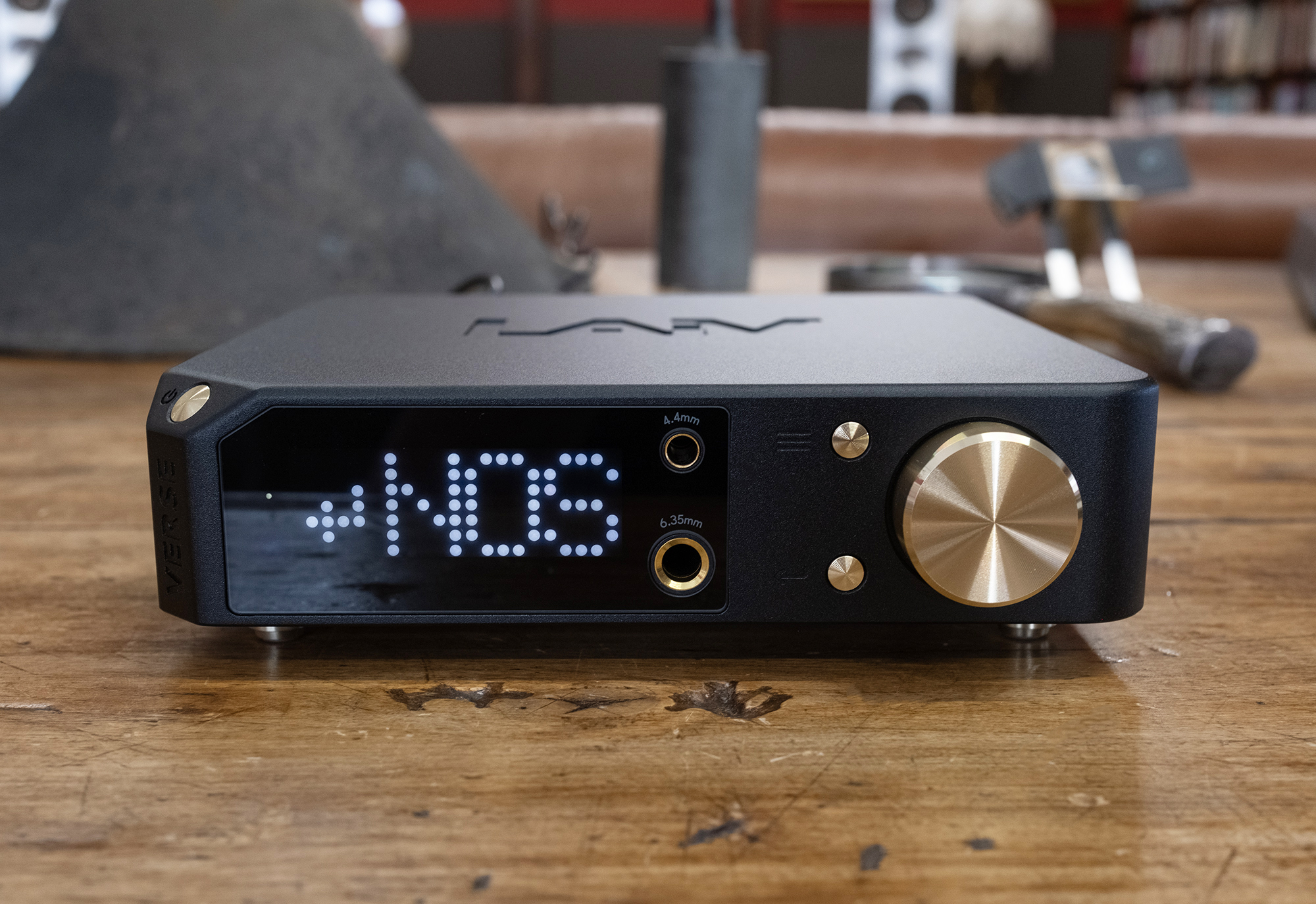
I went with NOS mode most of the time because I found it a bit richer and airer with greater depth to the sound image and overall just less fussy, where fussy feels as if there’s a touch of over-emphasis on resolution in SRC mode but frankly the differences between the two modes are not earth-shaking and seeing as you can just pick whichever you like or switch between the two as often as you like there’s no point in belaboring the differences. Pick the one you like and move on to music. That being said, for those who enjoy tailoring their digital sound, SRC mode is the way to go as those upsampling options and two digital filters allow for subtle tweaking which may very well come in handy in some systems for some tastes.
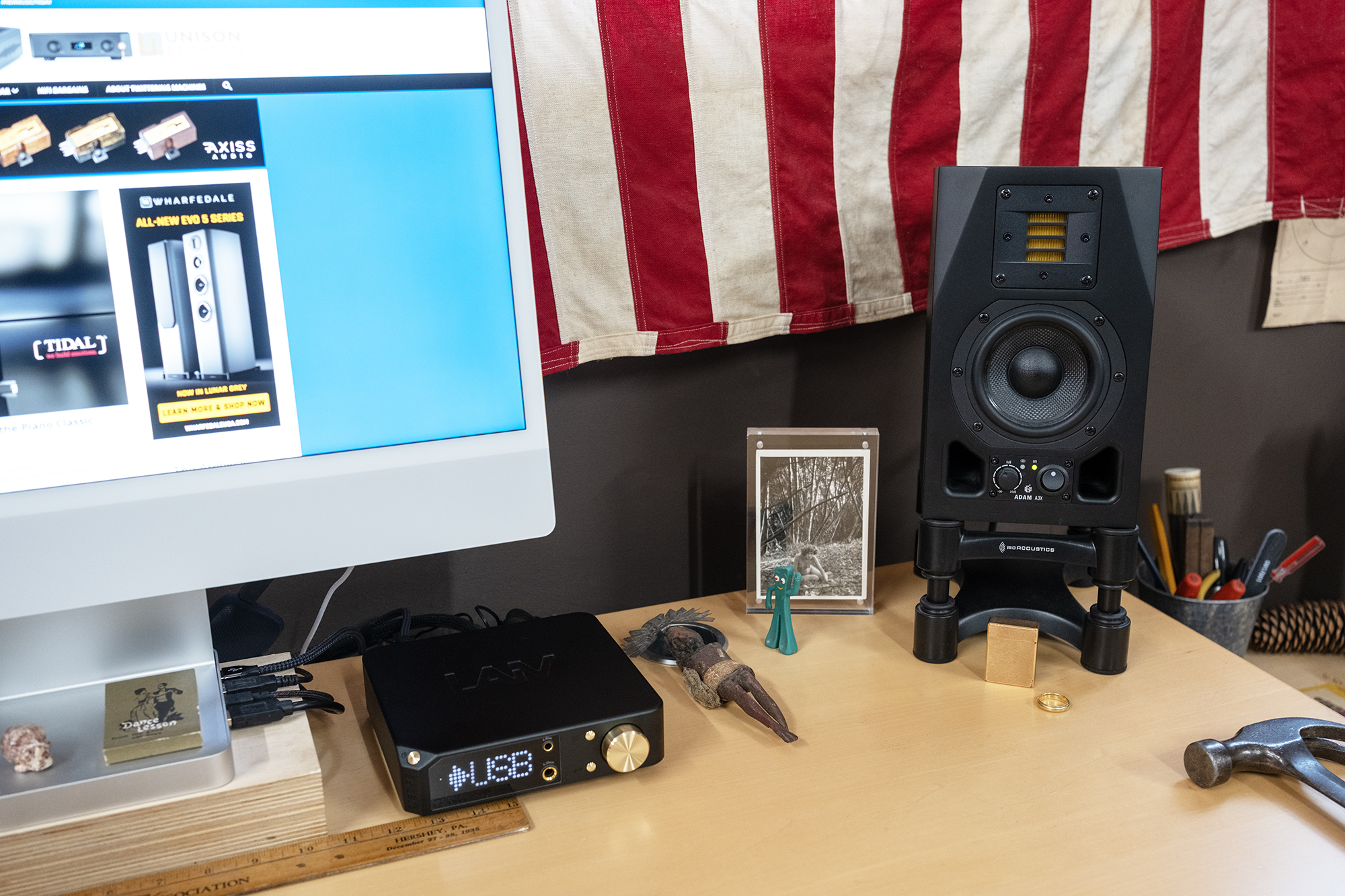
Let’s begin on the desktop where the Crescendo Verse replaced an AudioQuest DragonFly Cobalt DAC. The LAiV costs more than 4x the price of the DragonFly (!) and I mention this to illustrate that even an $800 and change DAC can be seen as expensive—it all depends on one’s perspective. I’ve owned the ADAMs for about 14 years and they’ve lived on my desktop the entire time so I know what they can do and while we’re here I’ll point out that they cost $299/each when I bought them—a very nice return on investment. While I’ve reviewed a number of other desktop speakers most costing much more than the A3X, I never feel as if I’m missing out on something once I have them playing music.
in filth your mystery is kingdom / far smile peasant in yellow music by Dagmar Zuniga is longer than its title and equally mysterious. The album’s 14 tracks clock in at 39 minutes in total and these songs were written over a five-year period and recorded direct to a Tascam 424 4-track analog cassette multitrack recorder (and mixer). Largely acoustic and heavily hippie, in filth your mystery also goes to some very unexpected places and I dig every place and each minute. The Crescendo Verse’s sound complimented the ADAM’s and there was very nice sense of resolution and detail without any etch or bite. The ADAM A3X place music in space as if it’s being made inside your head and this presentation was made all the more appealing by the LAiV DAC’s nimble and dynamic presentation. Nice.
Moin’s 2024 album You Never End sees the UK trio joined by guest vocalists adding a nice additional dimension to their tight instrumental mind games.
From the liner notes:
The album’s collaborators all have voices that are alluring in their own right whilst hard to pin down: from james K’s ethereal, reverb drenched vocals, Coby Sey’s words that bounce and echo across London’s concrete streets and Olan Monk’s emotive songwriting, while artist Sophie Al-Maria’s voice and thoughts are known to stretch across her multidisciplinary practice as an artist, filmmaker and writer. The unique mystique of each collaborator is maintained throughout the record while simultaneously opening Moin up to new possibilities, in a gentle shifting alchemy.
This wiry at times dense music gave this simple desktop system a nice workout and the little LAiV proved fit and ready to deliver Moin’s ‘shifting alchemy’. The LAiV DAC certainly offered up a more resolving and fuller sound compared to the DragonFly Cobalt and this extra musical information made listening that much more engrossing. Here with Moin on my desktop and in my head everything was rich, super tight, and engaging made even more so with more volume. Nice!
On the A-Side I cued up In Spring from the Tara Clerkin Trio to see how well the little LAiV works its D to A conversion with acoustic music in Barn and I wouldn’t give it an A or a D. C+ maybe as everything felt a bit processed on this typically great sounding EP when played through more expensive DACs. That being said, in NOS mode there was nice sense of space, detail, and clarity that gave this springy music some real bounce and life. The differences between the various instruments played by Tara Clerkin and brothers Sunny-Joe Paradiso and Patrick Benjamin were more subdued than I’m used to when moving up my list of Favorite DACs to at least the $1599 Atoll Electronique MS120 Streaming DAC (review) to hear what I’m talking about.
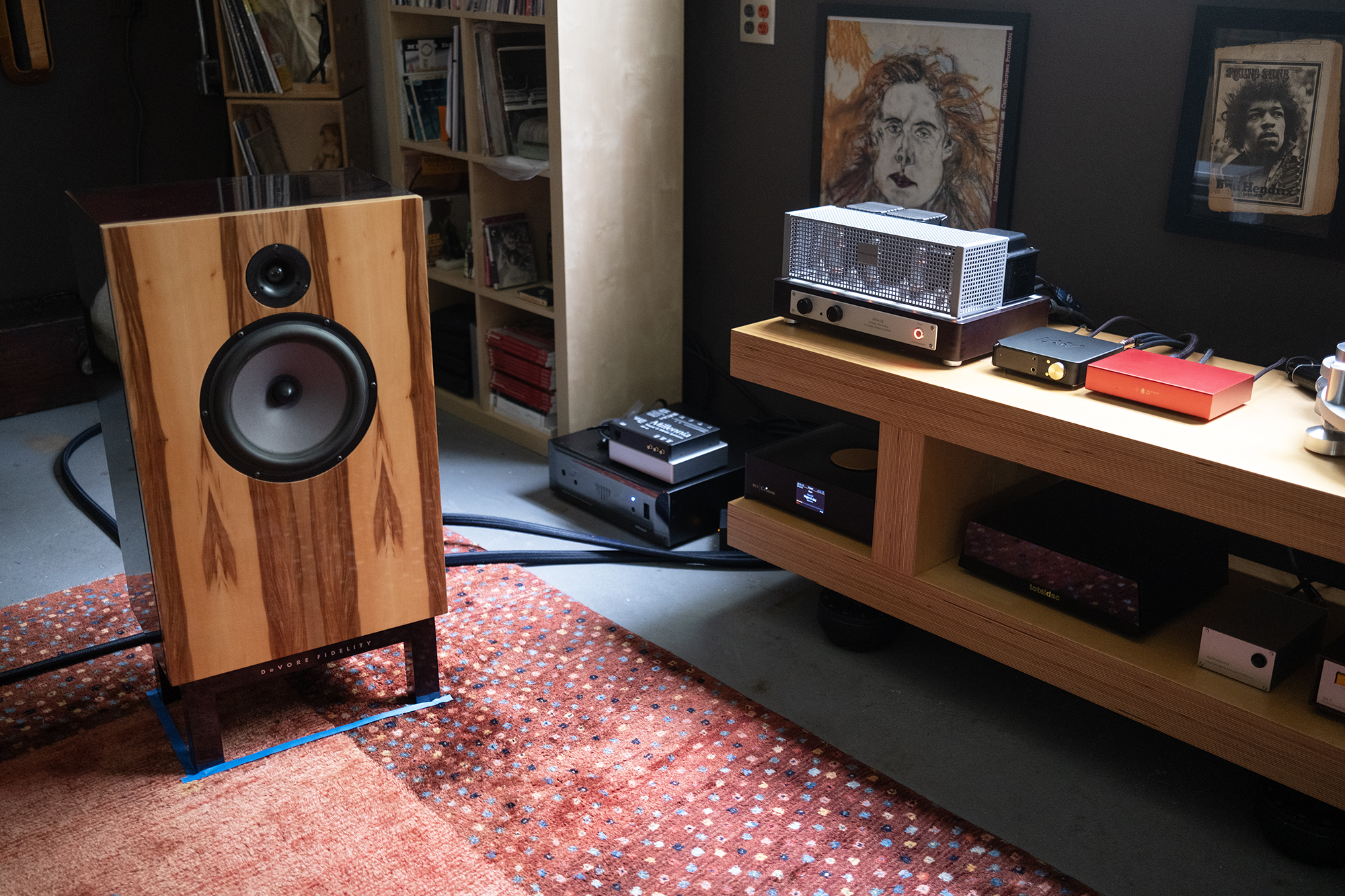
It’s worth pointing out that the Holo Red costs $998 which brings the price with the LAiV up to $1847 plus whatever digital cable you choose to use. Of course there are less expensive options for feeding the Crescendo Verse but I didn’t have any on hand to try outside my desktop. The Holo Red is a great product at a great price and I’ve not heard anything come close to its level of performance and flexibility for anywhere near its price.
I also played some DSD, boy how I hate phrasing it that way but it’s the case, from the handful of albums I have in that format. To state the obvious the quality of the music and the recording are infinitely more important than file formats so the notion that a format might guide my listening is not a thing that happens in the Barn. Anywho, within the small batch of DSD albums I have, Vivaldi: La Stravaganza 12 Violin Concertos featuring Rachel Podger from Channel Classics is among the best sounding and this fact came through loud and clear through the Verse DAC. Switching back and forth to DSD files produced an audible ‘pop’ through the speakers and I hate to sound like a broken DSD but I have heard more natural sounding timbre, greater separation, and more space with other pricier digital and this comparatively flatter and thinner sound put a slight damper on my joie de vivre.
Something else that should be obvious is this system context doesn’t really make sense to my way of thinking in that pairing a <$1k DAC with a roughly $10k integrated amp and $17.5k/pair speakers is out of whack. I know some people want to believe that digital is something you either get right or not regardless of price and I am happy for them. My experience has proven that’s simply not the case but I wanted to let the little LAiV play with more than just my desktop setup.
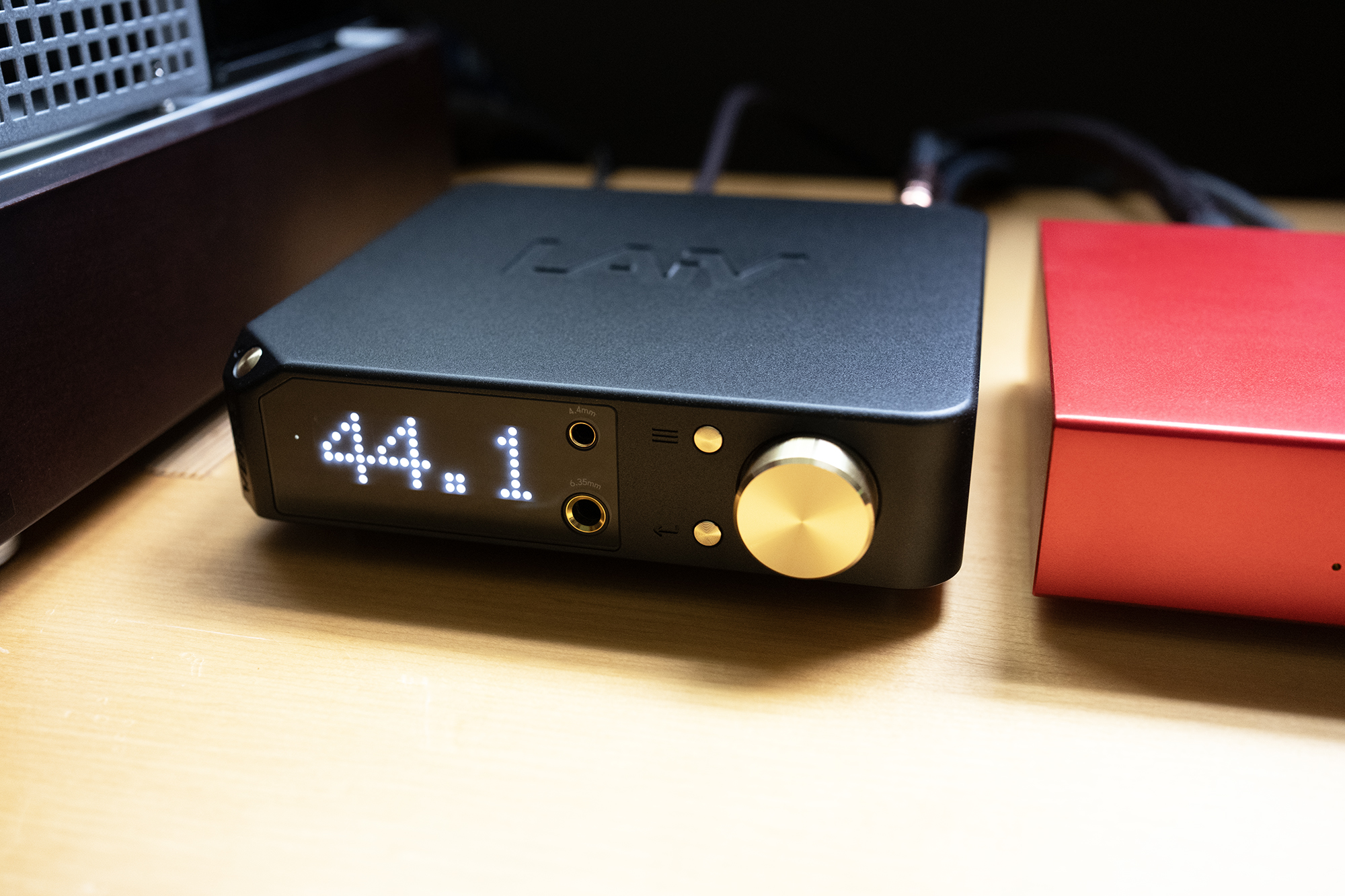
I have no relevant comparison to make DAC-to-DAC wise when it comes to other contenders that cost the same or thereabouts as the Crescendo Verse. As I pointed out, you need to feed the Verse with a digital audio signal from something and my best guess is some/many users will use a computer which worked out very nicely with my simple desktop system. The LAiV DAC showed up back in January and it spent the majority of time lighting up my desktop system and me with lots of music of all shapes and sizes as is my wont and there was never a moment where I felt something missing, something lacking. I could very easily live with this desktop system for another 14 years.
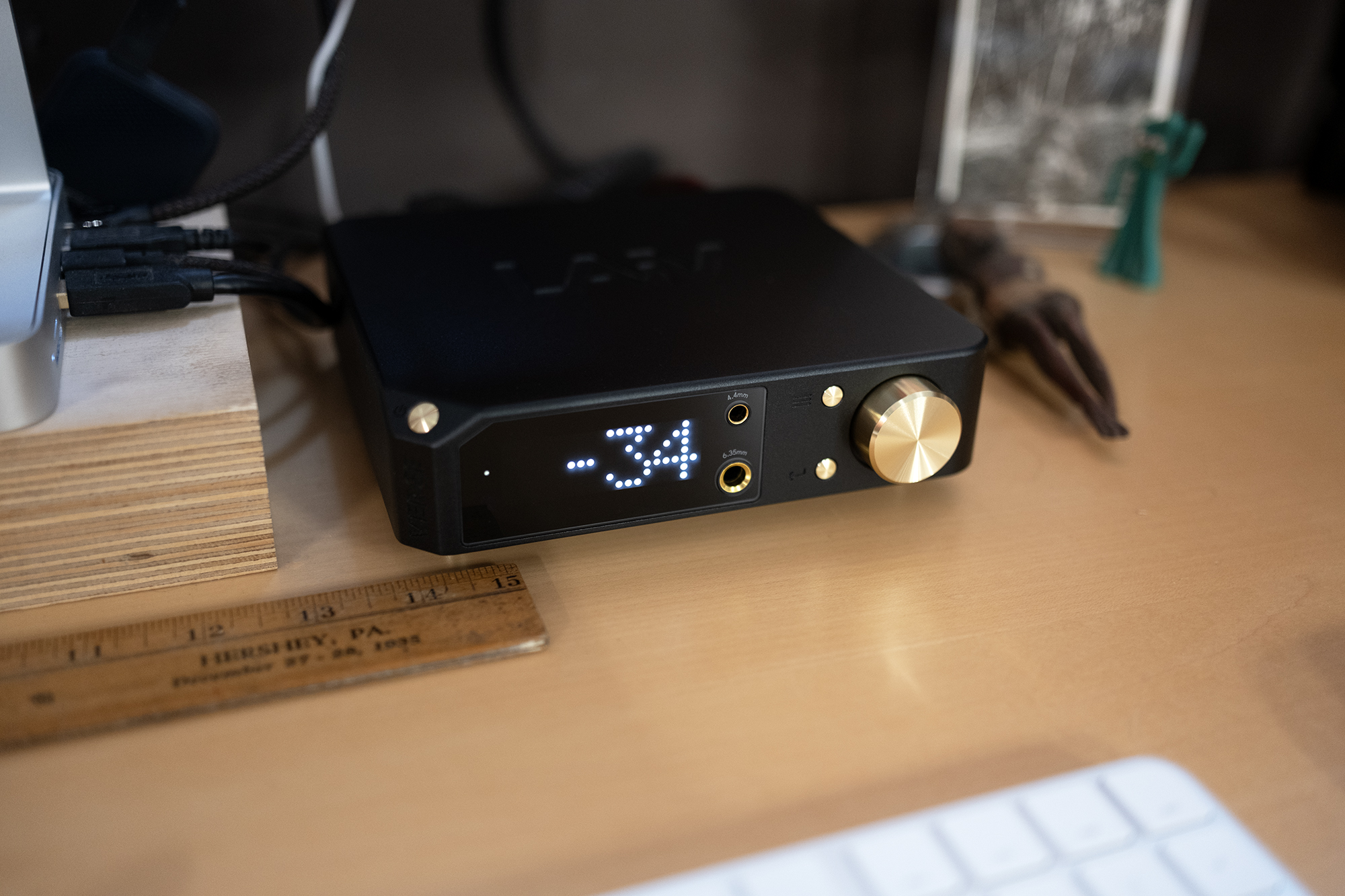
Taking into account what I believe to be a proper system context such as the one on my desktop, the LAiV Crescendo Verse comes highly recommended for its remarkable performance, playback options, build quality, and price.
LAiV Crescendo Verse DAC
Price: $849
Company Website: LAiV Audio
Specifications
Display: 20×7 dot-matrix LED display
Chip: Intel® Altera® Cyclone® FPGA
Digital Inputs: 1 x USB, 1 x Optical, 1 x Coaxial, 1 x I2S
Supported Formats (Input dependent)
USB – PCM: 44.1kHz – 768kHz | DSD: DSD64 – DSD256
Optical – PCM: 44.1kHz – 192kHz | DSD: DSD64 via DoP only
Coaxial – PCM: 44.1kHz – 192kHz | DSD: DSD64 via DoP only
I2S – PCM: 44.1kHz – 768kHz | DSD: DSD64 – DSD256
Digital Playback Control
Supports native DSD 1-bit processing and an integrated sampling rate converter, giving users full control over PCM and DSD playback behavior.
*Note: In DSD Native mode, a brief popping sound may occur when switching between PCM/DSD or DSD tracks with different rates. For mixed sampling rate playback, DSD. Multibit mode is recommended.
Resampling Options
PCM: 1x, 2x, 4x, 8x, 16x (up to 768 kHz / 705.6 kHz)
DSD: DSD64, DSD128, DSD256, DSD512 (Only available in DSD native mode)
Preamp Outputs: 1 x XLR, approx. 4 Vrms, 82 Ω, 1 x RCA, approx. 2 Vrms, 41 Ω
Headphone Outputs: 1 x Balanced 4.4 mm jack, approx. 11 Vrms, 5.1 Ω, 1 x Single Ended 6.35 mm jack, approx. 5.5 Vrms, 2.6 Ω
Gain: Selectable headphone output gain LOW | MED | HIGH
Output Power: ≤ 1100mW (Balanced 4.4 mm), ≤ 290mW (Single Ended 6.35 mm)
Frequency Response: 20Hz – 80kHz, within ± 3 dB
THD+N: 0.0045% (Preamp), 0.008% (Headphone amplifier)
Crosstalk
≤ -100dB (Preamp Balanced)
≤ -100dB (Preamp Single Ended)
≤ -100dB (Headphone Balanced)
≤ -60dB (Headphone Single Ended)
Signal to Noise Ratio (SNR):
≥ 120dB (Preamp Balanced)
≥ 110dB (Preamp Single Ended)
≥ 110dB (Headphone Balanced)
≥ 100dB (Headphone Single Ended)
Noise:
≤ 25μVrms (Preamp Balanced)
≤ 72mVrms (Preamp Single Ended)
≤ 30μVrms (Headphone Balanced)
≤ 65μVrms (Headphone Single Ended)
Finish: Silver Anodized Aluminum, Black Anodized Aluminum
Dimensions (W x D x H): 168 x 188x 50mm
Features
Sleek & Compact design
LAiV R2R ladder network architecture
Native DSD 1-bit conversion
NOS / SRC Mode
Sampling rate converter
Positive / negative phase
Display brightness, delay dim, and delay off
8 x I2S Mode with LAiV product auto-configured
I2S clock supported
Discrete output buffered preamplifier.
Discrete headphone amplifier with gain selector
Headphone output protections
Controls: Front panel, Remote control
Power: 15VDC/2A ,DC 5.5/2.5 mm female
In the Box
Welcome card with Quick Start guide
Crescendo VERSE
Remote control
Power adapter with interchangeable plugs