
I don’t know what they put in the water in Veldhoven, Netherlands, home to Grimm Audio, but my guess is there’s more than a dollop of musical mojo in the mix.
The Grimm LS1, which first appeared in 2010, was initially designed as a studio monitor which speaks to the company’s history dating back to 2004 and their roots in pro audio. The LS1c are the latest iteration and flagship of the LS1 line.

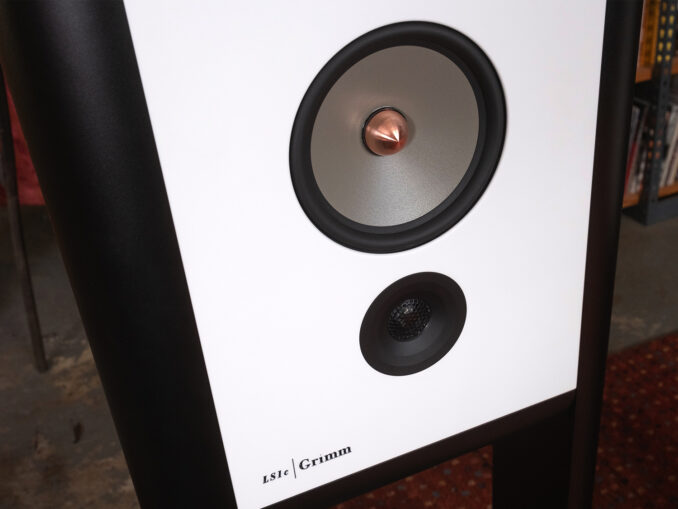
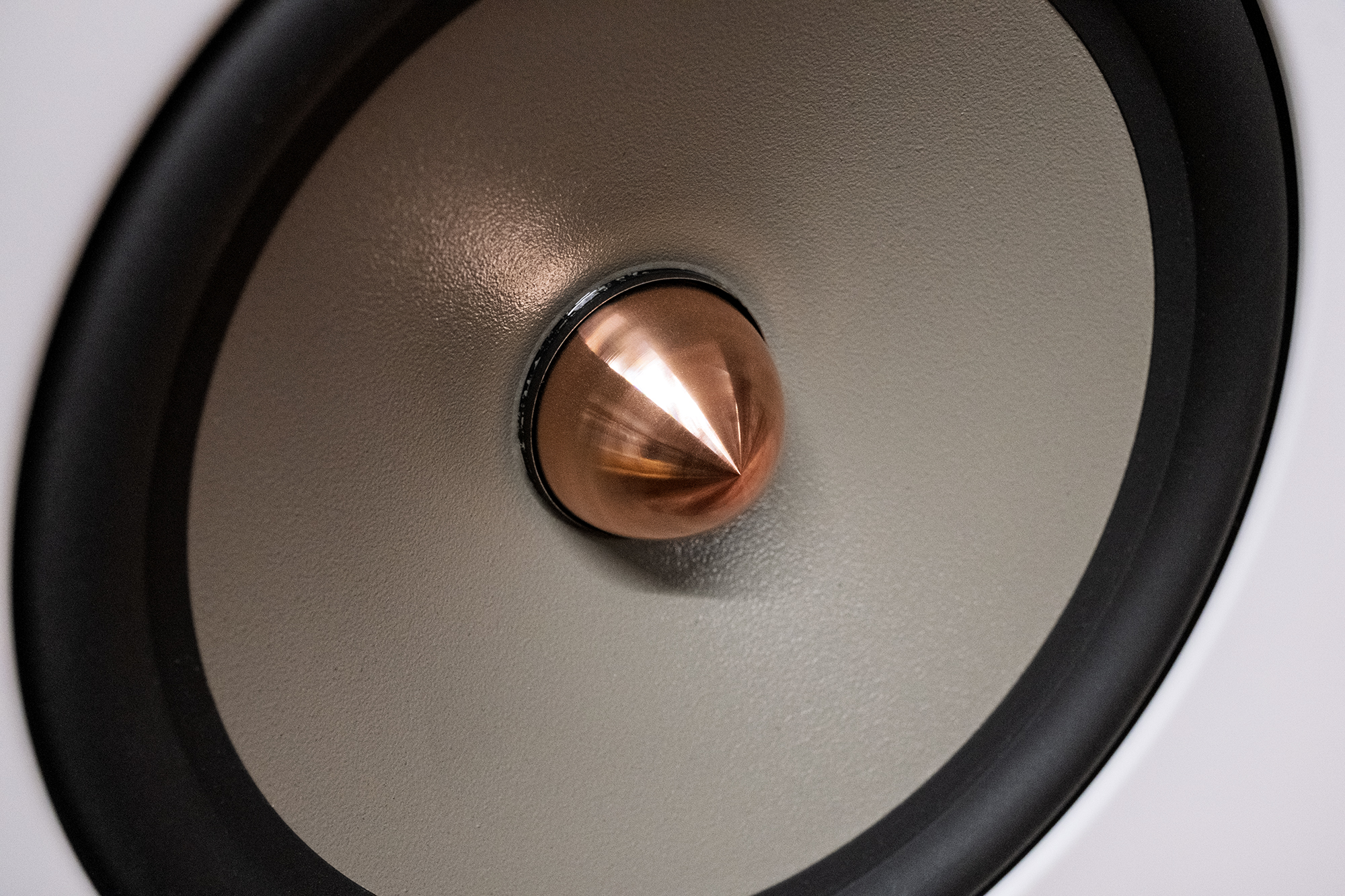
Perhaps a good way to begin talking about the LS1c Active Loudspeaker System is by describing what we can see. On the face of it, the LS1c is a 2-way speaker comprised of a “unique wide dispersion TPCD [Thin-ply Carbon Diaphragms] Carbon tweeter…developed in cooperation with driver manufacturer Seas” sitting under an 8” midrange-woofer also from Seas. The “c” in its name comes from that Carbon tweeter. Digging in, those drivers are powered by 250 Watts (woofer) and 100 Watts (tweeter) of NCORE-based Class D power per side and all told in its 2-way configuration the frequency response for the LS1c is a claimed 35Hz–27kHz (+0.5dB/–3dB).
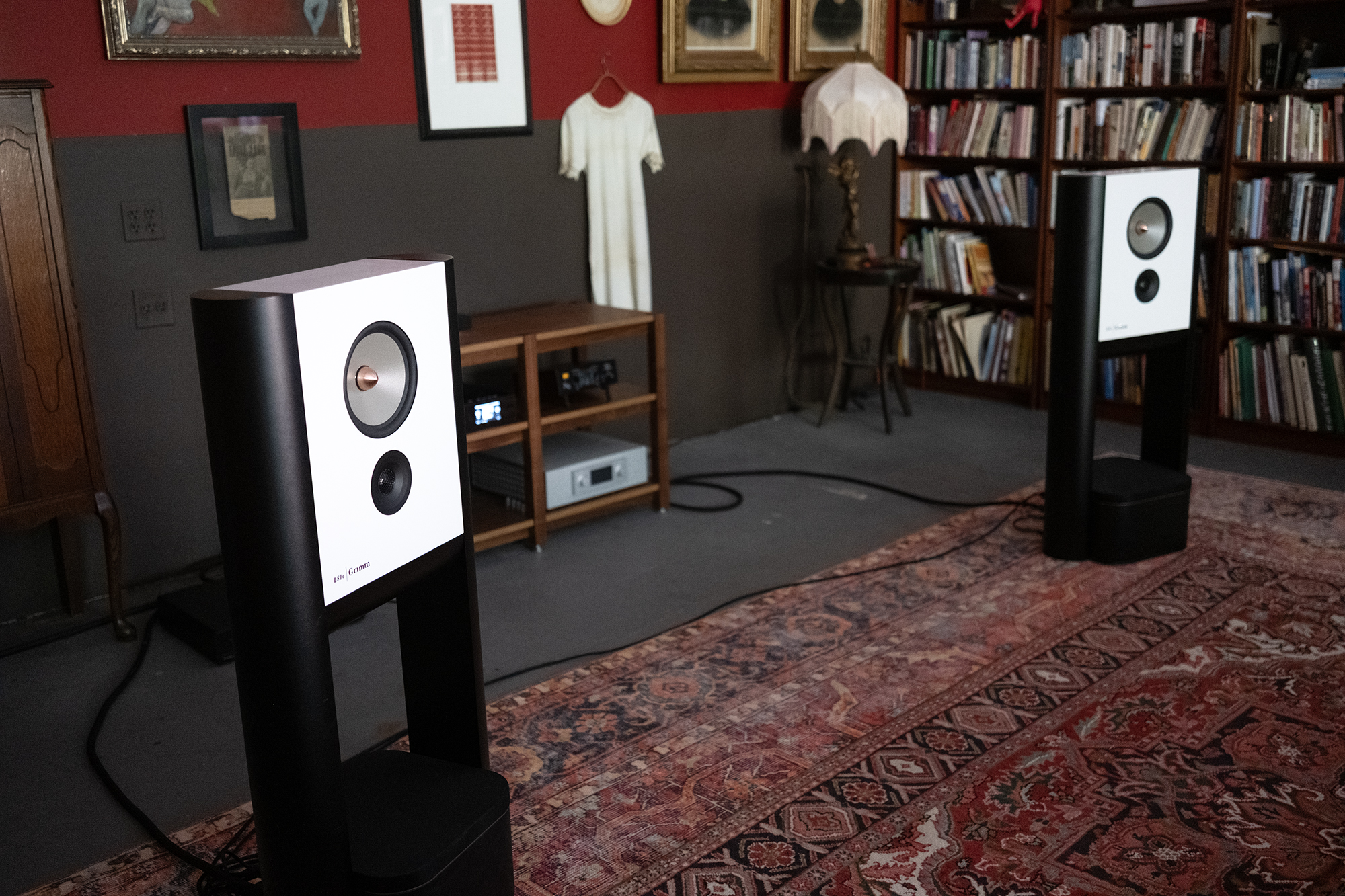
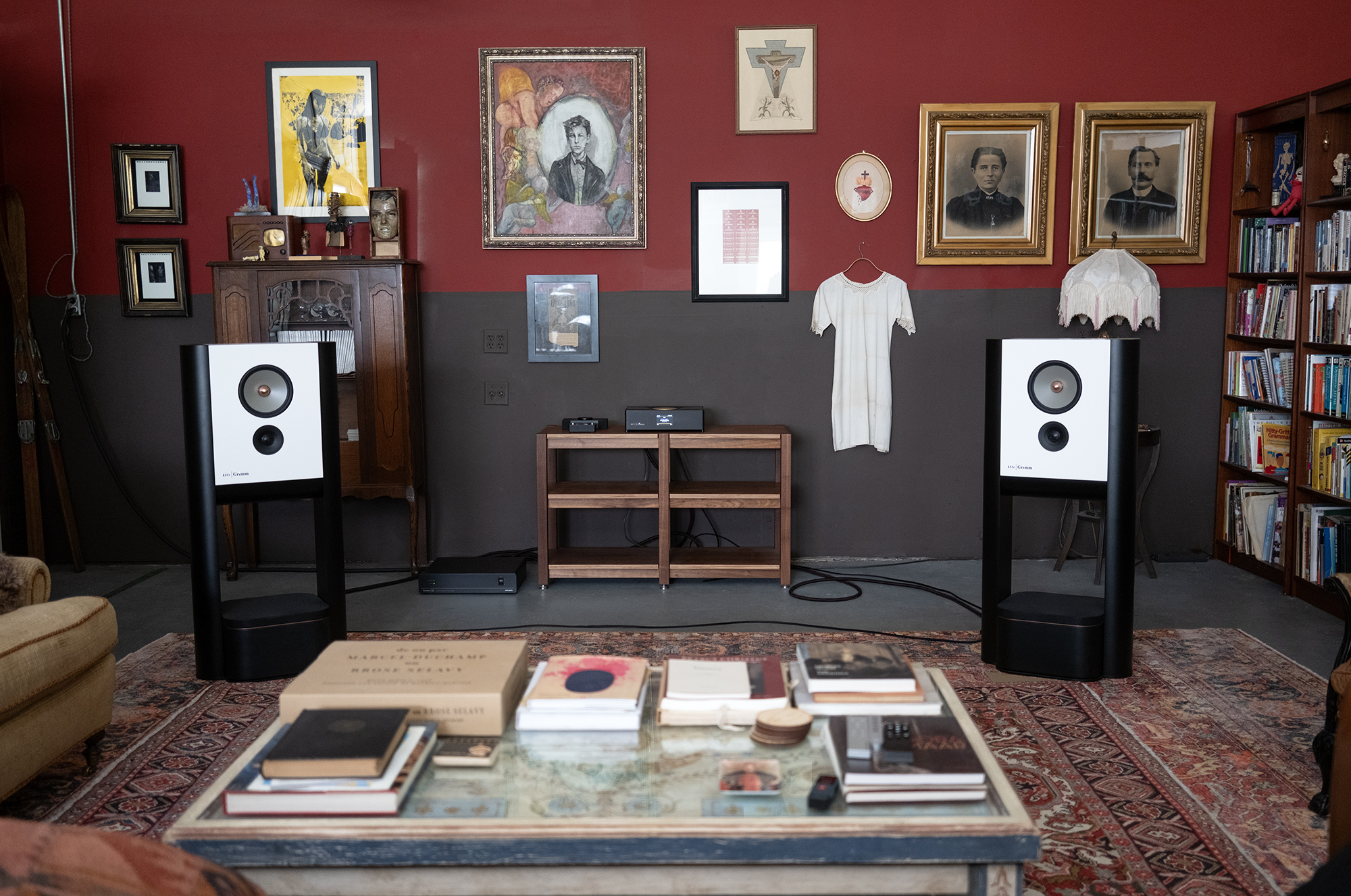
As you can see, the LS1c are wider and shallower than your typical modern box speaker.
From Grimm:
The theory behind the LS1’s acoustical design originates back to the 1930s and ’40s. Cabinets in those days were flat but wide, which moved the so-called ’baffle-step‘ frequency to lower than 250 Hz. Below the baffle step frequency, sound is radiated equally in all directions. Above the baffle step the sound becomes more forward directed, thereby attenuating reflections against the wall behind the speaker and the side walls. These reflections normally cause phase errors in the perceived sound. Psycho acoustics says that the ear is sensitive to phase errors down to approximately 250 Hz. The wide baffle helps to attenuate interfering reflections throughout this whole range by aiming the speaker away from a nearby reflective wall.
Progress since the 40’s has learned that edge diffraction of the cabinet deteriorates the stereo image, hence the sides of the LS1 cabinet are strongly rounded by the legs. As a bonus, the shallow cabinet moves the resonance along the depth axis inside the box significantly above the crossover frequency of the low frequency driver. This helps to avoid boxiness.

The review pair included the optional Grimm SB1 subwoofers, making the LS1c a 3-way. Each SB1 sits snugly on the LS1c’s base and house an up-firing 10” Dayton woofer mated to a 400 Watt Hypex amp. The SB1s also employ “Digital Motion Feedback” to reduce distortion.
From Grimm:
The SB1 with ‘DMF’ is a technological marvel. By applying ‘Digital Motional Feedback’, a control technology from the renowned Dutch high-tech industry, it became possible to achieve exceptionally low levels of distortion and full dynamic control. With an SB1 added for the bass frequencies, the LS1 system offers low distortion over the full audio band and redefines the term ‘transparency’. This is bass control like you’ve never experienced before.
According to Grimm, the SB1s extend the LS1c’s frequency response down to 20Hz and I recommend considering them an important part of the system.

When using the SB1s, a small power jumper runs from the LS1c to the SB1 with the SB1s connected to wall power while an included short XLR cable runs from Sub Out on the LS1c to Input on the SB1.

On the backside of one leg of each speaker reside, from the top, Analog In (XLR), Digital in (AES), Control In, Control Out, and Sub Out. Those Control ins, outs, and the included Cat 5 cables are proprietary Grimm tech using the built-tough Neutrik Ethercon connectors that cover the RJ45 plug with a ‘robust’ metal shell. These connections combine data transmission of AES/EBU digital audio, control data, as well as a power supply voltage over the Cat 5 cable. Control Out is used to connect the main speaker, made so by using its Control In from an external source, to the other LS1c’s Control In. A small toggle switch sets each speaker to Right or Left and sits just above the IEC inlet and power switch.
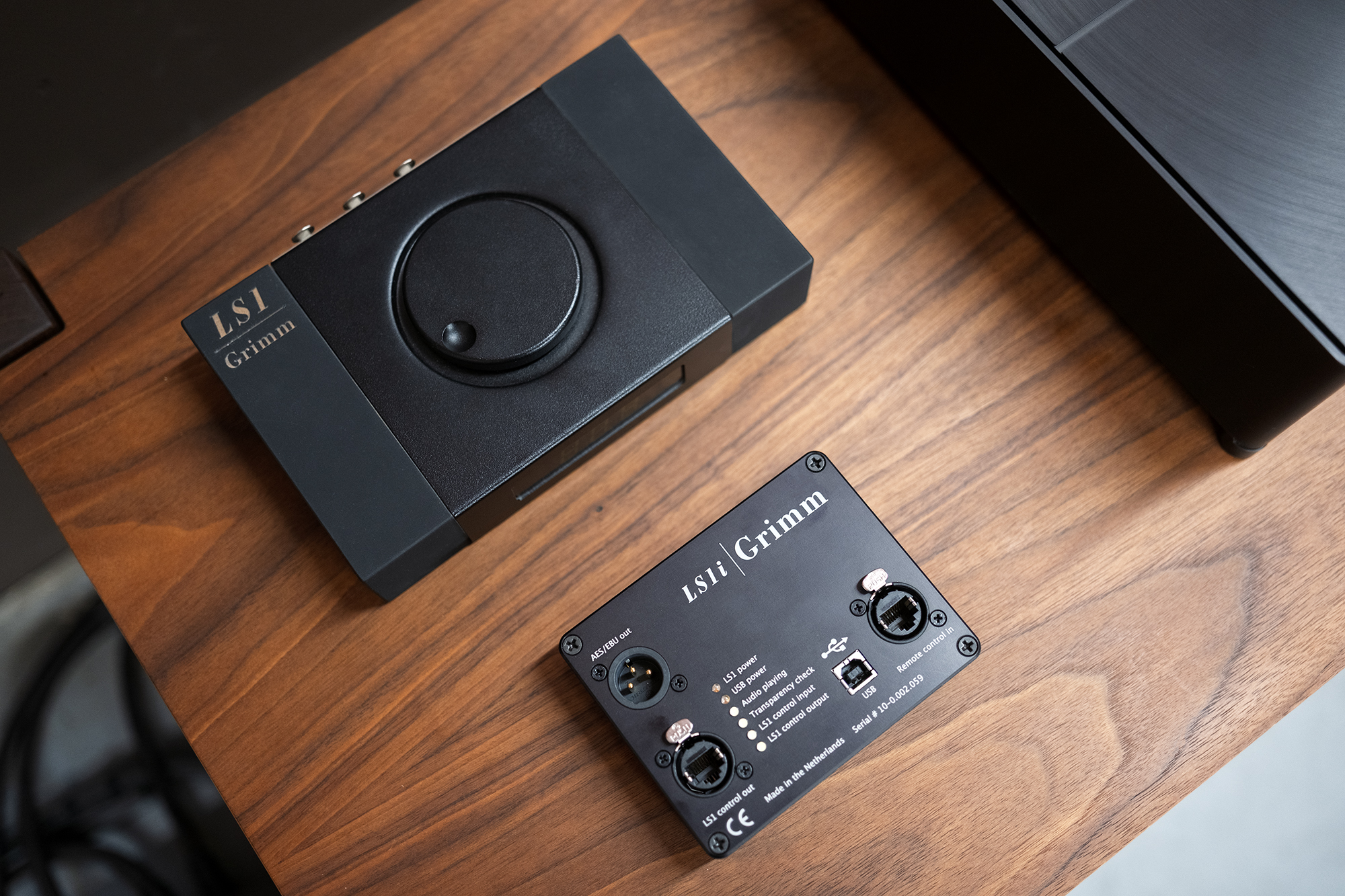
Also included in the review package are the optional Grimm LS1r Remote ($1650) and LS1i USB interface ($1200).
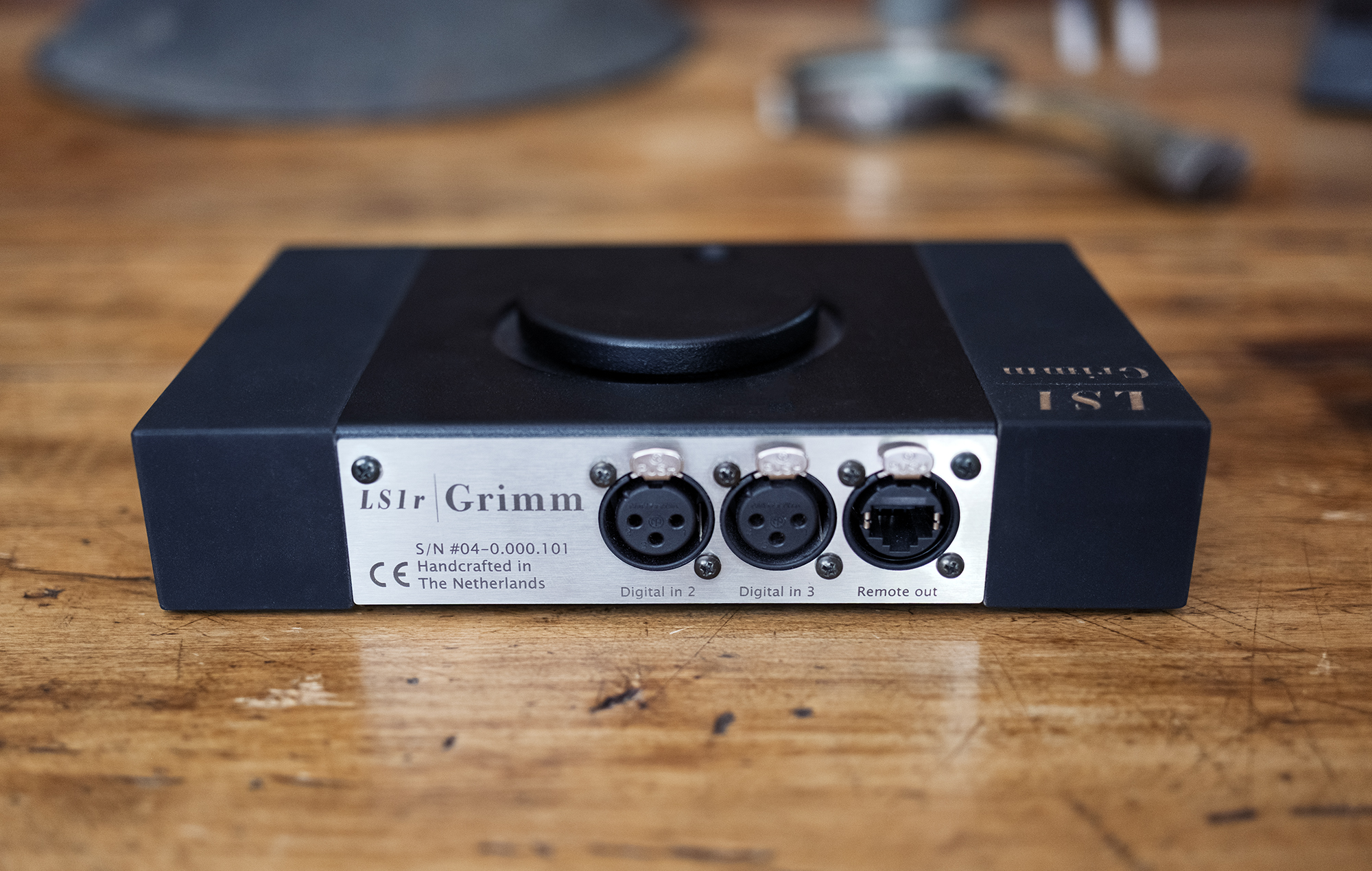
The LS1r offers volume control, source selection, and mute using the top-mounted dial while adding 2x Digital AES inputs and a single Control Out which connects to the Control In on one of the LS1c speakers. The LS1r receives its power over Cat 5 and will take commands from a Grimm Audio or generic IR (infrared) remote control for volume, source selection, and mute.
The LS1i USB interface has a USB audio input which allows for computer-based music playback, AES/EBU Out, LS1 Control Out, and Remote Control In when using the LS1r Remote with the LS1i. Note—the LS1i USB Interface or the included USB Control Cable connected to a computer and the LS1c are the only ways of performing firmware updates.
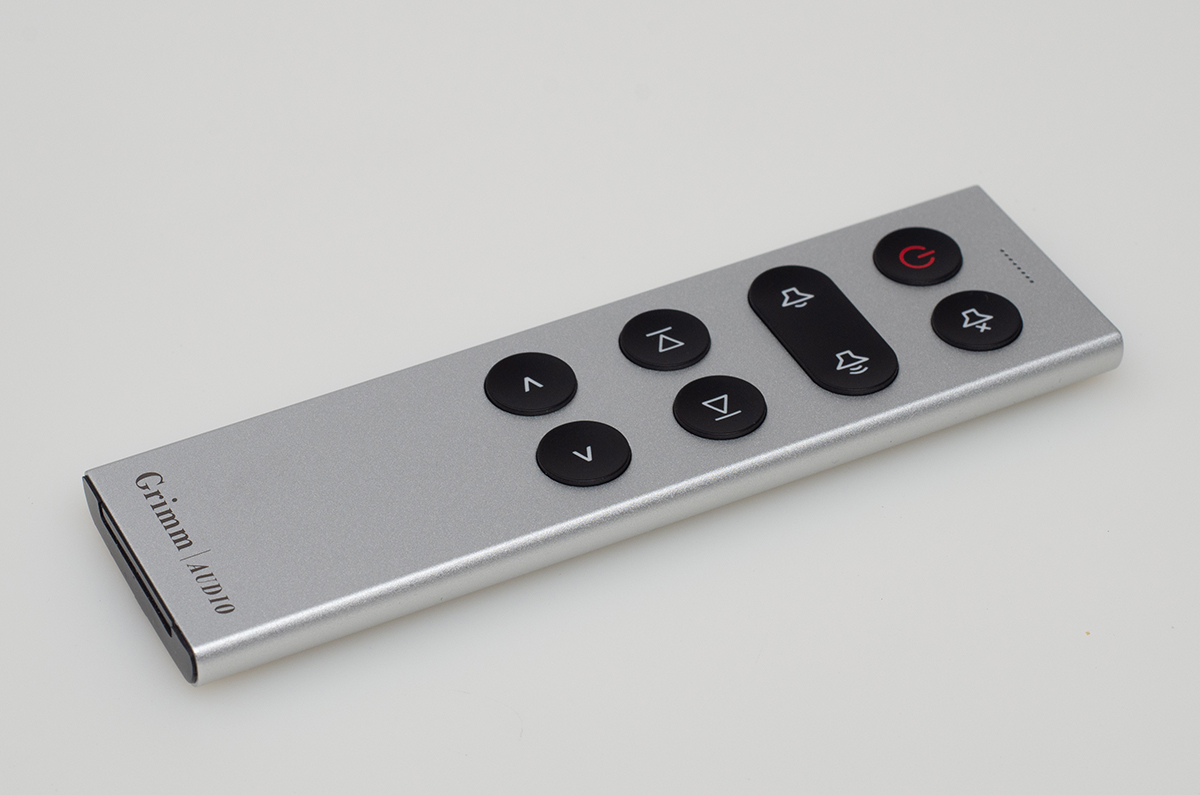
This just in—a new Grimm Audio infrared remote for use with the MU1, MU2 and LS1r will be coming in a few weeks and will ship with all new MU1, MU2 and LS1r. This remote controls volume, source, mute, and with the MU1/MU2, next/previous track and standby (in and out of).
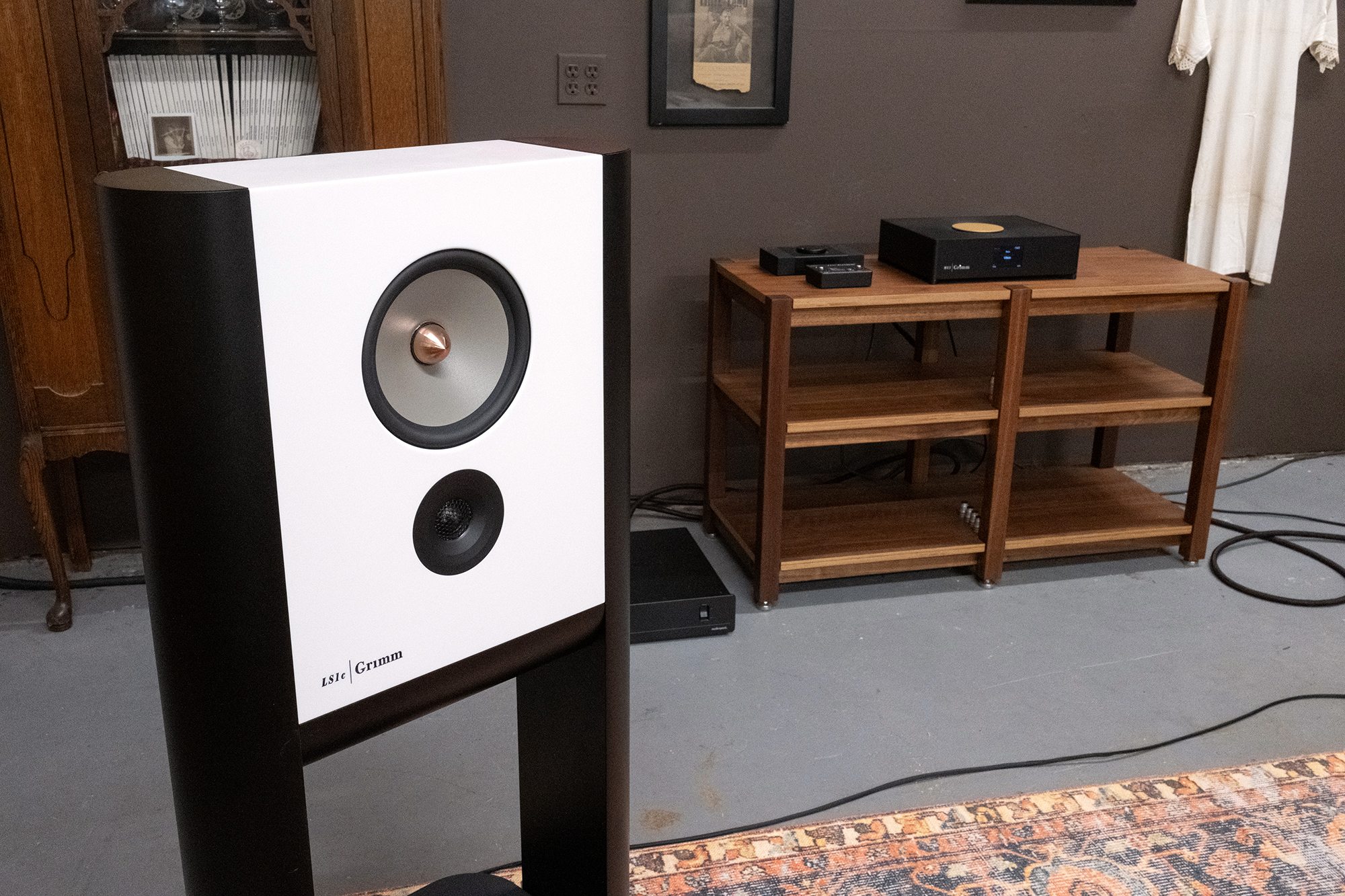
My preferred method of interacting with the LS1c both in terms of sound quality and ease of use was using the Barn resident Grimm MU1 connected to the LS1c using the Control Out on the MU1 into the Control In on the LS1c. They were made to go together, literally, and with Roon controlling playback, its in app volume controlled the LS1c. Nice, easy, and convenient.
Pairing the MU1 with the LS1c also means you do not need the LS1r Remote or LS1i USB interface since firmware updates can be done using the included USB Control Cable with a computer.
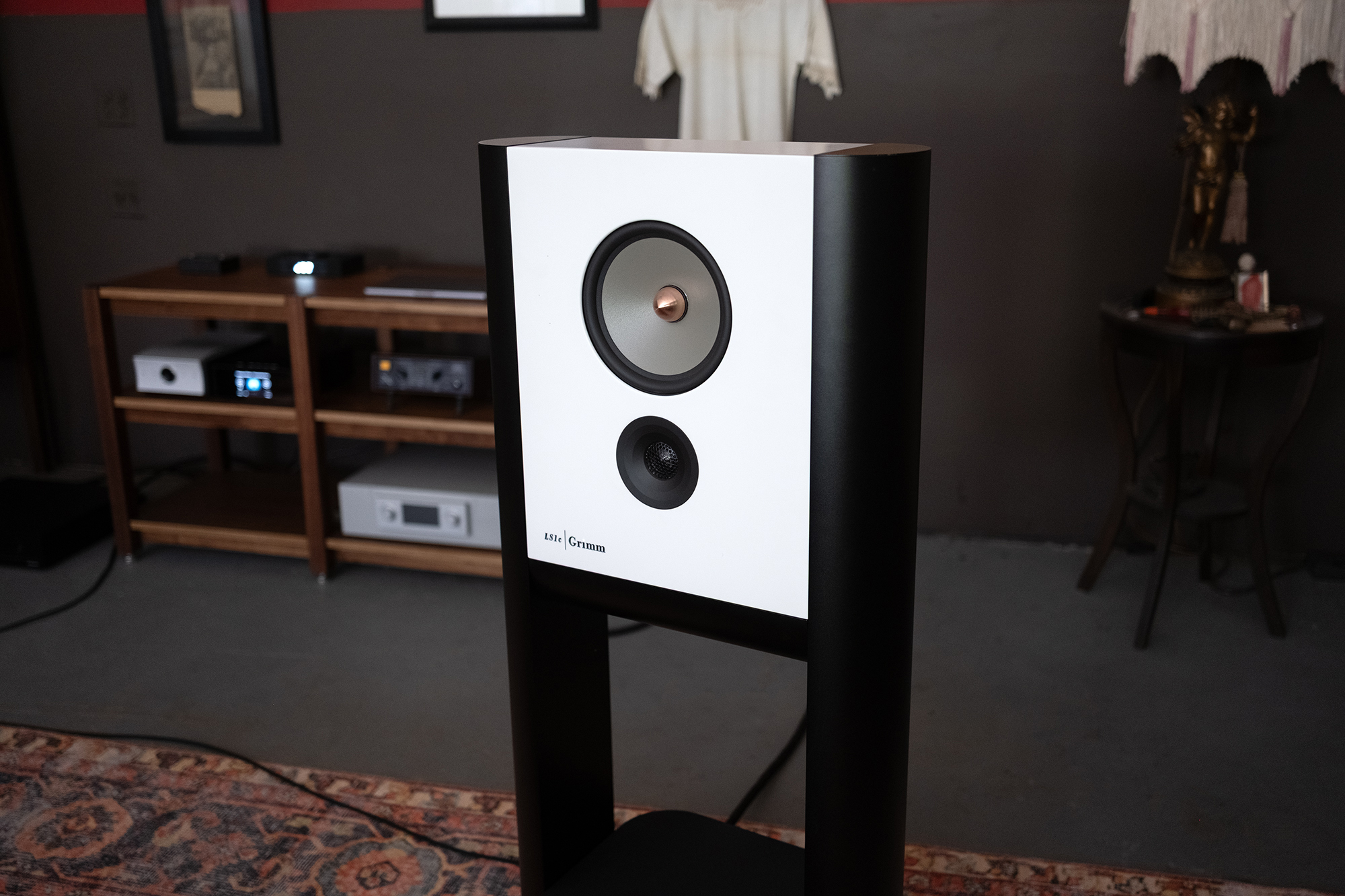
I also briefly used the Barn resident Auralic S1 streamer to feed the Grimm LS1r remote by connecting one to the other with a length of AudioQuest Carbon AES cable, while the LS1r was connected to the LS1c using the Control connections. This was more proof of connection concept as I preferred using the MU1 for the serious fun listening part. I did not use the LS1c’s analog or digital inputs.
Let’s talk about what goes on inside, out of sight.
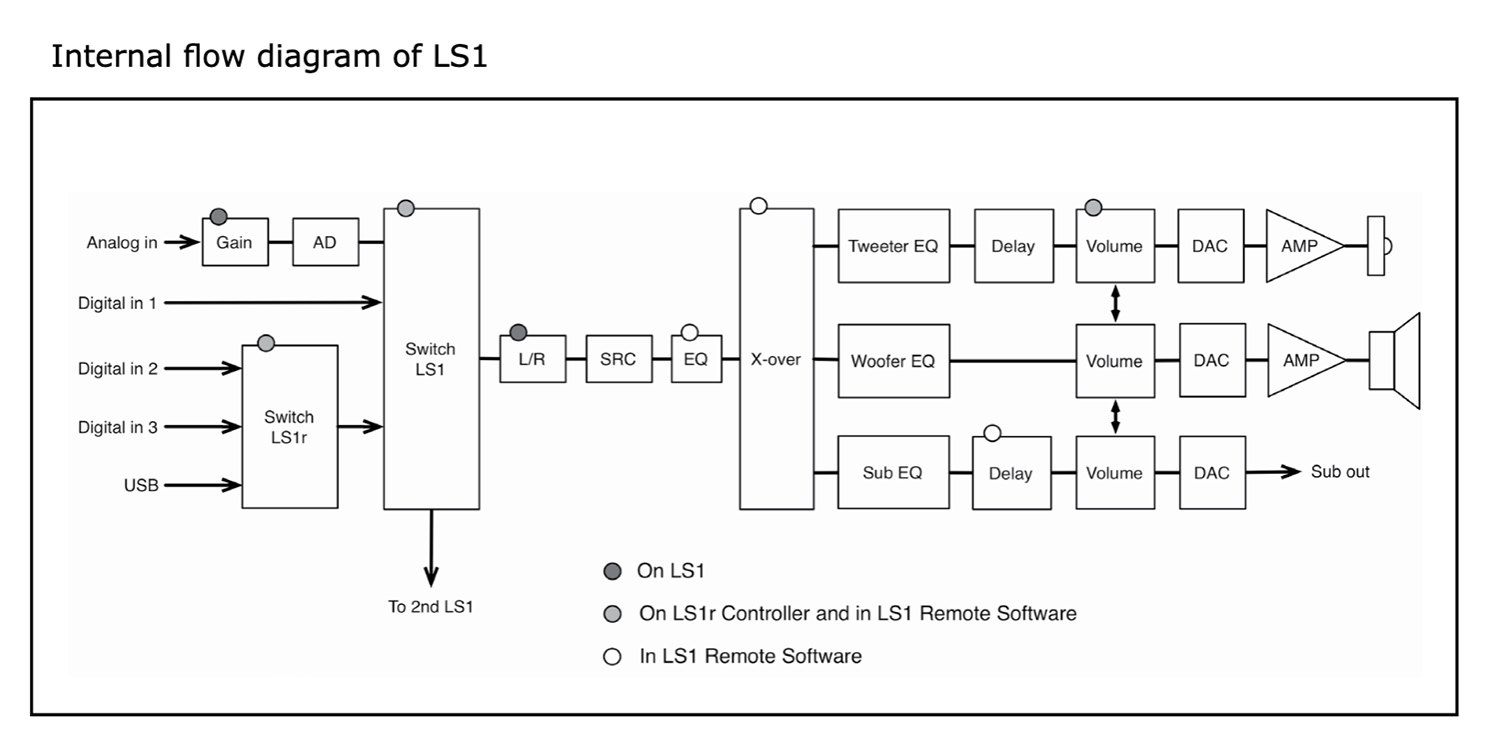
From the very informative LS1c manual:
Let’s now look in more detail at the electric signal path. Digital input signals are re-clocked by a high quality ASRC circuit which is based on the same oscillator as the legendary Grimm CC1 clock. Analog inputs are first converted to digital with a high performance AD converter. The signal then enters the first class DSP, which has a data path of 48 bits wide with a 76-bit accumulator. Each driver then has its own high quality DA converter. The output of the DA converters is directly fed into 120 W Hypex Ncore power amplifiers. The SB1 subs have a 400 W amp each. Hypex Ncore power amplifiers have extreme low harmonic distortion and are the perfect choice for the LS1 due to their linearity and excellent transient response. Throughout the whole circuit, careful attention has been paid to component selection like capacitors and resistors. Critical parts such as power supply regulators are of our own discrete design. Once our circuits measure well, we start listening to tweak the last parts by ear.
I tweaked this entire review by ear.
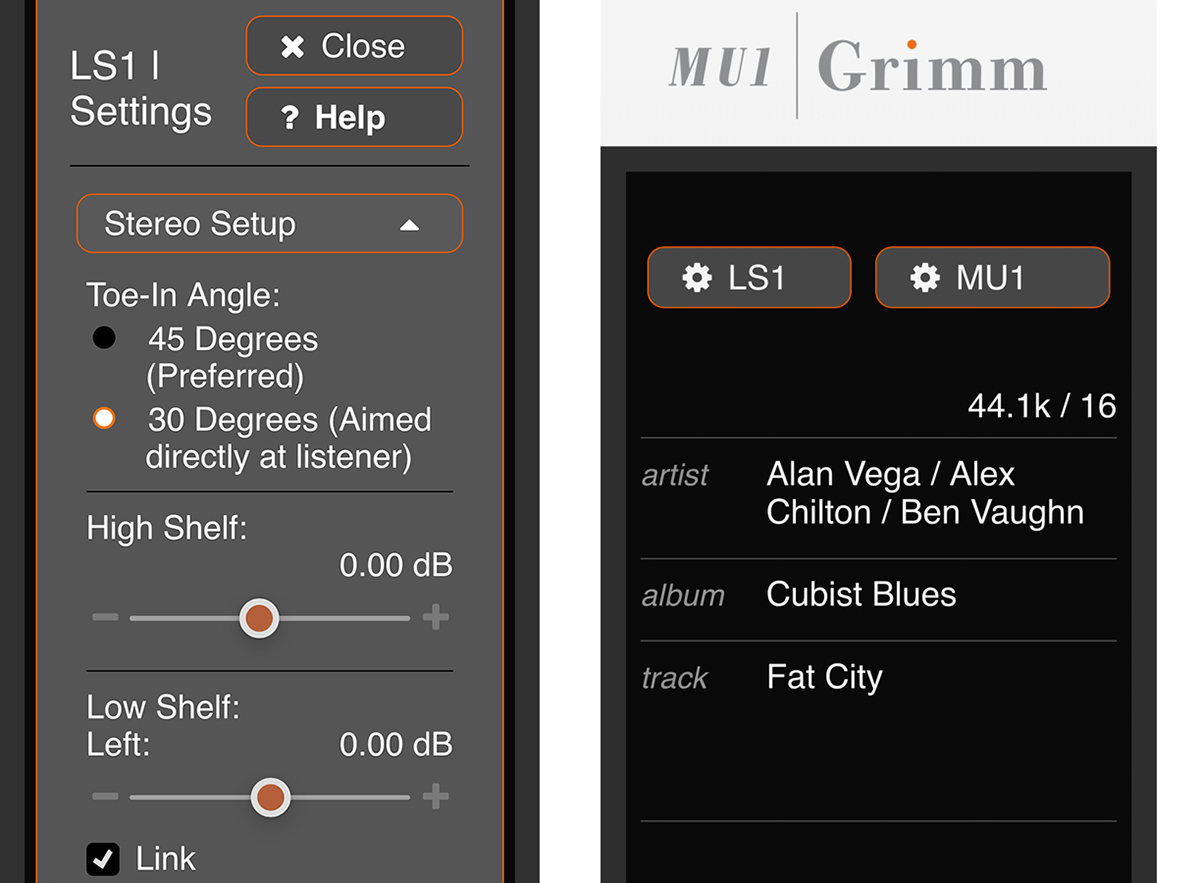
Grimm’s LS1 Control software is a standalone app that runs on a computer or as part of the Grimm MU1 browser-based app (pictured) providing access to a number of important/critical setup features including Phase Correction, Toe-In Angle, Volume Offset, and Sub Settings. There’s also a very comprehensive suite of Advanced settings which I’m not going to dig into here. I recommend a thorough read of the LS1 manual as it is instructive and informative and will give you a much more complete picture.

The LS1c arrived at the Barn in 9 boxes wrapped and strapped to a single pallet. Like Ikea, assembly is done by the owner (or reviewer) a process I found simple if a bit time consuming but another set of hands would have helped with the grunting and groaning. Assembly included making sure the serial numbers of the ‘active leg’ with the electronics matched the speaker cabinet because “Every speaker is individually measured and tuned during manufacturing, the unique correction curve for this speaker is then stored in the DSP of the matching electronics.”
This level of fine-grained refinement mating amplifier(s) to drivers, tuning speakers to perform to spec while accounting for variances in manufacturing tolerances on a per speaker basis, and overall control from end-to-end all speak to the selling points of the LS1c. But as they say, the proof of the pudding is in the listening.

The review pair are finished in the upgraded White HIMACS synthetic stone finish, a striking and contemporary look, but there a number of other options including Black Lacquer and Caramel or Natural Bamboo Veneer. I think the standard bamboo baffle softens the look up a bit but taster’s choice is the rule of the day when it comes to appearance.
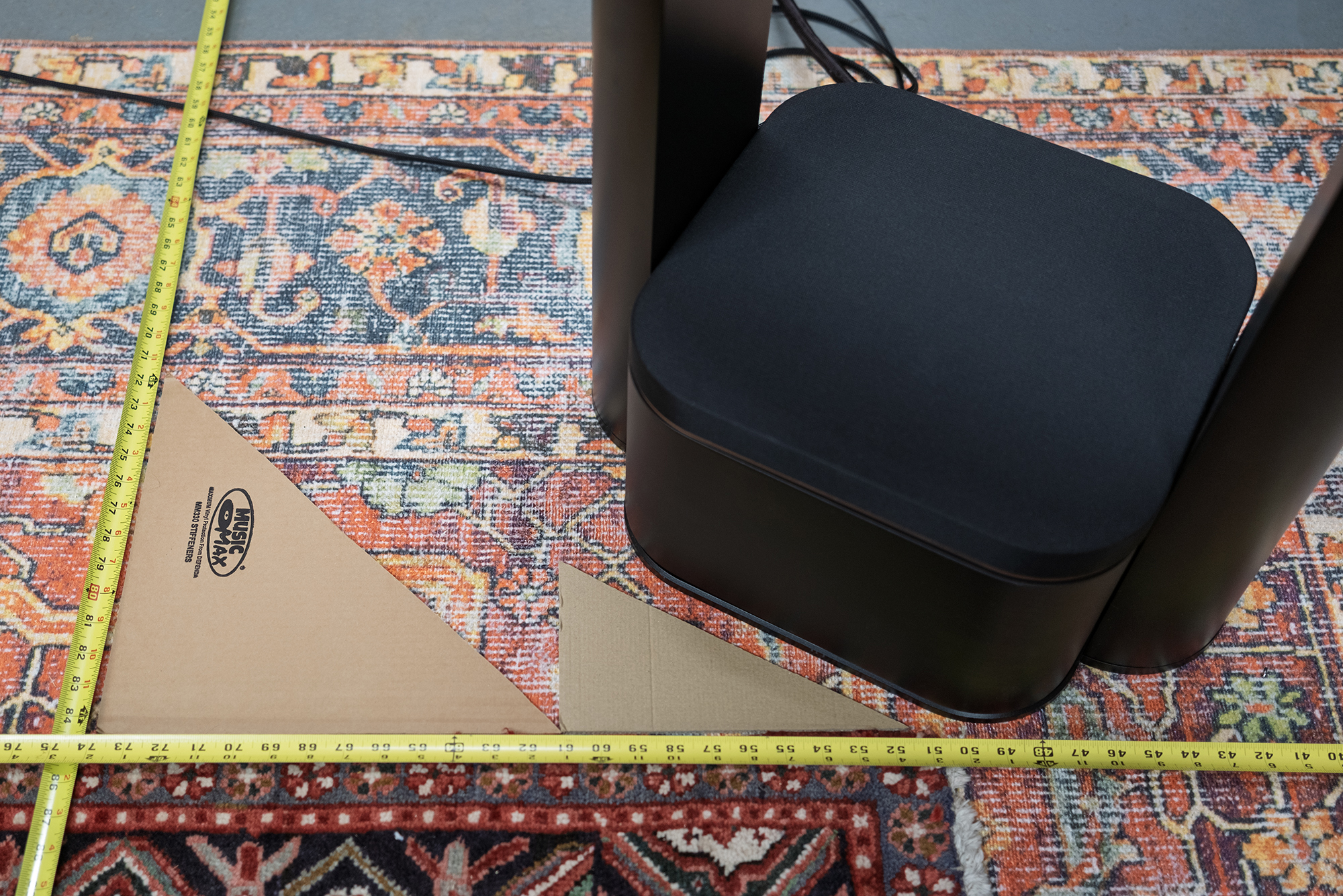
I spent real time properly positioning the LS1c on the Barn’s B-Side and preferred a (roughly) 30° toe-in compared to 45° because it opened up the sound for a greater Barn-filling experience. And I say roughly because the big comfy couch on the B-Side allows for moving closer to or further from the speakers resulting in more focus or more Barn. Of course there’s also a matter of personal preference and I prefer a bit more body and scale (and drama) as opposed to pinpoint clarity and precision, something easily addressed by toe-in angle and those DSP Shelf settings. Head vs heart.
It’s worth noting that a 45° toe-in will come in handy when setting up the LS1c in a smaller room with less space between the speakers and side walls.
From the LS1c manual:
First reflections also introduce phase distortion in the early sound if the walls are too close. Psycho acoustics tells us this effect is important down to 250 Hz. One wavelength of a 250 Hz tone lasts 4 ms so this is the time span that certainly needs to be ’clean‘ of reflections. Sound travels app. 1.4 m in that time. The rule of thumb is therefore that you need to have at least 80 cm distance from the side walls (1.5 m is better). Because of the wide baffle, the distance to the wall behind the LS1 is less critical. In fact it makes the LS1 unique since it can be placed very close to the wall without coloration, and this can actually be the best position in some cases.
Before we dig into listening, I’d suggest you read my reviews of the Grimm MU1 and MU2 if you’d like a bit more information on the company and what I found to be among the best digital sources I’ve reviewed. I ended up buying the MU1, wallet meet word, which acts as both Roon server and Roon endpoint and I used the MU1 for most of the review period.
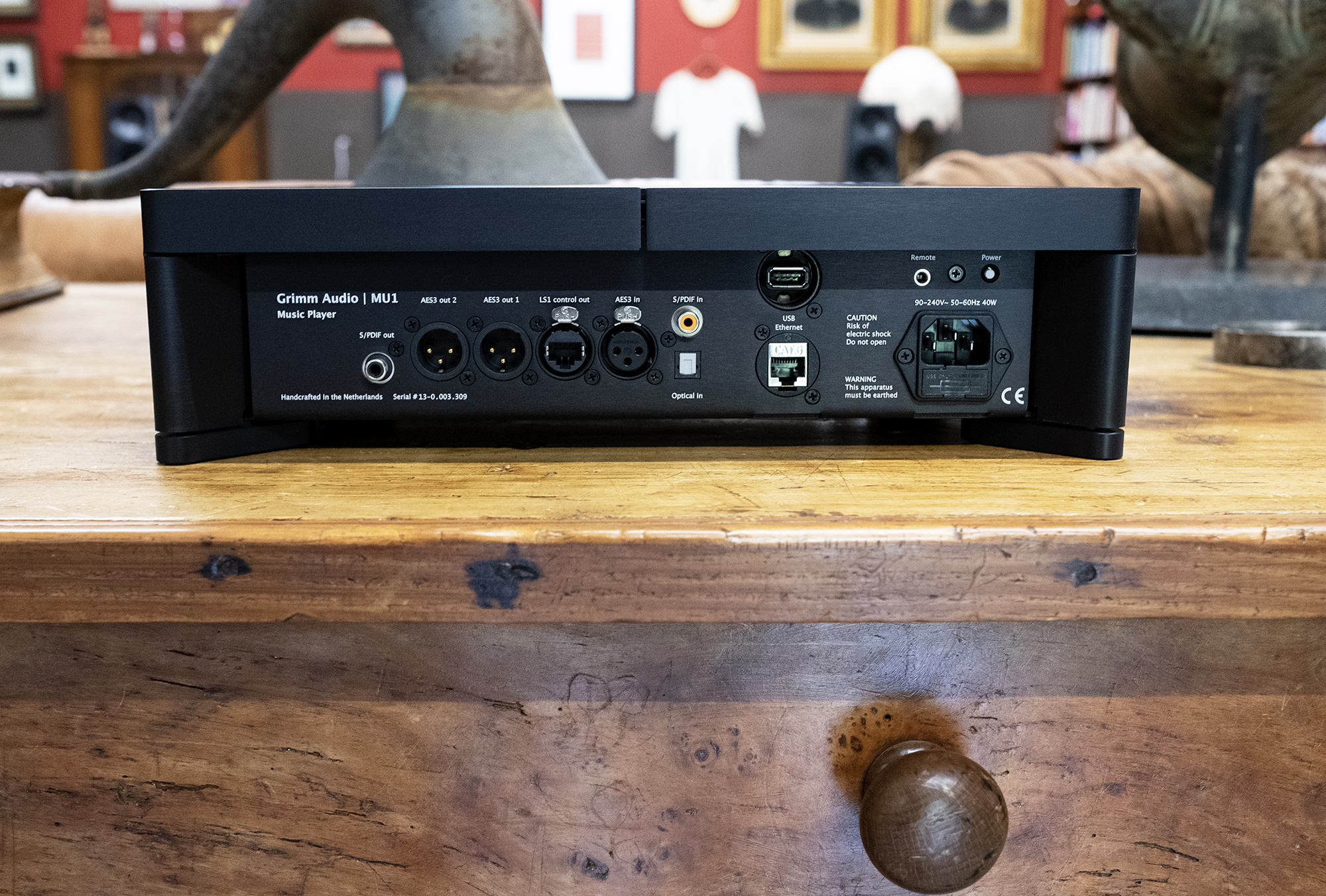
The MU1 also adds additional digital inputs to the mix.
Fritz Hauser’s Solodrumming is a one man tour de force of percussion and its repercussions in space. Solodrumming is also a great record in a musically involving way as well as being a true test of a hifi’s ability to reproduce infinite levels of detail, scale, dynamics, tones, and textures all in a rather extreme manner. Recorded live in the multi-story glass-roofed courtyard of Berlin’s Martin-Gropius-Bau in 1985, Hauser plays with time and space second only to the theory of special relativity in its ability to bend one’s mind. Here, the LS1c really showed its skills by reproducing every strike on every surface and the resulting waves of tones, overtones, and reverberations in this vast space (the venue provides a full 7-second delay) as convincingly as I’ve heard with a level of sheer purity that peeked deep into the proceedings, macro and micro alike, while perfectly describing the space of the place with sound.
While I wouldn’t call Solodrumming a deep dive into emotional landscapes, it is an uncanny display of masterful play with time and space that speaks to humanness on a grand scale and the LS1c delivered the tour and de force.
I know I’ve talked about These New Puritans Crooked Wing before but it’s worth talking about some more for all its rich and varied voices. “Bells” is among the most beautiful tracks on Crooked Wing with its layered soundscape including bells off in the distance, more and less, and the LS1c/MU1 system proved to be among the most adept I’ve heard at reproducing each instrument’s voice, location in space, and relative scale as if it was projecting a highly detailed image in 3 dimensions real enough to walk around. Simply stunning.
Los Angeles-based musician Annahstasia’s debut album Tether, released on Drink Sum Wtr earlier this month is an intimate lovely mostly vocal affair. Annahstasia’s voice is front and center backed by minimal and mostly acoustic instruments and the LS1c made this music sound and feel so astonishingly present I felt as if I should have dressed up for the occasion. Delicacy, detail, and every breath she takes were reproduced as if this stirring music was piped into the Barn directly from the mics. Transparent isn’t transparent enough a word to describe the absence of any sense of system sound which allowed for one-to-one communion with the music in play which is exactly what I’m after with hifi. Every inflection, every nuance throughout Annahstasia’s range was portrayed with a level of clarity, precision, and physical presence I nearly felt as if I felt her voice ruffle my hair.
Speaking of uncanny, the LS1c’s way with bass took some settling into as it is so well-formed, precise, and tonally rich my first impression was the SB1’s lacked bass energy. And I was proven wrong over time as I adjusted to what seems to be very well defined and controlled bass. I ran through a bunch of bass heavy tracks from Lonely Guest, Devin Hoff, African Head Charge, and Bach just to be sure and sure enough the lowest notes emanating from the pipe organ at Saint-Sulpice in the hands of Marcel Dupré thundered in Barn with live-like tone and fury.
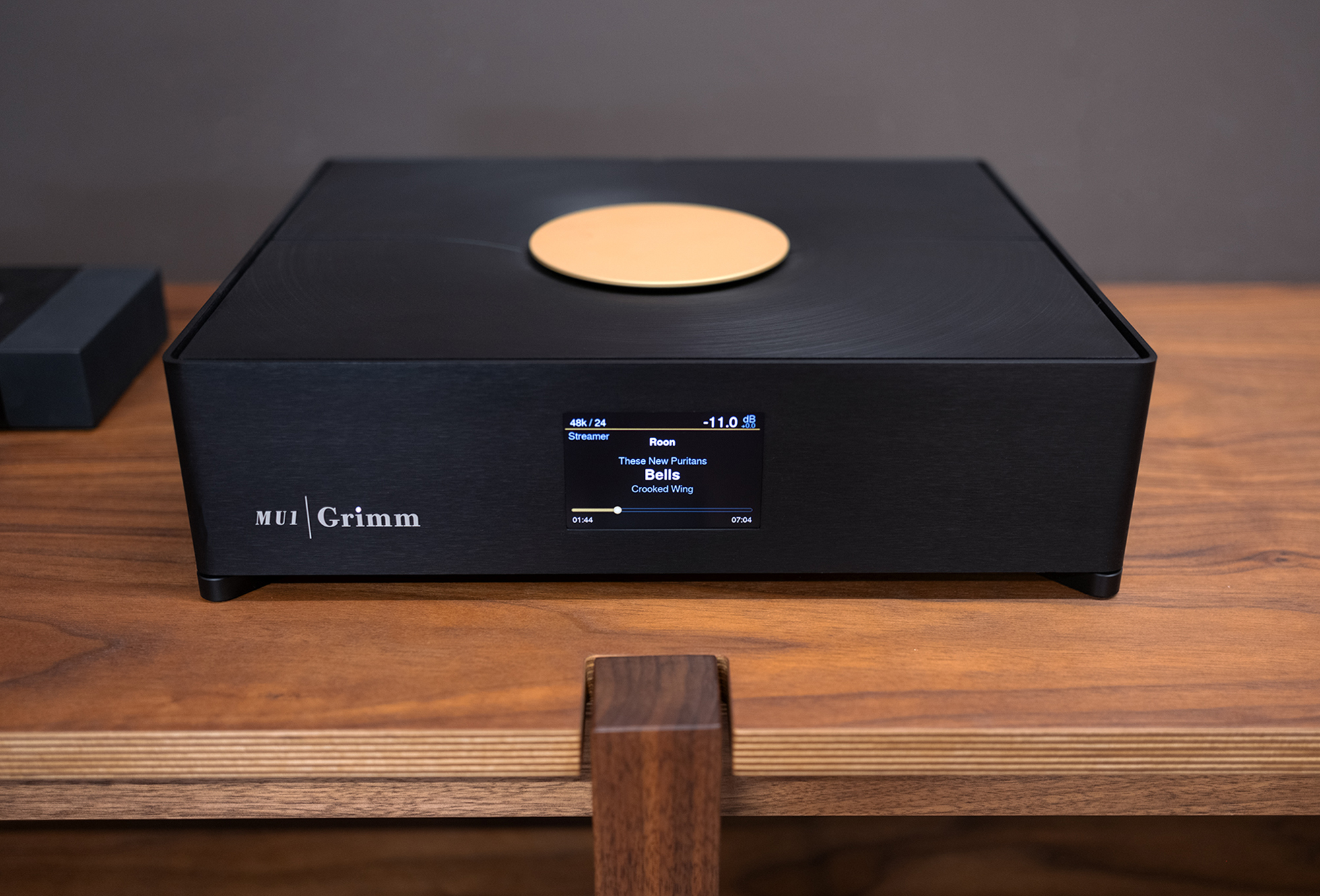
In terms of comparisons, I don’t have any as there’s nothing quite like the LS1c, especially so when paired with the Grimm MU1. I suppose we could talk about the total system cost as reviewed of roughly $57k including the MU1 and ask—what passive speaker based system comes close. To my mind that’s a fool’s errand for any number of reasons chief among them being someone interested in the LS1c are interested in them for what they are and perhaps how they look. It’s like asking someone looking at a Ford F-150 if they’ve considered a Mazda Miata. Besides, I’ve heard systems with cables that cost more than $57k.
After unpacking, assembly, setup, and manual reading, I spent most of my time with the LS1c playing music just for the joy and wonder of it. If you opt for the LS1c/MU1 combo, something I recommend, you’re looking at two speakers and one little black box that can transform your room into an intimate club, concert hall, or cathedral. I took my time listening to familiar voices like Nick Cave, Tom Waits, S.G. Goodman and Bonny “Prince” Billy, FKA twigs, Aldous Harding, Julia Jacklin, Adrianne Lenker, and Bon Iver to name just a few just to feel them all up close and personal through the LS1c’s magical looking glass.
The Grimm LS1c join the Grimm MU1 and MU2 on my short list of hifi gear that pleased me to no end with its ability to cut to the heart of music with clarity and purity that defied the complexity at work. My advice for any potential owners is to forget everything the LS1c is and can do and focus all your attention on what it does when asked to play music. And what the LS1c Active Loudspeaker System does when playing is provide among the clearest and most unadorned view into music I’ve had the great pleasure of living with in Barn.

Grimm Audio LS1c Active Loudspeaker System
Price: starts at $26,500/pair | $31,400/pair in white HIMACS as reviewed | optional SB1 Subwoofers: $12,750/pair | Grimm LS1r Remote: $1650 | Grimm LS1i USB interface: $1200 | Grimm MU1: $12,500
Company Website: Grimm Audio
Technical Specifications
Frequency Response:
20 Hz – 27 kHz +0.5dB/-3dB (w/SB1)
30 Hz – 20 kHz +/- 0.5dB (unsmoothed!)
Deviation from linear phase: <10 Degrees
Amplifier power: 100 Watts (tweeter), 240 Watts (woofer) per side; 400 Watts (per side per SB1 Sub)
Idle power, drawn from mains: 16W per LS1
Max SPL: (about) 105dB
Signal to noise ratio: 114dB (unweighted)
Crossover functions:
1550 Hz – 4th order Linkwitz Riley
70 Hz – 2nd order Linkwitz Riley (3-way system)
sum corrected to linear phase in normal mode, not corrected in ’low-latency‘ mode.
Supported sample rates:
44.1 – 192 kHz
Via USB with LS1i USB interface: 44.1 – 384 kHz (‘DXD’), DSD64 and DSD128
Level: The default ’0‘ setting of the LS1 remotes volume setting gives 79 dBC at the listening position with a -20 dBFS reference noise (’K14‘).
Latency: 7.3 ms (2-way) | 40 ms (3-way) | 5 ms in ’low-latency‘ mode
Current drawn from USB: 250mA
Maximum allowed USB cable length: 2m
Height: either 1150mm for Hifi use (standard sofa height) or 1450mm for studio use.
Width, Depth: 520mm x 160mm
Cabinet volume: 14 liters