
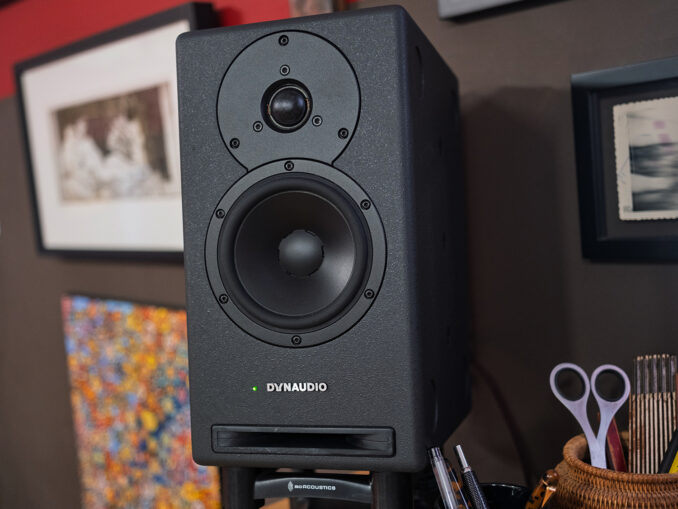
If loving the Dynaudio Core 5 is wrong, I don’t wanna be right.
Here’s one stated goal of Dynaudio Core 5 Professional 2-Way Reference Studio Monitor according to the company: Make no mistake: these are revealing speakers. If there’s a problem in your mix, they’ll let you know about it.
So let’s not take the words “Professional” and “Monitor” lightly in the Core 5’s name as it was designed for use in the recording studio to hear into the mix with a clear unobstructed view. The general idea being if you don’t like what you’re hearing, there’s something wrong with the mix not the monitor.
This goal has been viewed by some audiophiles as running counter to our cause which I describe as the enjoyment of music but I don’t see or hear it that way, especially when it comes to my desktop. Maybe that’s because I haven’t spent time living with shitty monitors that might make music sound hard, harsh, and kinda hollow but I’m admittedly only guessing about those nearly cliche’d traits that describe another false hifi dichotomy—accurate versus musical.
I’ve reviewed my fair share of gear that measures superbly well and this fact does not hinder the ability to offer plenty of pleasure in the listening. That being said, I am guided by listening where measurements come after the fact when it comes to what informs my personal purchase decisions and preferences in review gear. Sing along with me—If loving you is wrong, I don’t want to be right.
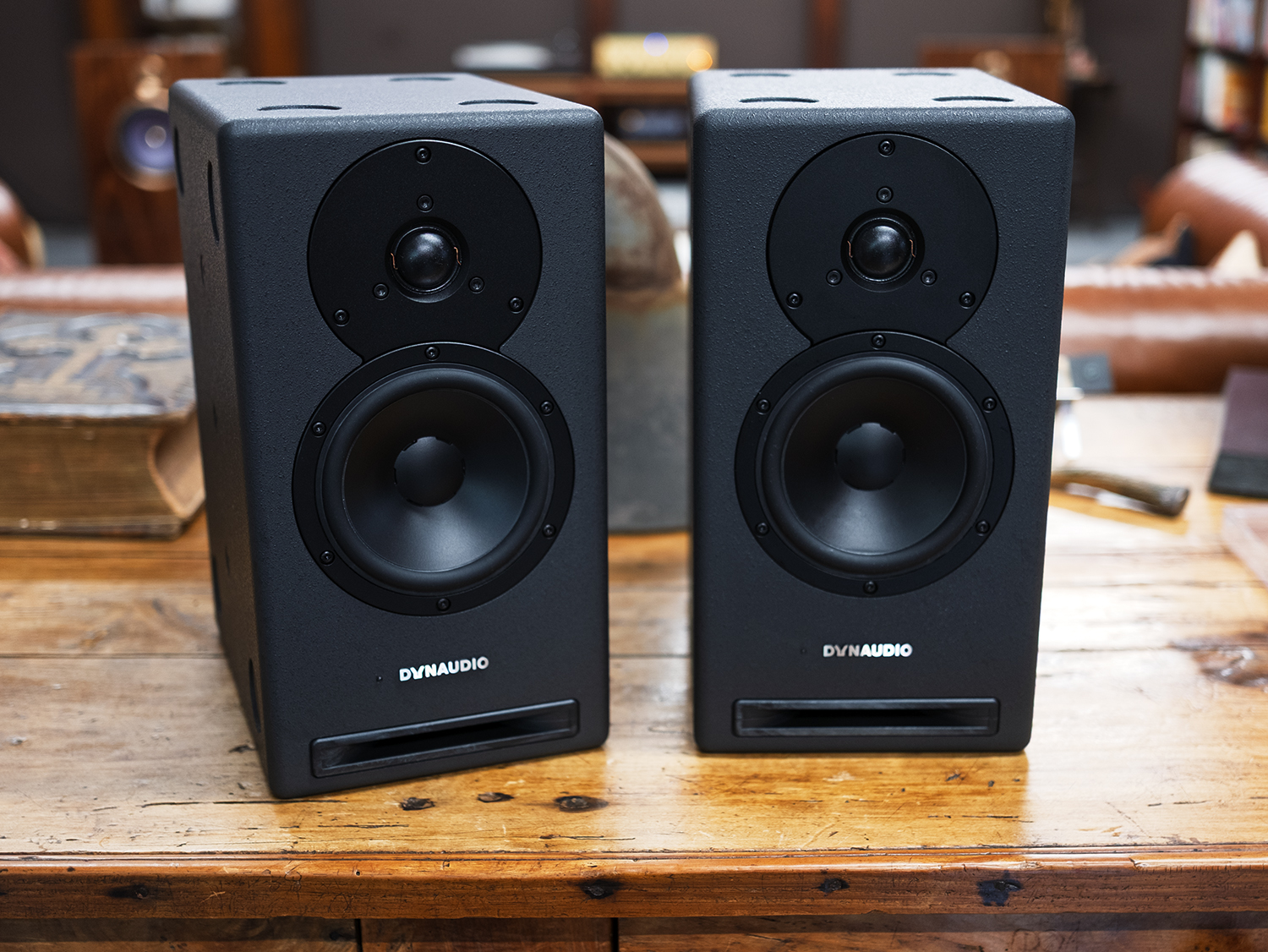
Dynaudio was founded in Denmark in 1977 as a speaker company and that’s the lane they’ve remained in ever since. The company’s first DSP-controlled active monitor came to market with the AIR series in 2002 and the Core Series first showed up at the 2019 NAMM show. The current Core lineup consists of the 3-way Core 59 and Core 47, and the 2-way Core 7 and Core 5 joined by two subwoofers, the Core Sub and Core Sub Compact. The entire design and assembly process of the Core Series is handled at the Dynaudio factory in Skanderborg, Denmark.

The Core 5 are built around the company’s 28mm Cerotar Pro tweeter which “uses a precision soft-dome diaphragm in conjunction with a Hexis resonance-defeating inner dome” paired with a 5” woofer made from Dynaudio’s proprietary MSP (Magnesium Silicate Polymer) material with DSP crossovers obviously handled in the digital domain. Power comes from a pair of 280W Class-D Pascal amplifiers in each speaker, one for each driver. A flared, slot-shaped front port sits at the speaker’s bottom directly under the company logo and a green LED status light which will flash if the Word Clock does not match the AES clock when using the Word Clock input. Each Core 5 measures 14” (h) x 10 3/4” (d) x 7 1/2” (w) and weigh in at 19 lbs which makes them a perfect fit for my 60” wide x 30” deep desktop. I sat the Core 5s on my ISO stands from ISOAcoustics because they make speakers that sit on them sound better.
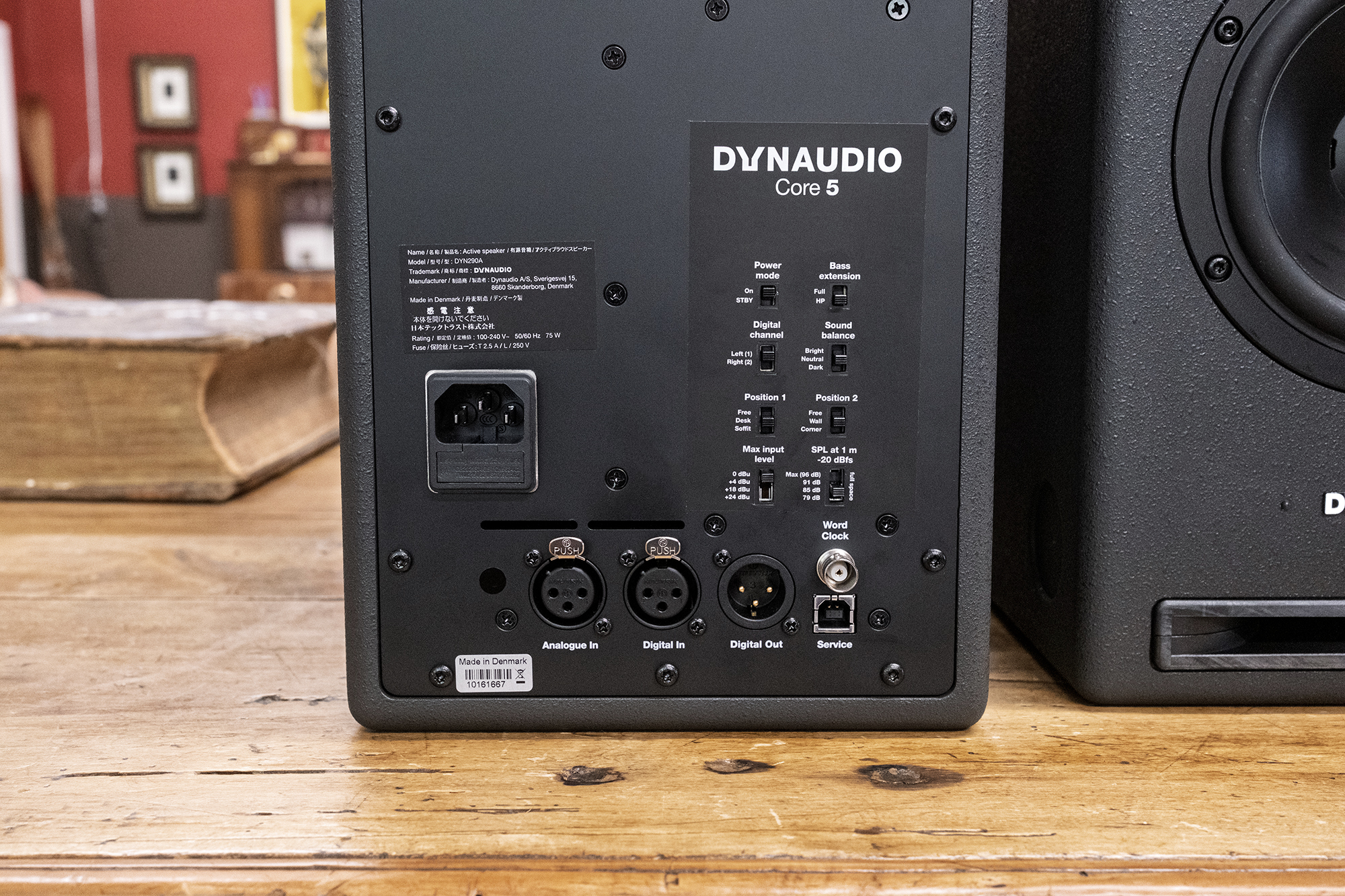
As you can see, there’s a lot going on on the Core 5’s back panel in terms of connections and options for tailoring their sound. On the input side we find both analog XLR and digital AES inputs, AES digital out, Word Clock, a USB service port, and IEC inlet. A quick run through of the setting options finds Position switches that apply DSP filters to compensate for placement and room, Sound balance options marked Bright, Neutral or Dark that offer a 1.5dB lift or cut, a Max input level switch (from 0dBu to +24dBu) for matching the incoming level of analog signals, a Bass extension switch that includes an “HP” setting for use with a subwoofer that cuts response below 80Hz using a Linkwitz‑Riley high‑pass filter, Max level, and a Digital channel switch for assigning left/right speaker when using the digital inputs (feel free to dig into the Core 5 manual for more).
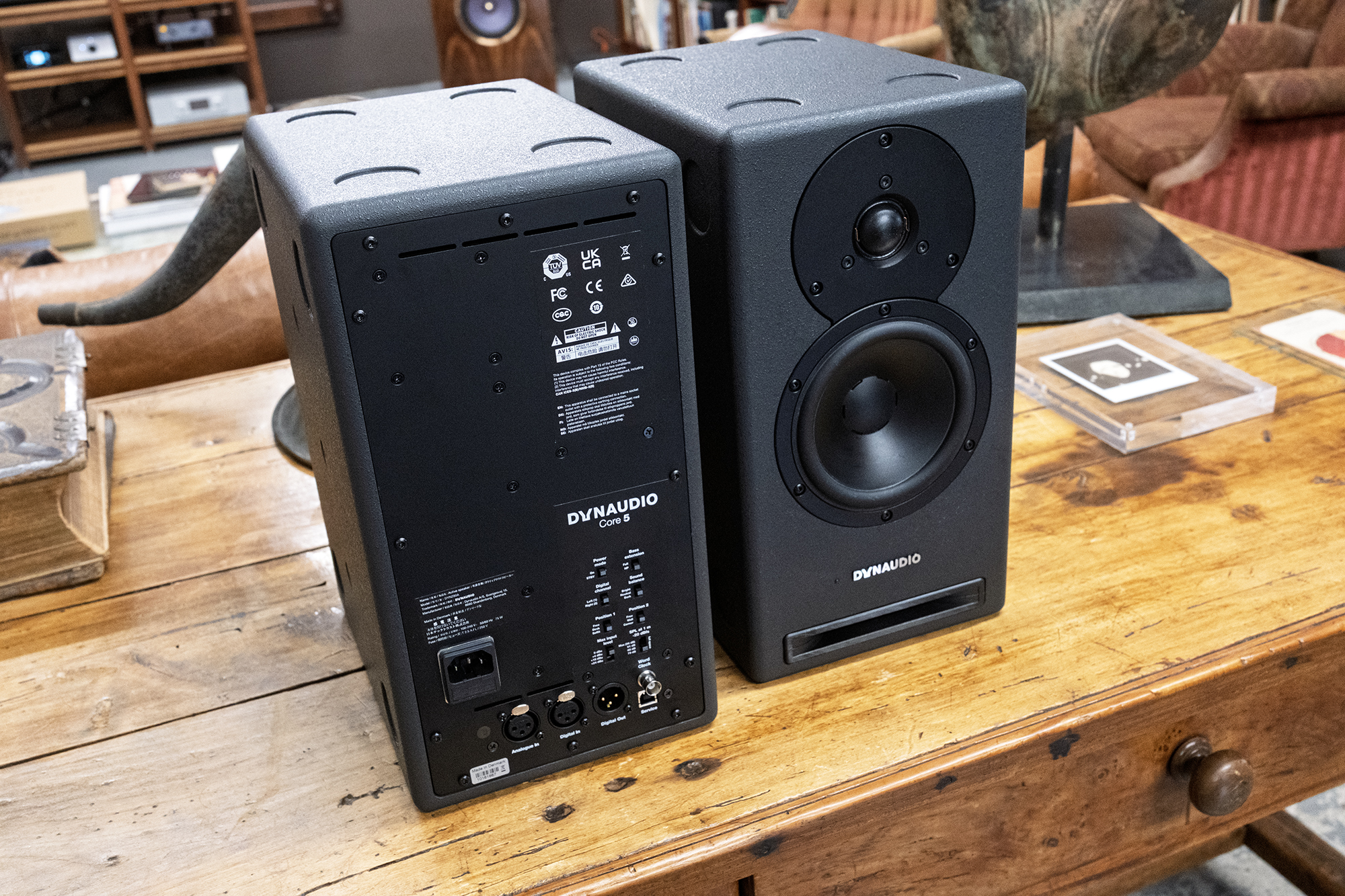
The digital AES input allows for use with a network transport/streamer with AES out, which is one way I connected to the Core 5 using the over-achieving and very flexible HoloAudio Red DDC & Network Streamer (review), relying on its DDC (Digital to Digital Converter) function to take the USB out from my iMac via an AudioQuest Carbon USB cable and convert it to AES out. A length of AudioQuest Carbon AES cable went from the HoloAudio Red to the right speaker’s AES input, while a generic and longer AES cable tied the right speaker’s AES digital out to the left speaker’s AES digital in.
One thing to note—the Core 5 does not support playback of 88.2kHz or 176.4kHz files. Part of the reason being these sample rates are not commonly used in a studio environment which is part of the Core 5’s DNA. While this is a non-issue for me or for anyone using an external DAC, it’s something to consider if you plan to roll with the Core 5’s AES digital input and you have a lot of audiophile type recordings at these sample rates.
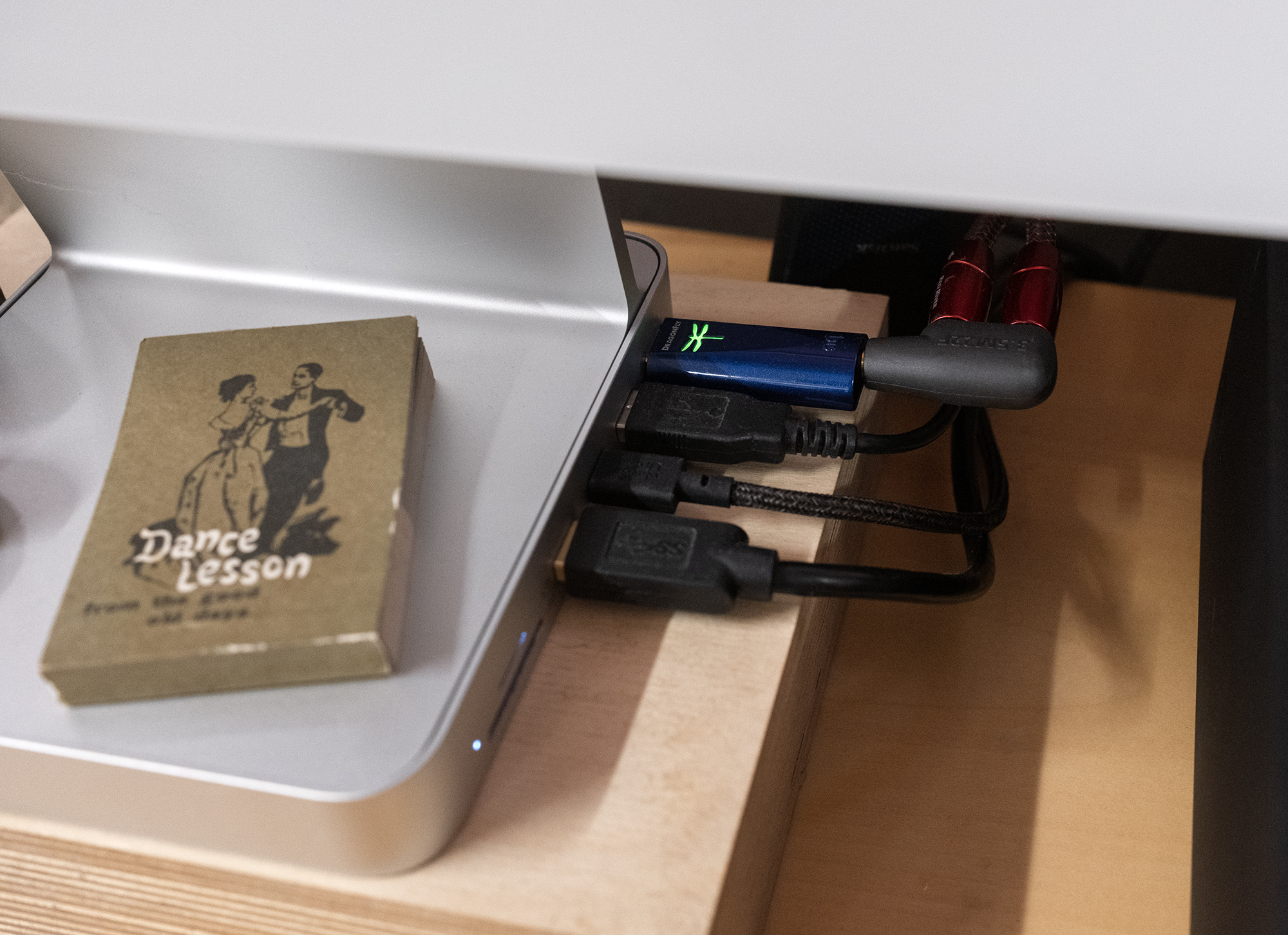
I also used the Core 5’s analog inputs paired with an AudioQuest DragonFly Cobalt DAC and a pair of AQ Red River interconnects (with an AQ Mini-to-RCA adapter as well as a set of RCA to XLR adapters on the Core 5 side) since that’s my daily setup with the ADAM A3X. But seeing as the Core 5 converts that analog input to digital at 192kHz via DSP internally, using an outboard digital-to-analog converter only to have the Core 5’s analog-to-digital converter get the signal back from whence it came, so to speak, may seem to some to be a bit…redundant? But people who own a DAC they love and want to use it with the Core 5 can certainly do so. You can also use both analog and digital inputs as the Core 5 automatically detects an incoming signal and switches to the active input.
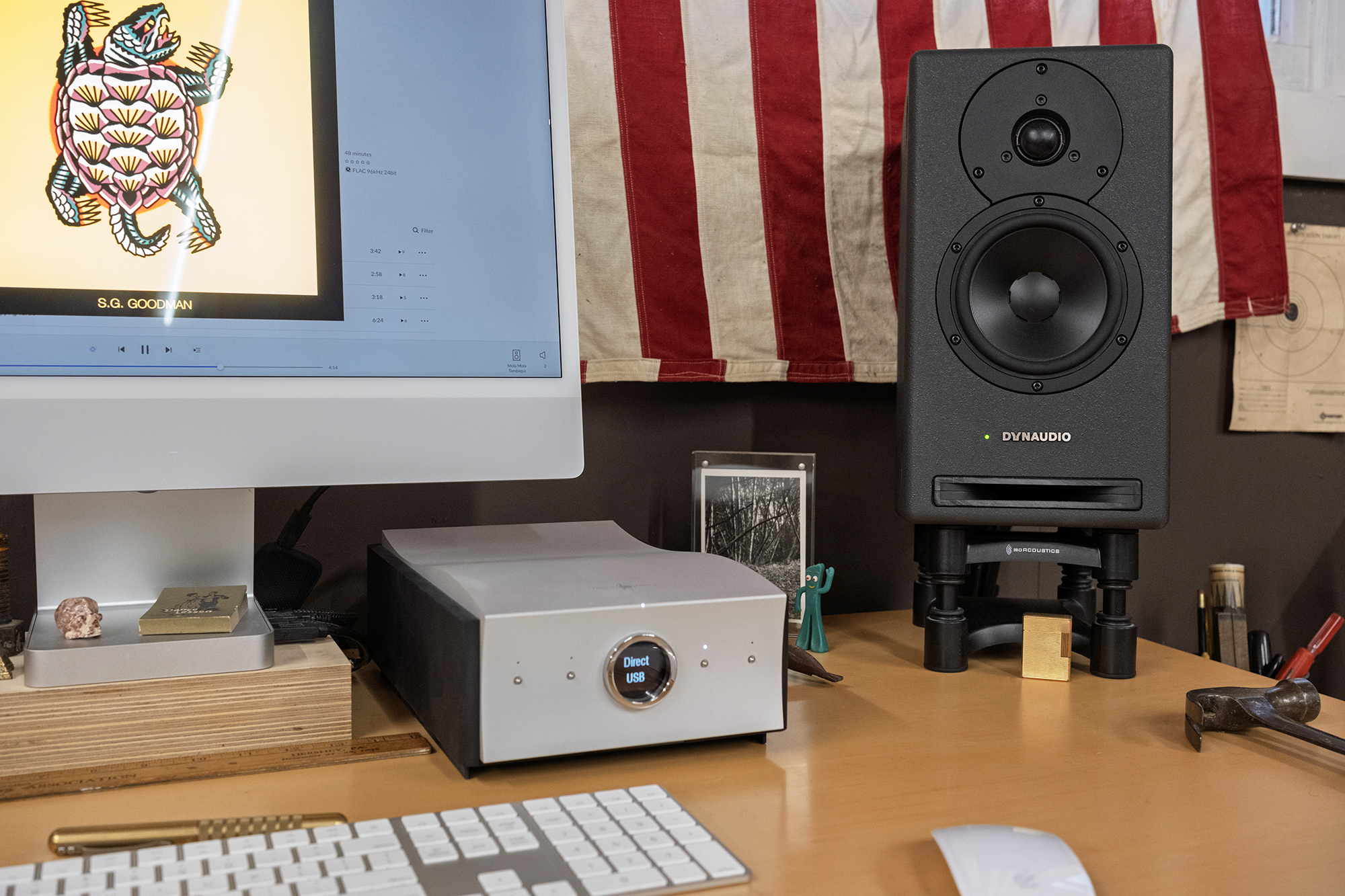
While we’re talking about external DACs, I did a quick comparison between the AQ DragonFly Cobalt and the Mola Mola Tambaqui (review) to see if the character of the DAC still came through after the Core 5 did its A-to-D thing. You see, some people might believe that this conversion process will strip away any sound differences between DACs so I put it to the (listening) test. Admittedly a poor test seeing as there are many variables at play including those adapters when using the DragonFly versus XLR direct from the Tambaqui but variables are pretty much impossible to avoid since we’re talking about different devices.
In any event, using the Mola Mola’s USB input to keep things somewhat level easily illustrated that the voice of the DAC comes through loud and clear through the Core 5—D to A and A to D be damned—with the little (and kinda mighty) DragonFly Cobalt sounding comparatively muddy and stunted compared to the Tambaqui’s brilliance (in terms of sound) and pristine clarity.
For the record, my preference for a number of reasons including cost and performance was for the $958 HoloAudio Red (it’s a bargain) as the more perfect Core 5 partner—the Tambaqui as lovely as it looks and sounds is just too big for my desktop and I view its price ($14,600) in this context as being out of whack.
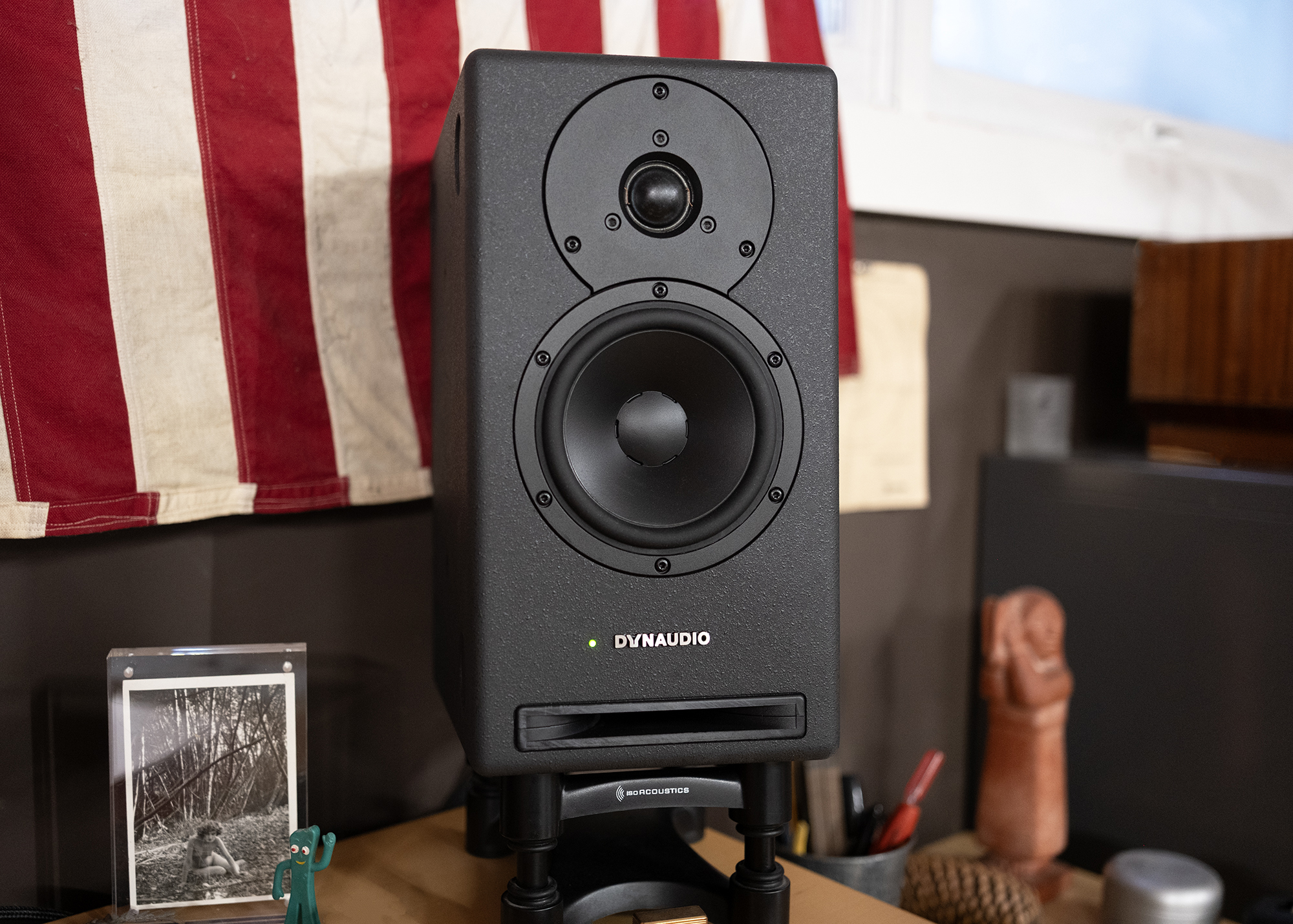
It only took a track or two for me fall hard for the Dynaudio Core 5 Monitors. While I don’t recall the exact tracks I first played back in September, I do recall laughing out loud and thinking, “OK, here we go.” Meaning, here we go on another few month journey of pure enjoyment. To be fair, my regular desktop ride are a pair of ADAM A3X Nearfield Monitors which I’ve been living with for some 13 years. In brief, the A3X are a 2-way powered speaker with a 4.5” Carbon Fiber Woofer and X-ART tweeter (eXtended Accelerating Ribbon Technology) with each driver powered by a 25W Class A/B amp. They sit on ISO stands from ISOAcoustics on my desktop.
I prefaced that ADAM intro with ‘to be fair’ because the ADAM’s are smaller and were much less expensive than the Core 5 back when they were available so it’s no wonder the bigger Dynaudio monitors made an immediate impression, one aspect of which was bigger sound. But as we all know from waistlines and debt, bigger isn’t always better but in this case it was. Better.
A fairer comparison can be found in the recently reviewed Harbeth NLE-1 High-Performance Digital Loudspeaker (review) which cost $3790/pair compared to the Core 5’s $1699/each ($3398/pair) price. One look at the Harbeth and another at the Core 5 will tell you a bit about those prices as Harbeth clearly spent some effort and money on outward appearance, they come in colors, whereas the Core 5’s textured black paint is all business. Listening past looks, I will say that the Core 5 are a lot more speaker compared to the NLE-1 in every facet of speaker performance as the heavyweight contenders from Denmark offer greater clarity, greater refinement, greater reach from bottom to top, and an overall refined richness that moves the very good sounding Harbeth into the light middleweight class.
The best music to play through the Dynaudio Core 5 to test their merits is music you care about. Music you like and preferably love. One band that fits that bill is Brooklyn’s Florist, fronted by singer/songwriter Emily Sprague who sings with a gentle lull as if weightlessness comes easy. Florist’s 2025 album Jellywish is another quiet gem with the rest of the band—Rick Spataro (bass guitar, keyboards, synthesizers, backing vocals), Jonnie Baker (guitar, keyboards, synthesizers), Felix Walworth (drums)—proving delicate washes underneath Sprague’s words.
Speaking of words, the first that comes to mind when listening to music through the Core 5 is clarity soon thereafter followed by purity especially when used with the HoloAudio Red as DDC. Jellywish sparkled, gurgled, and bubbled to life as if projected in 3D separate and apart from the speakers which sat just over an arm’s length away. What’s more is music was portrayed with a natural sense of scale and dimension—not too big or small—creating a kind of life-like sound cloud to enter and enjoy. As far as I can recall, I’ve not experienced this level of seamless purity and scale on my desktop with one result being I was often tempted to listen louder and lean in, which had the side effect of interfering with my concentration—I do work at my desk (that’s not a complaint).
Let’s jump back to 2018 with Raime’s stunner of an EP We Can’t Be That Far From The Beginning. This record bristles and brims with processed sounds, distorted voices, creepy cackles, and a general sense of menace amid electronic squalor and bass heavy rumbles.
From the liner notes:
Following on from ‘Am I Using Content Or Is Content Using Me?’, their 2nd EP of 2018 locates Raime in pursuit of challenging, non linear, and often beat-less structures ruptured by the shrapnel of online culture. The hardcore continuum still haunts their sound, but the concrète soundscapes they create make use of a spectra of techniques to camouflage its presence in any overt way. What remains is a skeletal render that implies delirious momentum. With every chime, sample, snare and sub honed to staggering effect, it becomes an exercise in hyperclarity and propulsion.
And the Core 5 loved this record which highlighted their many strengths and one thing I can tell ya for certain is Raime also care about sound quality. This record was simply stunning when uncorked on my desktop feeling as real as the Eiffel Tower trinket that sits under my iMac which I bought 40 years ago at the base of the Eiffel Tower. Here the Core 5’s way with scale and deep bass, from the very smallest blip up to the lowest sound bombs were presented with superb clarity and an overall sense of sonic purity that seemed to reach right into the music making without any debris from the long journey it took from studio to me. Stunning and at times startling as Raime loves to make sounds jump out from the mix like spectral rays. Hyperclarity indeed. Color me propulsed!
While I really enjoy S.G. Goodman’s latest, Planting by the Signs, I admit I find it hard not to jump directly to track 8 “Nature’s Child” that features Bonnie “Prince” Billy on supporting vocals because it’s among the choicest nuggets of song I’ve heard. A real peach. I am also a sucker for delicious harmony which rang out with such seamless voice in air from the Core 5 I was reminded how listening in the near field can be so completely engrossing, so completely captivating in its intimacy as if this music was made just for me in this very moment. Like friends in sound.
Part of my love of this track, and all of S.G. Goodman’s music, is her voice that’s at once clear and smoky (I like to imagine her home town of Hickman, Kentucky which sits on the Mississippi had a hand in that mix). With the Core 5s converting her distinct voice into waves in air on “Solitaire,” I was moved by its touch, by its style, by her words. If you dig an intimate connection to music but prefer listening without something wrapped around your head, get ye to the near field.
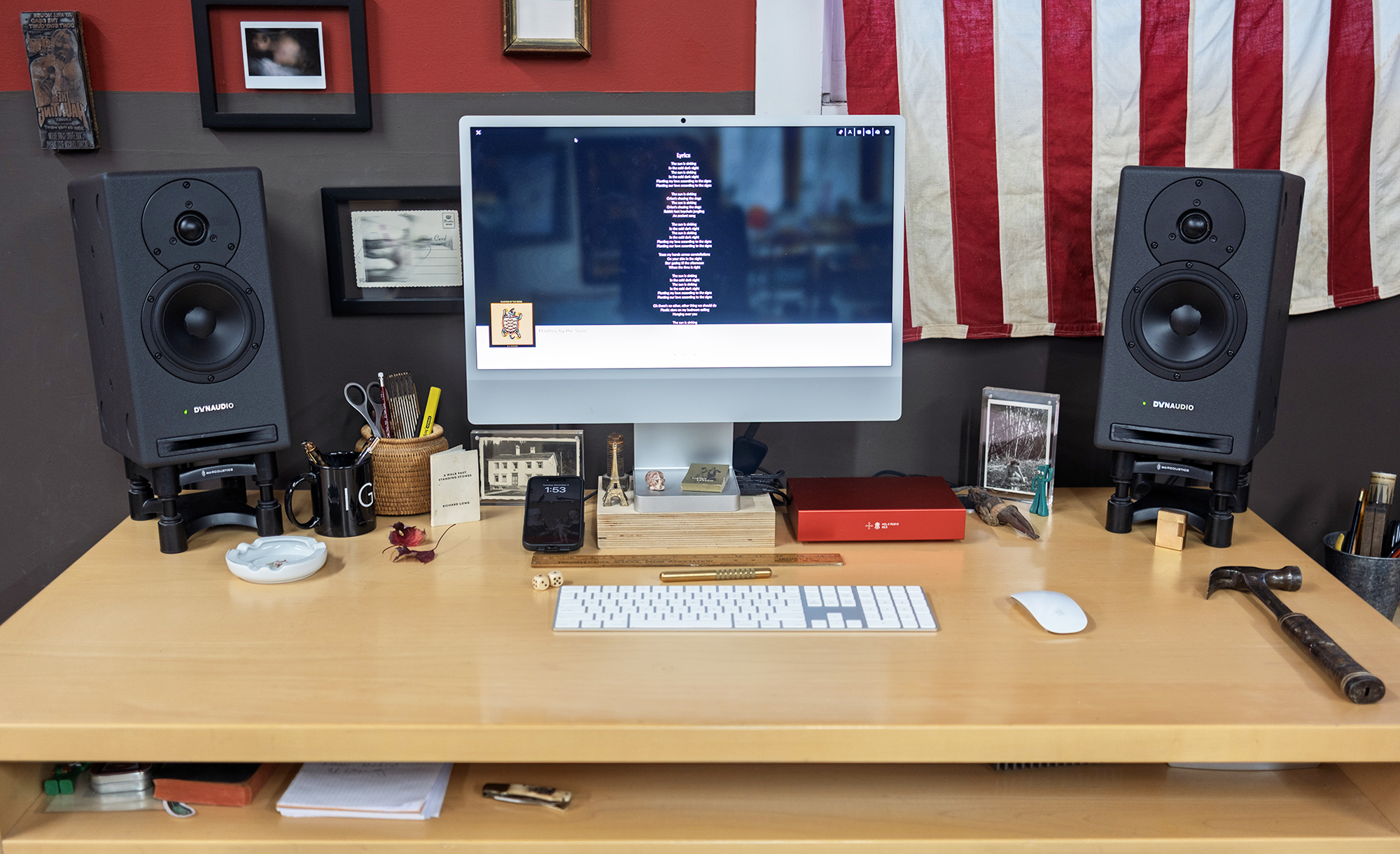
I hope you’ve noticed I haven’t said a single thing about hardness or harshness or accuracy at the expense of beauty because those things are not part of the Core 5’s repertoire. And I know because I sent countless albums and tracks through them during their two month+ Barn visit. I didn’t even need to break out any ‘test tracks’ because the Core 5’s strengths are just that obvious and those strengths serve music of all shapes, sizes, and kinds.
To my mind, living with a speaker as involving as the Core 5 on your desktop is a supreme kind of luxury, a gift that keeps on giving since music is an endless and ever increasing flow of goodness.
I recommend the Dynaudio Core 5 without reservation for anyone interested in hearing their beloved music in the crystal clear light of what sounds and feels simply right.

Dynaudio Core 5 Reference Monitor
Price: $1699/each
Company Website: Dynaudio
Specifications
Segment: Pro
Series: Core
Type: Nearfield Monitor
Analog inputs: XLR
Digital inputs: AES3 XLR, BNC word clock 1x BNC word clock
Digital outputs: AES3 XLR
Maximum SPL (Anechoic dB @ 1m): 104
Maximum SPL (Half space dB @ 1m): 110
Amplifier Power Woofer (W): 280
Amplifier Power Tweeter (W): 280
AC Power Input: 100-240V 50/60 Hz
Max Stand-by Power Consumption (W): 0.48
Lower Cutoff (Hz @85 dB +/- 3 dB): 46
Upper Cutoff (kHz @ 85dB +/- 3 dB): 26
Lower Cutoff (dynamic) (Hz @ -6 dB): 42
Upper Cutoff (dynamic) (kHz @ -6 dB): 29
Box Principle: Front-loaded bass reflex
Crossover: 2-way DSP-based
Crossover Frequency (Hz): 3800 Hz
Tweeter: 1.1in Cerotar Pro soft dome with Hexis
Woofer: 5in MSP
Weight: kg 8.6
Weight: lbs 19
Width mm: 190
Depth mm: 265
Height mm: 353
Width inches: 7 1/2
Depth inches: 10 3/8
Height inches: 14
Speakers per packaged box: 1
Finishes: Dark Grey