
Audiophiles, and I consider myself one, are funny.
I’m thinking about the buzz buzzing around the Imersiv D-1 DAC, specifically how some people are put off by its impressive measured performance. Put off because some people think that excellent measured performance translates into cold hard sterile sound. Bad sound. Ugly sound. If you’ve read my review of the D-1 DAC I obviously beg to differ and I’ve been living with one for more than 2 months and I’m loving it. l-o-v-i-n-g it.
But I also like tubes. SETs, even! And listening to records! Some people pull these things out of the magical air of rationalization as ballast to help right the ship while trying to make sense of the fact that a DAC which measures well, really well like the Imersiv D-1 can also sound good. Great, even.
Seems to me, measurements and listening are two sides of the same good penny.
The idea that a hifi designer never measures anything is fairly absurd but no more absurd than the designer who never listens. Sure there are outliers but to be realistic there’s no way to ensure things like consistent performance from sample to sample without measurements and for most humans there’s no way to know if we like the sound of something unless we listen to/through it.
“That amp measures well but I like it!”
“That amp doesn’t measure all that well but I like it!”
Take your pick, heads or tails. They both get you to the same place–the enjoyment of music.
Here’s the thing—measurements are a necessary tool when it comes to making hifi. On the other hand, measurements will never tell you how much or how little you will enjoy listening through whatever it is you’re thinking of buying once you get it home and into your system playing music. Measurements are an essential tool when it comes to designing and building hifi while listening is an essential tool when it comes to figuring out enjoyment.
To my way of thinking, relying solely on measurements when it comes to deciding what hifi to buy makes about as much sense as bragging about how healthy you are by citing the number of sit-ups you can do just before they put you under for open heart surgery.
As someone who listens for a living, trust me—you have to get around to trusting your enjoyment even if that means ending up with something that measures well.
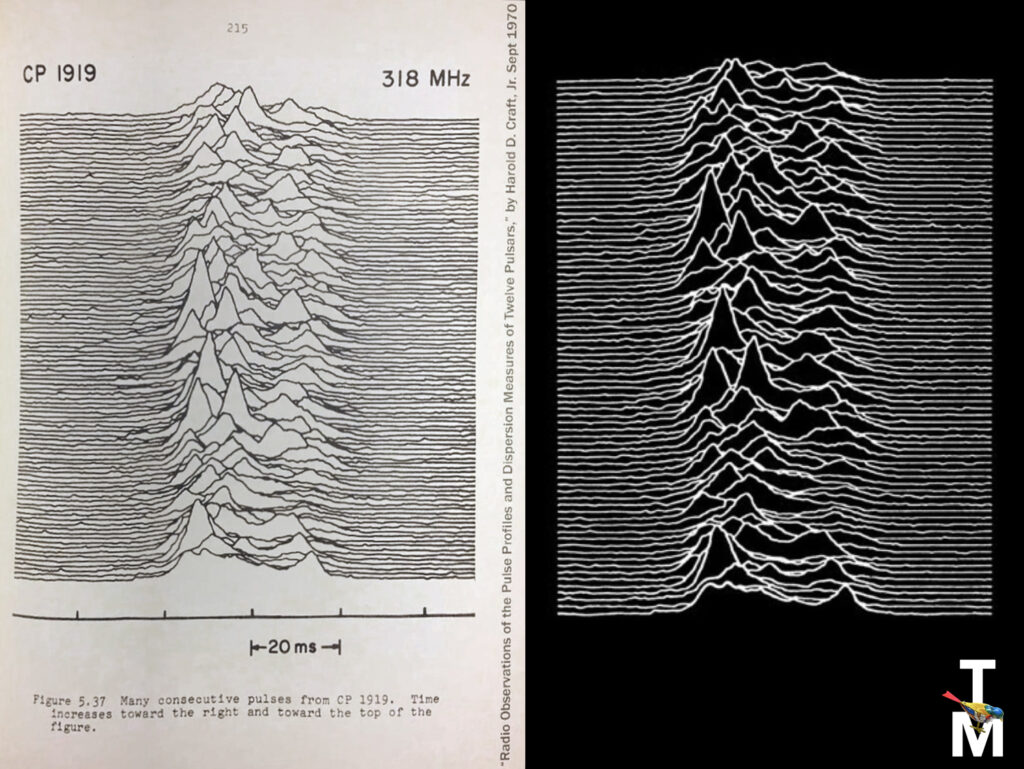
opening image: Harold D. Craft plot from his 1970 Ph.D. dissertation at Cornell University displaying incoming radio waves from pulsar CP1919 as detected at Arecibo Observatory in Puerto Rico (left) | album cover art from Joy Division’s Unknown Pleasures from 1979 (right)