
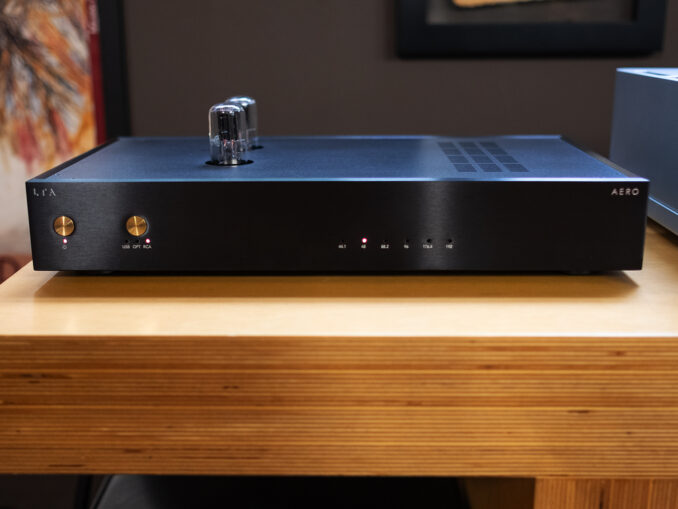
Non-digital digital.
The Linear Tube Audio (LTA) Aero DAC offers a natural ease, the kind of non-digital digital sound that’s praised by people who don’t normally take to converted bits. Lovers of the whole note. At the same time, the Aero delivers enough resolution to keep things engaging unlike some DACs that trade natural ease for a lack of nuance, a tradeoff I’d rather not have to make. You could say, and I would say that the LTA Aero is a very well balanced DAC if pleasure is high on your list of reproduction priorities.
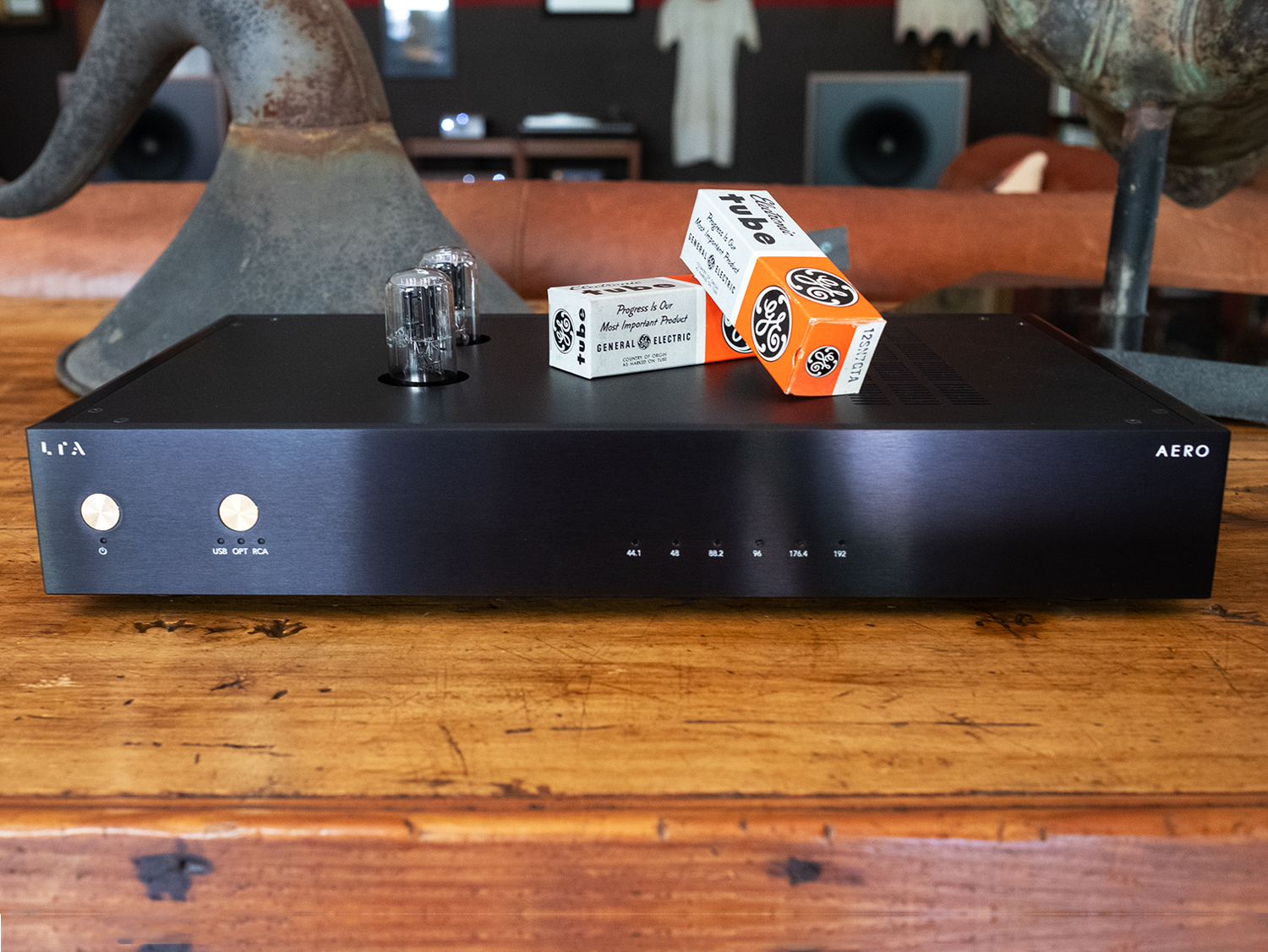
In terms of topologies, the LTA Aero is a non-oversampling R2R ladder DAC using the discontinued (NOS) yet ever-popular Analog Devices AD1865 R2R DAC chip. There is no negative feedback employed, global or local, and the Aero is the “first and only DAC in the world to use ZOTL technology” according to the company.
From LTA:
The analog section begins with a discrete current mirror with a balanced output. The active I/V stage allows the DAC chip to work less hard and sounded better than passive circuits during our testing. The signal from the I/V feeds the four single-ended amplification stages that make up the balanced ZOTL output stage.
The power supply in the Aero is a hybrid: it starts with a low-noise linear section that is followed by a fully discrete DC-DC converter – based on David Berning’s flagship Pre-One preamp – to create isolated voltage rails. These separate voltage rails are then filtered and have additional low-noise linear regulation. Each rail has at least four separate filter stages and there is over 300,000uF of combined filter capacitance in the power supply.
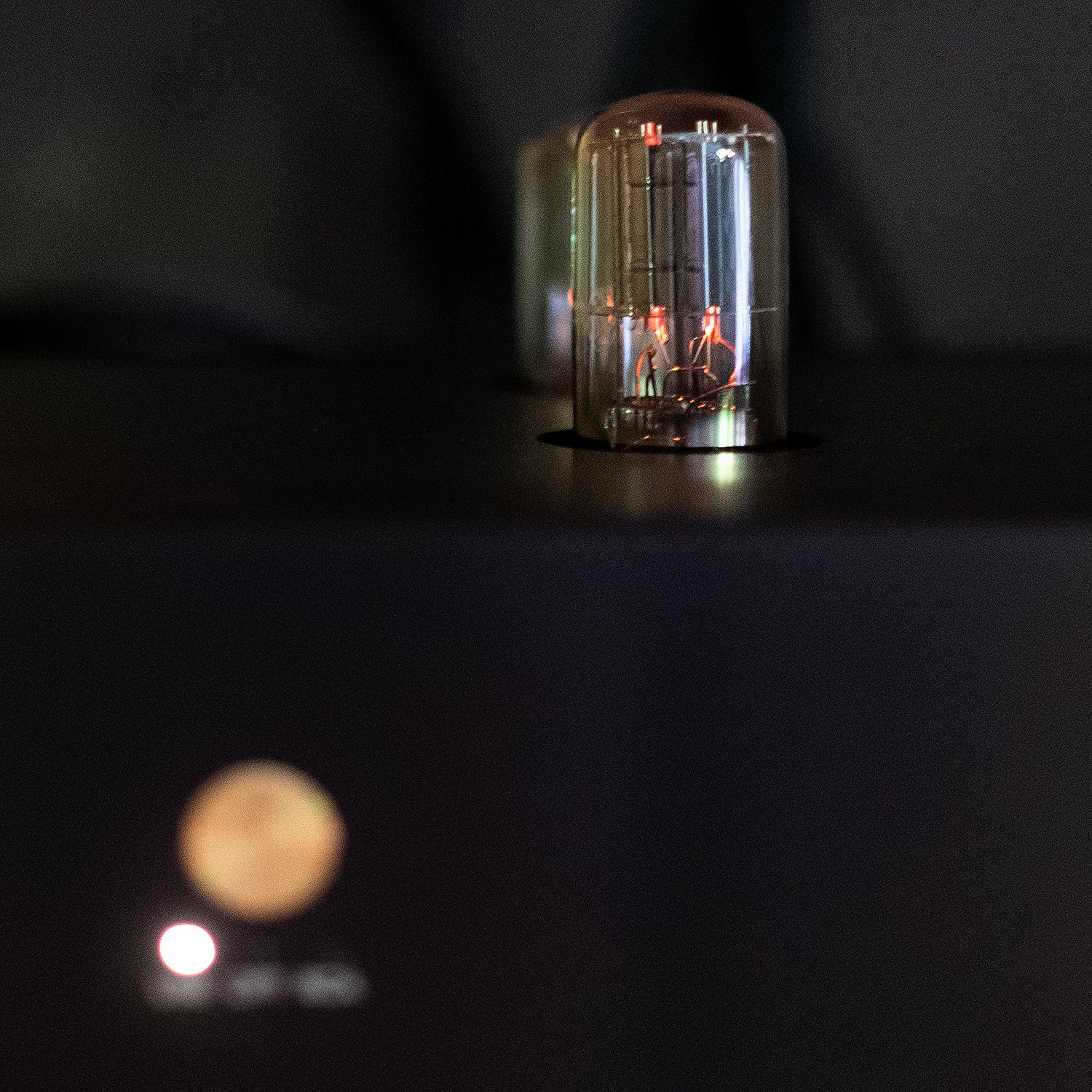
The Aero ships with a pair of NOS GE 12SN7 tubes but you can also roll in some 6SN7s. Part 2 of this review will focus on tube rolling and any changes in sound character they may bring. Fun!
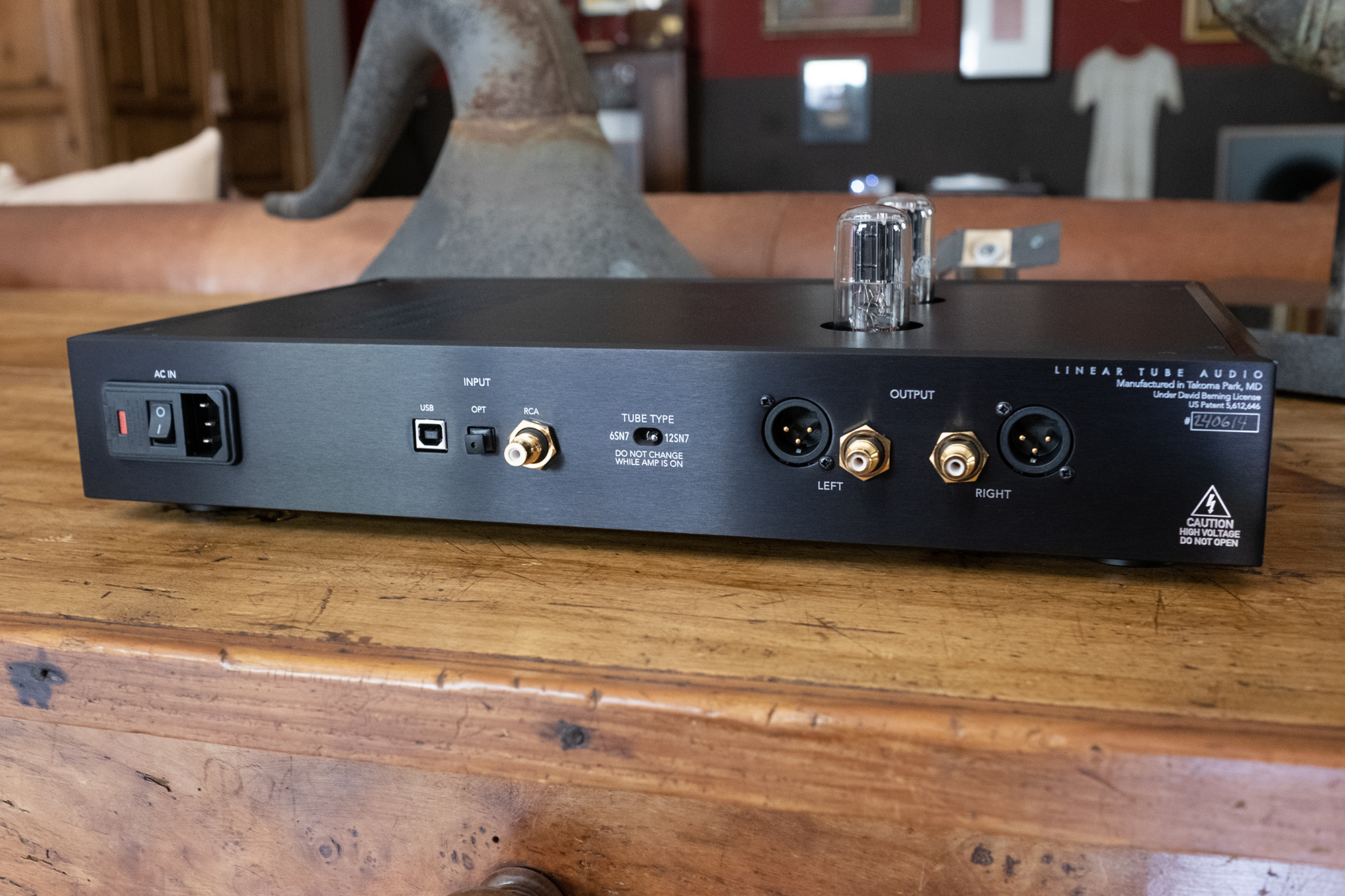
The LTA Aero has three digital inputs comprised of USB, Toslink/Optical, and Coax all capable of handing PCM resolutions up to 24-bit/192kHz (no DSD or MQA support which is all fine for me), while offering both single-ended RCA and balanced XLR outputs. That switch around back accommodates the use of 6SN7 or 12SN7 tubes.
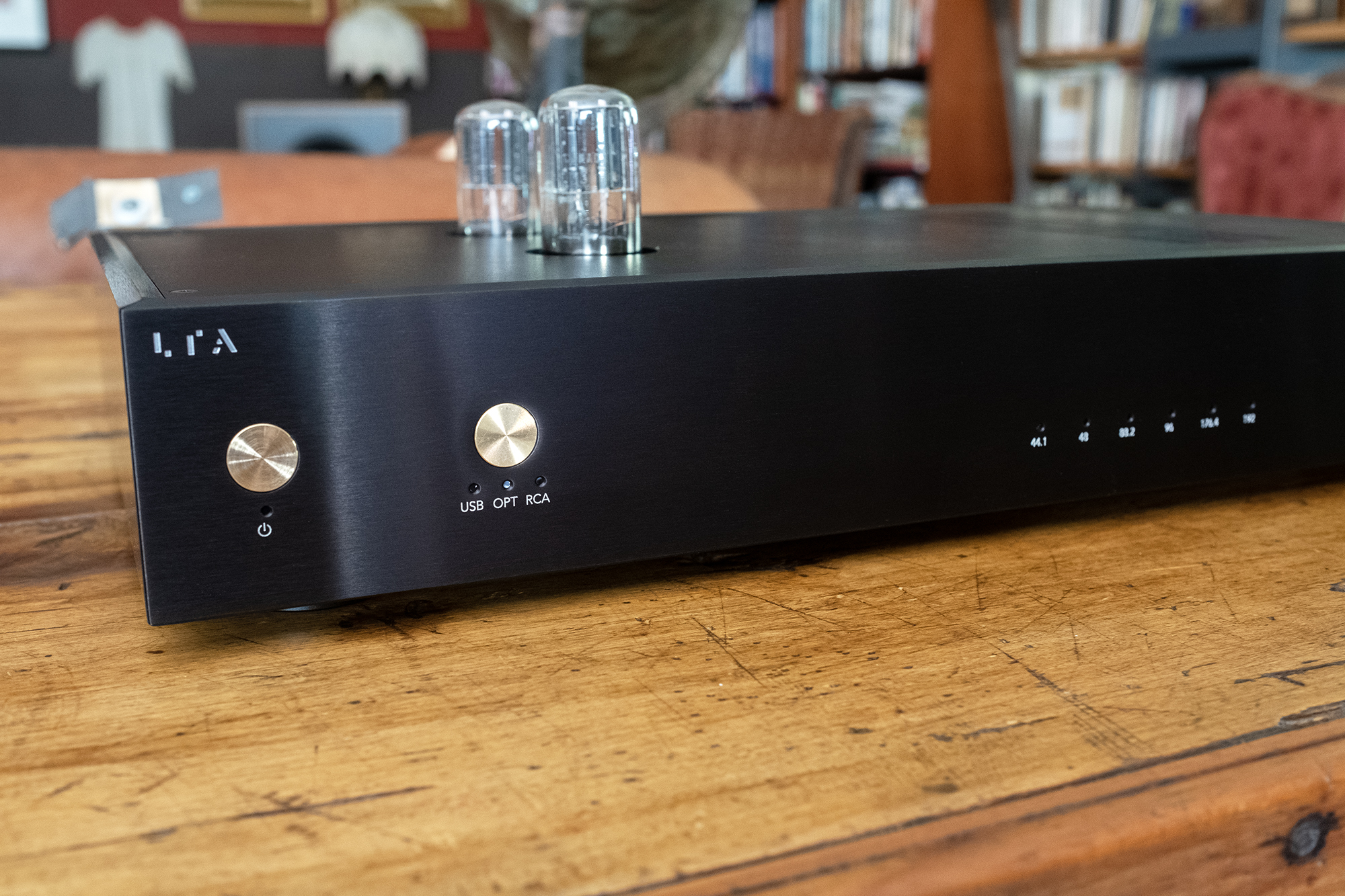
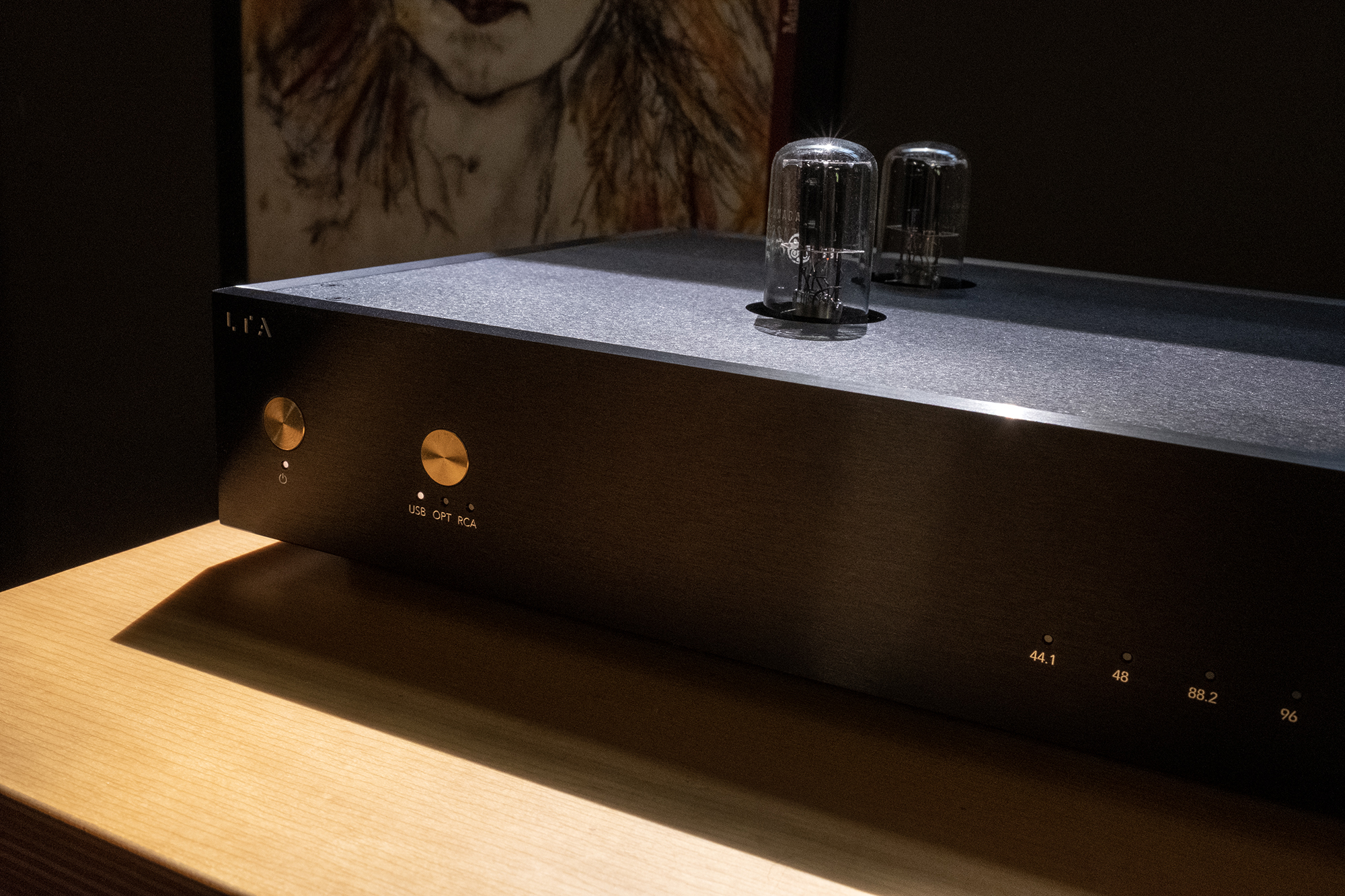
The simple front panel has two brass buttons—power and input selector—and little LEDs that light up according to the incoming sample rate of the file/music in play. I find the Aero’s overall look, size, fit ’n feel unfussy and appealing in a quiet way. Top shelf material.
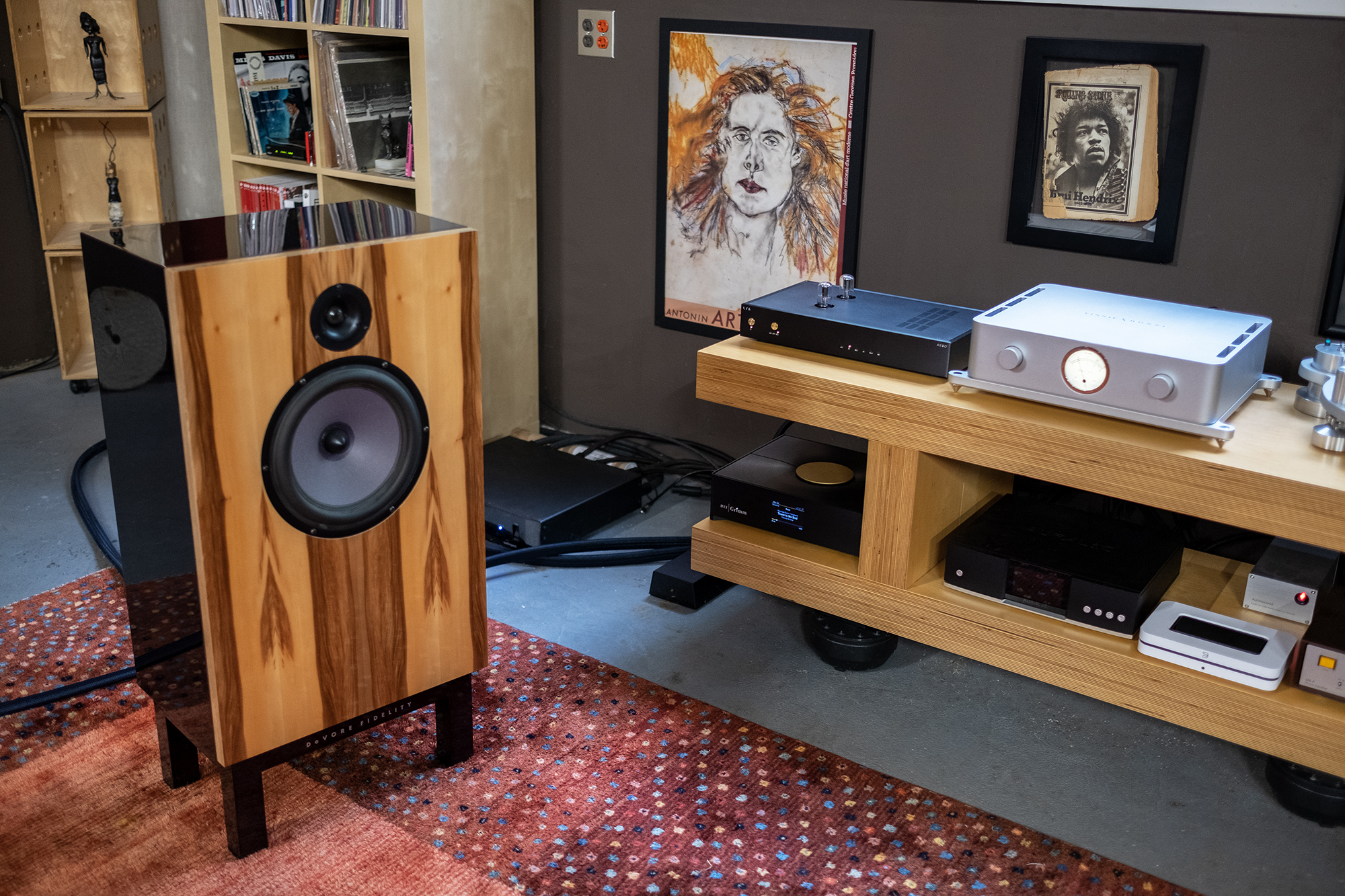
The Aero got to play with a bunch of gear including the recently reviewed Unison Unico 90 (review), the Vinnie Rossi Brama integrated (more info), the Barn resident Leben CS600x, the recently reviewed Piega Coax Gen2 411 speakers (review), Qln Reference 9 floorstanders (more info), Living Voice R80 OBX (more info), and the Barn resident DeVore O/96 (review). I used the Barn resident Auralic ARIES G1.1 (review), a Bluesound Node, and Grimm MU1 (review) to feed the Aero’s USB and Coax inputs and I’ll talk a bit more about the effects of these different streamers in Part 2. All cabling was from AudioQuest (see full system and Barn details).
One important takeaway from all of these gear/system pairings is the LTA Aero held its own throughout, never sounding out of place or as if it was handicapping much more expensive partners. The Aero’s balance of strengths consistently made music feel rich and engaging regardless of the other gear in play.
Adrianne Lenker’s abysskiss from 2018 offers mostly Lenker’s lovely voice, acoustic guitar, piano and synths with some occasional help from Gabe Wax on synths, and Luke Temple on synths, bass, and guitar. Regular reader’s know of my affinity for all of Adianne Lenker’s music, including her work with Big Thief, and abysskiss is another gentle, sparkling delight in song. This is intimate music recorded intimately presenting voice and guitar etc in reach out and touch it fashion. And the LTA’s strengths, its rich yet resolving sound, loved, loved Lenker too. While I’ve heard a bit more sparkle up top, overall balance is key for me and I prefer the Aero’s softer glow over the recently reviewed Laiv Harmony DAC (review) and its more lit up presentation, at least in OS (over-sampling) mode.
From my Harmony DAC review: “Switching between NOS and OS modes throughout the course of the review period had me wishing for something in between.” And while it’s not literally the case, in some ways the Aero slots in between with a more pleasing and engaging balance between color and resolution. More engaging because I respond to richness in tone and texture as being better able to connect me to music’s emotive powers than sharp, super-defined edges.
What’s Tonight To Eternity by Cindy Lee, released on Superior Viaduct in 2020, feels like looking back at pop music from the past through a glass darkly.
From the liner notes:
For Patrick Flegel, Cindy Lee is more than just a recording music project. “Singers like Patsy Cline and The Supremes carried me through the hardest times of my life,” explains Flegel, “and also provided the soundtrack to the best times.”
Flegel also talks about being influenced by Karen Carpenter, “What I relate to in her has to do with what is hidden, what is unknown,” and What’s Tonight To Eternity shrouds ‘60s pop in static, haze, and distortion, a kind of imperfect reflection on things past. The Aero DAC does a fine job unraveling even the densest masses of crush and splintered sounds that intrude on happier moments. Even here, the Aero’s ability to flesh out the heart of the varied voices at work lends a humanness to these tortured songs that lesser DACs, thinner and more ‘resolving’ DACs, tip toward too aggressive, too harsh, too thin.
Which brings to mind something Audio Note’s Peter Qvortrup said at a CES past, c.2008, that went a little something like this—Your system is only as good as its ability to play your worst recording. I know some people appreciate systems that make some music unlistenable, believing that’s more accurate. I’m more of a lover than fighter when it comes to listening to music on the hifi and Cindy Lee is a complicated dish to love but the Aero DAC helped make it so.
Mississippi Records recent release of Arvo Pärt’s Für Alina is a study in simple beauty. Featuring Alexei Lubimov (piano tracks A1, A3), Angela Yoffe (piano tracks A2, A4), Jurgen Kruse (piano tracks B1 to B3), Sebastian Klinger (cello tracks B1, B3), and Vadim Gluzman (violin tracks A2, A4), every note, every pause, every silence however fleeting convey meaning and the Aero’s sense of time seemed perfectly synchronized to Für Alina’s meditative pace. With such simple acoustic music, solo or duets, we really need to hear the whole voice of each element, the whole note if you will, and the LTA DAC delivered a very healthy helping. A satisfying amount.
It was only when comparing the Aero to the Barn resident—and about 3 times the price—totaldac d1-unity that I heard even more. More tonal richness from bottom to top, a larger and airier place for music to unfold within, and a generally more engaging presentation. In my Unison Unico 90 review I mentioned “a bit of hardness and thinness from the upper midrange (on up)” from the Aero and this degree of criticism was comparative, i.e. not a factor that intruded on long term listening. In other words, I would not call the Aero’s upper registers hard or thin, except in relation to the richer and more fully fleshy mid- to upper registers as reproduced by the totaldac.
Melbourne-based jazz funk band Hiatus Kaiyote’s 4th full length, Love Heart Cheat Code released on Brainfeeder back in June, feels like a magical music box that some adventurous soul stuffed full with tasty aural treats.
From the liner notes:
Love Heart Cheat Code is a snapshot of four musicians dancing together on the edge, 11 playful, exuberant tracks that shine light. Yet, for a band that made a name for itself with its complexity and received critical praise and multiple Grammy nominations for their embrace of maximalism, one of the most striking things about Love Heart Cheat Code is its simplicity.
Simplicity, like performance, is also relative (compare Love Heart Cheat Code to Für Alina to see what I mean). I’m finding real joy in the making here, an adventurous playfulness that lifts my spirits with ebullient bubbling funk. The band’s core players— Nai Palm (vocals, guitar), Paul Bender (bass), Simon Mavin (keyboards), and Perrin Moss (drums)—are joined by four guests who add flute, guitar, vocals, and Taylor “Chip” Crawford’s homemade ‘frello’. Break beats, jump cuts, and soaring joy radiate from this record and the Aero kept perfect pace with the snap and roll. The Aero is dynamically lively, snappy, while never sounding overwhelmed even by the complex fractured funk on display from Hiatus Kaiyote & Co. Nice.
So much of comparative listening has to do with timing—what comes before and what comes after. But what matters more, infinitely more, is uninterrupted time spent listening. After all, listening to music on the hifi is not a competitive sport contrary to what some audiophiles might lead you to believe. I ran a very long list of test tracks through the LTA Aero during its 6 week stay and it consistently responded with a rich, lively voice that kept pace with the most complex sounds in my aural arsenal. While I’ve heard a more fully fleshed out presentation from more costly DACs, long term Aero listening dissolved any sense of loss. Errors of omission outweighed by a nicely balanced musically engaging voice.

The LTA Aero inhabits a crowded space with more DACs than most people have the time to see let alone listen through. The Aero stands out from that crowd by offering a natural sense of ease combined with a level of richness and resolution that keeps things real and exciting. If you’re looking for non-digital digital sound that won’t break the bank, LTA has designed a DAC for you.

Keep an eye out for Part 2 of this review where we’ll dig into tube rolling and more.
Linear Tube Audio Aero DAC
Price: $3950
Company Website: LTA
Features and Benefits
- Pure R2R Ladder DAC: No oversampling and no digital filters
- Class-A ZOTL Output Stage: The first and only DAC in the world to use ZOTL technology
- Zero Negative Feedback: No global or local feedback for timbral accuracy and enhanced transient response
- Isolated Power Rails: Dedicated power supplies for each section for precise electrical isolation
- Advanced Protection: Circuitry to protect downstream components from tube failures
- Easy Tube Swapping: Fully visible tubes and simple toggle switch for using either 6SN7 or 12SN7 output tubes
- Balanced XLR Outputs: Enhanced signal quality and crystal clear audio
- Three Inputs: USB, Optical, and Coax inputs for flexible connectivity
- Direct-Coupled Topology: No capacitors in the signal path
- Plug & Play: No drivers needed for Windows or Mac
- Advanced Power Regulation: Belleson-regulated, multi-stage choke filtration for clean power
- Digital Galvanic Isolation: Blocks noise from music sources entering the DAC circuit
- Made in the USA: Designed and built in our Takoma Park, MD workshop
Specifications
- Inputs: USB, RCA Coax, Toslink / Optical
- Outputs: RCA (70 ohm), XLR (140 ohm)
- Formats: Up to 24-bit / 192 kHz PCM
- DAC: Analog Devices AD1865 R2R
- Output Voltage: RCA: 2.2 Vrms | XLR: 4.4 Vrms
- THD+N: RCA: 0.54% at 1.1 Vpeak | XLR: 0.061% at 2.2 Vpeak
- Hum: RCA: -110dB at 1.1 Vpeak |XLR: -116dB at 2.2 Vpeak
- Frequency Response: -0.3dB at 20Hz and -0.8dB at 20kHz
- Tube Complement: 2 x 12SN7 (6SN7 tubes can also be used)
- Power Consumption: 32W (Standby: 7W)
- Dimensions (W x D x H): 17 x 10 x 3″ (not including tubes)
- Weight: Approx 15 lbs