
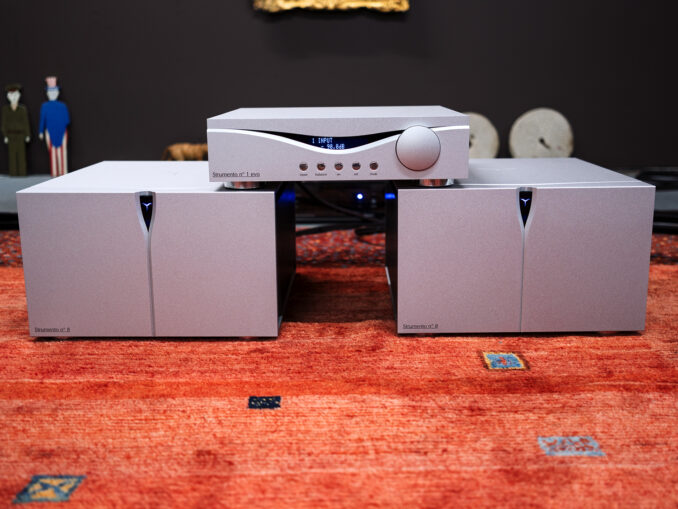
Small, medium, and large. I’ve now reviewed four products from Civitavecchia, Italy’s Audia Flight—the FL Three S and FLS 10 integrated amplifiers and the subject of this review, the Strumento Series N°1 evo Stereo Preamplifier and N°8 Monoblock Power Amplifiers.
And I’ve liked, more like loved, every one of ‘em as they all combine real power with world class refinement, and you get more the higher up you go in price—more power and greater refinement. I’m well aware that there are cases where more money does not necessarily get you better gear, even within the same company’s product line, but with Audia Flight more is more.
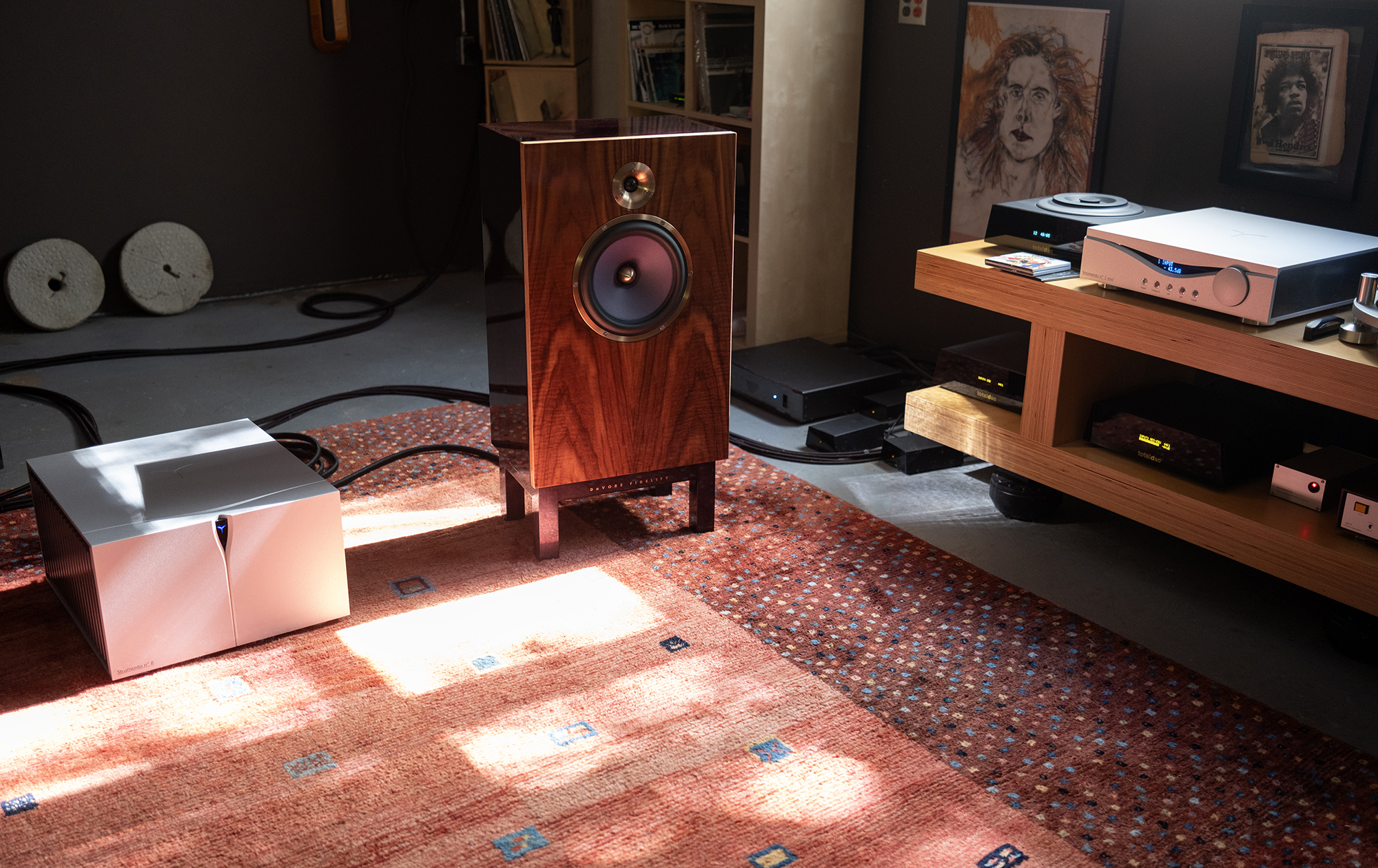
Perhaps contrary to commonly accepted practices and sensible system building, I nonetheless like to pair every amp that comes through the Barn with the resident DeVore Fidelity O/96 (review) and over the last 3+ months with the DeVore O/Bronze (review). While both of these speakers can run on about 6 (good) Watts of SET power, I’ve had great experiences with higher powered tube, hybrid, and solid state amps. And even though I don’t imagine anyone would build a system around the O/Bronze and this Audia Flight Strumento stack, I’m here to tell ya they made beautiful and powerful music together.
This combination that paired a relatively high efficiency speaker like the O/Bronze at 96 dB/W/M with a 500 Watt solid state amp also let me know a few other important things including how quiet the Audia Flight Strumento stack runs, how it is capable of real delicacy, and how there’s a kind of sweetness to its sound, perhaps gracefulness is more to the point, that in my experience are rare as a combo when it comes to high power solid state amps.
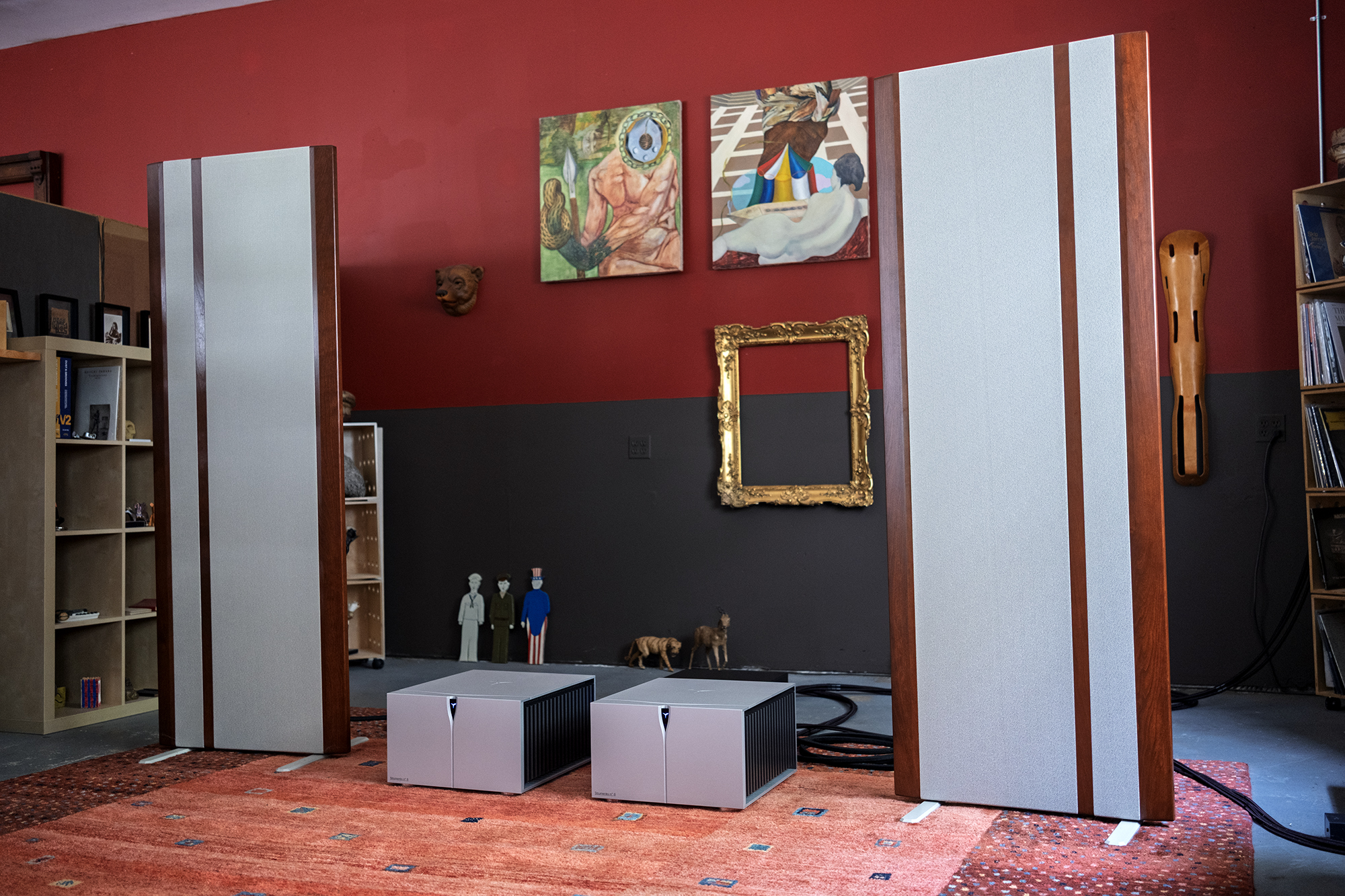
Of course the Strumento stack has endless drive, control, and power and we get to talk more about that soon with a few other loudspeakers that offer a more difficult load compared to the O/Bronze. That said, these qualities also lit up the DeVore O/Bronze’s lowest reaches as well as, and in many cases better than, every other amp partner I’ve tried.
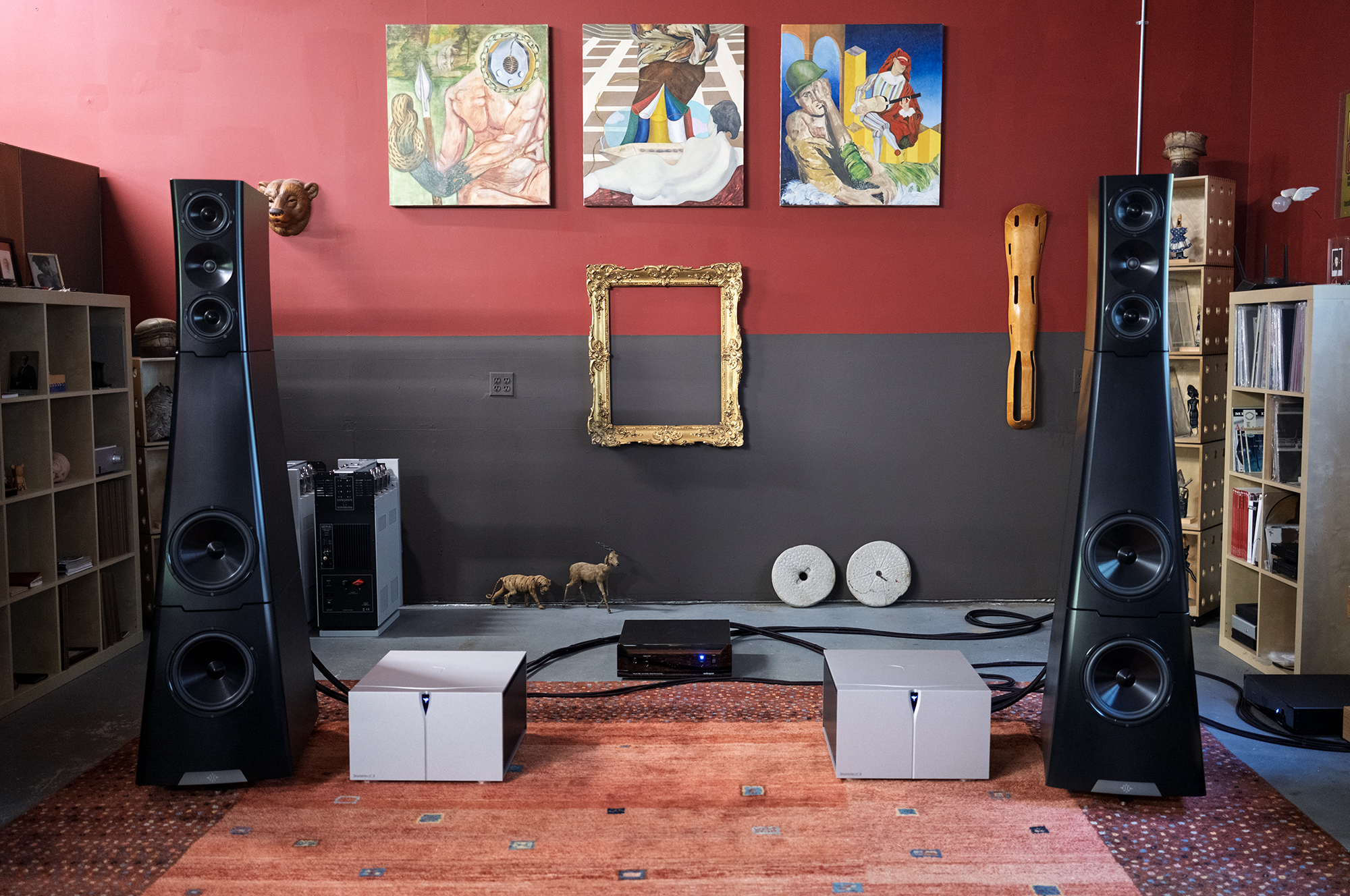
During the Audia Flight Strumento stack’s nearly 4-month Barn stay, they also got to power the YG Acoustics Sonja 3.3 (review), the Ø Audio Verdande (review), the Magnepan 20.7x (review), and the recently arrived Wilson Benesch A.C.T. 3Zero Loudspeakers (more info), a broad range of speakers in every way imaginable.
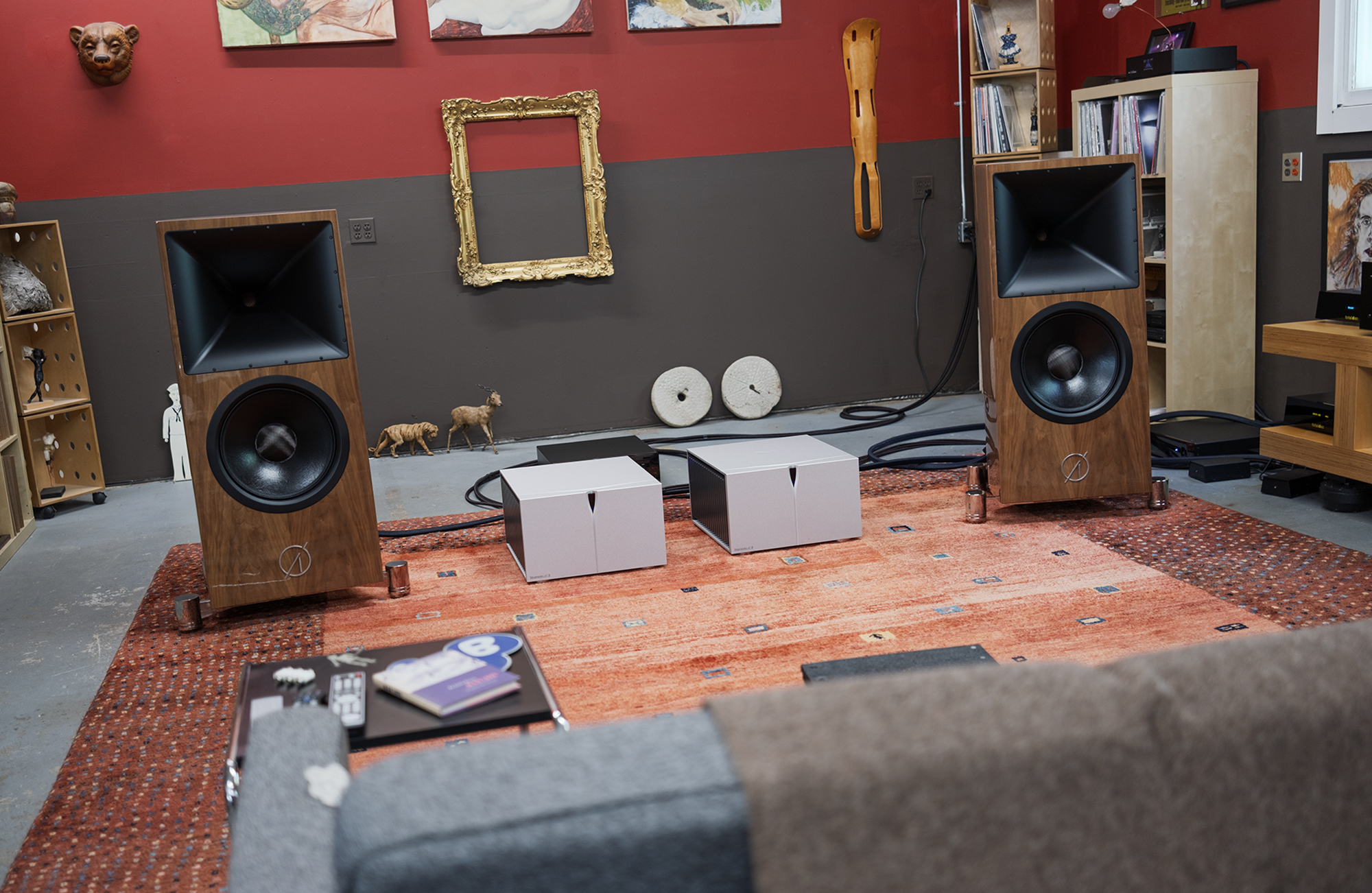
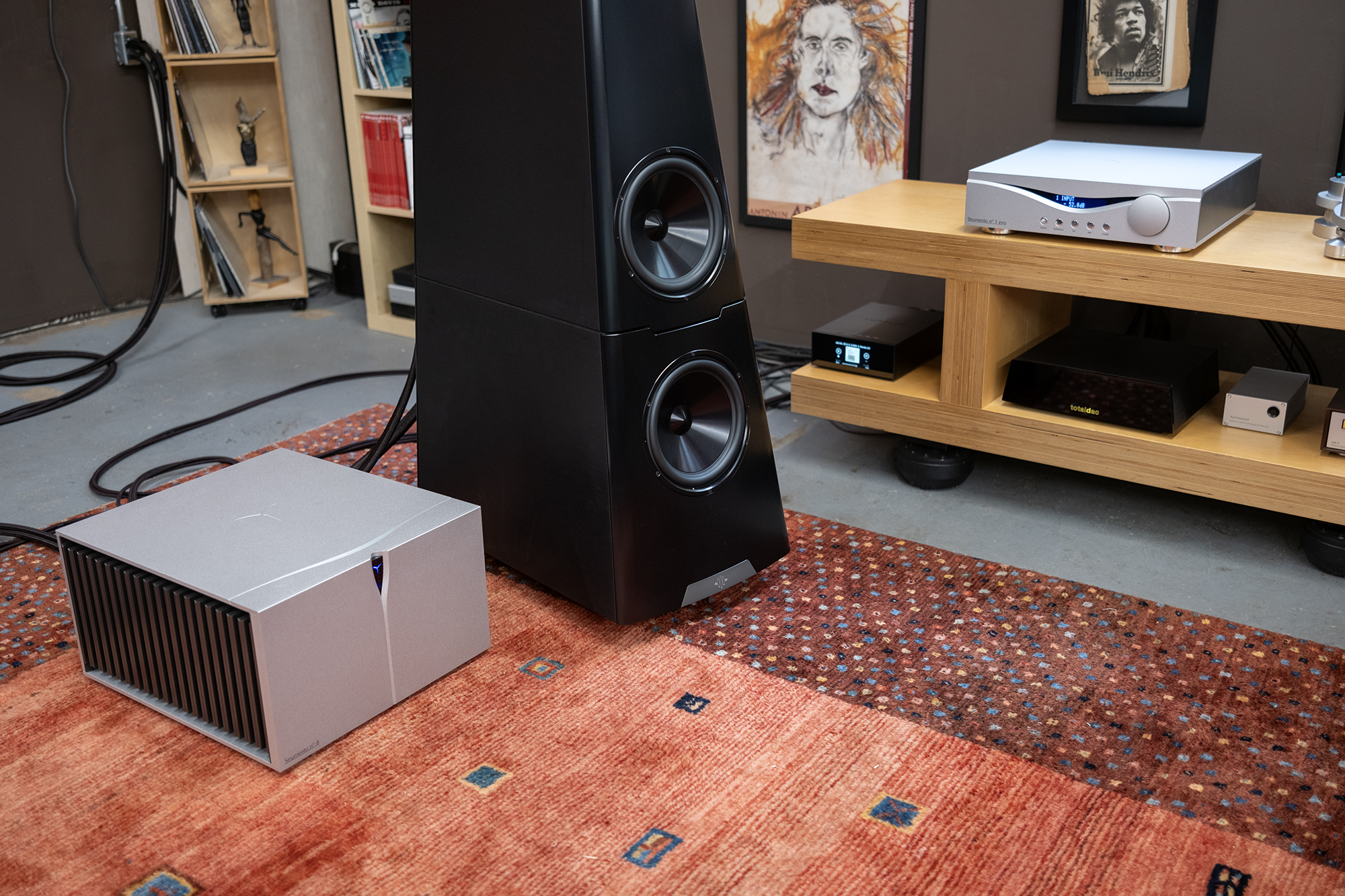
Due to their size and weight, the N°8 Monoblocks sat in between each pair of speakers for the duration of their stay as I wasn’t about to try and move more than 220 lbs. each of amp by myself. This meant a few changes to my normal cabling routine since the N°1 evo Stereo Preamplifier sat on my Box Furniture rack—think longer interconnects, shorter speaker cables, as well as 20 Amp-endowed power cords all of which were supplied by the fine folks at AudioQuest from their FireBird series of cables. Digital playback came by way of the Barn resident Grimm MU1 (review) and totaldac d1-unity (review) as well as the review totaldac d1-streamer-live (more info) also cabled with AQ FireBird wire and power cords. The N°8 Monoblocks were plugged into an AQ Niagara 7000 power conditioner while the rest of the gear got their power through a Niagara 3000. (See full Barn and system details)

The Strumento Series N°1 evo Stereo Preamplifier is built to typical Audia Flight standards which means, in part, some real focus on clean power and their “entirely class A current-feedback circuitry.” From the company:
Within the Strumento N°1 evo’s gorgeous chassis one finds it is powered by four toroidal transformers (two 75VA toroidal audio transformers for the main stages, one 25VA toroidal audio transformer for the control boards, and one 15VA toroidal transformer for the logic board), all enclosed within a ferromagnetic shield and encapsulated by epoxy resin. The main power supply is extremely low noise, the filter being made by ultra-fast rectifiers and n.40 680µF 100V extra low impedance capacitors. On the electrolytic capacitors an EMI shield and vibration damping material is used to reduce any physical noises to a minimum.The main power supply is composed of eight, very low noise power supply stages. Each amplification channel with its fully balanced circuitry is on an independent print board. Custom printed circuit boards with an extra high-grade surface copper are used, as ultra pure copper bars are used for ground and power supplies. After the input selection and a buffer, the input signal meets the volume control.
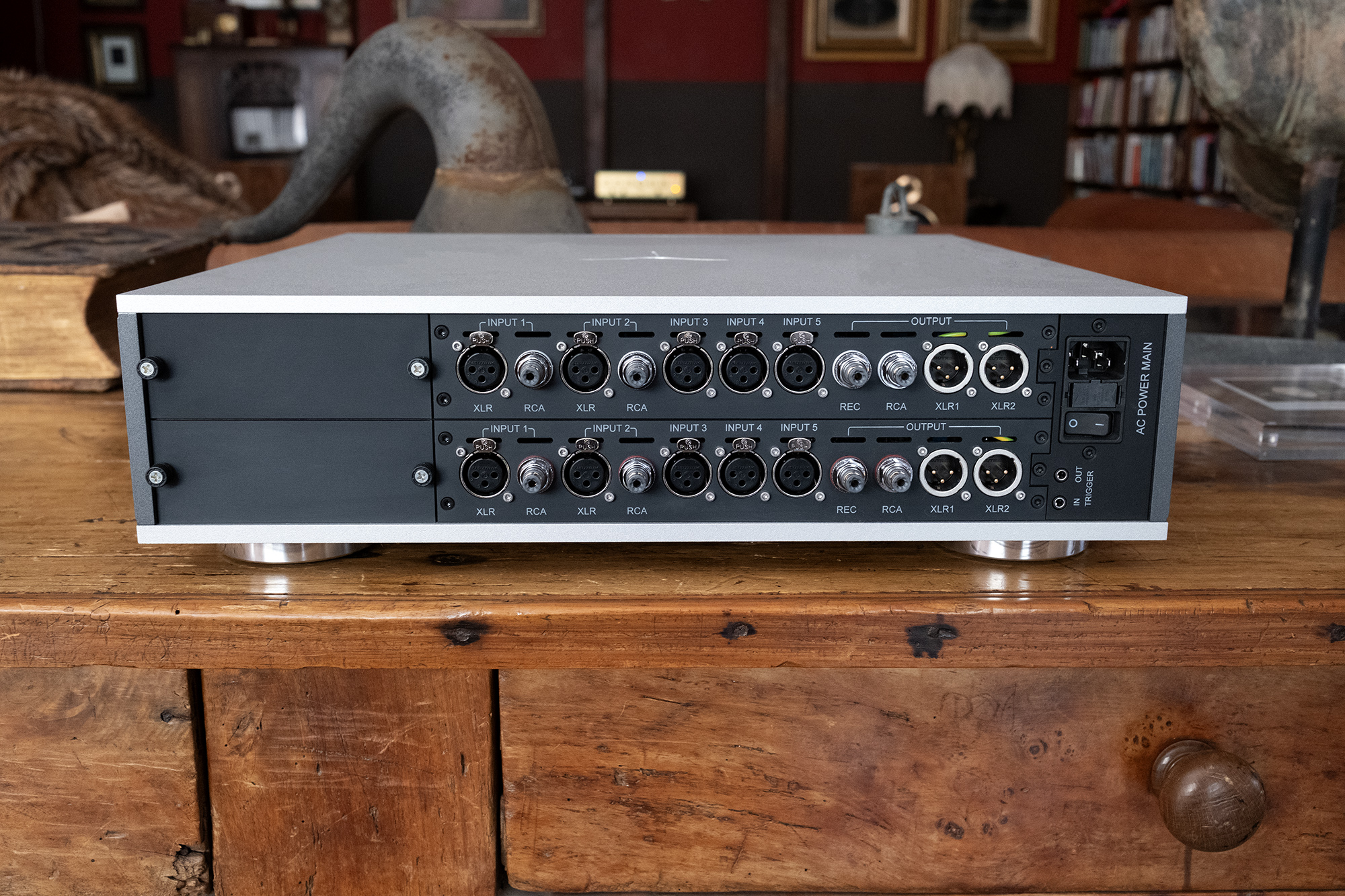
The N°1 evo offers a total of 5 inputs (2x balanced XLR and/or RCA, 3x balanced XLR) and 3 outputs (2x balanced XLR, 1x RCA).
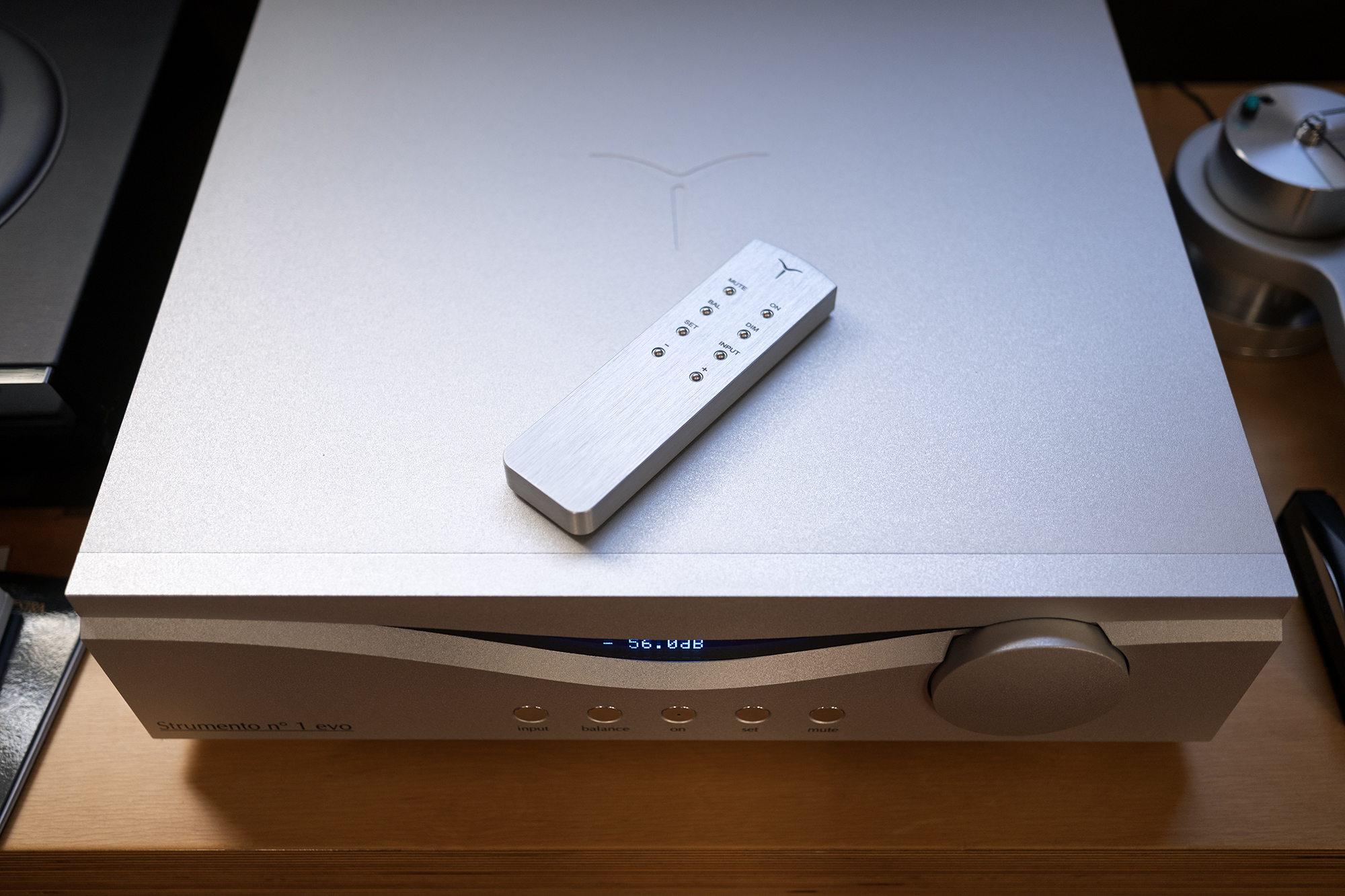
A matching remote is included.

Audia Flight’s signature carved curved front panel houses 5 control buttons (input, balance, on, set, mute) and a volume control knob for a simple, clean look. “This custom Audia Flight attenuator is composed of discrete components (low-noise metallic film resistors and relays) and provides a gain range as high as 127 dB while providing constant steps of 0.5 dB.”
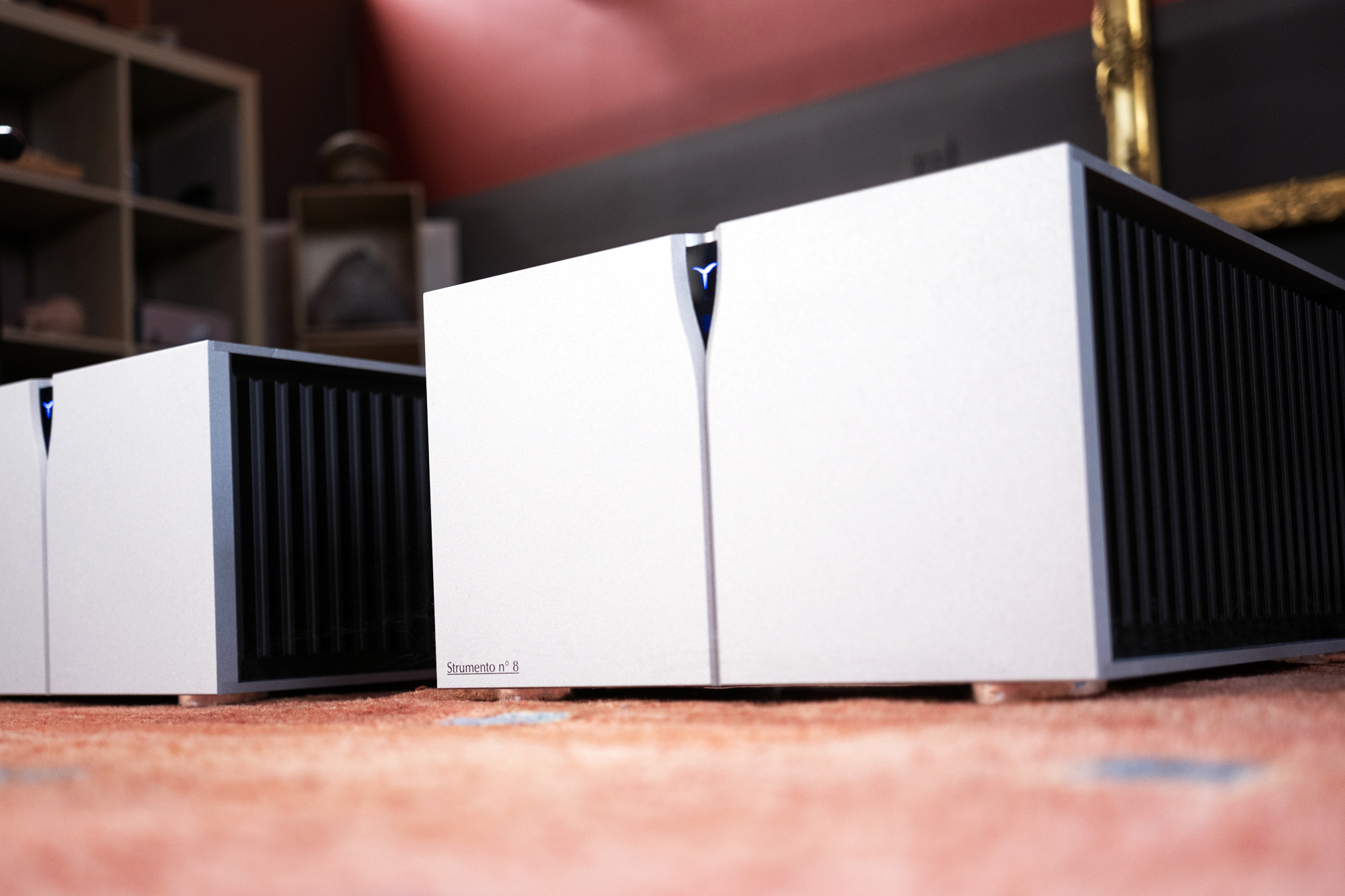
The fully balanced N°8 Monoblock Power Amplifiers weigh over 200 lbs. a piece in part due to their massive, and I do mean massive, transformers and deliver 500/1000/2000 Watts of output power into 8/4/2 Ohm loads respectively. Woof! That centered recessed blue light on black is the power button while also doubling as a display for numeric error messages.
From the company:
…a massive power supply built with extra low impedance, ultra high grade capacitors (190.400µF alone on the main power supply), custom printed boards with an extra high-grade surface copper, and ultra pure copper bars in the output stages. But we have chosen to not stop there with the Strumento N° 8 Mono-block Power Amplifier! The Strumento N° 8’s power supply is comprised of two super high current power supplies for its single channel and four stabilized independent stages: two for the input stages and two for the Audia Flight current feedback stage. The gain stage’s power supply is designed to achieve extremely low noise, the filter is made by ultra-fast rectifiers and extra low impedance capacitors. Two 150VA toroidal audio transformers are used for the main stages and one 15VA toroidal transformer is used for the logic control and protections. The main power supply is made by n.28 6.800µF 63V extra low impedance capacitors.
Like the N°1 evo preamp, the monoblock’s chassis is made from ultra high grade cast aluminum, which comes in silver and black, where every part is then closely inspected and “mirror polished” by hand.

The N°8 monoblock offer 2x XLR and 1 RCA input per side and two sets of speaker binding post for bi-amping.

Here’s a peak at the “massive 3000VA custom made audio transformer, encapsulated by epoxy resin and sealed within two ferromagnetic shields” taken during my visit to Audia Flight HQ in Civitavecchia last year. I recommend a visit to that link if you’re interested in learning more about Audia Flight and looking at the place where their amps are made by hand, with the majority of ingredients originating either in-house or from local producers. I’ve had the great pleasure of visiting a number of companies over my 20 years in hifi writing and this visit to Audia Flight is among my favorites for every reason, professional and personal.

Part of my obvious enthusiasm during our visit was due to how much I enjoyed the FLS 10 and FL Three S integrated amps so it was a real treat to see where and how they’re made. In terms of looks, fit, and finish, the Audia Flight gear is top notch.
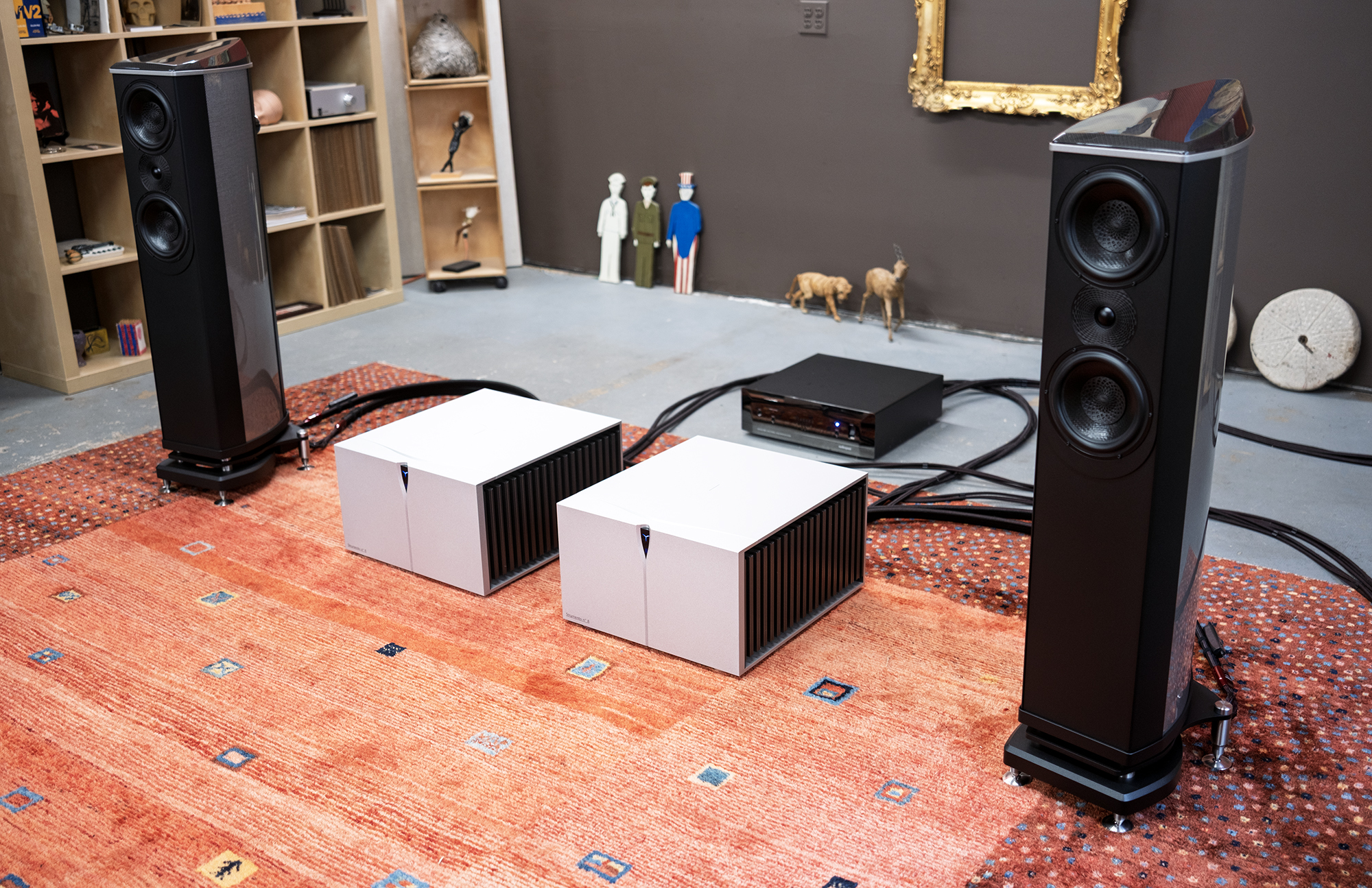
When it comes to favorite speaker partners of those on hand, I always try to be sensible from a cost and system-building perspective and one of the original pair of speakers meant to coincide with the Strumento’s stay got waylaid, which makes the YG Sonja 3.3 and the Wilson Benesch A.C.T. 3Zero my picks for great partners. Even though I had only a few weeks with the A.C.T. 3Zero, they offered what I heard as the best outlet for all of the Strumento stack’s many strengths. But as I said earlier, the DeVore O’Bronze showed off some of these same strengths as did the Magnepans and I would offer up the Audia Flight FLS 10 as a more appropriate partner for these fine less costly speakers.
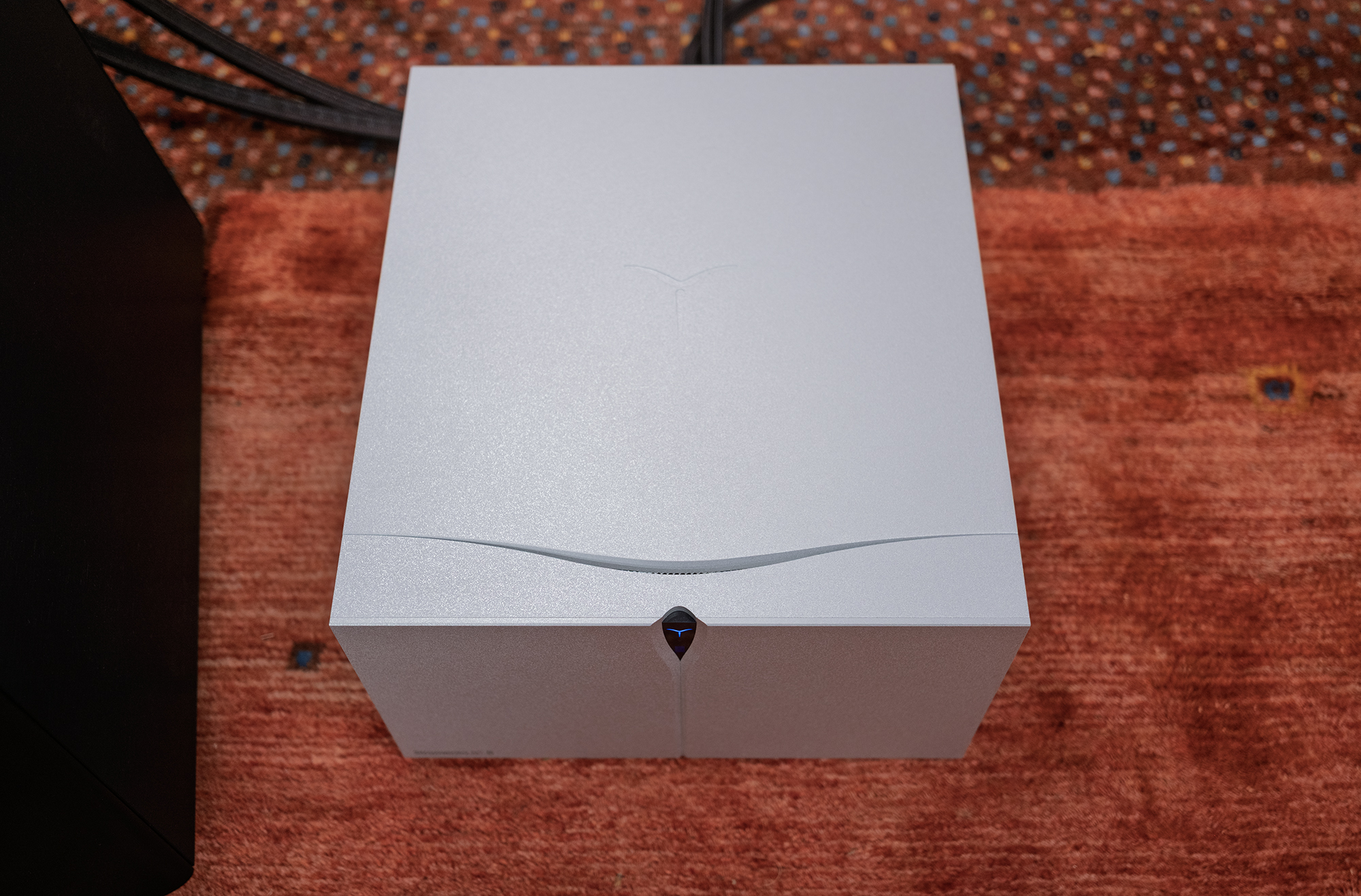
Have you ever seen a graceful ocean liner? Graceful in the same way a sloop slices through water? Me neither but perhaps that’s one way to understand the Audia Flights stack’s unique combination of strengths—a graceful ocean liner. Climb aboard and you’ll hear music as powerful and delicate as music can be without any signs of harsh (unless it’s in the music). Or to ask a related question—can a big, powerful solid state amp have charm? In the case of Audia Flight N°8 monoblocks, the answer is a knowing wink in the affirmative.
Let’s begin with something a bit big. And heavy. Oake’s Auferstehung, released on Downwards back in 2021, digs deep into the mystical with Gothic and industrial roots and a kind of blistering, if bleak, beauty. I let this album rip through the Wilson Benesch A.C.T. 3Zero to Barn-shaking levels in the dark, it has to be in the dark, and the Audia Flight stack made this music big, bad and brawny with pounding impact, cavernous size and weight without ever feeling overly heavy, slow, sludgy, or hard. I’m going to talk about gracefulness a lot when describing the Audia Flight’s many strengths because this level of lightness and delicacy doesn’t typically come hand-in-hand with so much pure power. I’ve certainly heard my fair share of big systems with big solid state brute force that sound like they were designed to pound pilings rather than reproduce music in all its delicate wonder so I want to highlight just how much the Audia Flight stack strays from that kind of heavy handed amusical path.
Even this kind of music needs refined power to unearth things like scale from the smallest creaks to the largest sonic swells in order to come fully alive, to fully communicate the size and scope of sounds and their moods and meanings and the Audia Flight stack paired with the A.C.T. 3Zero painted a massive and captivating picture. If you’re interested in art, think Anselm Keifer-sized drama and impact.
The trio of Bonnie “Prince” Billy, Nathan Salsburg, and Tyler Trotter took two short songs by Lungfish and stretched them out to a total of 41 minutes in duration on Hear the Children Sing the Evidence from 2024.
From the liner notes:
“Daniel has a grasp of language and its place in the quiver of communication tools and weapons, and understands that it’s an incomplete thing,” Oldham continues. “So the words are there individually for us to plug into our brain or savor in the moment, but then every once in a while something gurgles up where you can visualize it or apply it to something in your life right now.” “That’s the core of mysticism,” adds Salsburg. “The individual mystic’s subjective representation of transcendent experience…. I wasn’t thinking about what [Higgs’] lyrics meant when I was 14, but I knew I was listening to something profound. I guess it was the first mystical music I ever experienced.”
On “Hear the Children Sing”, my favorite of the two tracks, the Bonnie “Prince” twists and turns a few phrases over and over, “Oh the devil is a flower / Plucked from a cloud”, over the course of nearly 20 minutes adding up to meditative and mystical meandering with guitars, drum machine, synths, banjo, and vocals forming the river of sounds Billy steps into more than twice. Here, the very specific sounds of things and the subtlest of shadings, tones, texture and timing move into the fore of importance and here the Audia Flight Strumento gear struts its delicate and sweet stuff. There’s a natural sense of pluck and decay coupled with a timbral rightness at work and while not to the same degree as a fine 300B-based amp like the Treehaus 300B-2, the No° preamp / N°8 monoblock combination offer a surprising degree of pluck and dimensionality to voice, acoustic guitar and banjo that feels very much like full voice.
Part of this skillfulness also lies with the N°1 evo preamp and it’s pure, clean and clear transparency as well as the totaldac streamer/DAC combo’s richness and the DeVore O/Bronze’s ability to transform all of these strengths into living, breathing, sounds that feel as real as the real thing. Again, I wouldn’t run out and buy 500 Watt Audia Flight separates to drive the DeVores but the fact that this Audia Flight stack coaxed such rich and refined beauty from them speaks to their uncanny and uncommon set of strengths. Lovely.
I’m going to call on Lucrecia Dalt and her latest A Danger to Ourselves yet again just because it’s so damn tasty, a kind of phantasmagorical sound world without bounds. David Sylvan, in addition to co-producing credit, lends his distinctive voice to album opener “Cosa Rara” and through the Wilson Benesch that voice felt embodied in Barn. With some systems you get a great sense of voice, others a chestiness especially for deeper voices, but here we’re talking about a physicality and superb control that delivers more of the man behind the voice. While I’ve heard greater dimensionality from the hybrid Riviera Labs gear where sound feels reproduced fully in the round so to speak, the Audia Flight Strumento stack excels at well sculpted superbly controlled sound that feels as if you can hit it with a stick and get real resistance in return especially so with the A.C.T. 3Zero in charge of the output in Barn. Think solid.
As Dalt twists, turns, and floats all manner of sounds into space, the Audia Flight stack kept perfect pace without any sense of lag or sag, always seemingly at the ready with endless reserves of pure, effortless power. When things go low, and lower still, the Audia Flight gear proved itself more than capable of delivering the deepest of deep bass with superb control and stunning voice. This bass prowess came out loud and clear on every set of speakers paired up with the Audia Flight stack and this is another real standout strength. If you like subterranean bass whether of electric or church-organ origin, Audia Flight has you covered and with the N°8 monoblocks that holds regardless of how gnarly the accompanying speaker load.
This kind of sweet graceful full-range power can be intoxicating when conjuring up a sound world as rich and rewarding as can be found on A Danger to Ourselves.
In terms of comparisons, the JMF Audio PRS 1.5 Preamplifier ($39,000) & HQS 6002 Amplifier ($45,000) I reviewed in June are another example of what I consider to be great solid state. Not good, but great and I’d include the Soulution 331 integrated amp (review) in that short list as well. While I did not have the JMF stack playing in Barn at the same time as the Audia Flight stack, they missed each other by about a week, I can say with confidence that the JMF gear offers an even greater level of refinement as compared to the Audia Flight stack, a level of absolute transparency that’s hard to forget once you’ve experienced it over time. Of course the JMF gear comes at higher price by about $15k for the pair so that fact is worth adding into the price/performance calculation.
Stepping back from specifics I can also say, based on the six pairs of speakers used for this review, that the Audia Flight Strumento stack’s many strengths sang out loud and clear and lovely regardless of the speaker in play so if you’re looking for sweet compellingly delicate massive solid state power, look to Audia Flight.
Let’s go out with a real wild ride, La Pasión según San Marcos from Argentinian composer Osvaldo Golijov, an unconventional Passion if ever there was one and I’ll point to this version released on Deutsche Grammophon in 2010. Mixing elements and instruments from Latin American and African music where Christ is reimagined as a dark skinned Spanish speaking South American, Golijov’s Pasión of St Mark is nearly too big and bold to contain with words. Horns, massive choruses, Venezuelan singer Biella Da Costa, soprano Jessica Rivera, and Cuban dancer, choreographer, and singer Reynaldo González-Fernández riding atop with layers of percussion, orchestra, and passion swelling like waves in turbulent seas, all of this passion and power lit up the Barn through the Wilson Benesch with the Audia Flight gear providing near Earth-shattering dynamic delights all the while keeping perfect time, tempo and control no matter the degree and density of ecstasy.
If you like big bold music to sound and feel big and bold and beautiful, you should know that Audia Flight, every piece of gear I’ve heard from them, do big and bold with the best of ‘em. While the FL Three S and FLS 10 integrated amps are exceptional in this regard at their price points, the N°1 evo preamp / N°8 monoblock combo take things to another level. Pasión+.
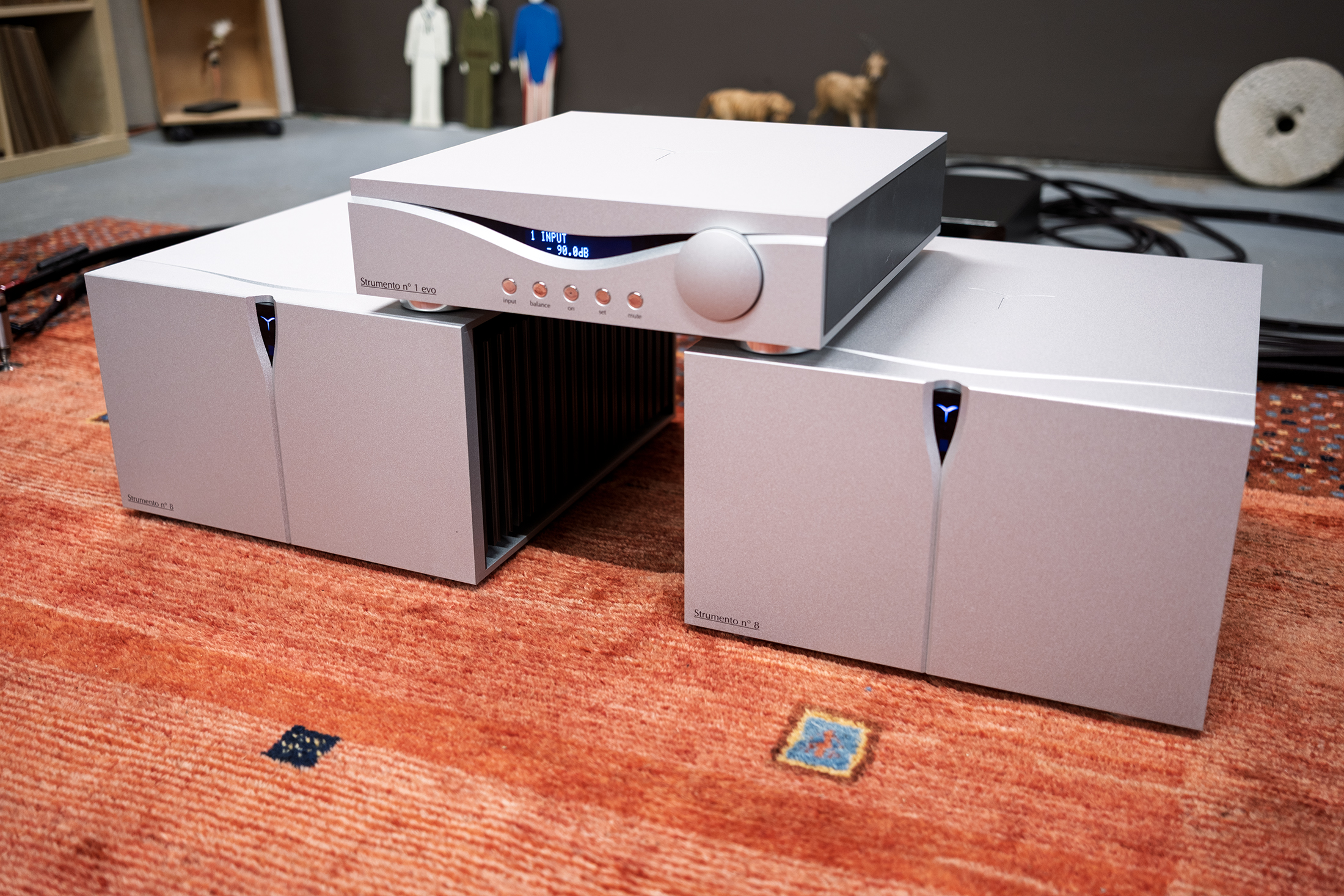
The Audia Flight Strumento Series N°1 evo Stereo Preamplifier & N°8 Monoblock Power Amplifiers are in many ways uncanny. Uncanny because they offer a rare combination of qualities that add up to a compelling musical force with endless power and a touch of the kind of charm one expects from a low power amp with glowing glass.
During their more than 4-month Barn stay, the Audia Flight stack mesmerized and delighted through a number of speakers with their ability to energize the full space of the Barn with grunt, grip, and growl coupled with delicacy and grace that consistently kept me dancing deep in the groove, which is exactly and always where I want to be. Color me bedazzled.

Audia Flight Strumento Series N°1 evo Stereo Preamplifier
Price: $29,999
N°8 Monoblock Power Amplifier
Price: $39,999/each
Company Website: Audia Flight
US Importer Website: Fidelity Imports
N°1 evo Stereo Preamplifier Specifications
Inputs: 2 balanced XLR and/or unbalanced RCA ; 3 balanced XLR only
Outputs: 2 balanced XLR and 1 unbalanced RCA
Gain range:-90 dB / +10 dB
Gain resolution: 0.5 dB
Frequency response: (1W RMS -3dB) 1 Hz ÷ 1 MHz
Slew-Rate: (@ 8 ohm)/strong>> 200 V/µS
THD: < 0,05 %
S/N Ratio: 105 dB
Input impedance: 10pF 15 kOhm balanced or unbalanced
Output impedance: 5 Ohm
Main voltage AC (50-60Hz): 100, 110-115, 220-230,240 V
Stand-by Power consumption: less than 0,5W
Nominal Power consumption: 90W
Dimensions and weight: 450 x 120 x 450mm (W x H x D)| 22.5 kg
Shipping dimensions and weight: 580 x 300 x 580mm (W x H x D) | 38.5 kg
N°8 Monoblock Power Amplifier Specifications
Output power per channel Watts RMS @ 8/4/2 Ohm: 500/1000/2000W
Gain: 29 dB
Input sensitivity: 1.41 Volts RMS
Frequency response (1W RMS -3dB): 0,3 Hz ÷ 1 MHz
Slew-Rate (@ 8 Ohm): > 200 V/µS
THD: < 0,05 %
S/N Ratio: 110 dB
Input impedance Unbalanced: 7,5 kOhm | Balanced: 7,5 kOhm
Damping factor (@ 8 Ohm): > 1000
Main voltage AC (50-60Hz): 100, 110-115, 220-230, 240 V
Stand-by Power consumption: less than 1W
Nominal Power consumption (no signal): 330W
Power consumption (600W RMS @ 8ohm): 1100 W
Dimensions and weight: 450 x 280 x 500mm (W x H x D) | 103.5 kg
Shipping dimensions and weight: 580 x 410 x 700mm (W x H x D) | 124 kg