
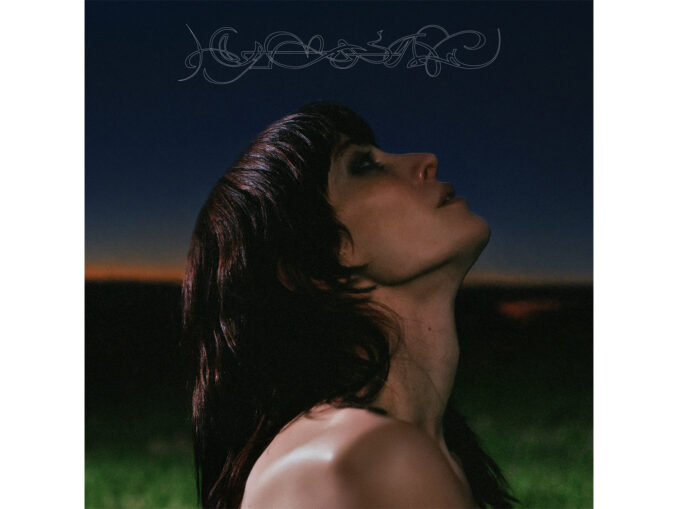
Learning about Lyra Pramuk’s Hymnal, through her words, was a rare treat.
A rare treat because the process of making the album takes more than a few words and an image to explain.
I admit I came to Hymnal without any preconceived notions and was completely drawn into the music even though I knew nothing about it or Pramuk’s debut album Delta from 2021. I’ve since made some effort to correct my ignorance by reading about these adventurous records and the artist who made them, coming across thoughts like—”I’m more likely to want to talk about Susan Sontag or aesthetics.” from her interview on The Quietus. Back in my NYC days, I had the most uncomfortable time playing charades at a friend’s apartment with Sontag as spectator which I thought was painfully unfair.
From another recommended interview with Pramuk in Interview:
MCKINNEY: Would you place your new record in that same framework? Is it folk music?
PRAMUK: I want it to be. I think the sound is very primal and very accessible. It’s very pure in the sense of these pulsing strings washing over your body and the voice having this folkloric quality. I basically tried to make a post-Detroit dub, techno-inspired, acoustic folk record.
The words in the songs on Hymnal came about through a kind of Cageian process, explained in an article in Hearing Things:
Looking to work with language more on Hymnal, Pramuk enlisted her friend Nadia Marcus to write poems for the album—but she didn’t want to just sing them. So she asked another friend, the biological artist Jenna Sutela, to help her acquire slime mold and let the mold choose the words she would vocalize. “We made something like a bingo board with a few key phrases from the poems, and put the slime mold in each corner and let them grow over the board,” Pramuk says. She took photos of the board for seven days, tracking the mold’s path, and then created a visual map that she used for her vocal sessions. “I was limited to go only in the direction that the slime mold went, and only to adjacent words,” she says. “It was like a randomized limitation system, and a collaboration with this incredible creature.”
I agree—Hymnal is very primal and accessible and it stands on its own through sound alone. But knowing a bit about the making adds to the experience.