

Fusion is not a favorite word whether referring to music or food.
I find genres in general as useful as those cute old-timey road signs that point to places all around the globe—Paris, France 3,650, Anchorage, AL 6,948, Toyko 6,750, New York City 57, Todi, Italy 4,265.
Don Cherry’s discography reads the same way when viewed in terms of genres if we look at his complete credits that include gigs with, most famously, Ornette Coleman on seminal records including The Shape of Jazz To Come (1959) and Change of the Century (1960), Albert Ayler, Sonny Rollins, John Coltrane, Lou Reed, Terry Riley, Alejandro Jodorowsky on The Holy Mountain Soundtrack, Allen Ginsberg, and Krzysztof Penderecki. Worldly in scope and sound with jazz always near the beating heart, the point from which to depart.
Cherry’s solo outings were released on an equally interesting array of labels including Atlantic, Blue Note, ESP-Disk, BYG, A&M, Caprice Records, Blank Forms, and to the point of today’s post EMI.
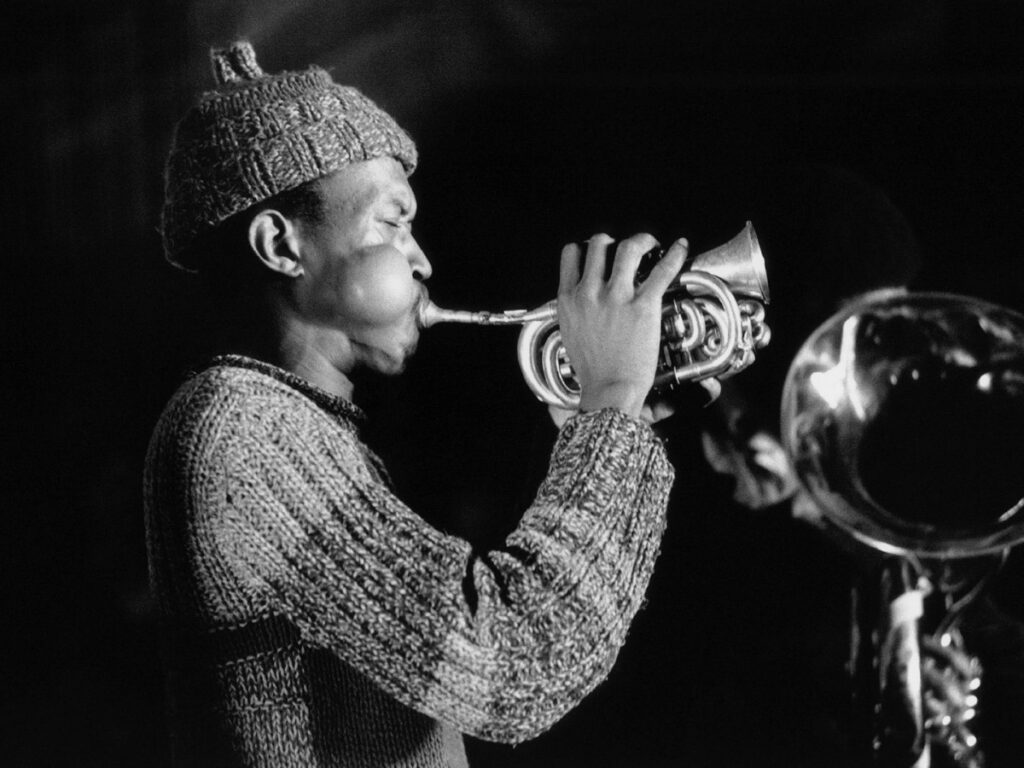
“There is joy laced with confidence in this music, and sadness, or pathos, that is as much connected to the Blues as it is to the huge yearning of that sound in Eastern music.”
So begin the liner notes by Stanley Crouch who goes on to explain:
“Whether one is as involved in Eastern mysticism as Cherry happens to be, should have no bearing on how well one likes the music, because the sounds that human beings make are as much for communication as for conversion.”
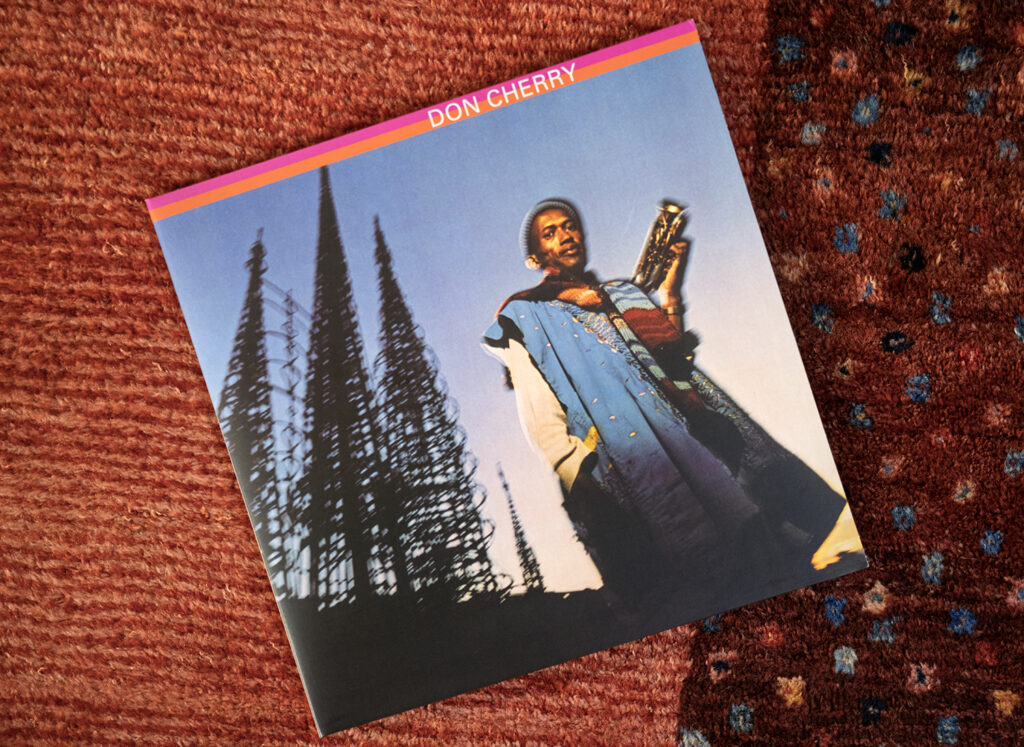
Brown Rice was recorded at the Basement Recording Studio in NYC and Grog Kill Studio in Woodstock, NY and released in 1975 on EMI.
The personnel:
Don Cherry – trumpet, piano, electric piano, vocals
Frank Lowe – saxophone (tracks 1, 3 and 4)
Ricky Cherry – piano, electric piano (tracks 1, 3 and 4)
Charlie Haden – bass (tracks 1, 2 and 4)
Billy Higgins – drums
Verna Gillis – vocals (track 1)
Bunchie Fox – bongos (track 1)
Hakim Jamil – bass (track 3)
Moki Cherry – tambura (track 2)
About 1 minute in to the title track which opens the album and we already know where we stand—at the crossroads of funk, thanks to Charlie Haden’s wah wah bass, free jazz with Lowe’s screeching sax, with vocalized mantra from Cherry and record producer, ethnomusicologist, and world music doyenne (according to the NY Times), Verna Gillis.
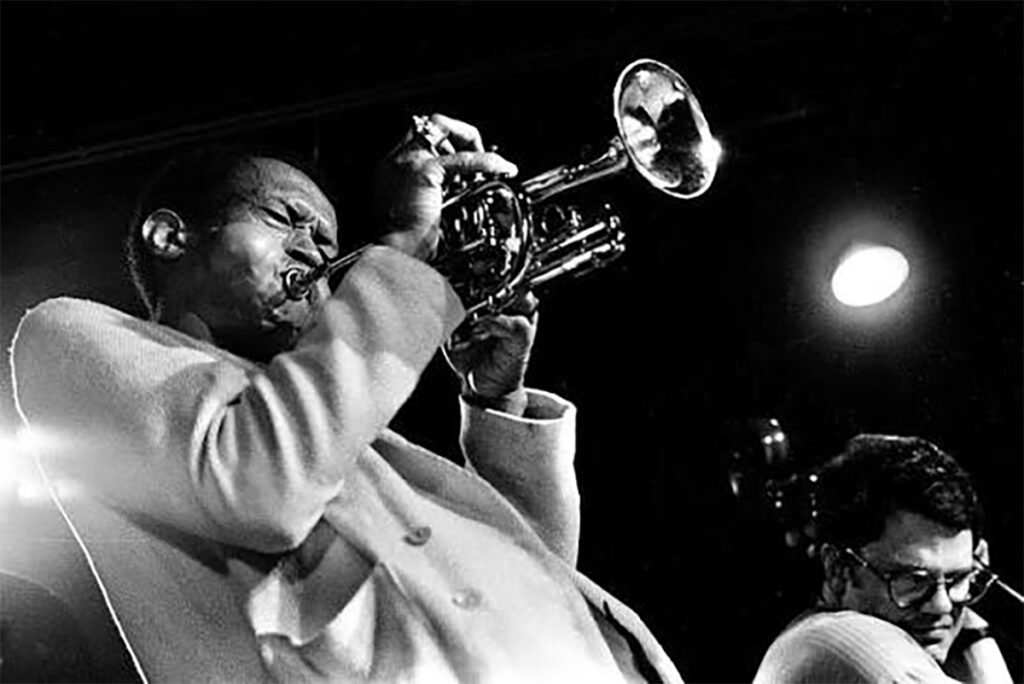
Tamboura and double bass lead the way into “Malkauns” joined by Cherry on trumpet and Higgins on drums and this core group—Cherry, Haden, Higgins—would go on to work together on other outings including the oddly straight ahead Art Deco from 1989. I hear a number of influences in Cherry’s playing here including Bill Dixon who shared one side of Bill Dixon 7-tette/Archie Shepp and the New York Contemporary 5 back when Cherry was part of the Contemporary 5 c.1963-64.
But the real beauty of Brown Rice is the music transcends genres and time aimed squarely at release (or conversion). From what? To what? That’s up to you. A few years after Brown Rice‘s debut I would end up learning Transcendental Meditation (TM) as part of my teenage quest for something more than Budweiser and various and sundry other things had to offer so I latched onto the spiritual aspects of this music like a life raft (which seems even more necessary today…).
Brown Rice was changed to Don Cherry by Horizon Records for their 1977 reissue and according to Discogs this record has 34 versions including cassette and 8-track tape! I own a later 2019 pressing on A&M but no matter which one you pick your groovy world-spirit-uality will thank you.