
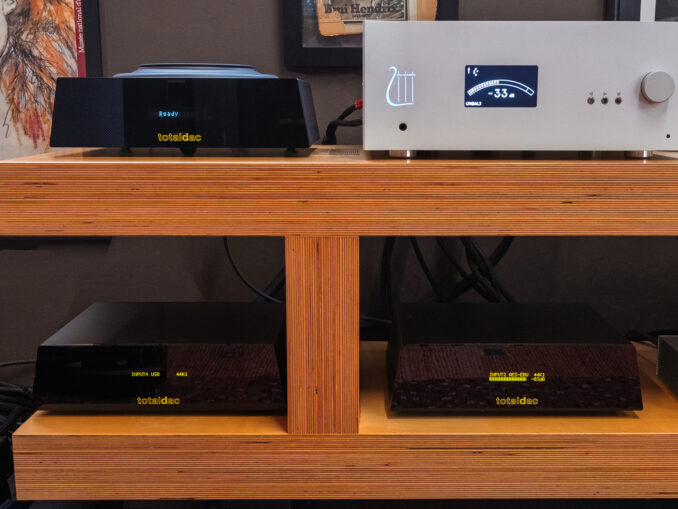
I’ve long lived with, and loved, one totaldac or another, going back some 10 years.
In my experience—and when we’re talking about things like DACs and other digital bits and bobs, that experience is extensive coming up on 15 years, 6+ of which spent focused on just digital—every totaldac product I’ve reviewed and owned know how to make music sound natural and right without a hint of that artificial flavoring many DACs add or the sense that something human has been stripped away. In either case, music can sound homogenized with a dull, lifeless sameness that removes important musical details that lie deep in sounds.
Now some people with very little experience and/or not much interest in listening to music uninterrupted by any other stimuli for hours and hours on end, year after year, will tell you that most DACS sound more or less the same and things like streamers, also called network transports, and CD transports make little or no difference as long as they’re working properly. The fact that digital eventually becomes analog in every hifi system, thereby introducing analog system concerns, escapes their world view perhaps because 1s and 0s are so perfectly reassuring that to let in the least bit of doubt into that black and white world view would spin it off its axis.
Look, there’s nothing easier than not hearing a difference, especially when you don’t believe there’s any way a difference can exist. But those of us who listen come at things with an open mind and ears.
And to let you in on a personal secret, I am not guided by a quest for “good enough” as I get no satisfaction from the price of things—how much someone else spent, how much I spent, or how much something I’d never buy costs. I get my hifi satisfaction the old fashioned way, the way I was raised by an MSEE audiophile father which is to say my satisfaction comes from the music and its ability to consume my attention so completely that time and place are erased and replaced by the sounds, moods, and movements of music. As if nothing else matters in that moment.
I’ve seen people, not just audiophiles, smile at the sound of music through a great hifi. That attention grabbing jolt that transforms faces and moods with the unifying inbuilt love of the sounds in music. A connection like no other to something other that works like a pressure release valve for our increasingly solipsistic social media-defined woes.
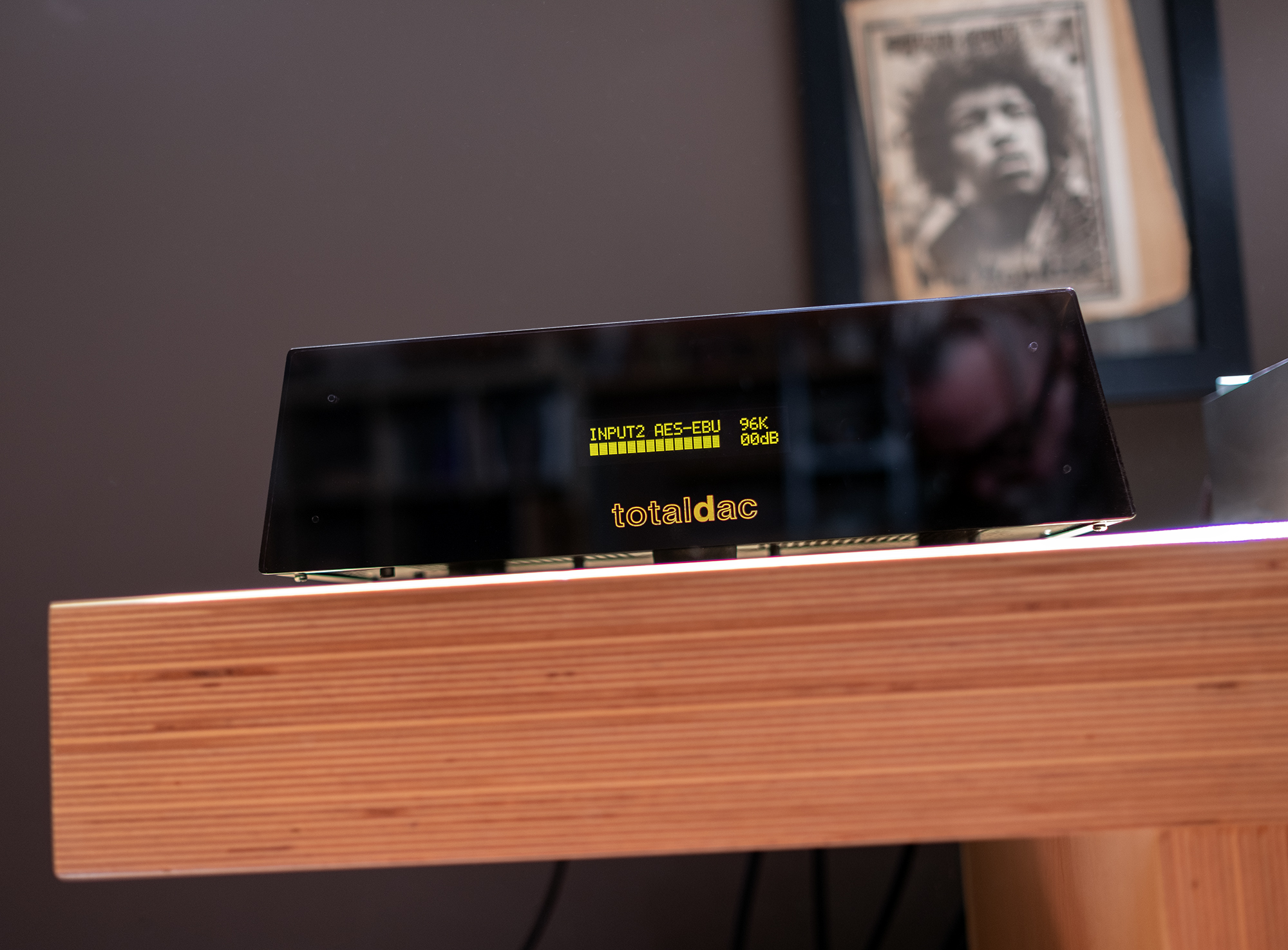
What I mean to say, what that leads me to here, is the totaldac d1-streamer-live and d1-CD Transport with help from my d1-unity DAC consistently made music that brought a big smile to my face.

The beating heart of any CD transport is its drive mechanism and totaldac’s d1-CD transport uses the CD-Pro8 drive from Austria’s SUOS-Hifi, a company founded in 2006 by ex-Philips “CD-Gurus”.

The d1-CD is a top loader, I prefer a top loader, and it comes with a nice heavy custom cover to keep things dust-free and quiet. Just place a CD on the drive, then the included small round disc on the CD, put that nice heavy custom cover in place which initiates the initial read and a “Ready” status on the display once read and hit “Play”. The included remote allows for all you need in terms of playback control.

The d1-CD transport offers AES out in addition to Coax as well as an RCA connector for Ground. Inside resides a mechanically isolated heavy copper plate for the mechanical bits along with a 40 femtosecond oscillator to keep the other bits running smoothly.

The d1-streamer-live supports UPnP/DLNA, RoonReady (Roon RAAT), Squeezelite, NAA and AirPlay. A firmware update during the review period brought along Qobuz Connect, a great option for people who just want to stream. Seeing as I am a devoted Roon user with Qobuz and Tidal accounts as well as locally stored music files, Roon is how I roll.

The d1-streamer-live also houses totaldac’s latest reclocker activated by attaching the included short USB microfilter cable as shown above. Also mounted on the back of the unit are the Ethernet input, digital inputs (Coax S/PDIF, Toslink, AES) for connecting other digital sources (these inputs also travel through the reclocker), a microSD card / slot which houses the unit’s firmware, and the power inlet for the included external power supply. The eSATA and HDMI connections are not used by the d1-streamer-live.
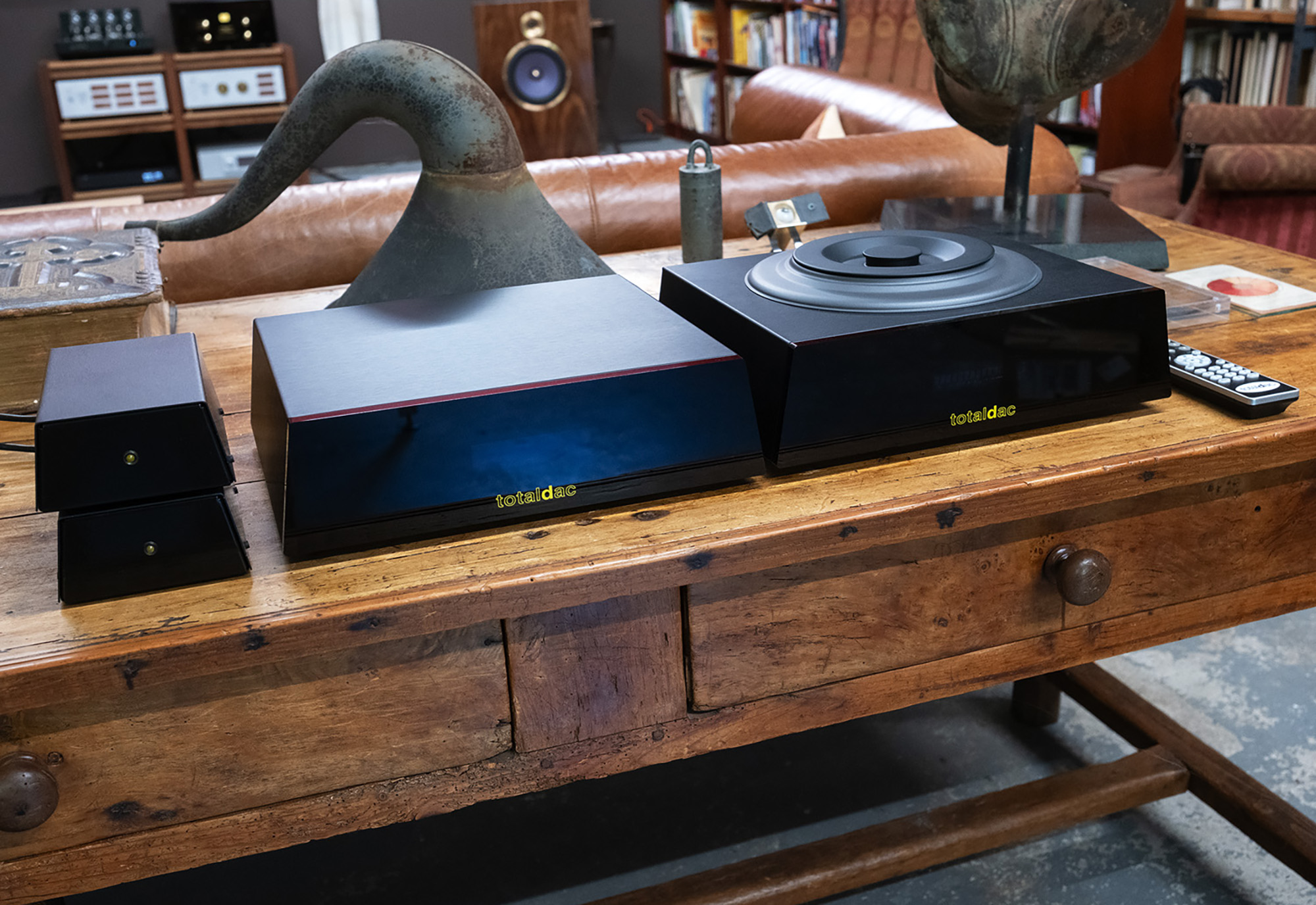
The review units are housed in the standard totaldac trapezoidal chassis which comes with a black acrylic or silver aluminum faceplate and each unit comes with its own matching outboard power supply. This reuse of the same chassis accounts for those unused connections on the rear panel of the d1-streamer-live.
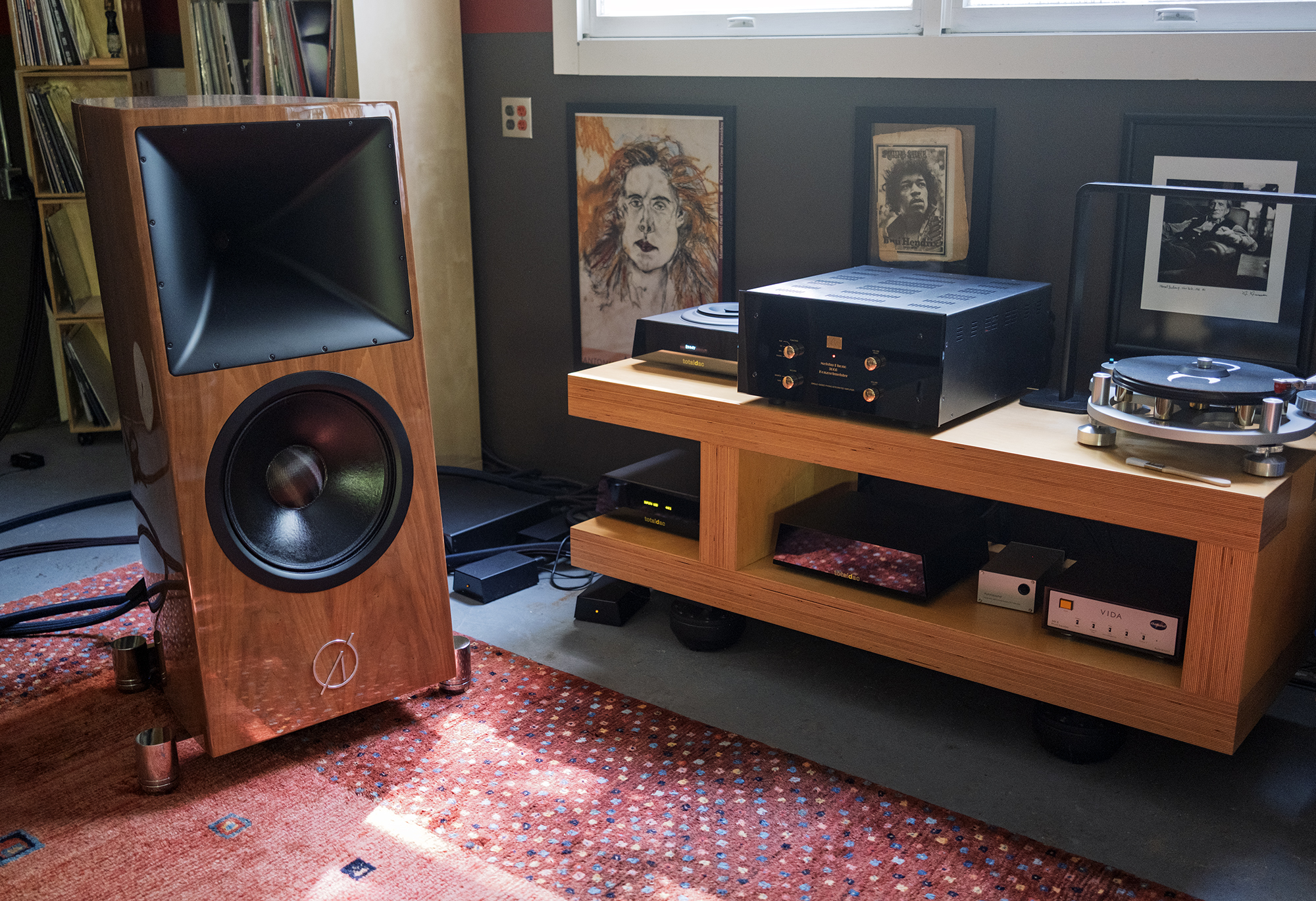
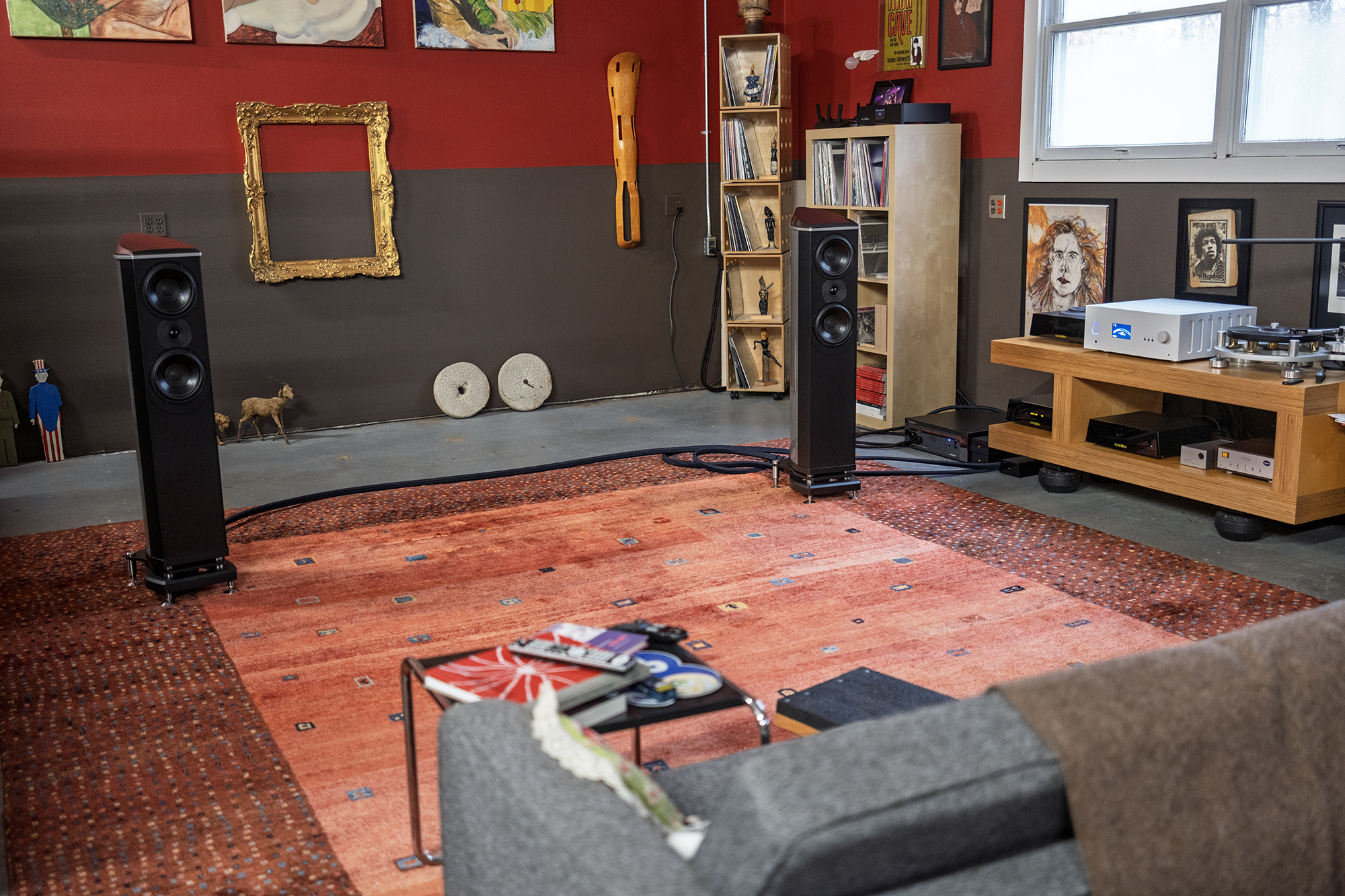
During the totaldac’s digital stack’s 3 month+ Barn stay they got to play with a lot of different gear and speakers including the Ø Audio Verdande (review), the DeVore Fidelity O/Bronze (review), Magnepan 20.7x (review), and the Wilson Benesch ACT3Zero (more info) and nearly too many integrated amplifiers and separates to mention (you can see them in the linked speaker reviews). Cabling included interconnects and speaker cables from AudioQuest’s FireBird line, AQ power cables, and totaldac’s own AES cables which were included with the review gear (see complete Barn and system details).
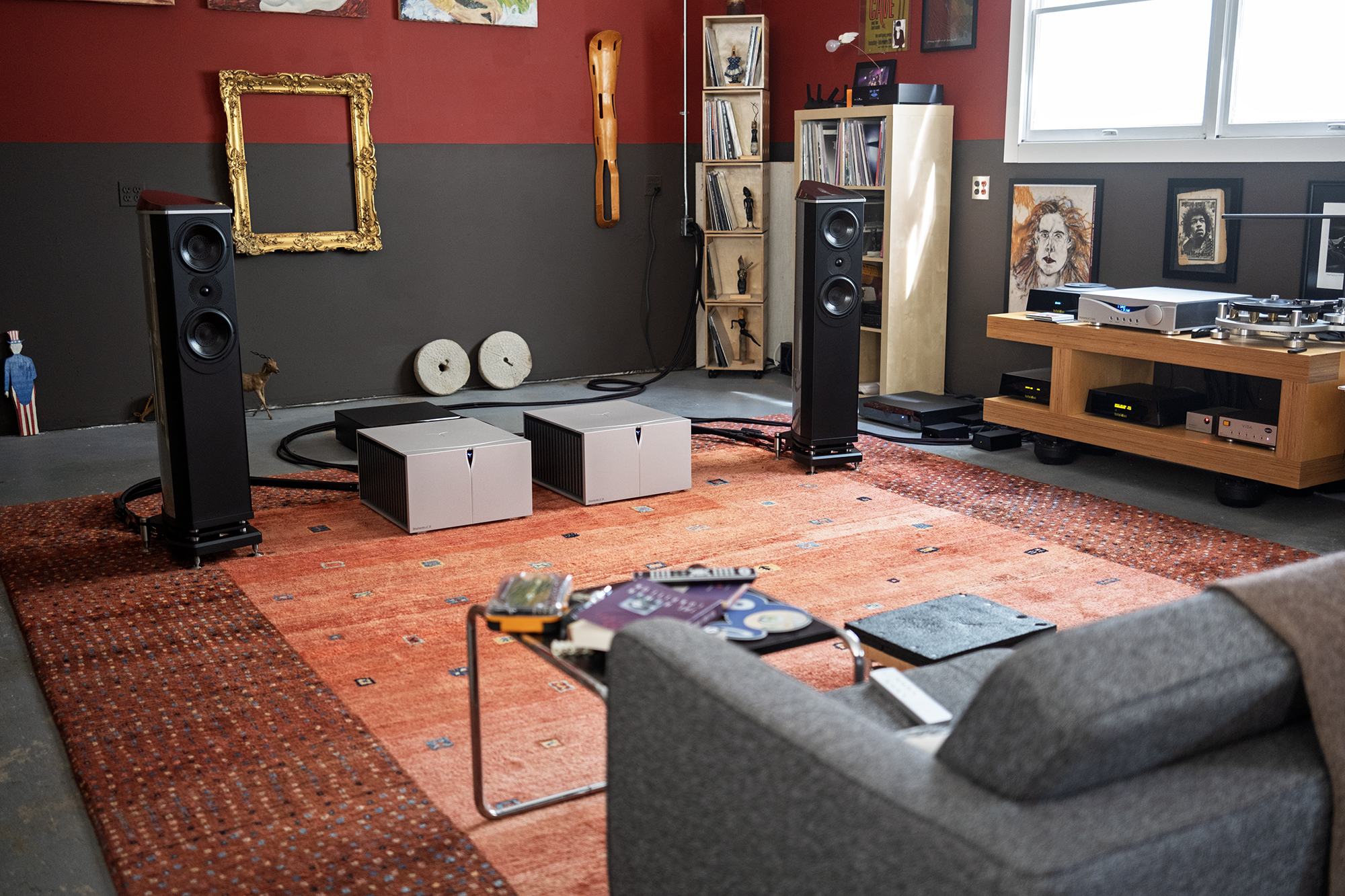
The Barn resident Grimm MU1 (review) houses my Roon library so it was also in use throughout the review period as such. But seeing as the MU1 can also act as a streamer/network transport I’ll also talk about how it compares to the d1-streamer-live.
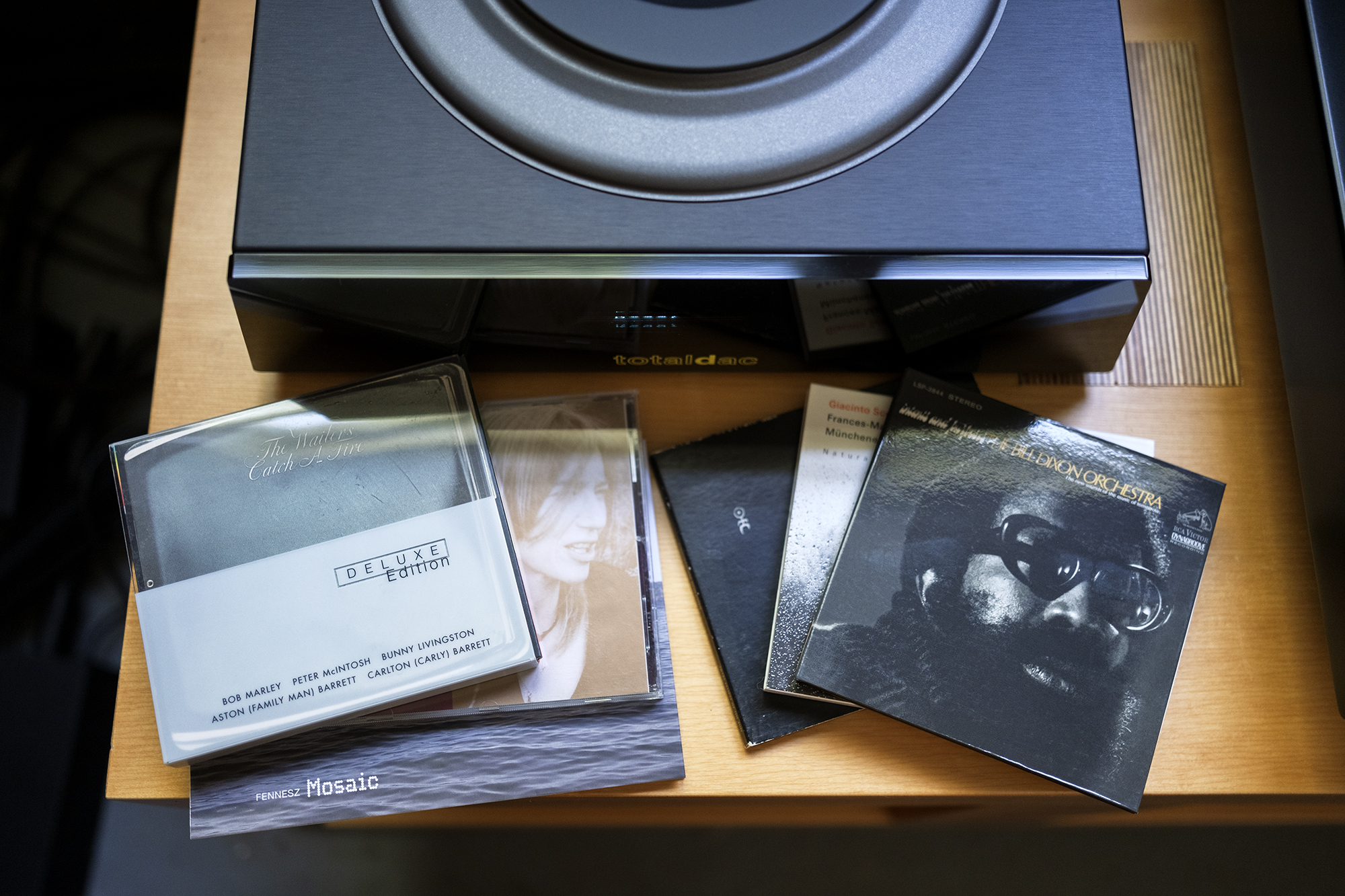
As you can imagine, 3 months means a lot of music played through both the d1-streamer-live and many a disc spun on the d1-CD transport, too much music to mention here. Before I get to the listening notes, I want to talk about living with and listening to CDs for a moment because, just like listening to records, CDs steer the experience in their own way.
The easiest and most obvious difference between playing a CD and streaming is a question of curation—any personal CD or LP collection no matter how large is a fraction of Tidal or Qobuz’s libraries numbering in the millions of albums. As comedian Steven Wright once quipped, “You can’t have everything. Where would you put it?”
But the more interesting difference involves the care that goes into curating a collection as well as the much more focused physical interaction that physical media demands. Streaming is more stream of consciousness if you will whereas spinning a CD is more intentional. While I remain an album lover and listener even when streaming, CDs and to a greater degree LPs encourage album-length listening. To get more personal, I bristle at people who jump tracks while spouting on about how albums are filled with throw away music. Everyone’s a critic.
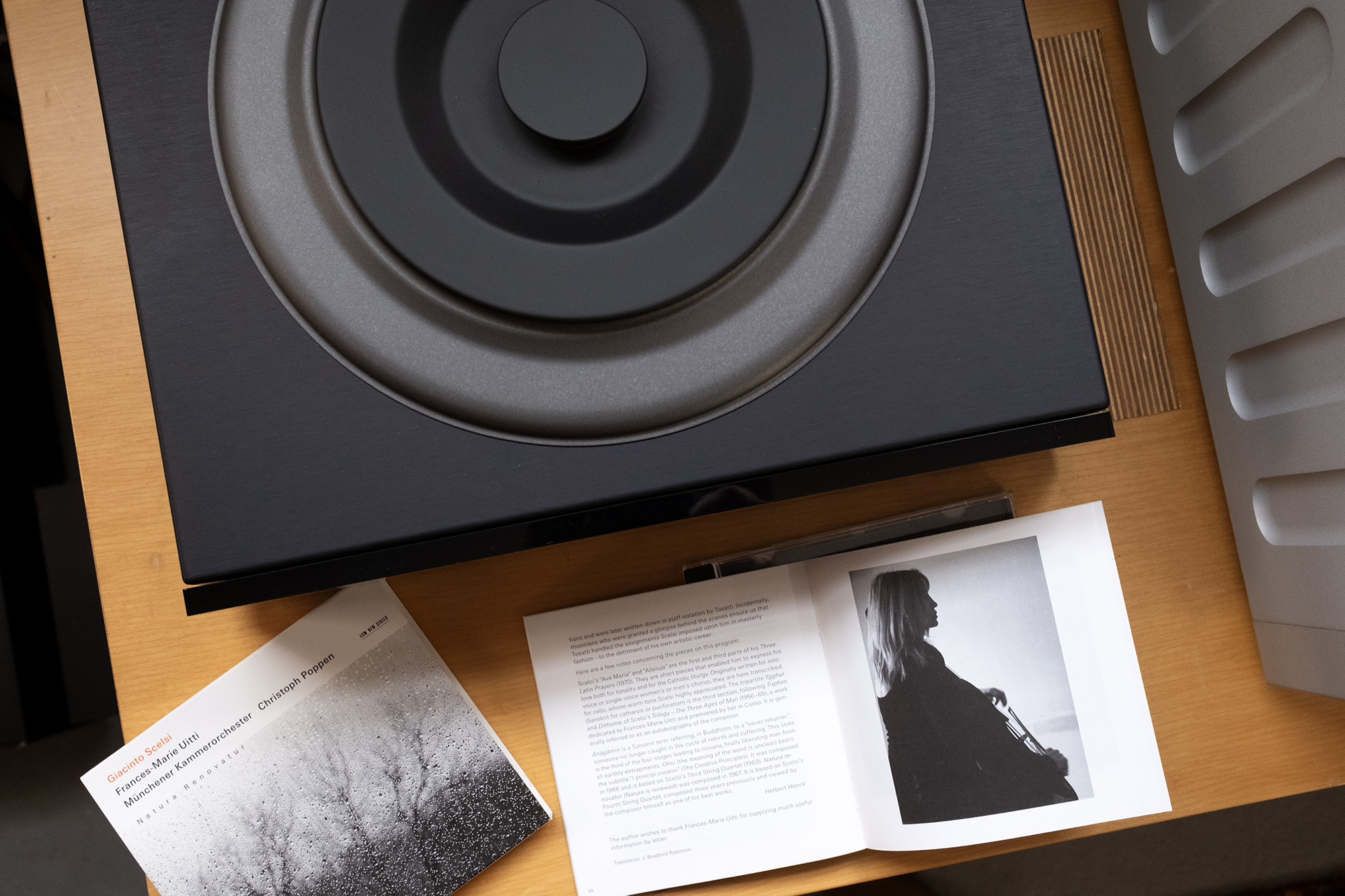
I have about 650 CDs, a piece of a collection I sold off many years ago and it mainly consists of contemporary classical music because much of that music was not available in the earlier days of streaming (and a fair amount still aren’t). In terms of present day collecting, I typically buy LPs over CDs but I certainly have silver discs of new music which I rip to the MU1 seeing as I have no resident CD player or transport in Barn.
All to say, interacting with CDs is as much a part of the overall experience as sound quality concerns and I will never, ever, give up streaming even if CD replay can sound better (more on that in a minute).
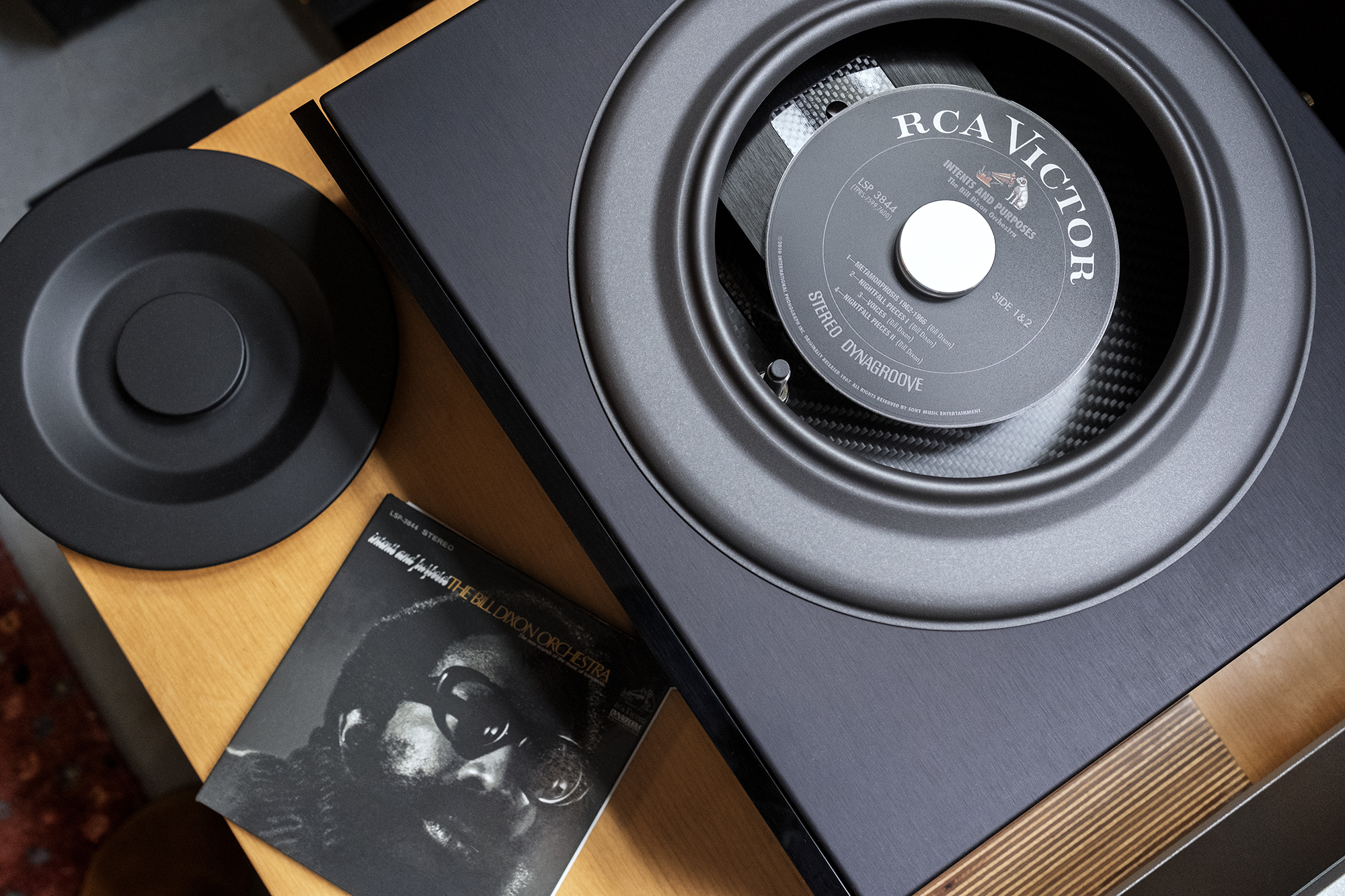
Let’s begin with a disc. The Bill Dixon Orchestra album Intents and Purposes was originally released on RCA Victor in 1967 using the unfortunate Dynagroove process, dubbed “Grindagroove” because it made records sound bad. Thankfully through a labor of love International Phonograph released a remastered version on CD in 2011 which I snapped up as soon as it was available. Dixon founded the Black Music department at my alma mater, Bennington College, and while I did not study music while there, I attended a number of his concerts both on campus and off. To my mind, Intents and Purposes is one of Dixon’s most creative and engaging works, scored for ten musicians that added English horn, cello, and both Jimmy Garrison and Reggie Workman on bass to Dixon on flugelhorn horn and trumpet, Jimmy Cheatham on bass trombone, Byard Lancaster on alto sax and bass clarinet, Robin Kenyatta on alto sax, Marc Levin on percussion, and Frank ‘Cleve’ Pozar on drums.
This remastered CD version is a great sounding version of a great album and the d1-CD transport feeding the d1-unity DAC brought it to life in living color. The varied sonic shades of the various horns in play, a Debussy-like delicacy in interplay, and that double double bass foundation with drums and percussion were reproduced with a solidity, distinction, and dynamic impact that made listening in close the only option. Vivid, alive, rich and ultimately rewarding. While I’m no jazz critic, Intents and Purposes sits on my short list of stunning jazz records that pushes boundaries in all the right directions. Bravo all around.
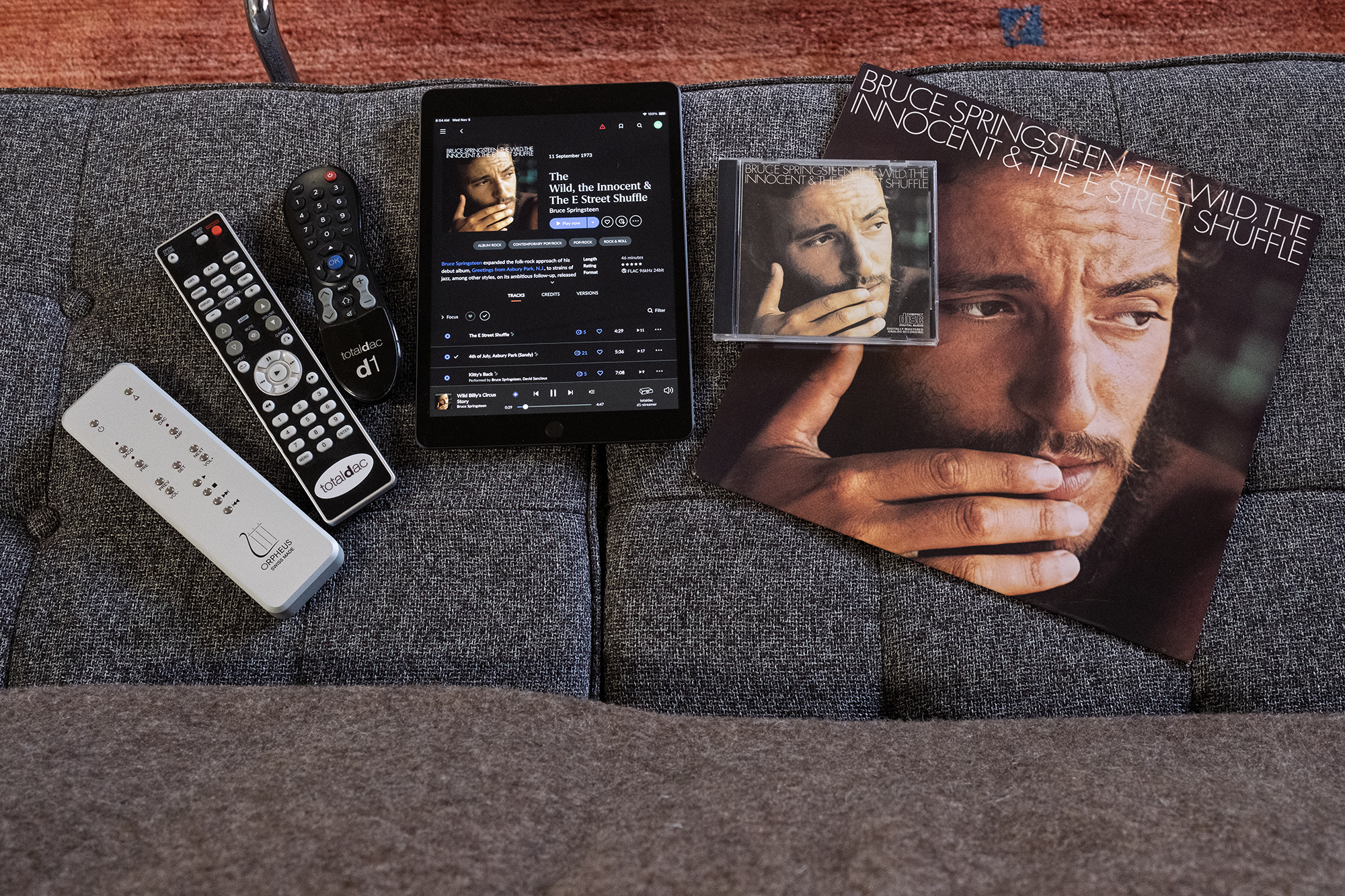
How’s that stack up as ammunition for a big shootout—CD versus ripped CD versus streaming versus the LP! I’m going to mostly disarm this notion because a) a hate ‘shootouts’, b) I hate ‘shootouts’, c) listening to a CD, playing a file or streaming, and playing an LP are three very different kinds of experiences, and d) even if I went down this road, what I’m actually comparing is the gear and system used, i.e. not formats. What’s more, the versions of this record on Tidal and Qobuz are 24-bit/96kHz remasters so we’re talking apples to apple sauce (with cinnamon).
My favorite Bruce record changes with the day (or month, year, or decade) but 1973’s The Wild, the Innocent & the E Street Shuffle, Springsteen’s sophomore release, is always at or near the top. Filled with dreams, sadness, and hope I travel to all manner of places during the album’s damn near perfect 46 minutes, places I’ve inhabited throughout the 50 years we’ve been spending quality time together.
What I will compare, just for fun, is the CD version played through the d1-CD Transport/d1-unity combo with help from the Orpheus Lab Absolute Integrated (more info) and Wilson Benesch A.C.T. 3Zero Loudspeakers to the ripped CD and streamed from Qobuz using Roon and my hands and feet, keeping in mind the Qobuz version has been remastered so we’re not comparing the same thing.
It was very clear, very early on that the CD was my favorite sounding version, followed by the ripped CD. The streamed 24-bit/96kHz remaster sounded comparatively underwater and artificially bloated as if someone dressed Bruce & the E Street Band up in Michelin Man costumes. Their instruments too. The main pluses for the CD included a more precise sound image and an overall sense of greater solidity and weight. The ripped CD held onto these qualities but with ever so slightly less solid and weighty, as if the boys in the band took a few steps back from their microphones, letting more stuff into the mix between them and me.
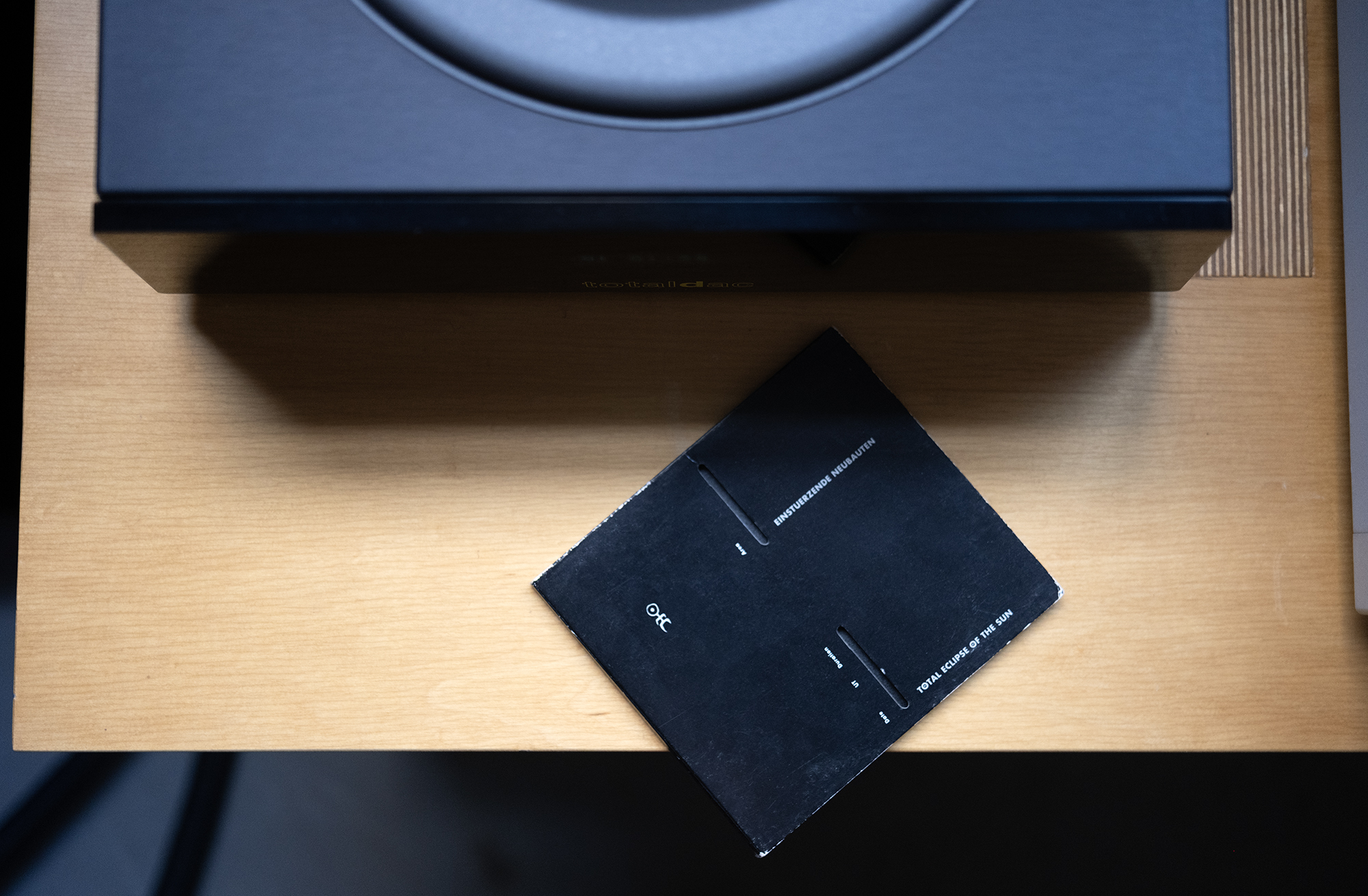
I did similar comparisons with a number of other albums and these Bruuuuce findings tracked no matter the music, the only real difference being the quality of the recording and my relationship to the artist and music. Berlin’s Einstürzende Neubauten is another favorite band and this EP Total Eclipse of the Sun from 1999 is a real nice slice of their skeletal sound. Here, the comparison was CD to ripped CD since this EP is not on Tidal or Qobuz (which is one good reason I own the CD) and the opening bass lines with Blixa Bargeld’s vocals on top were presented, once again, with greater clarity and weight via CD. There’s also a slightly more relaxed sound from the CD as compared to the ripped version, as if the ripping and playback process added some edginess to the sound.
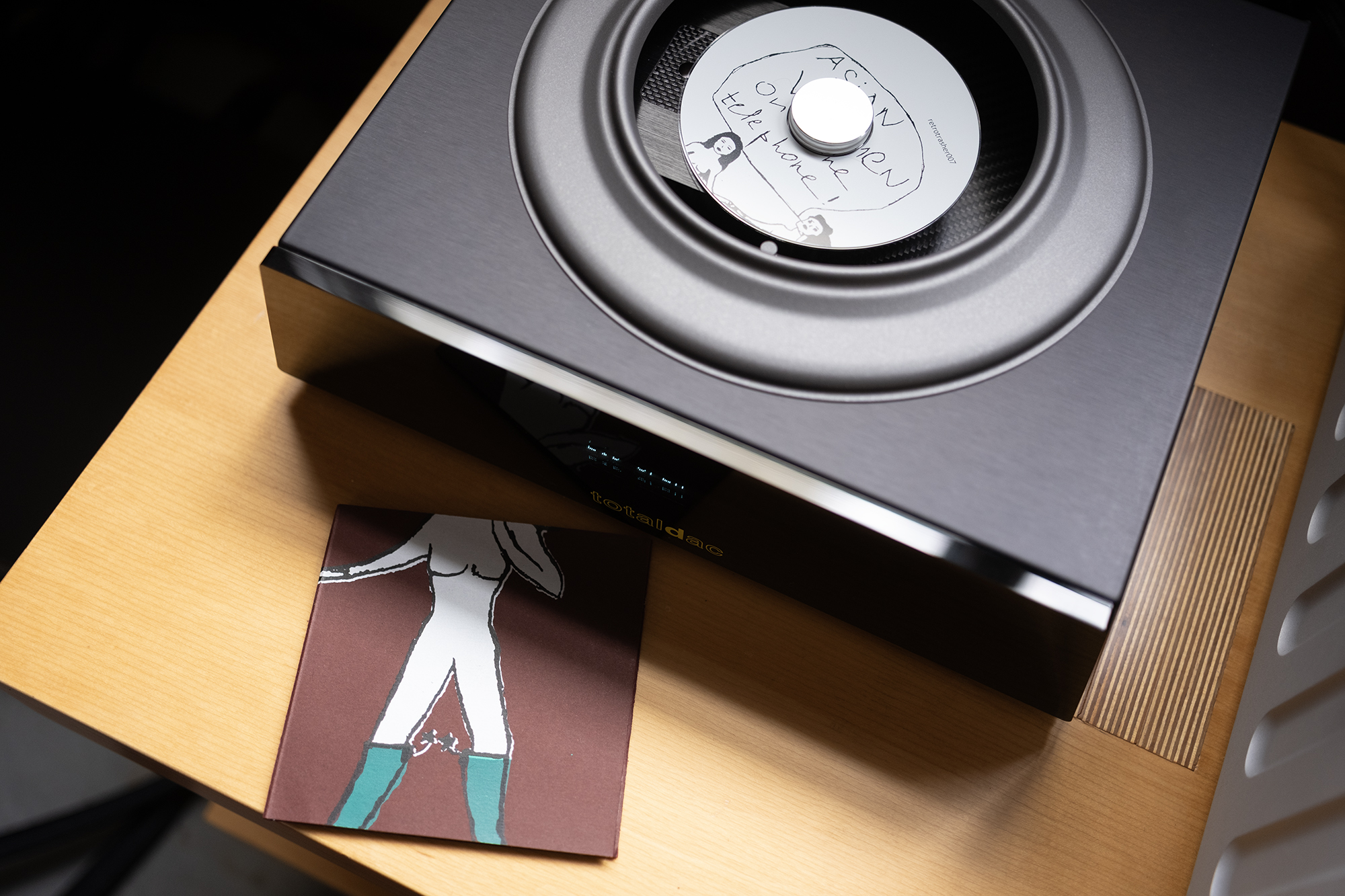
In the end, the differences notes between CD playback and ripped or streamed versions when comparing the same version were more or less subtle in nature but the CD always sounded more refined and purposeful. We have a winner.
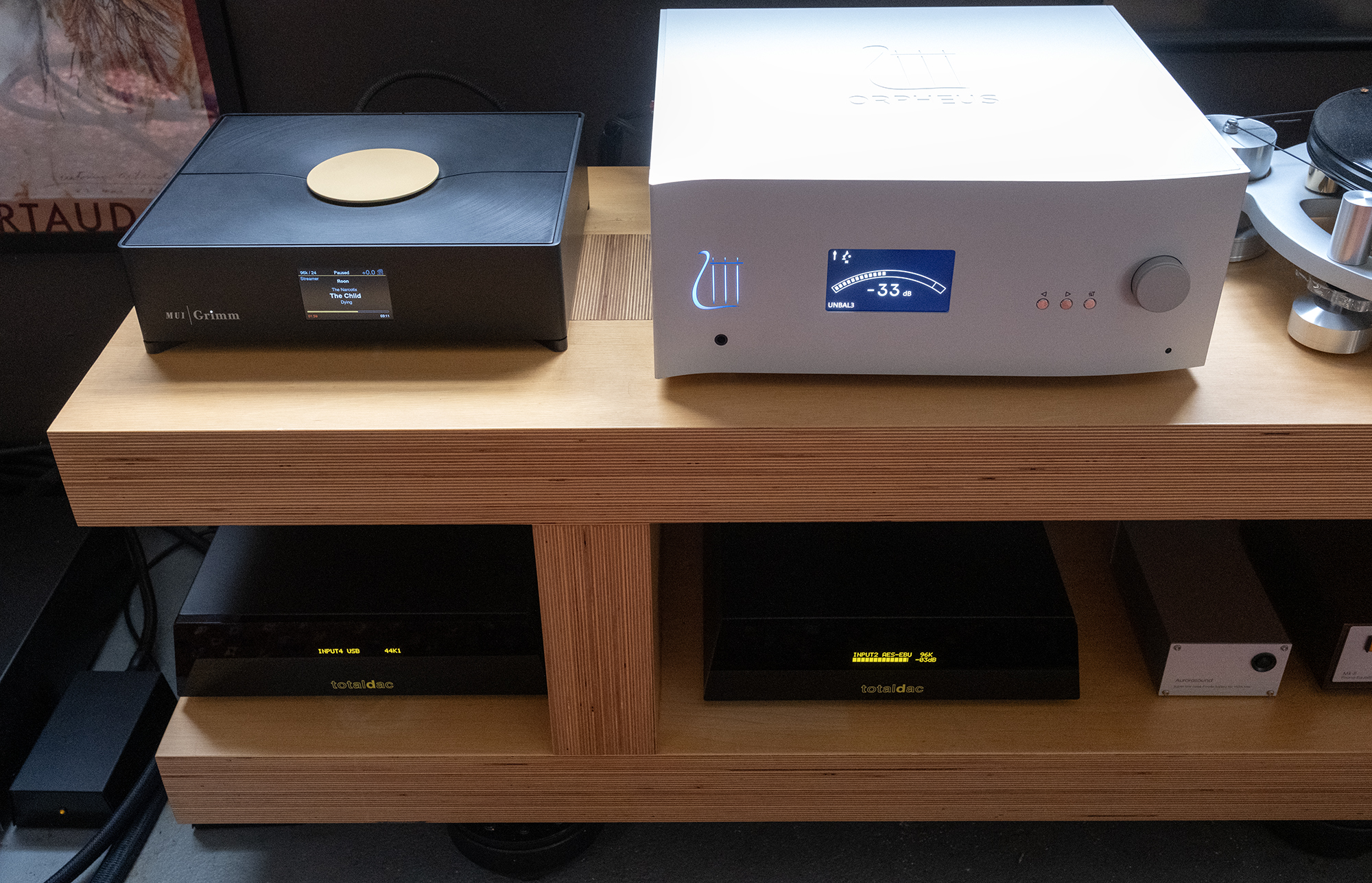
Another comparison I’m sure many readers are waiting for is between the Barn resident Grimm MU1 as network transport to the totaldac d1-streamer-live. So let’s have at it!
For these types of comparisons I mostly rely on the very familiar, test tracks, or music I’ve used over and over to compare different gear. My approach to A/B’ing is a combination of listening to tracks all the way through on A then B and back and forth again (and again where necessary) as well as longer term listening to A then B and back and forth as needed. In other words, I don’t do rapid since my interests lie in how well a given piece of gear communicates music not sounds.
The results of this A/B process were clear—the MU1 set to 2fs Oversampling imparted greater resolution and clarity compared to the d1-streamer-live’s airier and plumper sound. It’s worth noting that with the MU1 set to No Oversampling, the sound image became more compact and more tightly focused, a change I do not prefer over the 2fs option’s bigger drama.
Diatom Deli’s “Down” from their 2018 album Tqm begins with deep synth bass and other electronic sounds that through the d1-streamer-live created a massive soundworld in Barn with plenty of impact and drama but the MU1 offered a more focused and better defined version. Is there a winner? Not according to my tastes. Just differences. We also have to take into account the fact that the Grimm MU1 offers three Oversampling options that really help tailor sound to taste while also functioning as a Roon Core, or Roon server, so you can store your music library in it where you need to have a separate device to act as your Roon server with the totaldac.
If we add in the cost of the MU1 at $14,800 versus the d1-streamer-live at 10,150euros (about $11,600 at current exchange rates), I’d say it’s a tight race considering the Grimm’s extra functionality that more than accounts for its higher price.
But here’s my thoughts stepping back from this A/B minutiae—if you like big drama, big sound, and richness, the totaldac d1-streamer-live will suit your tastes to a T. If you prefer a more resolving sound with greater clarity and focus while retaining a very nice sense of timbral richness and rightness, the Grimm MU1 is your flavor. There’s simply no wrong choice to be made here as I could easily live with either.
As a matter of fact, I spent about 3 months listening to the d1-streamer-live and d1-CD transport without a care in the world, deep in the groove of countless albums and music new (to me) and old. And there was never a single moment I felt anything lacking because I was too busy smiling that big smile signaling pure delight in the sounds and moods of sweet, sweet music.
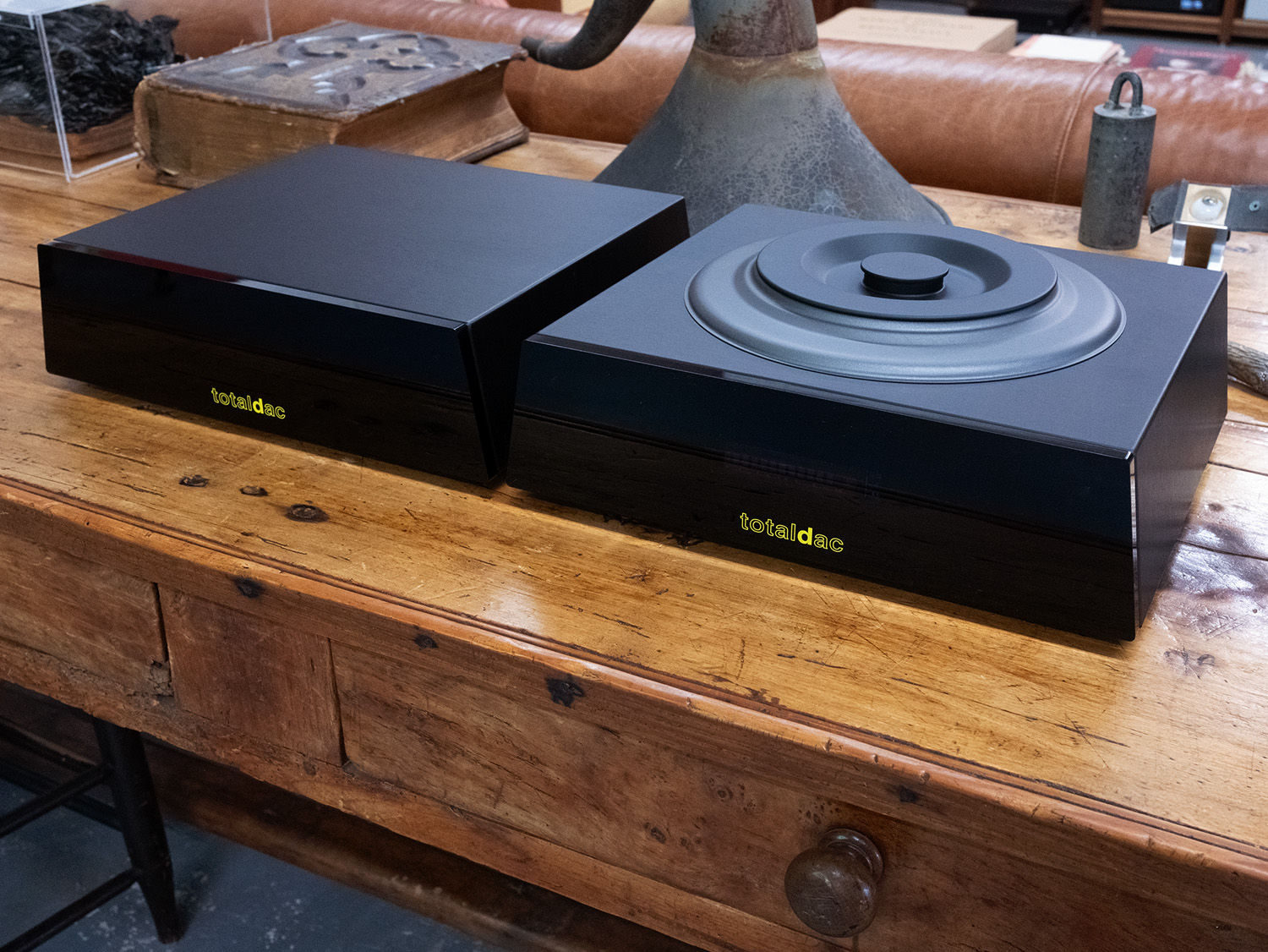
Why write about the totaldac d1-streamer-live and d1-CD Transport in the same review? Because they go together along with the d1-unity DAC in sight and sound, that’s why. To my mind, some hifi buyers (like me) attach to things beyond sound quality even though sound quality is a critical element for any purchase or recommendation. I find sound quality in and of itself an incomplete story, a piece of a much more interesting picture and things like the company, history, the people involved, the approach, aesthetic, and overall vibe all play important roles in my assessment.
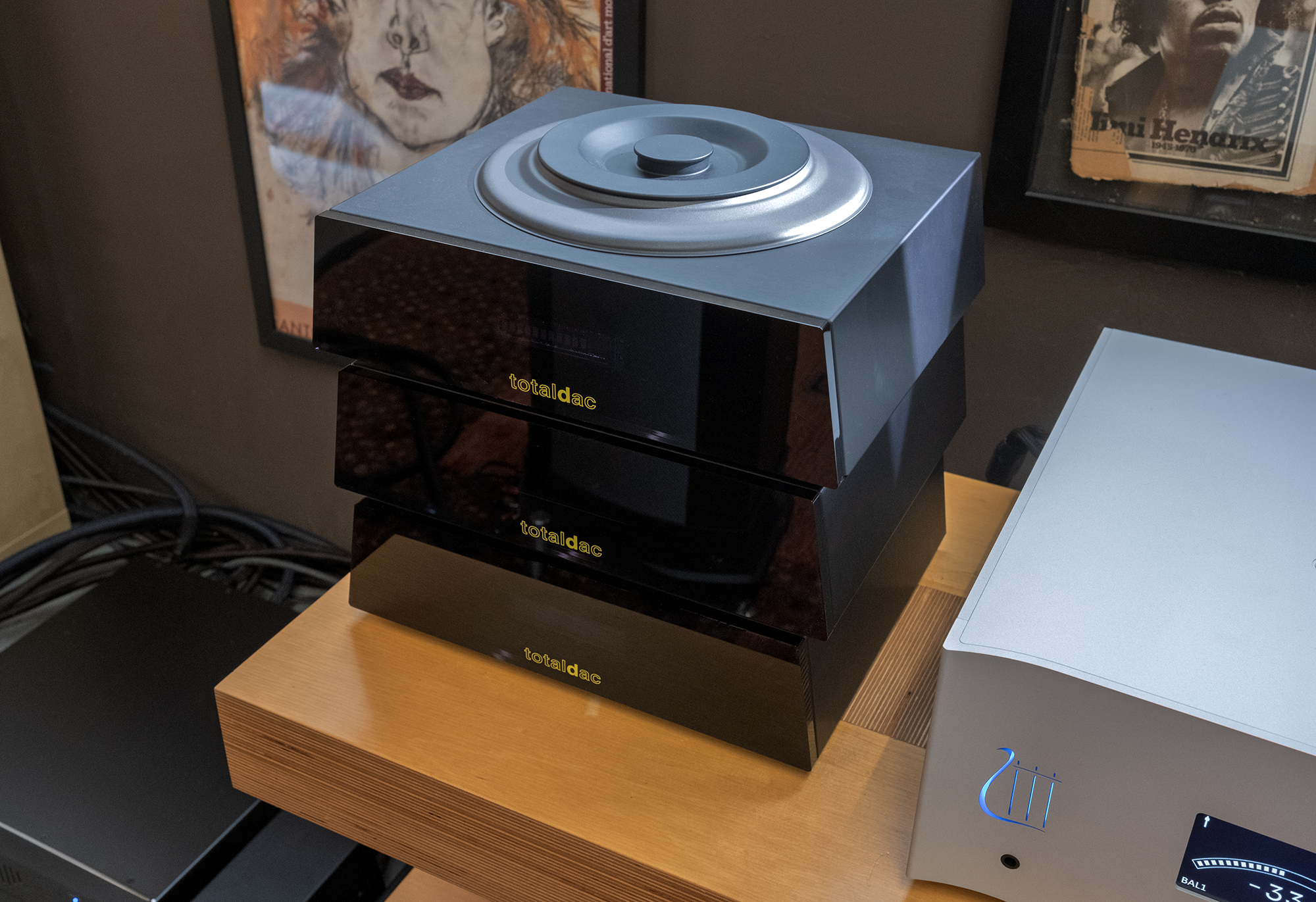
Owners of any of totaldac’s DACs will certainly also appreciate the d1-streamer-live’s organic touch, a very similar kind of natural fluidity and ease that are important elements of any totaldac DAC’s sound. CD collectors and/or people looking to add a more intimate and curated aspect to their listening habits to feed a totaldac have a very easy option with the d1-CD transport for similar reasons while it adds a more refined sound as compared to served or streamed music. Of course these strengths and traits will carry over to other DACs as well. They just won’t match.
Vincent Brient of totaldac goes about things in what I see as a slow, deliberate, and careful manner guided by music and all its delights. You can add the d1-streamer-live and d1-CD transport to my running list of highly recommended products from totaldac that serve the music as well as those of us who feel compelled to listen.

totaldac d1-CD CD Transport: 7500euros incl VAT in Europe, *6900euros excl VAT out of Europe
totaldac d1-streamer-live: 11000euros incl VAT in Europe, *10150euros excl VAT out of Europe
Company Website: totaldac
*from totaldac: up to the end of the year 2025, orders from the USA will get 15% off to compensate for the sudden 15% increase of the tariff tax. This special offer will not be valid in 2026.
d1-CD Specifications
- RCA coaxial spdif and XLR AES-EBU outputs (avoid using both at the same time).
- 100% original Red Book signal, without any modification, pure 44.1KHz 16bits CD signal.
- can also read the CD layer of a hybrid SACD disc.
- 40 femtosecondes oscillator.
- CD-text functionality.
- Totaldac live-power external power supply.
- aluminium and PMMA enclosure with massive pure copper antivibration plate.
- power consumption 10W when playing a CD
- player dimensions: height 135mm,, width 360mm, depth 290mm.
- power supply dimensions: height 65mm, width 122mm, depth 180mm.
d1-streamer-live
Embedded reclocker interfaces:
-
- 192KHz asynchronous Xmos USB, RCA, optical and AES-EBU digital inputs, selectable from a remote control.
- 44.1KHz, 48KHz, 88.2KHz, 96KHz, 176.4KHz and 192KHz, 16 to 24 bit formats supported on all inputs except 96KHz max for optical input.
- DSD (DoP standard) supported on the USB, AES-EBU and spdif inputs.
- AES-EBU digital output (and spdif RCA or BNC on order).
- embedded custom clock with anti-jitter FIFO memory.
- bit perfect signal path.
- display switched off by remote control or automatic.
- external power supply to minimize the noise.
- aluminium and PMMA enclosure.
- power consumption 15W.
- dimensions: height 110mm, width 360mm, depth 290mm.
- power supply dimensions: height 65mm, width 122mm, depth 180mm.
- weight: 4kg.
Computer type interfaces:
-
- 1x ethernet port.
- 1x USB2 port as an audio output to the embedded reclocker.
Compatible applications:
-
- Qobuz Connect
- RoonReady (RAAT certified by Roon)
- Jplay certified (ask Totaldac to get a free 2 month trial)
- plays with Audirvana (ask Totaldac to get a free 3 month trial)
- UPNP/DLNA/openhome, for example for Jplay IOS app, Minimserver, Audirvana, Mconnect Player HD, BubbleUPNP, Spoticast
- Airplay compatible, to listen to the sound of your Ipad/Iphone or from Itunes under Windows
- Squeezelite, compatible with Roon
- NAA for HQplayer
- Streaming such as Qobuz, Tidal or Spotify via Roon, Jplay, Mconnect, Audirvana or Airplay.