
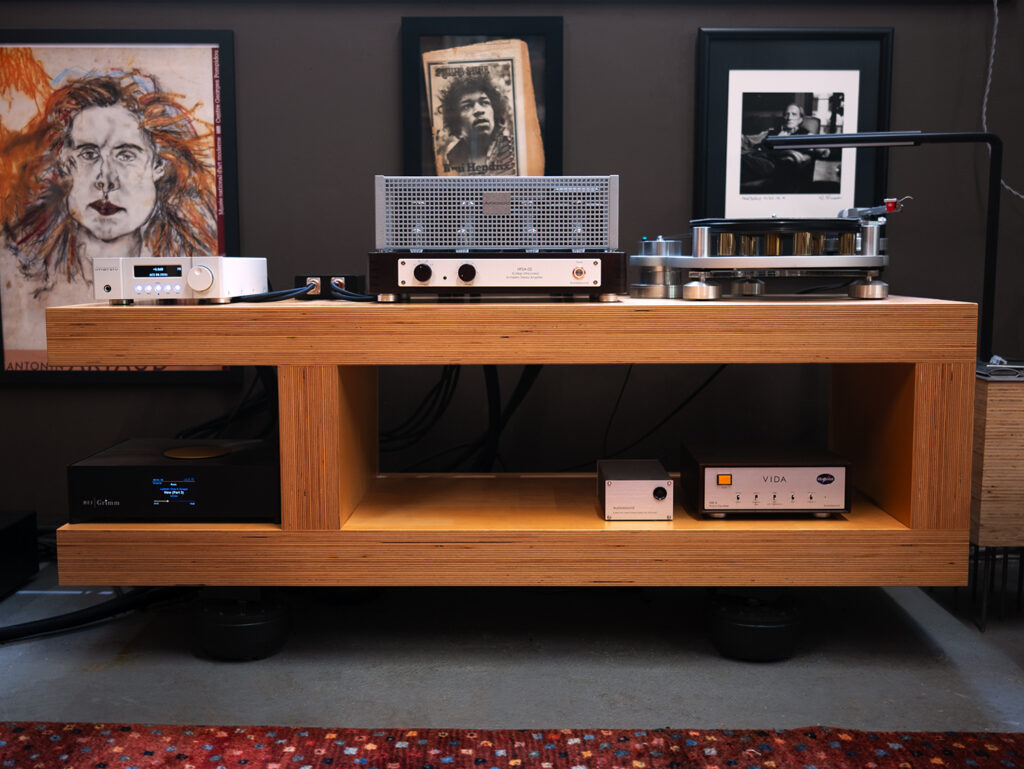
There are two things in my hifi life that get the most comments—my ‘Fallen A’ rack from Box Furniture and the jacket made by the Pointer Brand I’ve worn to most every hifi show for the past 100 years.
Even though I’ve owned my custom Box Furniture rack since 2005 which has been the star of many a photo over the years, I still get asked “where did you get your rack?” so it’s well past time to tell its story.
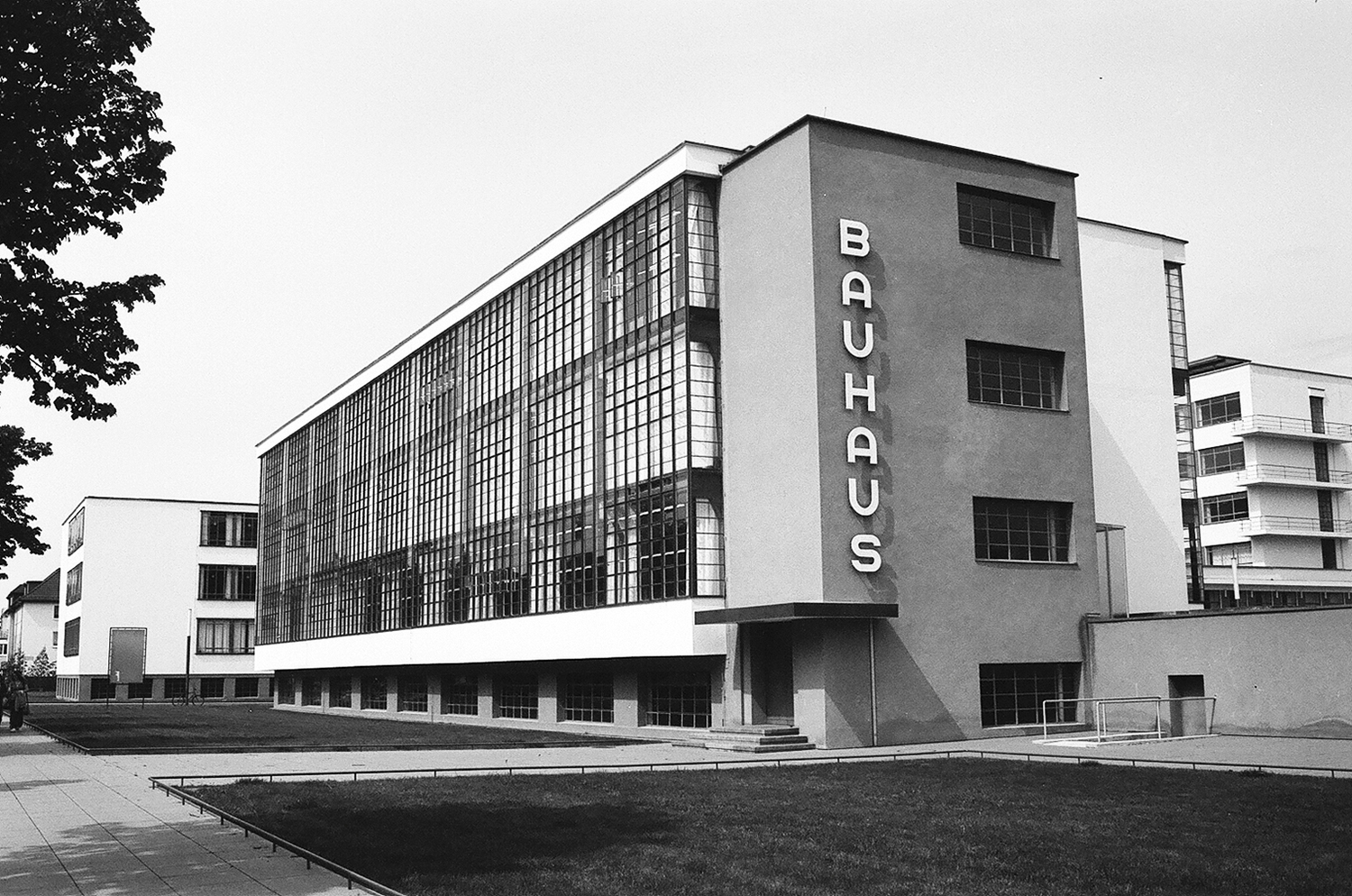
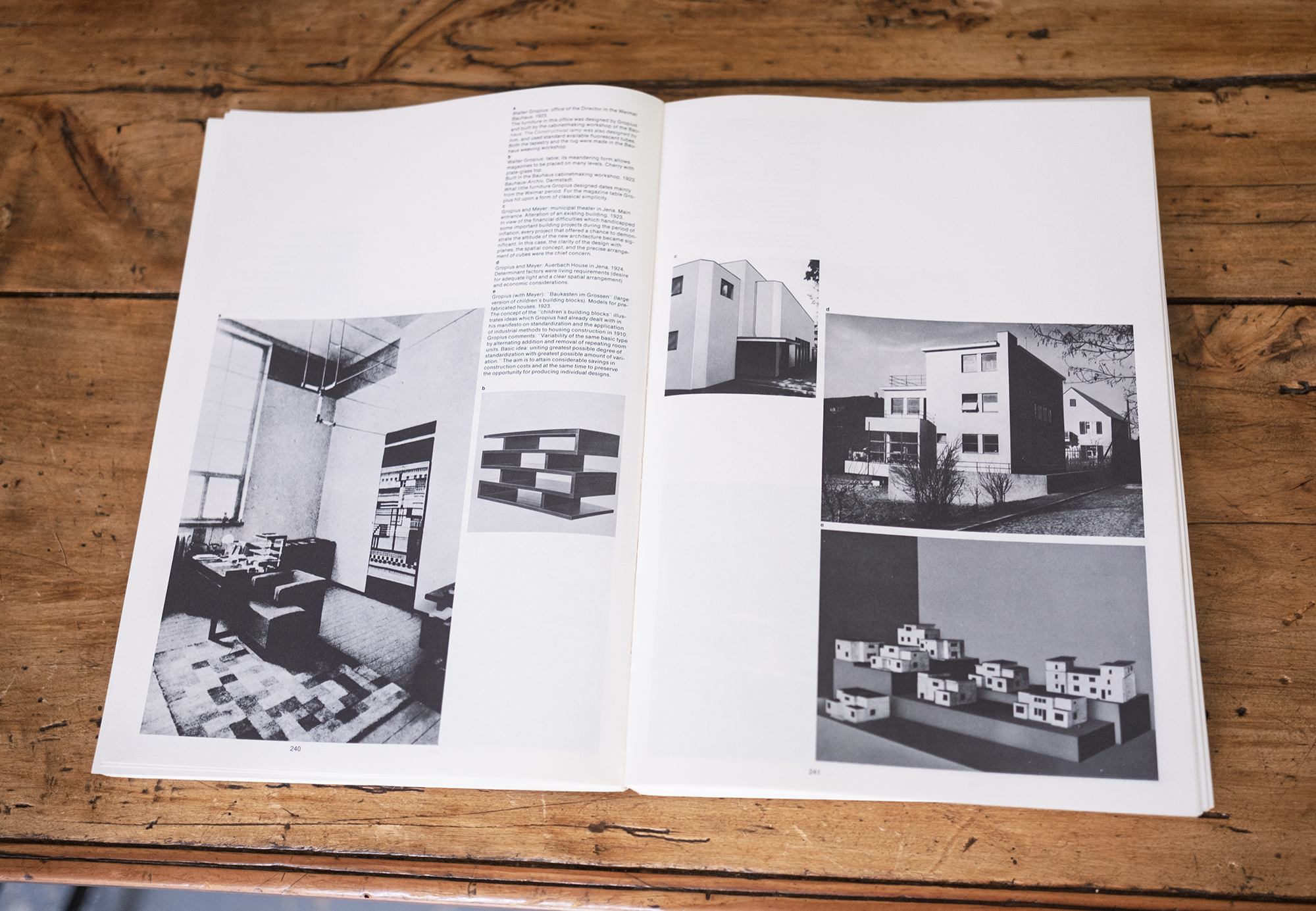
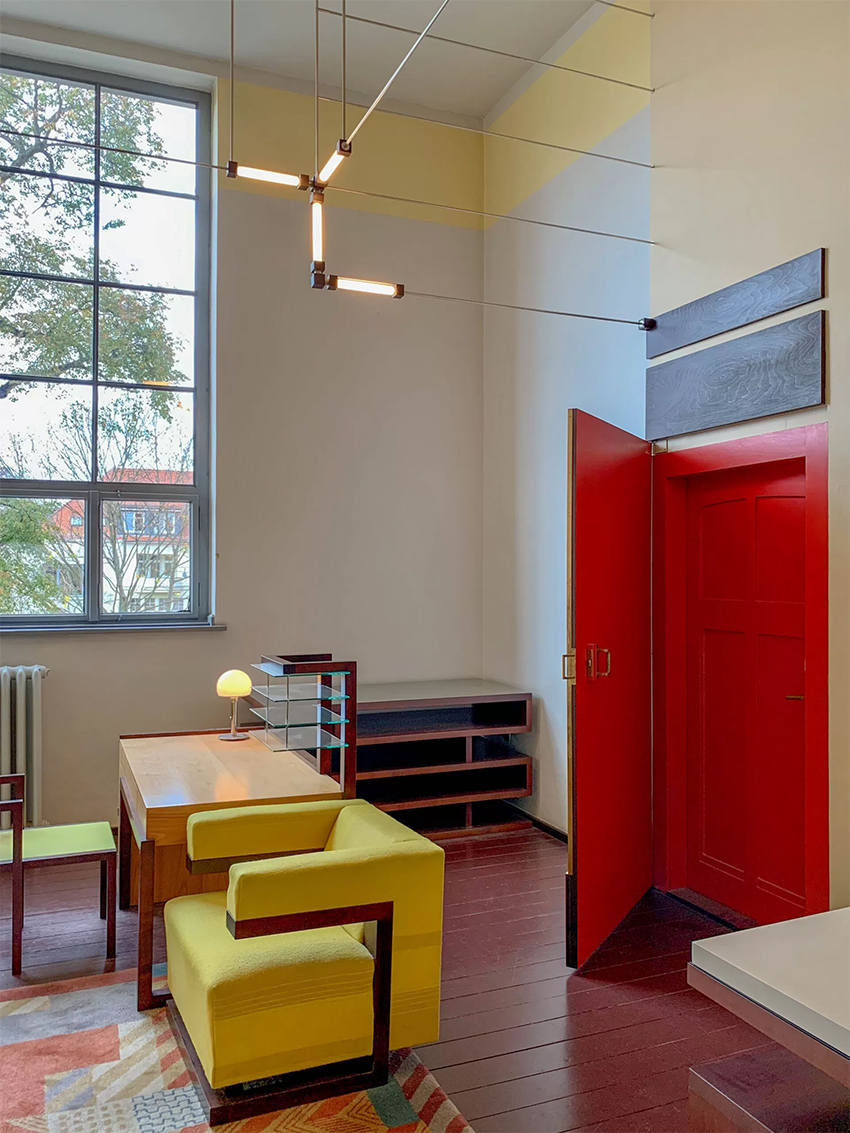
It all began in 1923 at the Bauhaus-Universität in Weimar, Germany. Specifically in the Director’s office occupied and designed by Bauhaus founder Walter Gropius. As is the case with history we tend to look back in chunks of generalizations where the Bauhaus has been reduced to stark grids and cold looking architecture. Which is very much like looking back at almost any country’s history and seeing nothing but good deeds. Generalizations that blur reality to paint a more palatable bite-sized picture.
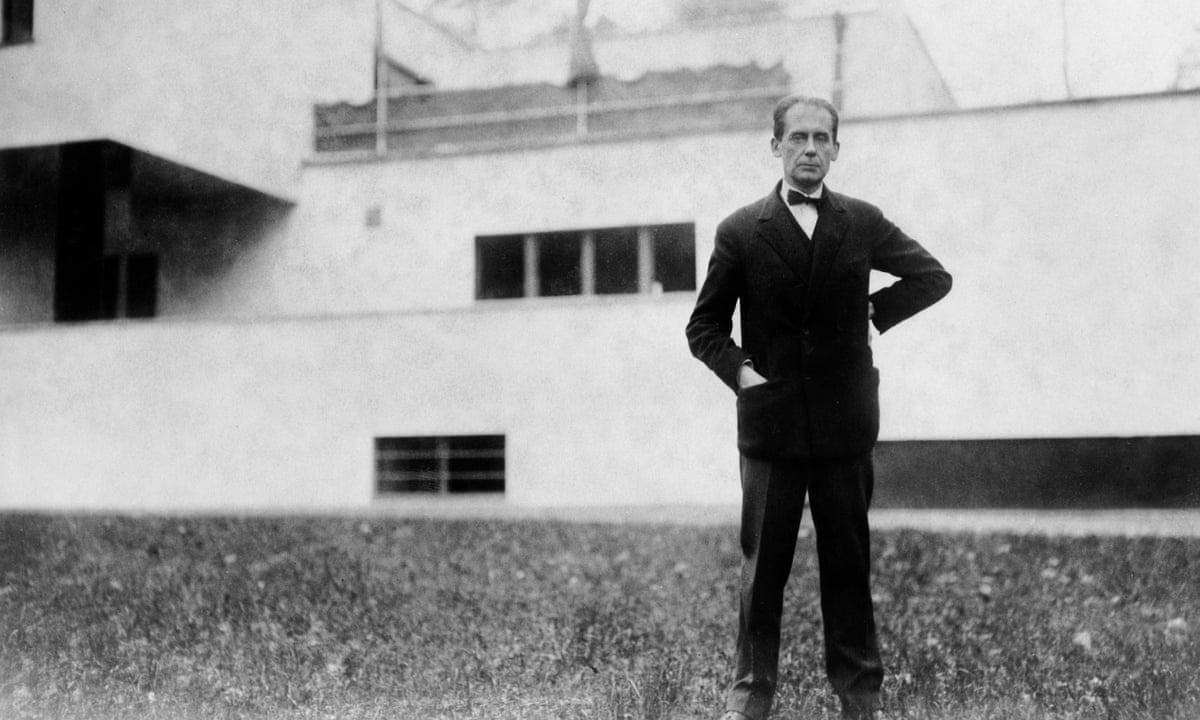
When in fact the Bauhaus school was much more than a school, much more than a style, and much more than some dumbed down caricature of what was a flourishing community that married art, craft, and architecture as equals to build a more meaningful and purposeful life.
As you probably know I studied art in college and ended up with a bachelors degree in Fine Art with a major in painting and a minor in drawing. While I never studied architecture or design, I was nevertheless fascinated by both along with film, philosophy, and literature so I did my own private post-college studies which in this context led me to fall in love with the Bauhaus school as a movement, as a way of life, and for the art, design, and architecture that were born out of it.

One easy and relevant example being the work of artist and Bauhaus professor Paul Klee whose work on paper, “Twittering Machine” from 1929, gave this site its name. Just add “s”.
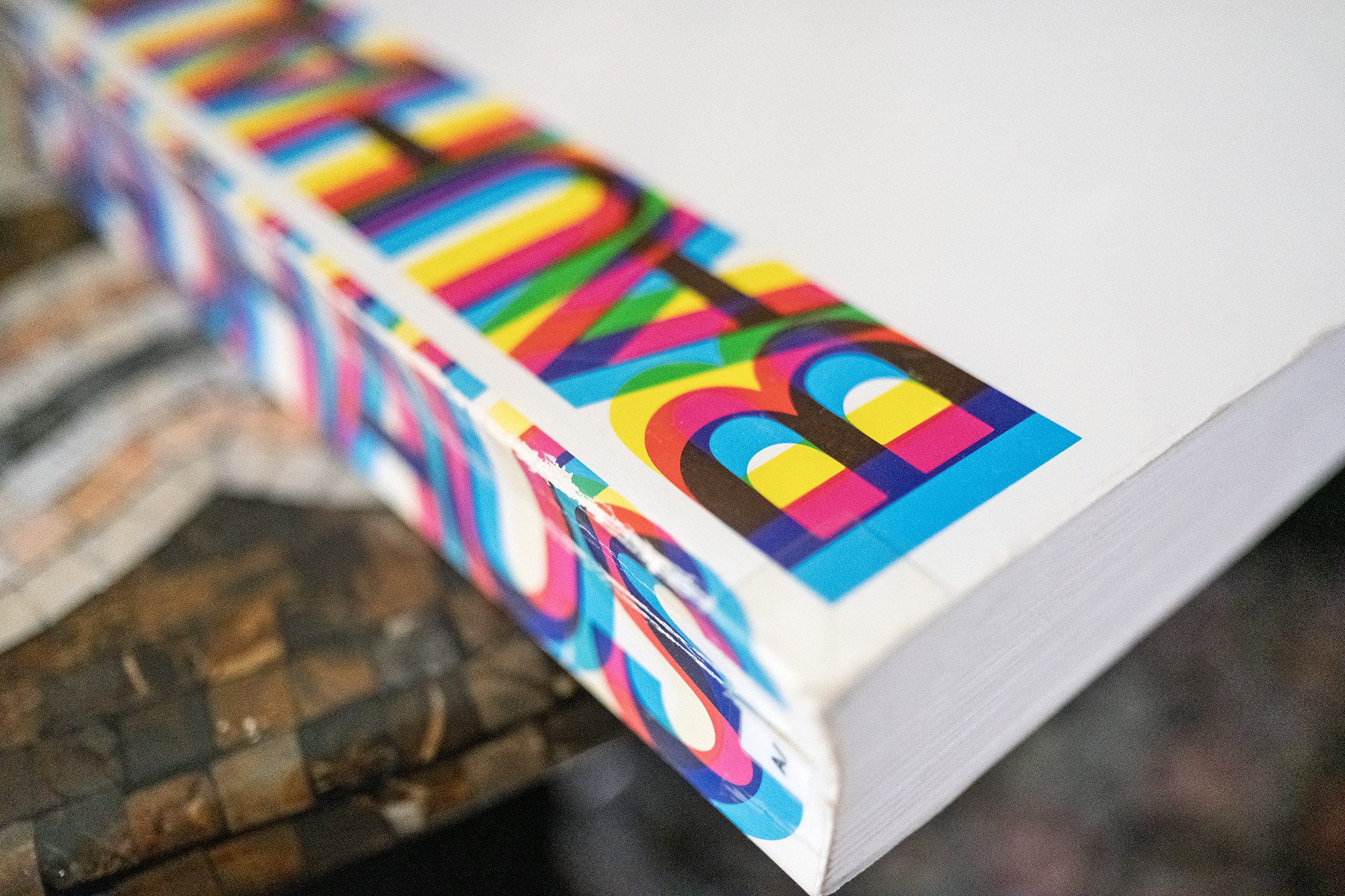
The other more pertinent example is the bookcase found in a corner of Gropius’ office in Weimar. I saw this photo in the essential book on the Bauhaus, Bauhaus, first published in English by the MIT Press in 1969, and its lines and form sang to me.
Back when I lived in a loft on Broadway in SoHo, before it became a shopping mall, I built a copy to hold my budding book collection. It was just OK, not that great, but it served its purpose both functionally and as a sloppy homage.
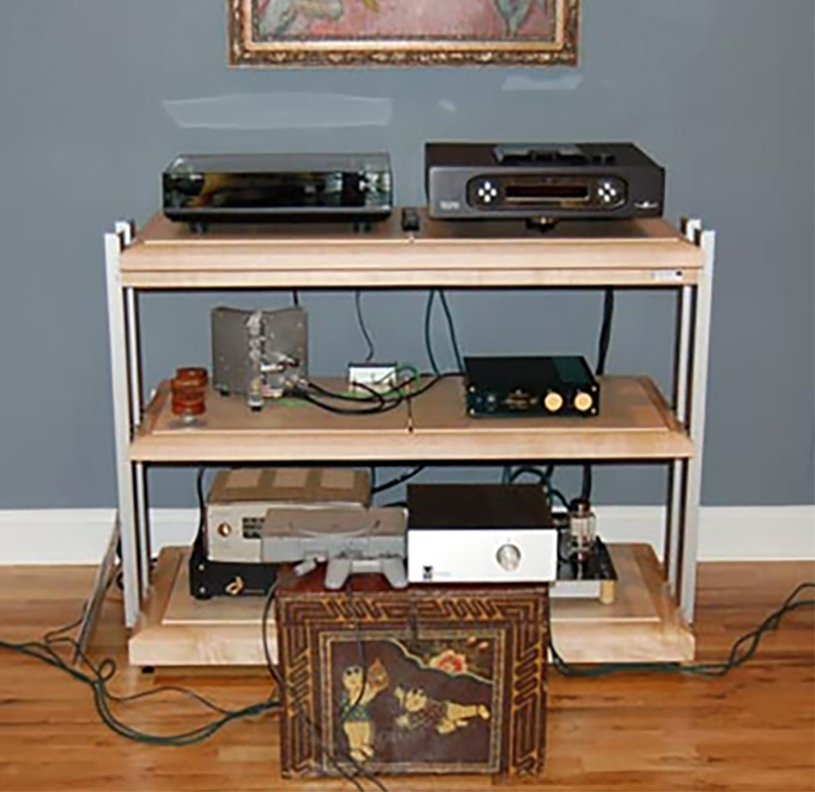
Fast forward to 2005 (or so) when we, our family, were living in Tewksbury Township in Hunterdon County, NJ where we moved after I sold my 1/2 of an IT consulting company cutting my ties to be near NYC. My system at that time had grown to include Shindo electronics, a prototype Auditorium 23 Nouvelle Verdier turntable with a Shindo arm and SPU. Digital was handled by an original Sony Playstation and all that gear sat on a Finite Elemente Pagode rack.
And I liked the Pagoda rack just fine but when I first saw a rack from Germany’s Ligno Lab, then imported by Jonathan Halpern’s Tone Imports along with Shindo and A23, my mind wandered all the way back to Gropius’ Bauhaus bookcase.
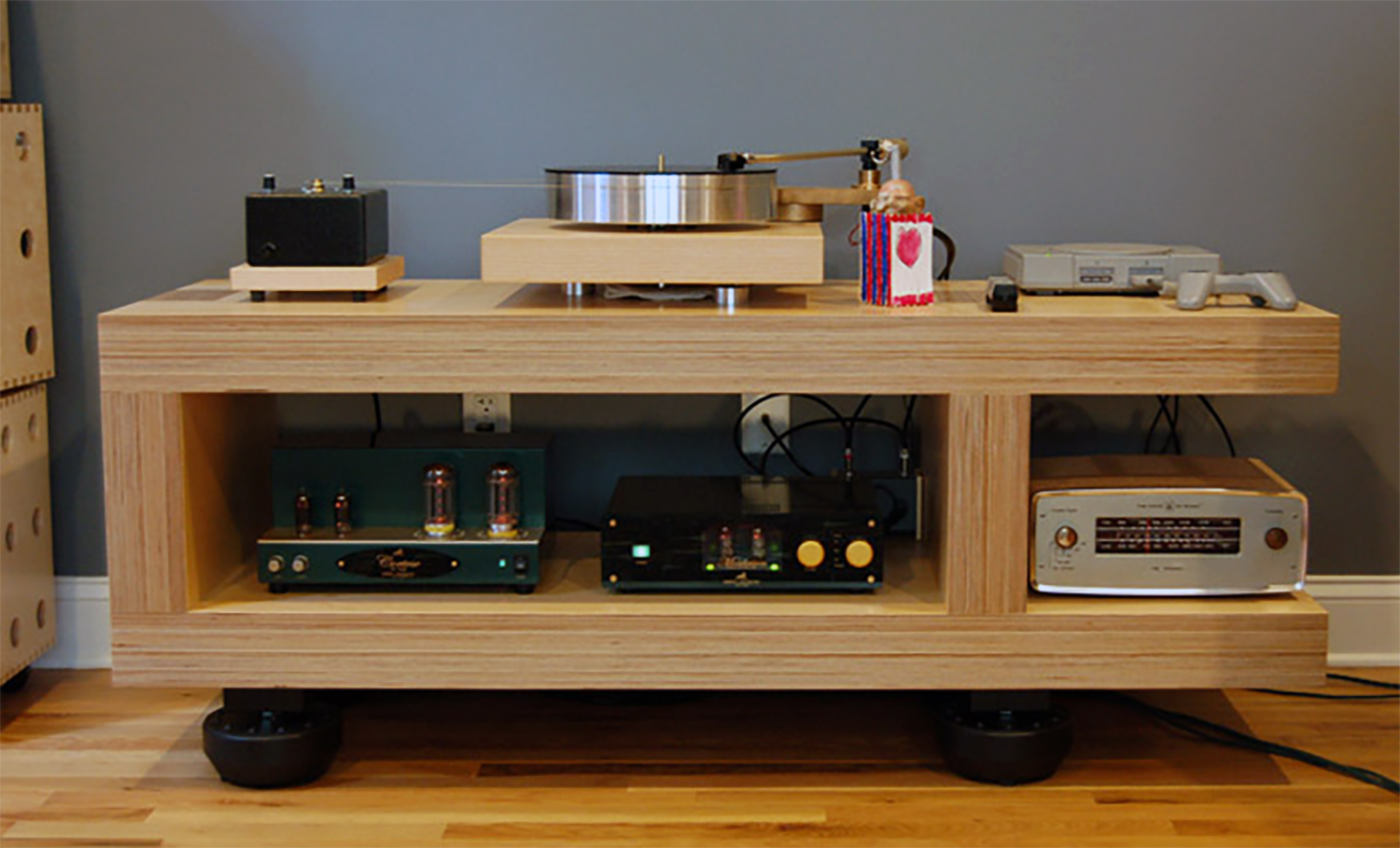
I went about making some rough sketches of my ideal rack with input from Jonathan Halpern as I planned to use the spring-loaded Ligno Lab footers so there was some consideration made to overall weight. When I had something that resembled my ideal on paper, I sent off the rough sketches to Box Furniture’s Anthony Abbate asking for his input and expertise with a special request that he add some of the lovely joinery I’d seen in his other work.
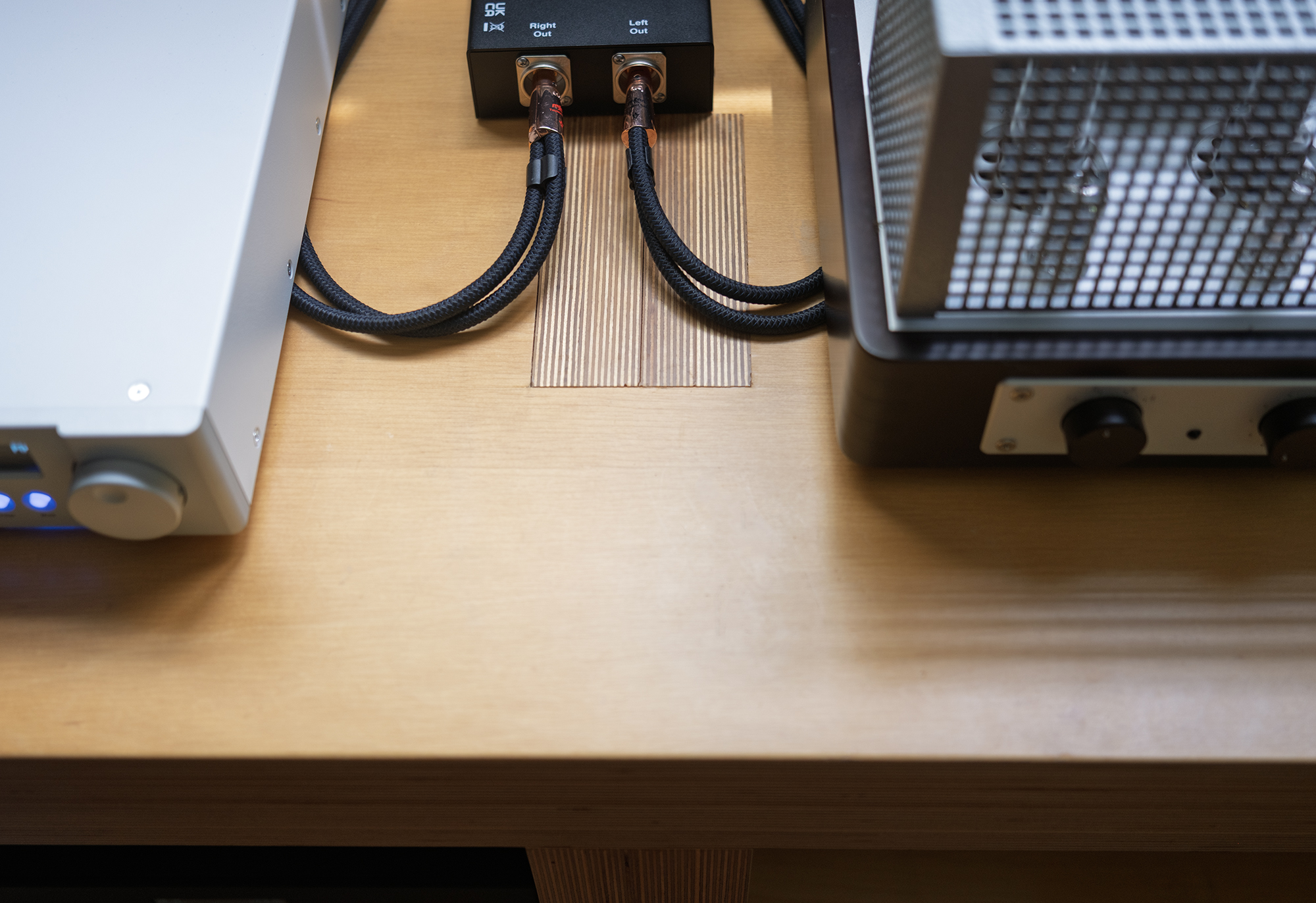
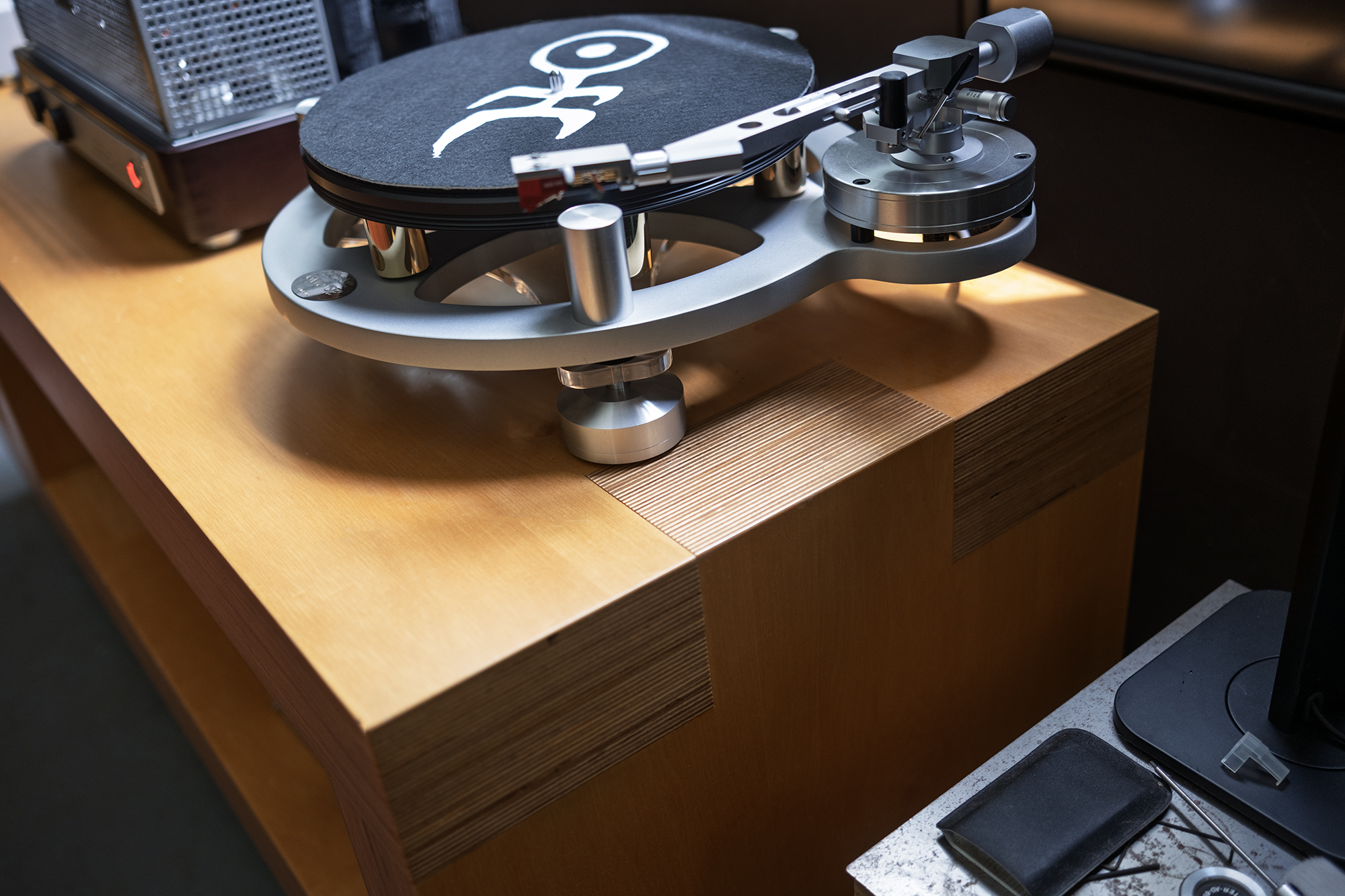
The size, scale, and materials were pretty much set—thick stacked Baltic birch ply, think heavy—but Anthony’s additions and recommendations made the ‘Fallen A’ what it is and what you see. Why ‘Fallen A’? Because it looks like one, albeit in a nice fat ‘n funky block font.
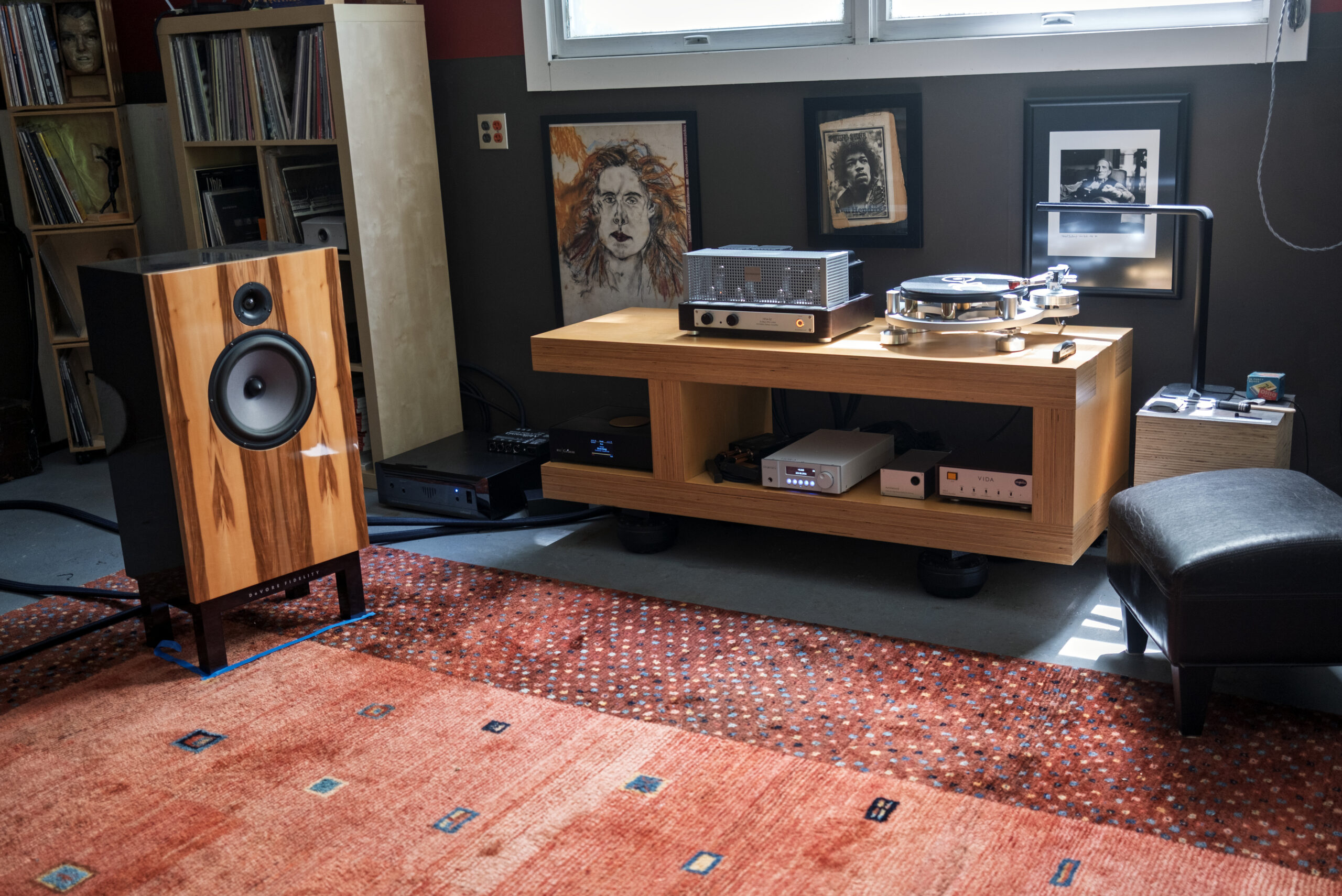
I’ve been living with the ‘Fallen A’ for more than 20 years and as you can imagine it has seen more than its fair share of review gear come and go yet it remains in remarkably great shape. And it still does its job very well and it still brings a smile to my heart.