
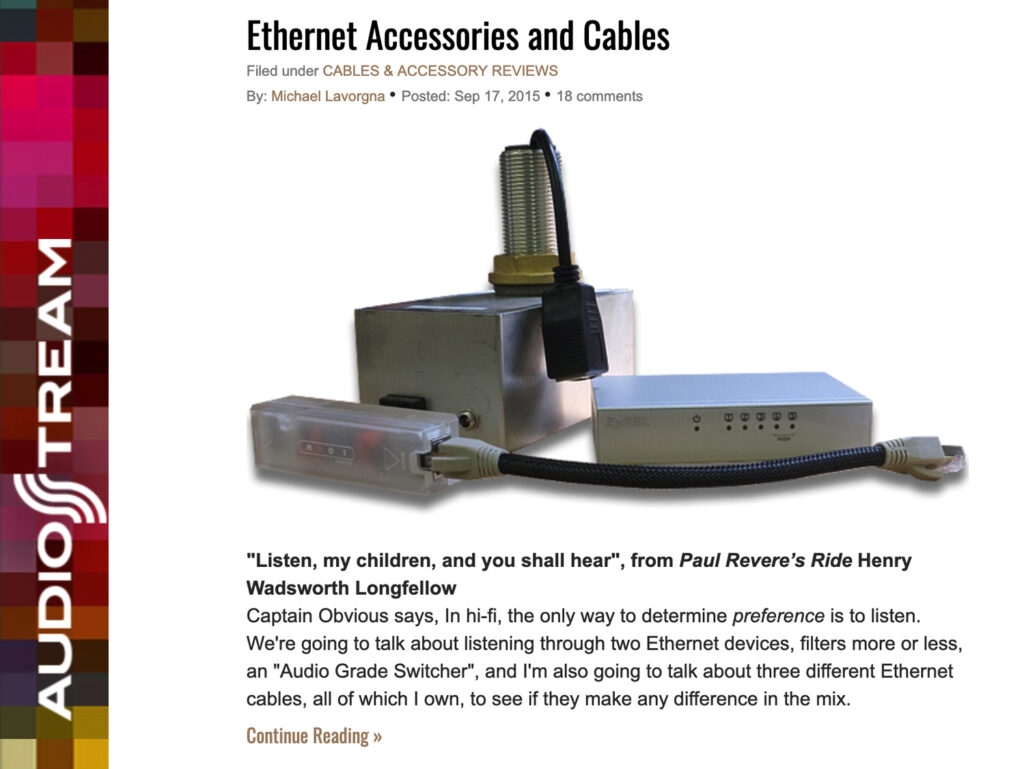
I first wrote about an Ethernet filter for audio 11 years ago.
This was way back when in my AudioStream days and the filter in play was the GigaFOILv3 Ethernet filter from DJM Electronics.
Here’s some of what I wrote:
The first change I made was to take the GigaFOILv3 out of the system. What I heard was a less refined sound, especially in the upper registers. This was a subtle change, and certainly not worth a grand, but the GigaFOILv3 clearly made my music sound less digital, less harsh, and more natural.

DJM released the GigaFOILv4 in 2018 which I reviewed and owned for years.
From that review also on the now non-existent (other than at archive.org) AudioStream:
As I said, these changes were not on the level of changing a component but I welcomed the improvements the GigaFOILv4 made in every connectivity scenario I ran it through, which can be summed up by saying music sounds more natural, more relaxed, and less digital.
Let’s face it—no one wants their music to sound digital.
Since then the number of Ethernet filters for audio have multiplied like bored rabbits and the field of products for network audio accessories has grown to include Ethernet switches, clocks, and of course lots of cables. I admit I can wrap my head around the possible need for an inline Ethernet filter, I use the Muon Pro Ethernet Filter from Network Acoustics, but my interest in exploring audiophile Ethernet switches and clocks is very nearly non-existent.
Here’s another quote from that GigaFOILv4 review:
The best gauge of the effectiveness of and preference for any cable, accessory, component, or speaker, is to listen to it for yourself in your system. The longer, the better. I cannot say, without any doubt, that these Ethernet products will perform to the same degree for you in your system as they did for me in mine since you, your gear, environment, network, etc. all influence how much of a sonic difference, or how little, these devices and cables will offer.
All of this came to mind when I received an email from DJM Electronics Steve McNally yesterday wherein he shared a recent article on their site titled, “Missing Numbers: Why Smart People Buy Questionable Audio Products.”
From the article:
1. An Unusual Corner of the EMI Business
I remember receiving the email asking if our GigaFOIL Ethernet filter would make a streaming audio system sound better. My honest first reaction: it’s a digital signal, checked for errors, carrying essentially bit-perfect audio over balanced twisted-pair CAT6 cable. Probably not. He insisted on trying, so we lent him one. The review came back glowing.
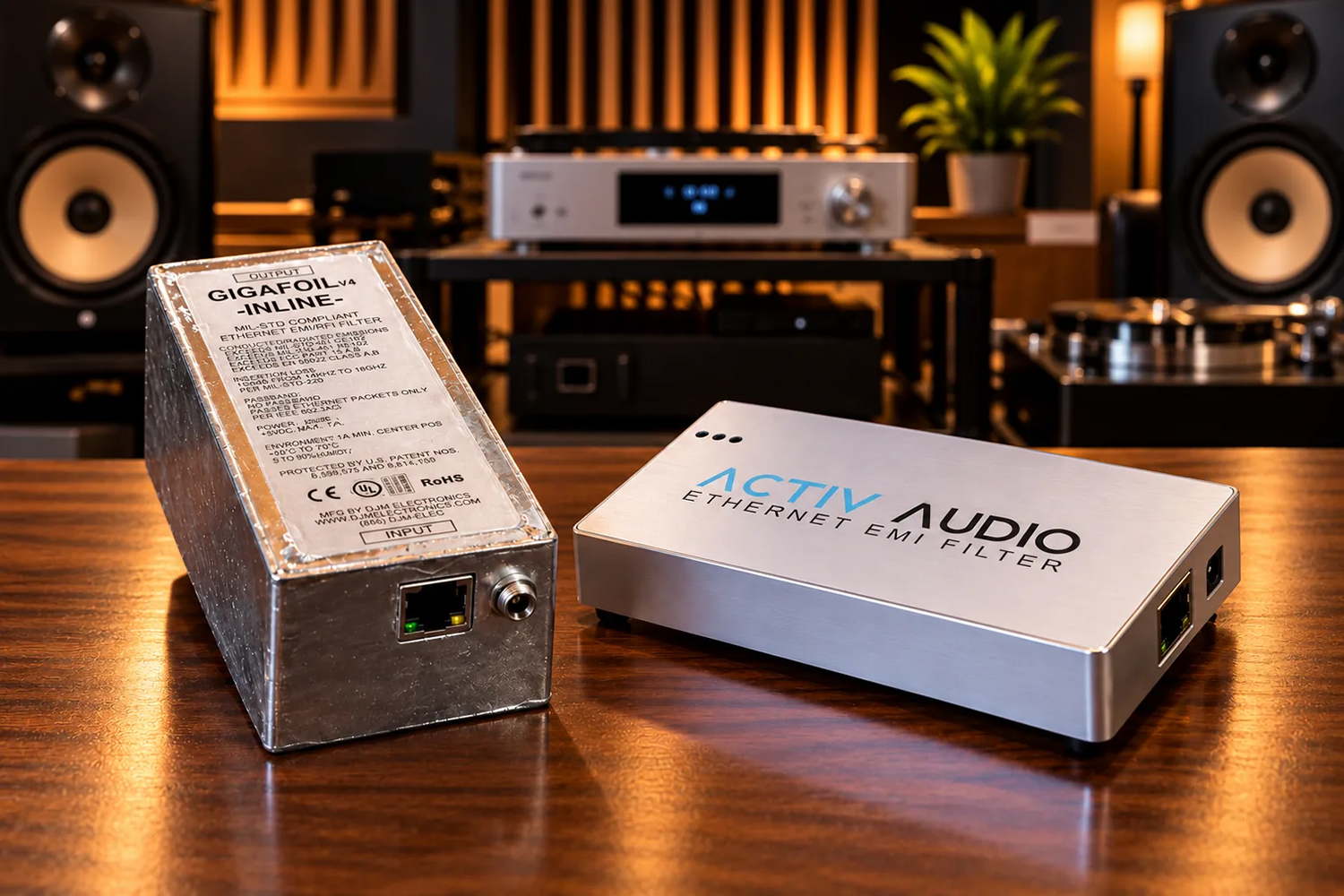
So we reconsidered the physics and figured maybe noise hitchhikes from the digital side to the analog side, and our filter was interrupting that ride. Word got out, and audiophiles started buying our GigaFOILv4-INLINE, a filter we originally designed for industrial automation, where Ethernet-controlled tools hiccup in EMI-soaked factories. The “INLINE” installs in the middle of the Ethernet cable. Apparently, it worked just as well beside a DAC as beside an arc welder.
I pretty sure “him” is me.
But the gist of Missing Numbers is here:
Let’s be honest about the mechanisms, because they’re real. Ethernet was designed by some very smart people and it is impressively resistant to electromagnetic interference. The isolation magnetics in every Ethernet circuit are extremely effective, but the transformer has parasitic capacitance between its windings, and high-frequency common-mode energy can slip across. Switching-supply leakage rides cables and ground structures. RF can rectify in nonlinear circuitry and reappear at lower frequencies. Fiber can help clean that up, but the media converter on each end is a noisy transmitter with its own power supply reinjecting noise back onto the copper. Sure, there could be noise. There probably is noise. Noise is everywhere.
And:
An EMI filter is one of the most measurable products in all of audio: known signal in, measured signal out, and the difference reported in dB across a frequency range. Yet the audiophile Ethernet filter market runs almost entirely on adjectives and superlatives, often with no attenuation curves, no frequency ranges, and no test methods. Just listening impressions, fancy cases and marketing.
Guilty as charged although saying “Just listening impressions” when it comes to listening to music on the hifi is like saying “Just visual impressions” when looking at art.
Steve goes into real detail explaining how their current ACTIV product line of Ethernet filters work, or not, and I recommend reading the full article if this subject is of interest. I certainly enjoyed Missing Numbers and learned a thing or two in the process.
Here’s one more taste to whet your appetite:
But in the audiophile market, price is a poor guide to filtering performance. In a recent spot check, passive Ethernet products ran from about $300 to over $4,000. One had an elaborate four-stage architecture with no attenuation curve. Another had proprietary multi-core filtering with extensive listening impressions, but no rejection numbers in dB and no frequency range. A third published clean data-path figures, but not the performance data that might justify the investment. What drives those prices? My guess is machining, finishing, packaging, marketing, dealer margins… nothing that adds a decibel of filtering or guarantees better sound. You’re not paying for attenuation. You’re paying for the anodizing.
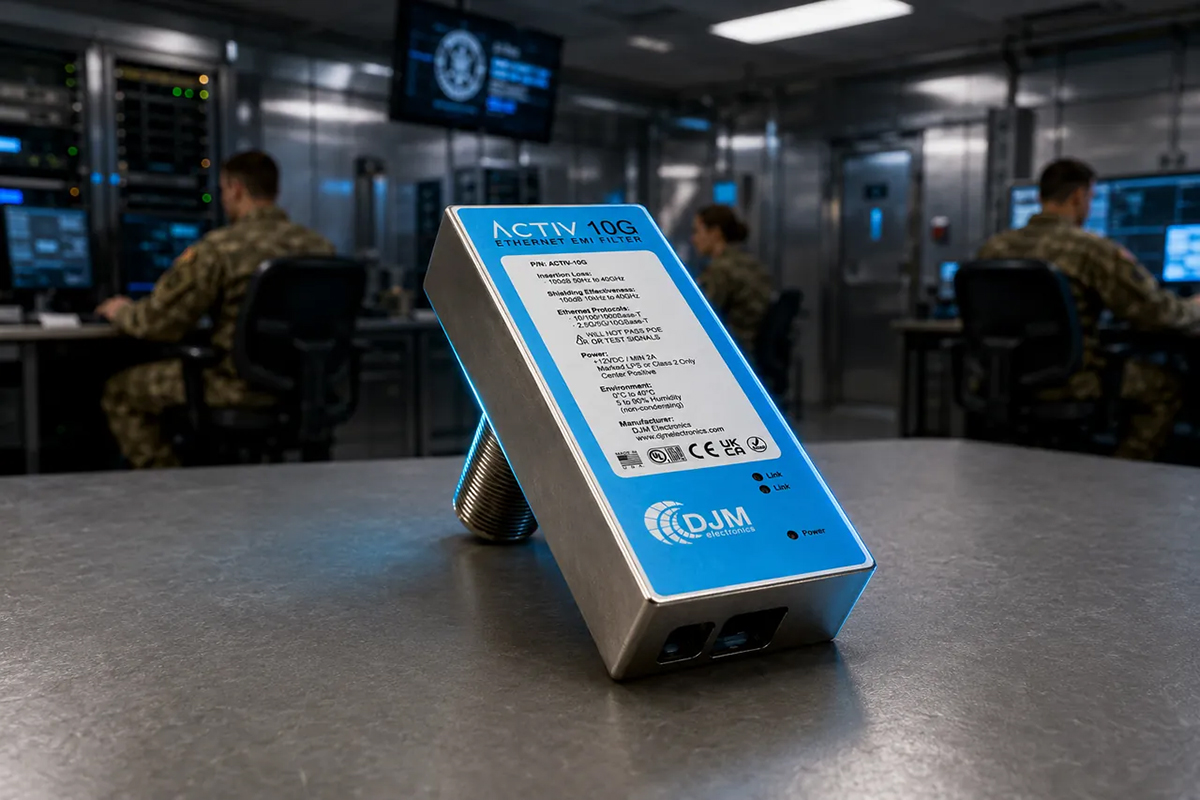
We know, because we’ve done it. The ACTIV AUDIO uses the same core filtering architecture as our standard ACTIV 10G filter in an enclosure designed to look at home beside expensive audio equipment, and the prettier case raised the price by hundreds of dollars. Our premier Ethernet filter became more expensive when we made it look less like a filter and more like our competition.
While there’s nothing wrong with paying for appearance, I prefer the look of the DJM ACTIV 10G filter to the gussied up version but that’s just me.
Company Website: DJM Electronics