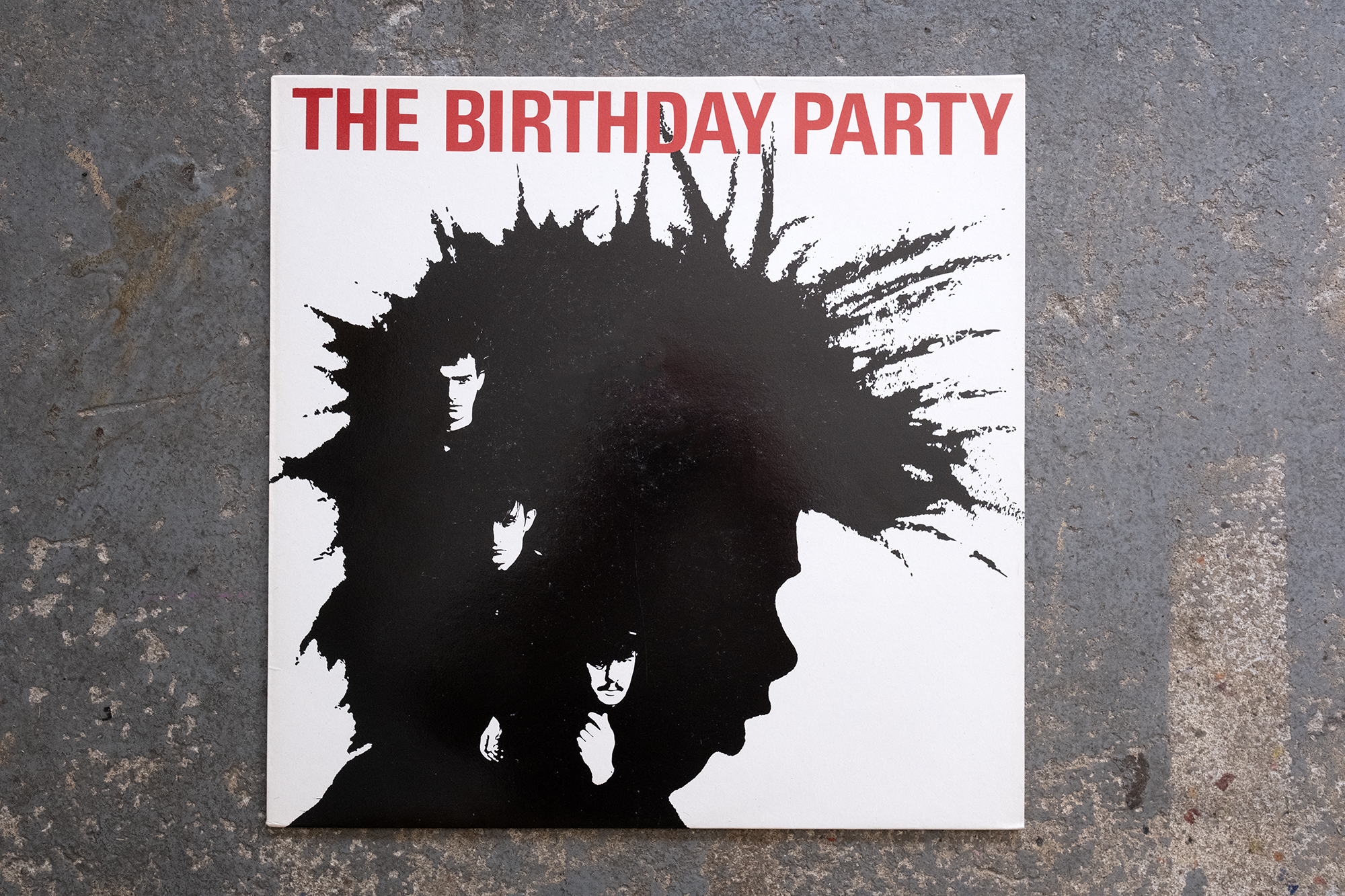
Following a band, or in this case a musician, for some 40 years teaches the inevitable acceptance of change.
That’s the ideal with music as far as I’m concerned as the last thing I want is the same kind of music from the same band for decades. What a complete bore.
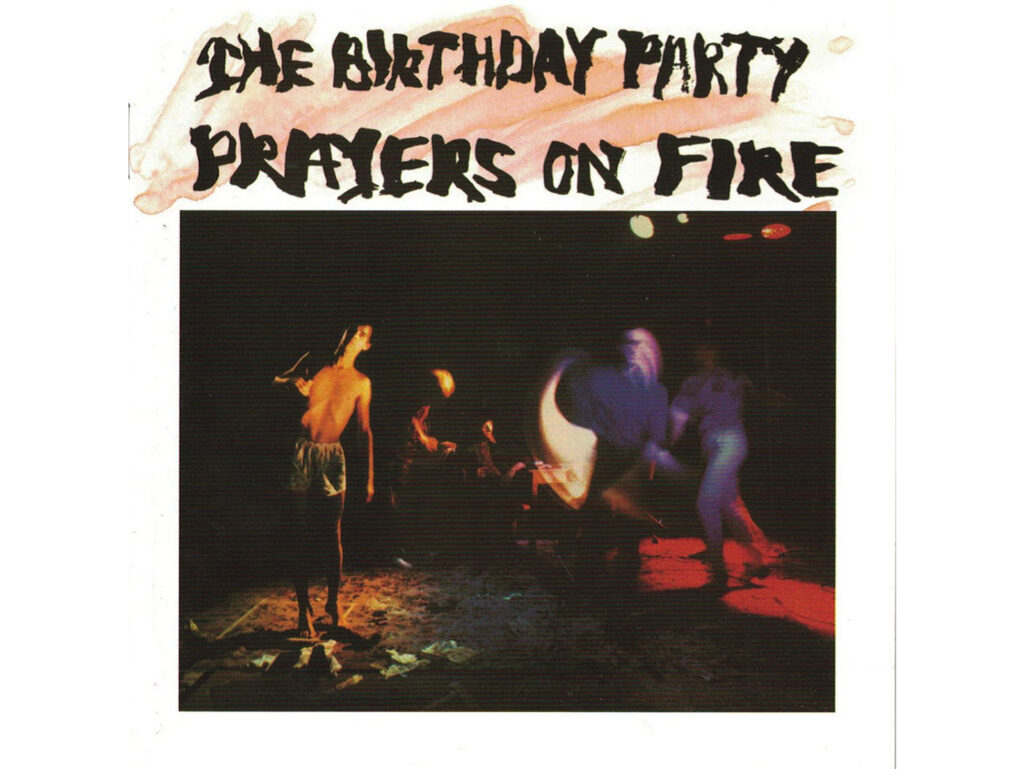
Among Nick Cave’s incarnations I have a very large soft spot for his hardest music released as The Birthday Party. Prayers on Fire was their first album, released 6 April 1981 on the Missing Link label in Australia followed by the UK release on 4AD that same year. Before we dig into Prayers on Fire, let’s look at a few albums from 1981 from other bands:
Fire of Love by The Gun Club (August)
Mask by Bauhaus (October)
Kollaps by Einstürzende Neubauten (October)
The Ascension by Glenn Branca (November)
Damaged by Black Flag (November)
Movement by New Order (November)
These represent, more and less, what I see as the general neighborhood The Birthday Party inhabited but their sound was and remains singular. In terms of admitted influences, The Stooges—one listen to Fun House from 1970 will tell you why—The Doors, Johnny Cash, and Elvis are all pieces of The Birthday Party puzzle. It’s worth noting that Einstürzende Neubauten’s Blixa Bargeld became Cave’s close friend and bandmate, playing guitar on The Birthday Party track “Mutiny in Heaven” c.1983, with Blixa eventually becoming an important part of Nick Cave and the Bad Seeds. As did The Birthday Party’s guitarist Mick Harvey.
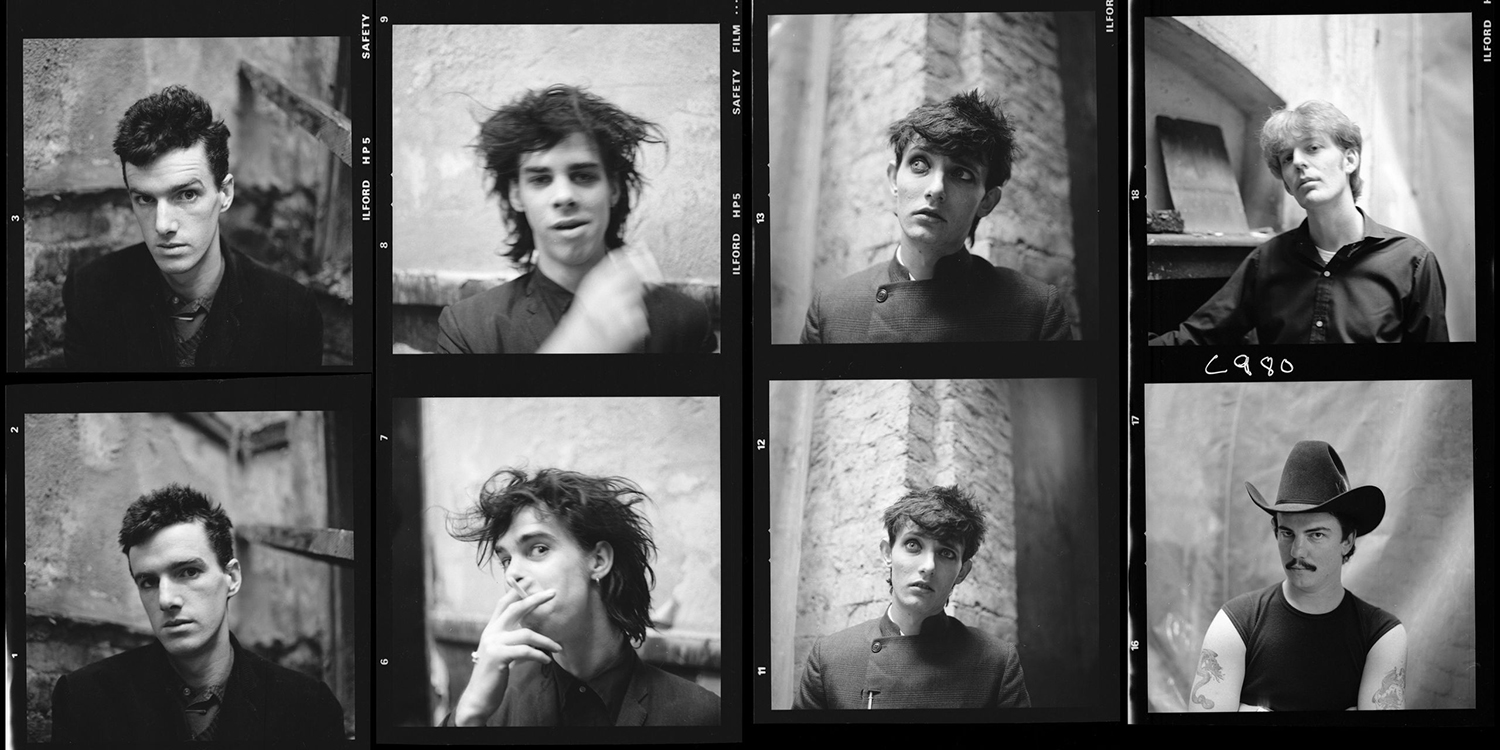
The Birthday Party lineup for Prayers on Fire:
Nick Cave – lead vocals, piano (track 7), saxophone (track 9), drums (track 11)
Rowland S. Howard – guitar, backing vocals, lead vocals (track 5), saxophone (track 11)
Mick Harvey – organ, piano, guitar, snare drum (track 7)
Tracy Pew – bass guitar, clarinet (track 8), double bass (track 9)
Phill Calvert – drums
with members of Melbourne post-punk band Equal Local:
Phillip Jackson – trumpet
Mick Hauser – tenor saxophone (incorrectly credited as “Mick Hunter”)
Stephen Ewart – trombone
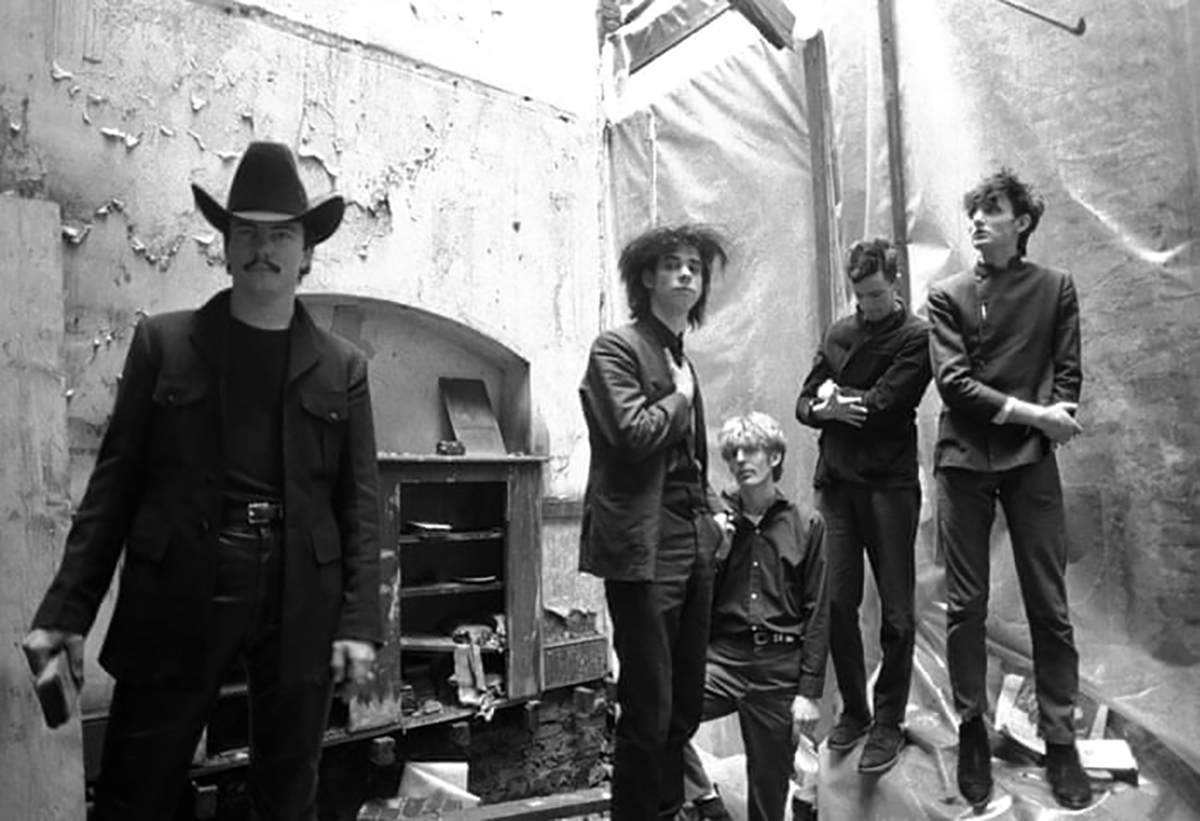
The Birthday Party’s original name was the Boys Next Door—the name change occurring on a drug and alcohol fueled flight from the band’s native Australia to London in 1980 where they moved to grow their reach according to band members. Door, Door the Boys Next Door debut album came out in 1979 and it pales in comparison to The Birthday Party records with the exception of the Roland S. Howard penned tune “Shivers“.
I view Prayers as a perfect record in very much the same way The Doors self-titled debut is a perfect record—seamless and overfull with a unique sound and mad nearly manic energy. To my mind, The Birthday Party as well as Nick Cave and the Bad Seeds are a continuation of aspects of The Doors, namely the notion of pushing the limits of consciousness in search of something beyond (“Break on through to the other side”).
Jim Morrison was a voracious reader and spoke about literature and philosophy as important influences as did Cave, Howard, and bassist Tracy Pew. The Doors took their name from Aldous Huxley’s The Doors of Perception while The Birthday Party has a number of possible origins including Harold Pinter’s play of the same name, Cave misremembering a scene from Dostoyevsky’s Crime and Punishment according to legend, or just a fun bait and switch pick along the lines of Throbbing Gristle’s 1970 album 20 Jazz Funk Greats which wasn’t jazz or funk. Perhaps The Re-Birthday Party would have been more apropos if more heavy-handed.
Heroin, alcohol, East German speed (the methamphetamine), a broad interest in the arts and philosophy, and a desire to break on through the mundane and out of mediocrity fueled their rage on and off stage. The band’s first self-released single “Mr. Clarinet” drew small crowds to their live shows and according to most people who saw The Birthday Party perform, the experience was at turns frightening, confrontational, unexpected, and extreme with more than a touch of campy carnival theatrics when in their prime.
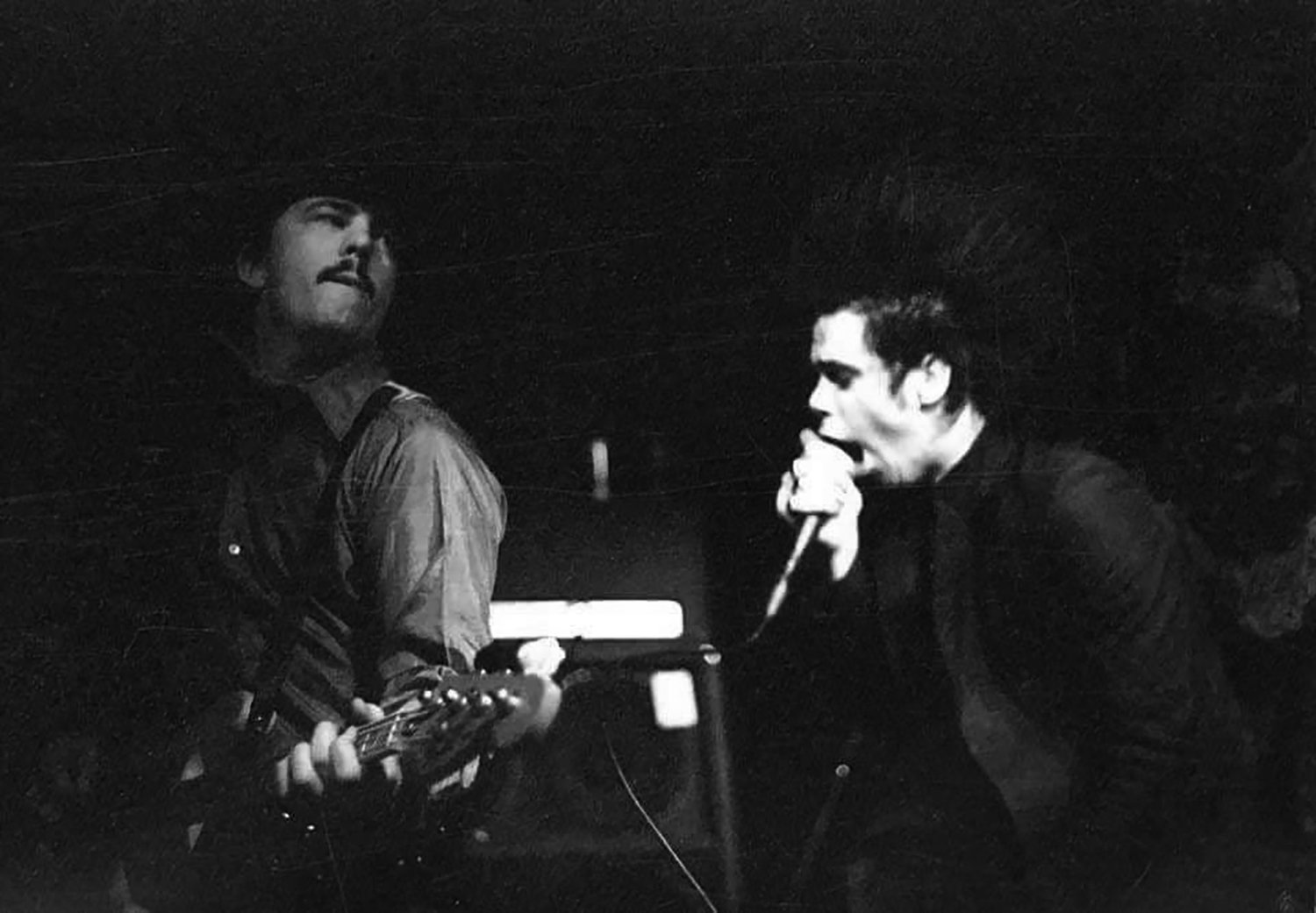
4AD’s Ivo Watts-Russell commented, “The Birthday Party were the only band that I ever got involved with from being excited by seeing somebody live first.”
Their next single, “The Friend Catcher,” was released on 4AD and it caught the attention of John Peel who promoted it on his show, eventually hitting #3 on the NME Alternative Charts. As a result, the band was playing to larger crowds where they honed their skills and found their sound. To my mind The Birthday Party were very skilled with Howard’s unique searing guitar sound, Pew’s throbbing bass foundation, and of course Cave as the mad jester carny preacher up front raising hell. The sermon don’t start ’till the snakes come out.
Prayers was recorded in Australia at AAV Studio in Melbourne from December 1980 to January 1981. Mick Harvey spoke about the studio setting that found the whole band playing in one big room with open mics and every instrument bleeding into the next creating a big open sound. The band also produced their first promo video while in Australia for the track “Nick the Stripper” which Cave described as an attempt to recreate hell with visuals influenced by the paintings of Hieronymus Bosch.
Incest, blasphemy—”Porca Dio” painted on Cave’s chest means “pig God” — and theatrics taking more than a page from Jim Morrison and The Doors playbook (see “The End” and their infamous concert from the Dinner Key Auditorium, Miami 1969) with some Iggy mixed in for good measure.
I highly recommend watching Mutiny in Heaven: The Birthday Party, an hour plus documentary that offers interviews with the band, lots of great rare live footage, and a detailed history of the antics and mayhem to which I owe many of the details shared here.
From Mutiny:
“One of the ideas behind the band was that this was not entertainment. What you saw was you got and there was no defining line between our lives and our performances.” Roland S. Howard
“The Birthday Party was more of a kind of an almost conceptual statement.” Nick Cave
The Prayers on Fire tracks:
- “Zoo-Music Girl”
- “Cry”
- “Capers”
- “Nick the Stripper”
- “Ho-Ho”
- “Figure of Fun”
- “King Ink”
- “A Dead Song”
- “Yard”
- “Dull Day”
- “Just You and Me”
From the first track to the last, Prayers on Fire is a joyous twisted journey that feels fresh, frenetic, and entirely captivating some 45 years on.
For vinyl fans, I recommend finding a copy of the 12″ 45RPM EP “The Friend Catcher” released on 4AD in 1983. It sounds great and includes “Release The Bats” where Nick does his best Elvis, “Blast Off,” “The Friend Catcher,” “Mr. Clarinet,” and “Happy Birthday” a single from the Boys Next Door 1980 album The Birthday Party. The origin story on the band name change to The Birthday Party clearly reached back before that debauched flight to London—truth can be less interesting than fiction.